Hierarchical drought responses of canopy photosynthesis and water-use efficiency in Caragana korshinskii Kom.: from optimal function to degradation
ZHANG Li1, LI Qin1, ZHANG Yangmin1, YANG Wenxuan1, YANG Xinguo1,2,3, QU Wenjie1,2, MENG Chen1,2, ZHANG Xue1,2,3, WANG Lei1,2,3,*()
1College of Ecological Environment of Ningxia University, Ningxia University, Yinchuan 750021, China 2Northwest National Key Laboratory Breeding Base for Land Degradation and Ecological Restoration, Ningxia University, Yinchuan 750021, China 3Ningxia Yellow River Wetland Ecosystem National Positioning Observation and Research Station, Ningxia University, Yinchuan 750021, China
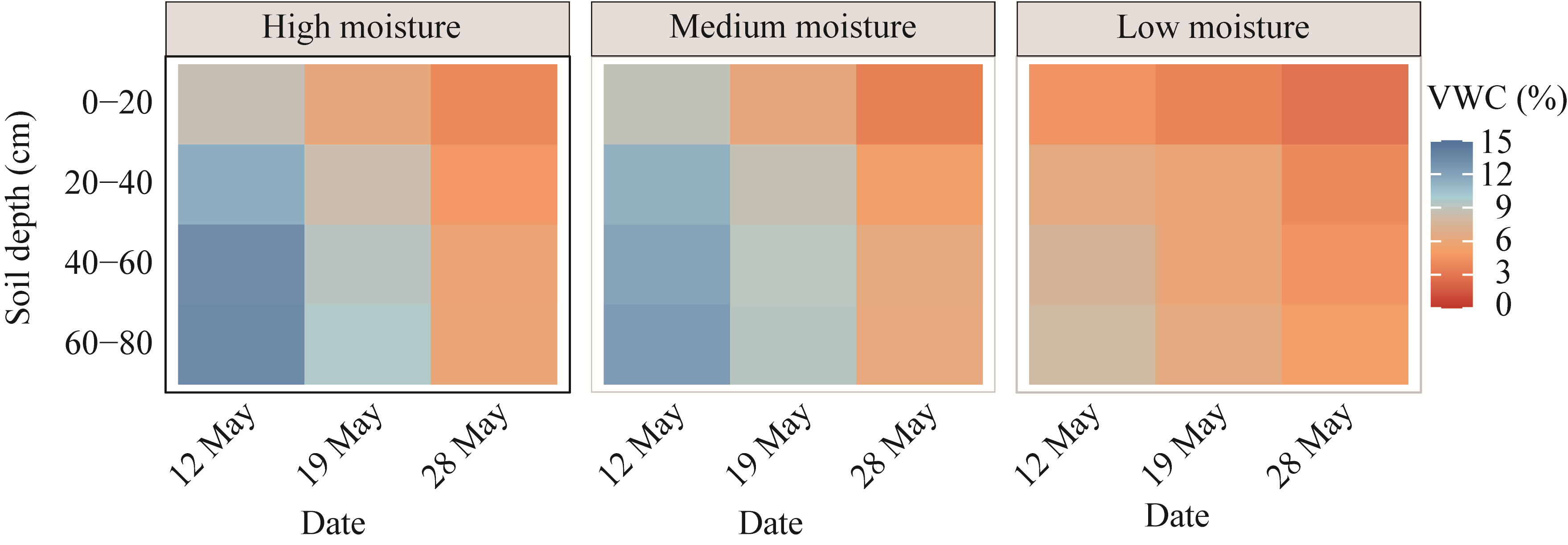
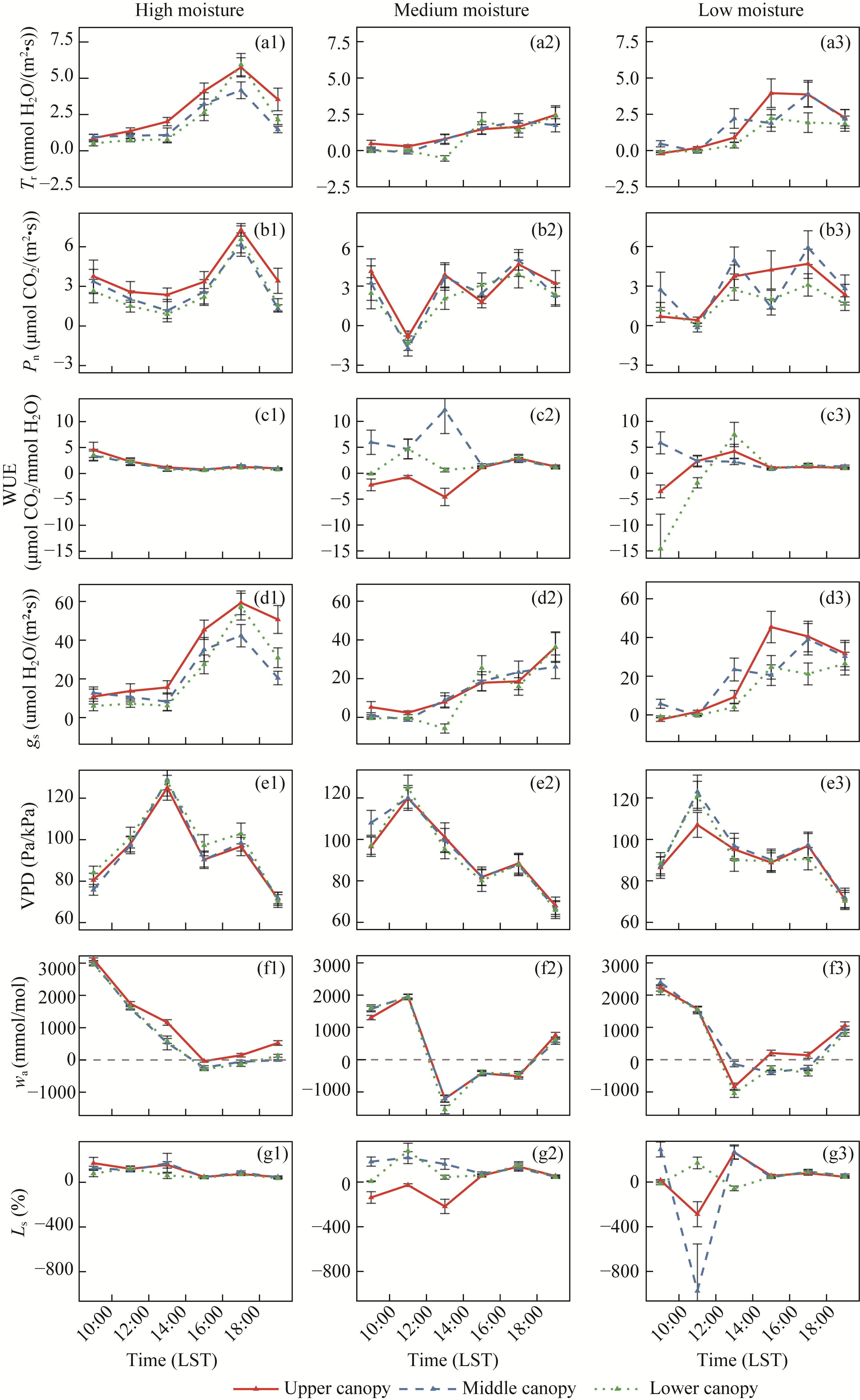
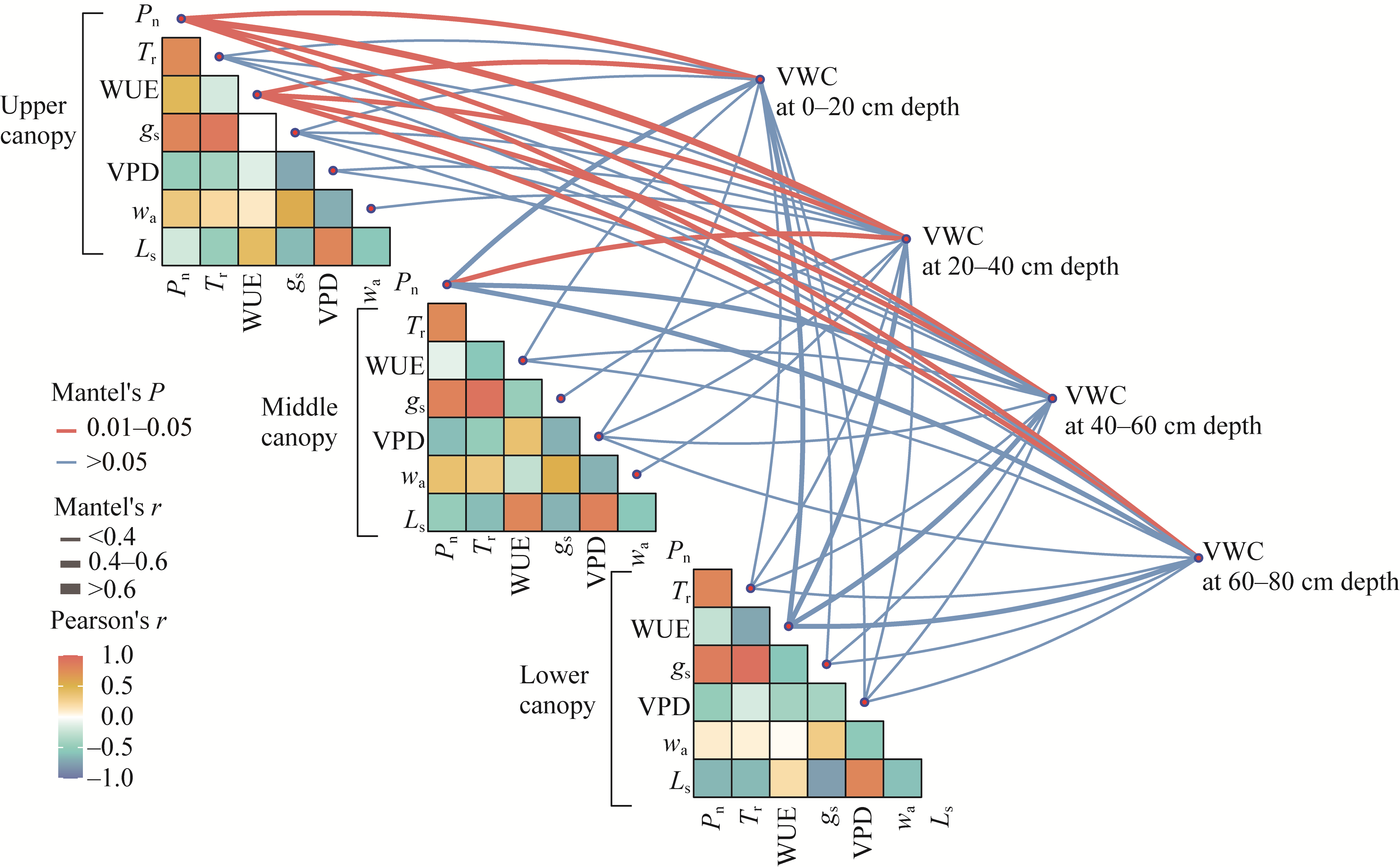
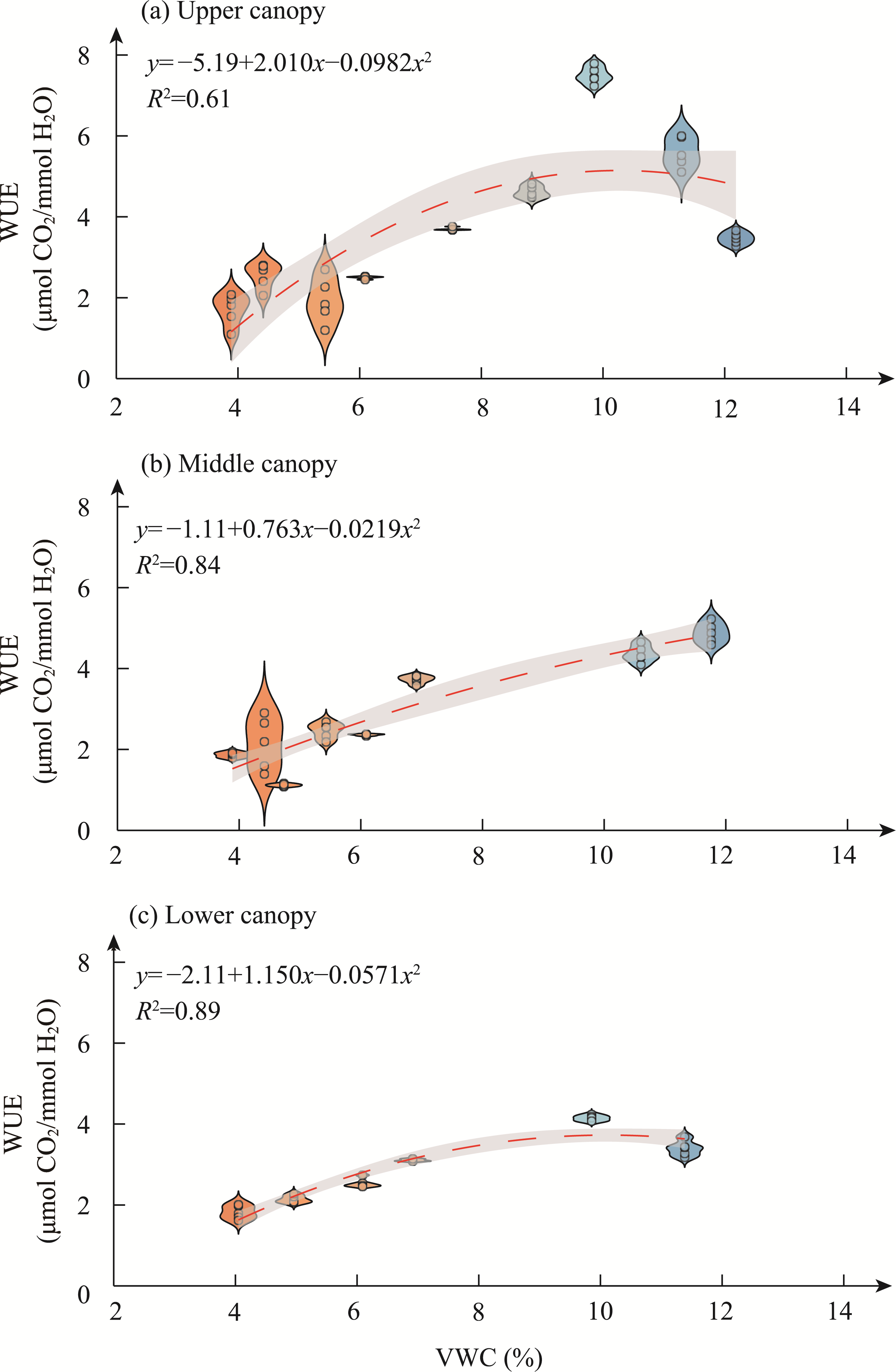
Planting the drought-resistant vegetation is important to control desert in the world. However, the resistant mechanism to drought of psammophytes especially at the canopy scale remains unclear. To elucidate the mechanisms of water adaptation in Caragana korshinskii Kom. across various vertical canopy layers, we conducted an experiment in Dawukou District, Shizuishan City, Ningxia Hui Autonomous Region, China to measure hydraulic architecture and photosynthetic traits at different canopy heights under drought. Results showed a distinct vertical gradient in soil volumetric water content (VWC), characterized by water accumulation in deeper soil layers (60-80 cm) and depletion in shallower layers (0-20 cm). Under well-watered condition (70.00%-80.00% field capacity (FC)), the upper canopy achieved the highest photosynthetic rate (Pn) and transpiration rate (Tr); under moderate drought stress (40.00%-50.00% FC), photosynthetic amplitudes attenuated across all layers; under severe drought stress (10.00%-20.00% FC), the middle canopy became the primary photosynthetic refuge while lower-canopy photosynthesis nearly ceased. This hierarchical regulation strategy facilitated water conservation and survival under severe drought conditions. Upper-canopy photosynthetic and transpiration traits exhibited the strongest and most significant associations with shallow VWC (0-20 cm), reflecting rapid physiological adjustments to surface water fluctuations. By contrast, middle-canopy traits showed markedly weaker linkages to VWC, while lower-canopy traits displayed overall non-significant relationships with any measured soil layer, including 60-80 cm, indicating that lower leaves may depend on stored stem water or hydraulic redistribution rather than direct soil uptake. Furthermore, key ecological thresholds were identified as follows: (1) normal function: plant growth proceeded normally when VWC exceeded 3.04%, with optimal canopy WUE empirically confirmed within the measured VWC range of 10.07%-11.76%; (2) functional maintenance: as VWC declined to 1.52%-3.04%, photosynthetic activity gradually ceased in a layer-specific sequence—upper canopy<3.04%, lower canopy<2.03%, and middle canopy<1.52%; and (3) functional degradation: when VWC decreased to below 1.52%, total canopy photosynthesis ceased completely, indicating irreversible physiological decline. These findings provide an empirical basis for water management strategies, survival maintenance, and early-warning systems for degradation in C. korshinskii vegetation within arid areas.
Received: 12 March 2026
Published: 30 September 2026
Corresponding Authors:*WANG Lei (E-mail: wl8999@163.com)
About author: First author contact:
Conceptualization: WANG Lei, ZHANG Xue; Methodology: ZHANG Li; Investigation: ZHANG Li, ZHANG Yangmin, YANG Wenxuan; Formal analysis: ZHANG Li; Writing - original draft preparation: ZHANG Li; Writing - review and editing: ZHANG Li, ZHANG Xue, WANG Lei; Funding acquisition: WANG Lei; Supervision: WANG Lei, ZHANG Xue. All authors approved the manuscript.
ZHANG Li, LI Qin, ZHANG Yangmin, YANG Wenxuan, YANG Xinguo, QU Wenjie, MENG Chen, ZHANG Xue, WANG Lei. Hierarchical drought responses of canopy photosynthesis and water-use efficiency in Caragana korshinskii Kom.: from optimal function to degradation. Journal of Arid Land, 2026, 18(9): 1616-1630.
Table 1 Basic physical-chemical properties of the studied soil
Plant
Plant height (cm)
Canopy area (m2)
Basal stem diameter (mm)
Quadrat size (m2)
Caragana korshinskii Kom.
153.00±2.35
2.61±0.39
9.58±0.56
2.0×4.0
Table 2 Overview of the experimental material
Source
Sum of square
F
P
Treatment
66.55
431.25
<0.001
Soil depth
54.47
235.31
<0.001
Sampling time
149.18
966.66
<0.001
Treatment×Soil depth
0.87
1.88
0.167
Treatment×Sampling time
19.21
62.25
<0.001
Soil depth×Sampling time
2.71
5.86
0.005
Residual
0.93
-
-
Table 3 Three-way analysis of variance (ANOVA) for the effects of treatment, soil depth, and sampling time on soil volumetric water content (VWC)
Fig. 1Soil volumetric water content (VWC) in different depths and sampling times under different moisture treatments
Source
df
Pn
Tr
WUE
gs
Ls
F
P
F
P
F
P
F
P
F
P
Treatment
2
156.42
<0.001
89.73
<0.001
45.68
<0.001
67.35
<0.001
23.41
<0.001
Canopy layer
2
28.76
<0.001
15.34
<0.001
3.52
0.038
18.67
<0.001
8.93
<0.001
Diurnal time
5
42.18
<0.001
35.62
<0.001
12.45
<0.001
28.91
<0.001
15.78
<0.001
Treatment×Canopy layer
4
12.35
<0.001
8.76
<0.001
6.42
<0.001
9.23
<0.001
4.56
0.002
Treatment×Diurnal time
10
18.67
<0.001
14.23
<0.001
7.89
<0.001
11.45
<0.001
6.78
<0.001
Canopy layer× Diurnal time
10
5.43
<0.001
4.21
<0.001
2.87
0.003
3.96
<0.001
2.34
0.012
Treatment×Canopy layer×Diurnal time
20
2.18
0.008
1.89
0.021
1.45
0.098
1.76
0.031
1.23
0.245
Residual
216
-
-
- -
-
-
-
-
-
-
Table 4 Three-way analysis of variance (ANOVA) for photosynthetic parameters
Fig. 2Diurnal variation in photosynthesis of Caragana korshinskii Kom. under different moisture treatments. (a1-a3), transpiration rate (Tr); (b1-b3), net photosynthetic rate (Pn); (c1-c3), water-use efficiency (WUE); (d1-d3), stomatal conductance (gs); (e1-e3), vapour pressure deficit (VPD); (f1-f3), intercellular water-vapour concentration (wa); (g1-g3), stomatal limitation value (Ls). Bars are standard errors.
Comparison
Pn
Tr
WUE
gs
Ls
Upper canopy vs. Middle canopy
<0.001
0.003
0.127
0.002
0.008
Upper canopy vs. Lower canopy
<0.001
<0.001
0.042
<0.001
<0.001
Middle canopy vs. Lower canopy
0.012
0.038
0.256
0.015
0.045
Table 5 Tukey's Honestly Significant Difference (HSD) post hoc comparisons for canopy layers
Comparison
Pn
Tr
WUE
gs
Ls
High moisture vs. Medium moisture
<0.001
<0.001
0.003
<0.001
<0.001
High moisture vs. Low moisture
<0.001
<0.001
<0.001
<0.001
<0.001
Medium moisture vs. Low moisture
0.008
0.015
0.067
0.023
0.042
Table 6 Tukey's HSD post hoc comparisons for moisture treatments
Comparison
Pn
Tr
WUE
gs
Ls
09:00 vs. 11:00
0.003
<0.001
0.012
<0.001
0.008
09:00 vs. 13:00
<0.001
<0.001
<0.001
<0.001
<0.001
09:00 vs. 15:00
<0.001
<0.001
0.045
<0.001
<0.001
09:00 vs. 17:00
<0.001
<0.001
0.003
<0.001
<0.001
09:00 vs. 19:00
<0.001
<0.001
0.008
<0.001
<0.001
13:00 vs. 17:00
<0.001
0.003
0.015
0.002
0.012
Table 7 Tukey's HSD post hoc comparisons for diurnal times
Fig. 3Correlation between canopy photosynthetic traits and soil moisture at different depths
Fig. 4Fitting curve between soil VWC and vertical canopy WUE. (a), upper canopy; (b), middle canopy; (c), lower canopy. The violin plots illustrate the data distribution at each VWC level, the circle denotes individual measurement, and the shaded area indicates the 95.00% confidence interval.
[1]
Abdalla M, Schweiger A H, Berauer B J, et al. 2023. Constant hydraulic supply and ABA dynamics facilitate the trade-offs in water and carbon. Frontiers in Plant Science, 14: 1140938, doi: 10.3389/fpls.2023.1140938.
[2]
Amin S A, Hayat F, Alyafei M, et al. 2025. Drought tolerance strategies of some native plants in the UAE Desert: growth, biochemical, and antioxidant insights. BMC Plant Biology, 25(1): 1374, doi: 10.1186/s12870-025-07305-z.
[3]
Amitrano C, Rouphael Y, De Pascale S, et al. 2022. Vapour pressure deficit (VPD) drives the balance of hydraulic-related anatomical traits in lettuce leaves. Plants, 11(18): 2369, doi: 10.3390/plants11182369.
[4]
Bonetti S, Breitenstein D, Fatichi S, et al. 2020. Persistent decay of fresh xylem hydraulic conductivity varies with pressure gradient and marks plant responses to injury. Plant, Cell and Environment, 44(2): 371-386.
[5]
Che C W, Xiao S C, Peng X M, et al. 2022. Radial growth of Korshinsk peashrub and its response to drought in different sub-arid climate regions of northwest China. Journal of Environmental Management, 326: 116708, doi: 10.1016/j.jenvman.2022.116708.
[6]
Chen X, Zhang Q X, Yan Y X, et al. 2025. Exogenous abscisic acid reduces water consumption in Sedum lineare for green roofs: insights from morpho-physio-biochemical responses and multi-omics. Plant Physiology and Biochemistry, 229: 110696, doi: 10.1016/j.plaphy.2025.110696.
[7]
Chitra-Tarak R, Xu C G, Aguilar S, et al. 2021. Hydraulically-vulnerable trees survive on deep-water access during droughts in a tropical forest. New Phytologist, 231(5): 1798-1813.
[8]
Ding L, Zhao H M, Zeng W J, et al. 2017. Physiological responses of five plants in Northwest China arid area under drought stress. Journal of Applied Ecology, 28(5): 1455-1463. (in Chinese)
[9]
Domec J C, Warren J M, Meinzer F C, et al. 2004. Native root xylem embolism and stomatal closure in stands of Douglas-fir and ponderosa pine: mitigation by hydraulic redistribution. Oecologia, 141(1): 7-16.
[10]
Evaristo J, Jasechko S, McDonnell J J. 2015. Global separation of plant transpiration from groundwater and streamflow. Nature, 525: 91-94.
[11]
Feng S, Fang H C, Liu X, et al. 2021. Genome-wide identification and characterization of long non-coding RNAs conferring resistance to Colletotrichum gloeosporioides in walnut (Juglans regia). BMC Genomics, 22(1): 15, doi: 10.1186/s12864-020-07310-6.
[12]
Fu Z, Ciais P, Feldman A F, et al. 2022. Critical soil moisture thresholds of plant water stress in terrestrial ecosystems. Science Advances, 8(44): eabq7827, doi: 10.1126/sciadv.abq7827.
[13]
Gao S, Su P X, Yan Q D, et al. 2010. Canopy and leaf gas exchange of Haloxylon ammodendron under different soil moisture regimes. Science China Life Sciences, 53(6): 718-728.
[14]
Gazol A, Pizarro M, Hammond W M, et al. 2025. Droughts preceding tree mortality events have increased in duration and intensity, especially in dry biomes. Nature Communications, 16(1): 5779, doi: 10.1038/s41467-025-60856-5.
[15]
Ge L F, Chen J H, Chen R J. 2010. Palmate-like pentafoliata1 encodes a novel Cys(2) His(2) zinc finger transcription factor essential for compound leaf morphogenesis in Medicago truncatula. Plant Signaling and Behavior, 5(9): 1134-1137.
[16]
Gholampoor M, Osku M, Jahanifard M, et al. 2025. Exploring drought adaptation strategies in pistachios through morpho-physiological analysis under deficit irrigation. Scientific Reports, 16(1): 1105, doi: 10.1038/s41598-025-30740-9.
[17]
Guo X Y, Yang G, Wang C G, et al. 2025. Improvement effects of different shrub sand fixation plantations on vegetation and soil in the Kubuqi Desert. Frontiers in Plant Science, 16: 1688154, doi: 10.3389/fpls.2025.1688154.
[18]
Harrison E L, Cubas L A, Gray J E, et al. 2020. The influence of stomatal morphology and distribution on photosynthetic gas exchange. Plant Journal, 101(4): 768-779.
[19]
Hassan M A, Ni D H, Tong H N, et al. 2023. Drought stress in rice: morpho-physiological and molecular responses and marker-assisted breeding. Frontiers in Plant Science, 14: 1215371, doi: 10.3389/fpls.2023.1215371.
[20]
Hu C F, Chen Q L, Qiao X T, et al. 2020. Photosynthetic, spectral reflectance characteristics and primary productivity of main tree species in broadleaved Korean pine forest. Journal of Beijing Forestry University, 42(5): 12-24. (in Chinese)
[21]
Huang A X, She X P. 2011. Actin microfilaments and vacuoles are downstream targets of H2O2 signaling pathways in hyperosmotic stress-induced stomatal closure. Functional Plant Biology, 38(4): 303-313.
[22]
Huo J Q, Li C Y, Zhao Y, et al. 2024. Hydraulic mechanism of limiting growth and maintaining survival of desert shrubs in arid habitats. Plant Physiology, 196(4): 2450-2462.
[23]
Ingrisch J, Umlauf N, Bahn M. 2023. Functional thresholds alter the relationship of plant resistance and recovery to drought. Ecology, 104(2): 1-15.
[24]
Iovieno P, Punzo P, Guida G, et al. 2016. Transcriptomic changes drive physiological responses to progressive drought stress and rehydration in tomato. Frontiers in Plant Science, 7: 371, doi: 10.3389/fpls.2016.00371.
[25]
Ishii H R, Azuma W, Kuroda K, et al. 2014. Pushing the limits to tree height: could foliar water storage compensate for hydraulic constraints in Sequoia sempervirens? Functional Ecology, 28(5): 1087-1093.
[26]
Jin N, Yu X C, Dong J L, et al. 2024. Vertical variation in leaf functional traits of Parashorea chinensis with different canopy layers. Frontiers in Plant Science, 15: 1335524, doi: 10.3389/fpls.2024.1335524.
[27]
Khamis G, Alsherif E A, Korany S M, et al. 2025. Drought stress differentially influences growth, physiology, and metabolite accumulation in Triticum aestivum (C3) and Amaranthus caudatus (C4) plants. BMC Plant Biology, 25(1): 1199, doi: 10.1186/s12870-025-07022-7.
[28]
Liu H, Gleason S M, Hao G Y, et al. 2019. Hydraulic traits are coordinated with maximum plant height at the global scale. Science Advances, 5(2): eaav1332, doi: 10.1126/sciadv.aav1332.
[29]
Liu Z J, Lin H, Li H R, et al. 2025. Response mechanisms of vegetation productivity to water variability in arid and semi-arid areas of China: a decoupling analysis of soil moisture and precipitation. Atmosphere, 16(8): 933, doi: 10.1126/sciadv.aav1332.
[30]
Maier C R, Chavan S G, Klause N, et al. 2023. Light blocking film in a glasshouse impacts Capsicum annuum L. yield differentially across planting season. Frontiers in Plant Science, 14: 1277037, doi: 10.3389/fpls.2023.1277037.
[31]
Malcheska F, Ahmad A, Batool S, et al. 2017. Drought-enhanced xylem sap sulfate closes stomata by affecting ALMT12 and guard cell ABA synthesis. Plant Physiology, 174(2): 798-814, doi: 10.1104/pp.16.01784.
[32]
Mei F Y, Yang T R, Chao H Y, et al. 2025. Genomic insights into drought adaptation of the forage shrub Caragana korshinskii (Fabaceae) widely planted in drylands. Plant Journal, 121(3): e17255, doi: 10.1111/tpj.17255.
[33]
Murillo-Amador B, Rueda-Puente E O, Troyo-Diéguez E, et al. 2015. Baseline study of morphometric traits of wild Capsicum annuum growing near two biosphere reserves in the Peninsula of Baja California for future conservation management. BMC Plant Biology, 15: 118, doi: 10.1186/s12870-015-0505-6.
[34]
Oubida R W, Gantulga D, Zhang M, et al. 2015. Partitioning of multivariate phenotypes using regression trees reveals complex patterns of adaptation to climate across the range of black cottonwood (Populus trichocarpa). Frontiers in Plant Science, 6: 181, doi: 10.3389/fpls.2015.00181.
[35]
Pan Y X, Li A M, Ma X Z, et al. 2026. Divergent water use strategies of three desert shrubs on the Alxa Plateau: insights from stable isotopes and root distribution analysis. Frontiers in Plant Science, 17: 1735586, doi: 10.3389/fpls.2026.1735586.
[36]
Petit G, Anfodillo T, Carraro V, et al. 2011. Hydraulic constraints limit height growth in trees at high altitude. New Phytologist, 189(1): 241-252.
[37]
Rome S C, Wang Y T, Bigot S J, et al. 2025. Local weather types (LWTs) associated with urban heat islands (UHIs) and hot days in the Grenoble area, France. PLoS ONE, 20(12): e0339189, doi: 10.1371/journal.pone.0339189.
[38]
Sun C L, Chai Z Z, Liu G B, et al. 2017. Changes in species diversity patterns and spatial heterogeneity during the secondary succession of grassland vegetation on the Loess Plateau, China. Frontiers in Plant Science, 8: 1465, doi: 10.3389/fpls.2017.01465.
[39]
Tian J Y, Yuan F H, Guan D X, et al. 2022. Water use efficiency and leaf nutrient characteristics of five major tree species in broadleaved Korean pine forest in Changbai Mountains, China. Journal of Applied Ecology, 33(2): 304-310. (in Chinese)
[40]
van Westreenen A, Zhang N, Douma J C, et al. 2020. Substantial differences occur between canopy and ambient climate: quantification of interactions in a greenhouse-canopy system. PLoS ONE, 15(5): e0233210, doi: 10.1371/journal.pone.0233210.
[41]
Wan Y F, Yu P T, Bai Y S, et al. 2025. Soil moisture thresholds at progressive mortality stages of larch plantations in the Northwest China. Agricultural and Forest Meteorology, 371: 110638, doi: 10.1016/j.agrformet.2025.110638.
[42]
Wang C, Zhang Q, Tao M, et al. 2025. Estimation of seasonal ecological water demand in arid zone of Northwest China: an approach using the LSTM-random forest regression model. Journal of Environmental Management, 397: 128240, doi: 10.1016/j.jenvman.2025.128240.
[43]
Xie M Y, Li L, Liu B, et al. 2023. Responses of terrestrial ecosystem productivity and community structure to intra-annual precipitation patterns: a meta-analysis. Frontiers in Plant Science, 13: 1088202, doi: 10.3389/fpls.2022.1088202.
[44]
Xing Y Y, Wang X K. 2024. Precision agriculture and water conservation strategies for sustainable crop production in arid regions. Plants, 13(22): 3184, doi: 10.3390/plants13223184.
[45]
Yu T, Liu P G, Zhang Q, et al. 2021. Detecting forest degradation in the Three-North Forest Shelterbelt in China from multi-scale satellite images. Remote Sensing, 13(6): 1131, doi: 10.3390/rs13061131.
[46]
Zhang T J, Liu X T, Zhang Q H, et al. 2025. Novel patterns of photosynthetic activity within canopies of poplar stands with different densities. Plants, 14(6): 898, doi: 10.3390/plants14060898.
[47]
Zhao Y, Wang L, Knighton J, et al. 2021. Contrasting adaptive strategies by Caragana korshinskii and Salix psammophila in a semiarid revegetated ecosystem. Agricultural and Forest Meteorology, 300: 108323, doi: 10.1016/j.agrformet.2021.108323.
[48]
Zhao Y N, Zhou Y R, Wang H M, et al. 2018. Spatial heterogeneity of soil water content under introduced shrub (Caragana korshinskii) in desert grassland of the eastern Ningxia, China. Journal of Applied Ecology, 29(11): 3577-3586. (in Chinese)
[49]
Zhao Y R, Su B L, Li Y N, et al. 2025. Response mechanism of photosynthetic physiology of uneven aged leaves of Pinus koraiensis to sunflecks in broad-leaved Korean pine forest in Changbai Mountain, China. Journal of Applied Ecology, 36(8): 2307-2316. (in Chinese)
[50]
Zheng Y R, Xie Z X, Yu Y, et al. 2005. Effects of burial in sand and water supply regime on seedling emergence of six species. Annals of Botany, 95(7): 1237-1245.
[51]
Zhou W Q, Liu J S, Wang W J, et al. 2024. Molecular mechanisms for regulating stomatal formation across diverse plant species. International Journal of Molecular Sciences, 25(19): 10403, doi: 10.3390/ijms251910403.
[52]
Ziegler F M R, Rosenthal V, Vallarino J G, et al. 2025. A full genome assembly reveals drought stress effects on gene expression and metabolite profiles in blackcurrant (Ribes nigrum L.). Horticulture Research, 12(2): uhae313, doi: 10.1093/hr/uhae313.