Nitrogen fertilization alters fruit yield and quality traits of Lycium barbarum in Northwest China
WANG Chenwen1,2, LIU Jianguo1,2,*(), ZHU Xinting1, XU Jingjing3, ZHAO Zehe1, TENG Baoqin3
1Key Laboratory of Resource Environment and Sustainable Development of Oasis, College of Geography and Environmental Science, Northwest Normal University, Lanzhou 730070, China 2Engineering Research Center for Ecological and Environmental Damage Assessment of Gansu Province, Lanzhou 730070, China 3Forestry Technique Extension Station of Gansu Province, Lanzhou 730046, China
Lycium barbarum L., valued for its potential immunomodulatory and metabolism-regulating functions, contains abundant bioactive compounds, including polysaccharides and betaine. The global demand for L. barbarum has grown rapidly at an annual rate exceeding 10.00%. Northwest China is the principal cultivation region. However, the highest urea application rate has induced soil acidification and nutrient imbalance, threatening the sustainability of this agricultural system. A three-year field experiment was conducted in the Wuwei oasis irrigation area to assess how different nitrogen (N) application rates affected fruit yield, fruit quality traits, and soil physicochemical properties. Four N rates, N0, N1, N2, and N3, supplied 0.00, 161.00, 322.00, and 483.00 kg N/hm2, respectively, and a non-fertilized blank control (BLK) was included. Yield, betaine, polysaccharides, total flavonoids, soluble solids, soil pH, soil organic matter (SOM), total phosphorus (TP), available phosphorus (AP), and soil enzyme activities were determined. Compared with the BLK, N2 increased the fruit yield from 933.24 to 2899.71 kg/hm2, an approximately threefold increase. Conversely, the highest N input decreased the soil pH and SOM in the 20-40 cm layer while increasing the surface soil electrical conductivity (EC). Under N3, the total flavonoid and betaine contents decreased by 14.78% and 55.32%, respectively. Thus, moderate N application improved fruit yield while maintaining fruit quality, whereas the highest N input reduced key functional components and enhanced the risk of soil degradation. These findings provide insights for optimizing N management in L. barbarum cultivation within arid regions.
Received: 02 April 2026
Published: 30 September 2026
Conceptualization: WANG Chenwen; Methodology: LIU Jianguo; Formal analysis: ZHU Xinting; Writing - original draft preparation: ZHAO Zehe; Writing - review and editing: WANG Chenwen; Funding acquisition: WANG Chenwen, LIU Jianguo, XU Jingjing; Resources: XU Jingjing, TENG Baoqin; Supervision: WANG Chenwen, LIU Jianguo. All authors approved the manuscript.
WANG Chenwen, LIU Jianguo, ZHU Xinting, XU Jingjing, ZHAO Zehe, TENG Baoqin. Nitrogen fertilization alters fruit yield and quality traits of Lycium barbarum in Northwest China. Journal of Arid Land, 2026, 18(9): 1651-1666.
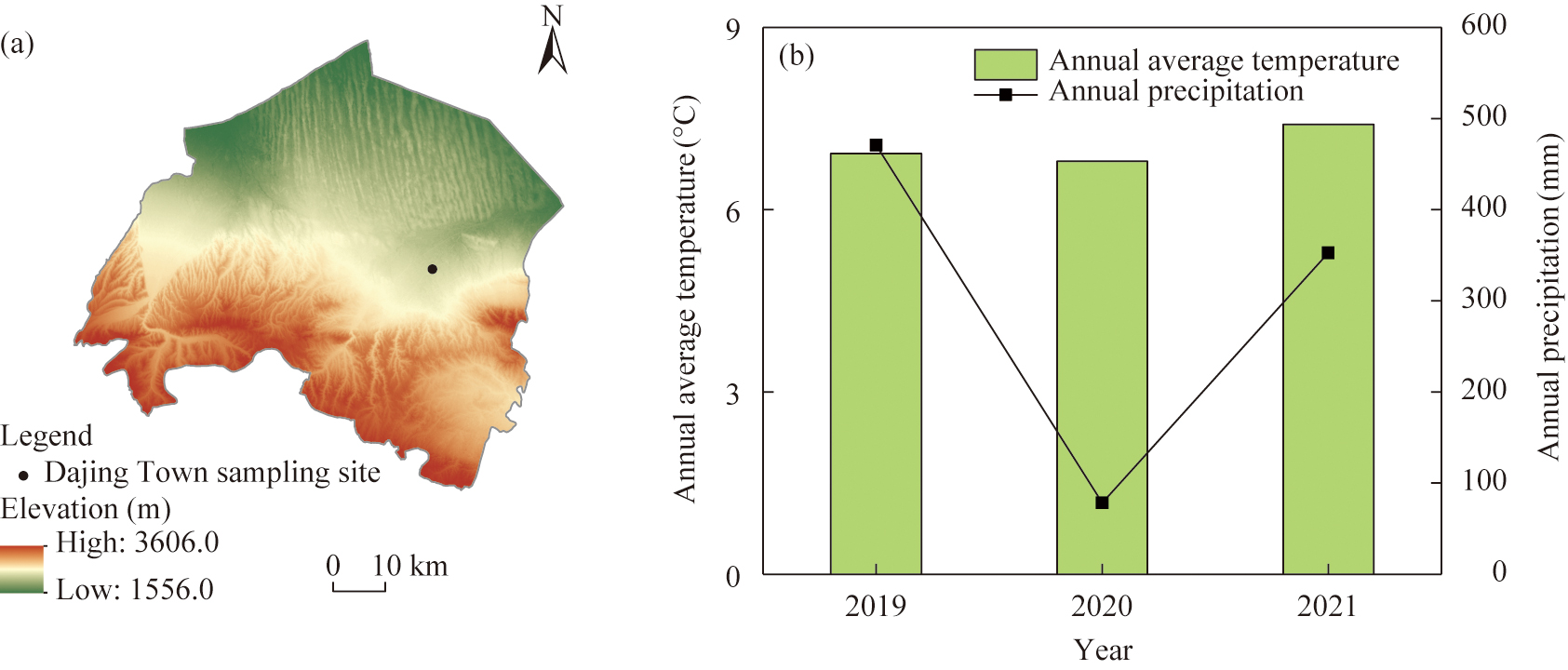
Fig. 1Sampling location in Dajing Town, Gulang County, Wuwei City, Gansu Province, China (a) and annual average temperature and annual precipitation from 2019 to 2021 in the study area (b)
Fig. 2Layout of the Lycium barbarum L. experimental plots. Each plot comprised 33 planting cells arranged in 3 rows and 11 columns. Individual cells measured 2.5 m×1.2 m and contained one centrally positioned L. barbarum plant. BLK denotes blank control (i.e., no fertilizer) and N0-N3 denote different N treatments with standard phosphorus (P) and potassium (K) supplementation, of which N0 denotes no N fertilizer, N1 denotes 161.00 kg N/hm2, N2 denotes 322.00 kg N/hm2, and N3 denotes 483.00 kg N/hm2.
Treatment
Urea (kg/hm2)
Equivalent N (kg N/hm2)
Calcium superphosphate (kg/hm2)
P2O5 (kg/hm2)
Potassium magnesium sulfate (kg/hm2)
K2O (kg/hm2)
BLK
0.00
0.00
0.00
0.00
0.00
0.00
N0
0.00
0.00
1000.00
≥160.00
800.00
192.00
N1
350.00
161.00
1000.00
≥160.00
800.00
192.00
N2
700.00
322.00
1000.00
≥160.00
800.00
192.00
N3
1050.00
483.00
1000.00
≥160.00
800.00
192.00
Table 1 Fertilization application level for Lycium barbarum L.
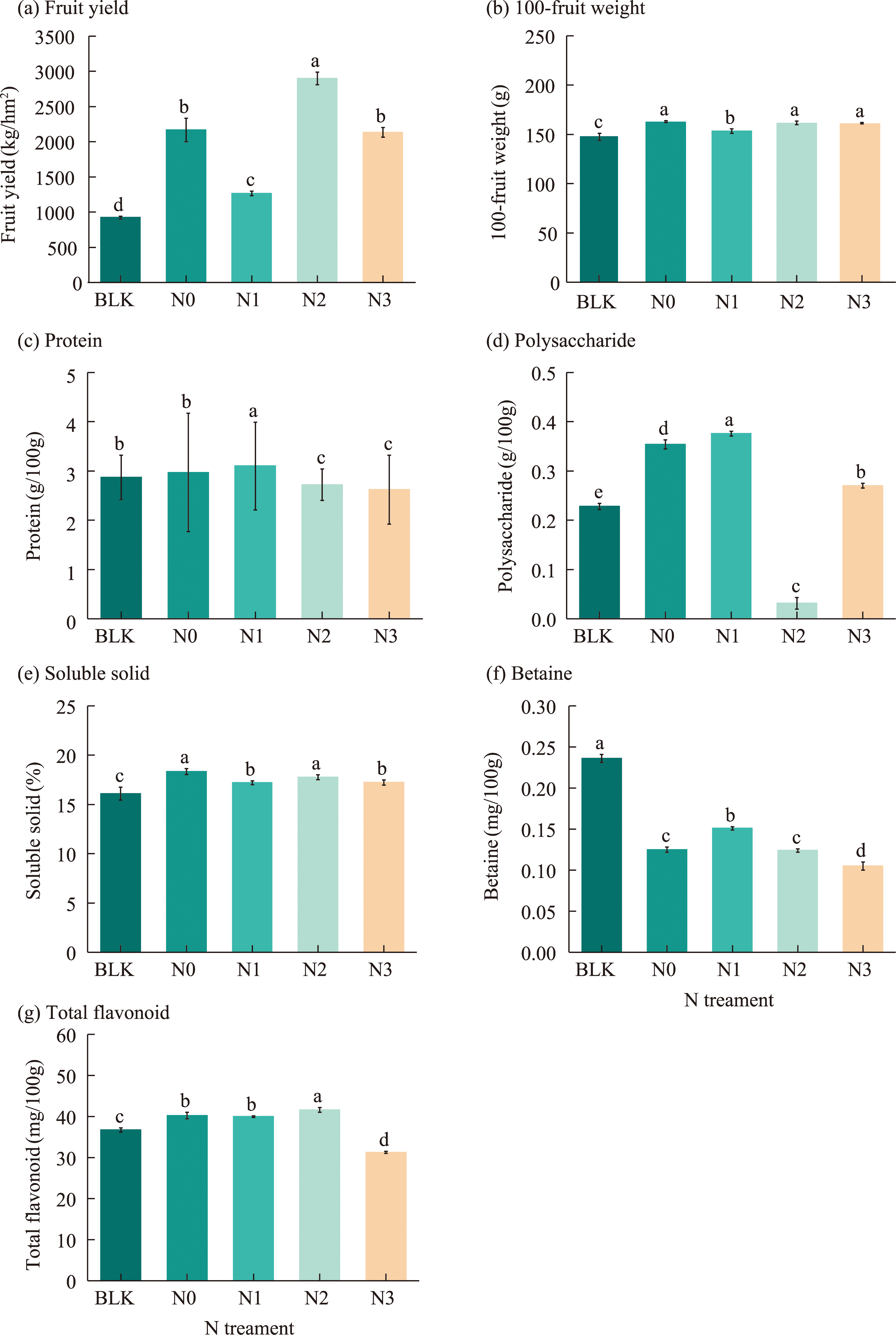
Fig. 3Effects of different N application rates on L. barbarum fruit yield and quality traits. (a), fruit yield; (b), 100-fruit weight; (c), protein content; (d), polysaccharide content; (e), soluble solids content; (f), betaine content; (g), total flavonoid content. Different lowercase letters indicate significant differences among treatments at P<0.05 level, according to Duncan's multiple range test. Error bars indicate the standard error (SE; n=4).
Fig. 4Soil physicochemical properties in the 0-20 and 20-40 cm layers under different N fertilization rates. (a), pH; (b), soil water content (SWC); (c), soil organic matter (SOM); (d), available nitrogen (AN); (e), available phosphorus (AP); (f), available potassium (AK); (g), total nitrogen (TN); (h), total phosphorus (TP); (i), total potassium (TK). Different lowercase letters indicate significant differences among treatments at P<0.05 level, according to Duncan's multiple range test. Error bars indicate the SE (n=4).
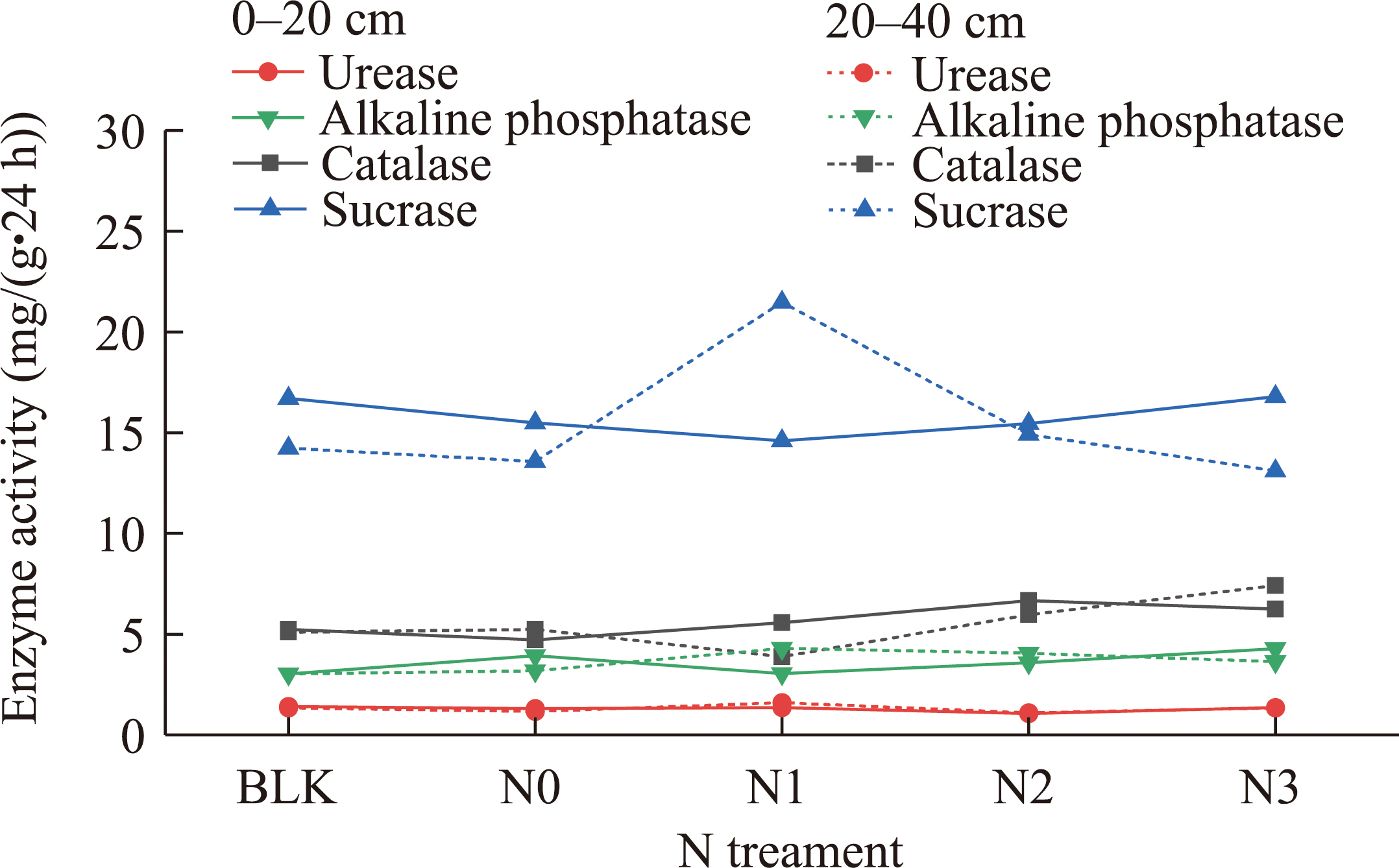
Fig. 5Soil enzyme activities under different N fertilization rates in the 0-20 and 20-40 cm layers
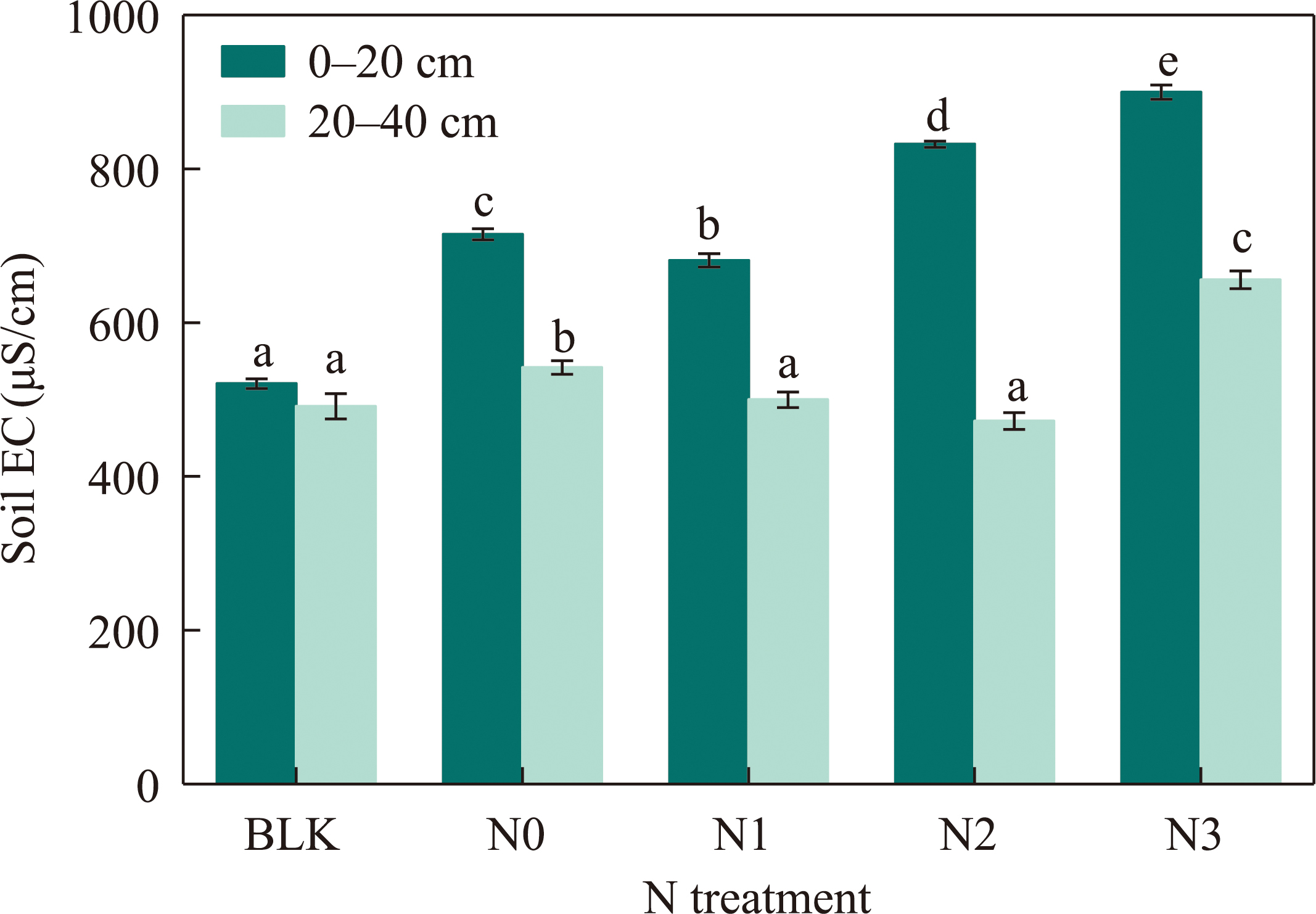
Fig. 6Soil electrical conductivity (EC) under different N fertilization rates in the 0-20 and 20-40 cm layers. Different lowercase letters indicate significant differences among treatments at P<0.05 level, according to Duncan's multiple range test. Error bars indicate the SE (n=4).
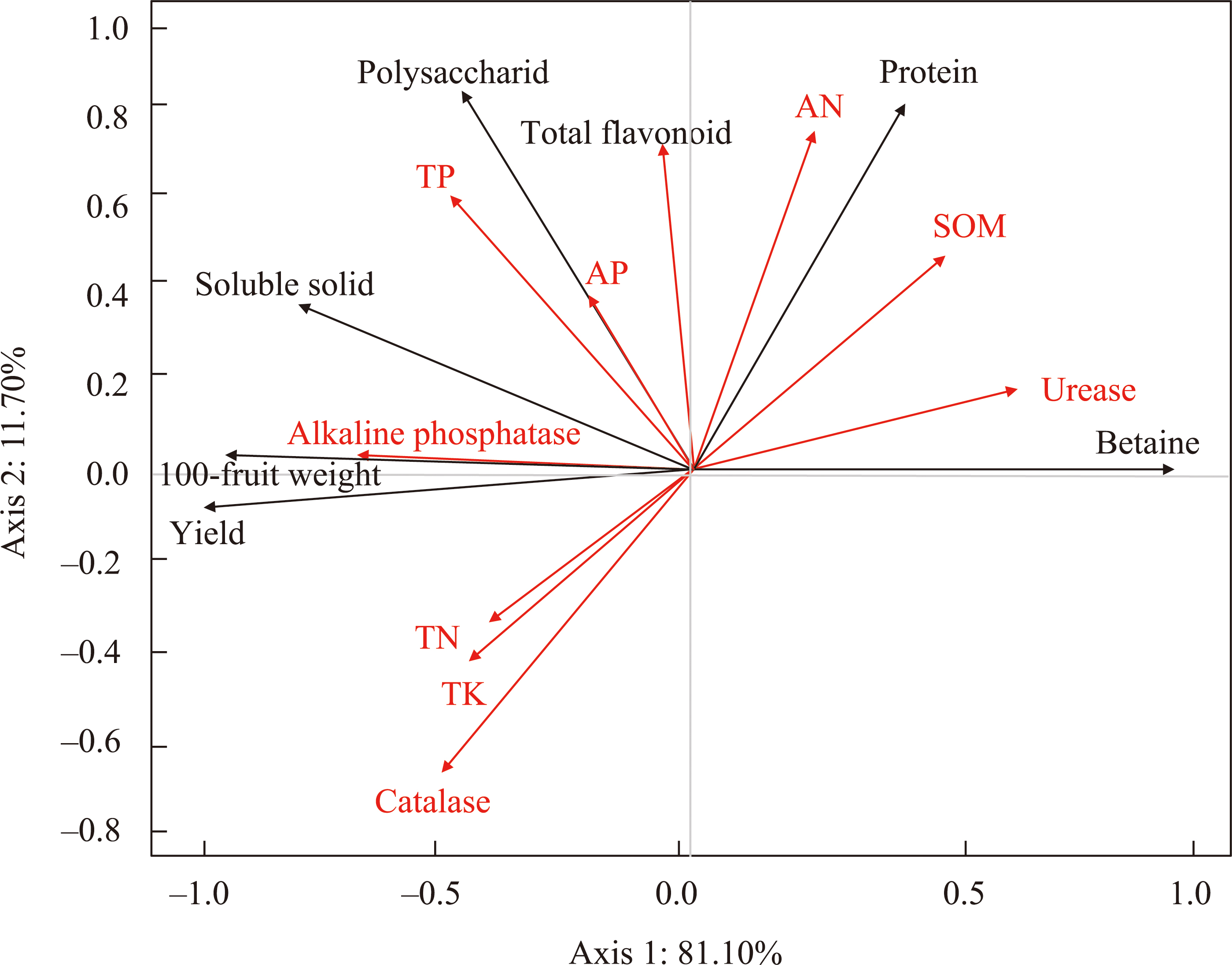
Fig. 7Redundancy analysis (RDA) of soil physicochemical properties to L. barbarum fruit traits. The red lines on the figure represent the soil physicochemical characteristics, and the black lines represent the plant fruit traits. The vector length reflects the strength of the association of each variable with the first two RDA axes. The angle between a soil-factor vector (red) and a fruit-trait vector (black) indicates their relationship: an acute angle indicates a positive association, an obtuse angle indicates a negative association, and an angle close to 90° indicates a weak association.
Fig. 8Heatmap of correlations among soil physicochemical properties, enzyme activities, and L. barbarum fruit traits. Pearson correlation coefficients (r) are shown in the upper triangle, whereas circle color and size in the lower triangle indicate the direction and magnitude of the corresponding correlations. The diagonal, corresponding to self-correlations (r=1.00), is not displayed. Red indicates positive correlations and blue indicates negative correlations, with greater color intensity and larger circles indicating stronger correlations. *, significant at P<0.05 level, , significant at P<0.01 level.
[1]
Adetunji A T, Ncube B, Meyer A H, et al. 2021. Soil pH, nitrogen, phosphatase and urease activities in response to cover crop species, termination stage and termination method. Heliyon, 7(1): e05980, doi: 10.1016/j.heliyon.2021.e05980.
[2]
Bali S, Mohapatra S, Michael R, et al. 2025. Plastidial metabolites and retrograde signaling: A case study of MEP pathway intermediate MEcPP that orchestrates plant growth and stress responses. Plant Physiology and Biochemistry, 222: 109747, doi: 10.1016/j.plaphy.2025.109747.
[3]
Bektas Y, Eulgem T. 2020. The role of S-adenosylmethionine in plant response to abiotic stress. Plant Physiology and Biochemistry, 148: 234-244.
[4]
Bi B Y, Li G C, Goll D S, et al. 2024. Enhanced rock weathering increased soil phosphorus availability and altered root phosphorus-acquisition strategies. Global Change Biology, 30(5): e17310, doi: 10.1111/gcb.17310.
[5]
Chen L, Brookes P C, Xu J M, et al. 2016. Structural and functional differentiation of the root-associated bacterial microbiomes of perennial ryegrass. Soil Biology and Biochemistry, 98: 1-10.
[6]
Chiriac O P, Pittarello M, Moretti B, et al. 2025. Factors influencing nitrogen derived from soil organic matter mineralisation: Results from a long-term experiment. Agriculture, Ecosystems & Environment, 381: 109444, doi: 10.1016/j.agee.2024.109444.
[7]
Chung R S, Chen C C, Ng L T. 2010. Nitrogen fertilization affects the growth performance, betaine and polysaccharide concentrations of Lycium barbarum. Industrial Crops and Products, 32(3): 650-655.
[8]
Collins S L, Sinsabaugh R L, Crenshaw C, et al. 2008. Pulse dynamics and microbial processes in aridland ecosystems. Journal of Ecology, 96(3): 413-420.
[9]
Coruzzi G M, Zhou L. 2001. Carbon and nitrogen sensing and signaling in plants: emerging 'matrix effects'. Current Opinion in Plant Biology, 4(3): 247-253.
[10]
Dalmeijer G W, Olthof M R, Verhoef P, et al. 2008. Prospective study on dietary intakes of folate, betaine, and choline and cardiovascular disease risk in women. European Journal of Clinical Nutrition, 62(3): 386-394.
[11]
Dick R P, Burns R G. 2011. A brief history of soil enzymology research. In: Dick RP. Methods of SoilEnzymology. Madison: Soil Science Society of America, 9: 1-34.
[12]
Dong J Z, Lu D Y, Wang Y. 2009. Analysis of flavonoids from leaves of cultivated Lycium barbarum L. Plant Foods for Human Nutrition, 64(3): 199-204.
[13]
Faithfull N T. 2002. Methods in Agricultural Chemical Analysis:A Practical Handbook. Wallingford: CAB International, 75.
[14]
Figueroa C M, Lunn J E. 2016. A tale of two sugars: trehalose 6-phosphate and sucrose. Plant Physiology, 172(1): 7-27.
[15]
Gao Y J, Wei Y F, Wang Y Q, et al. 2017. Lycium barbarum: A traditional Chinese herb and a promising anti-aging agent. Aging and Disease, 8(6): 778-791.
[16]
Hao T X, Zhu Q C, Zeng M F, et al. 2020. Impacts of nitrogen fertilizer type and application rate on soil acidification rate under a wheat-maize double cropping system. Journal of Environmental Management, 270: 110888, doi: 10.1016/j.jenvman.2020.110888.
[17]
Inselsbacher E, Umana N H N, Stange F C, et al. 2010. Short-term competition between crop plants and soil microbes for inorganic N fertilizer. Soil Biology and Biochemistry, 42(2): 360-372.
[18]
Isayenkov S V, Maathuis F J M. 2019. Plant salinity stress: many unanswered questions remain. Frontiers in Plant Science, 10: 80, doi: 10.3389/fpls.2019.00080.
[19]
Jagadamma S, Lal R, Hoeft R G, et al. 2007. Nitrogen fertilization and cropping systems effects on soil organic carbon and total nitrogen pools under chisel-plow tillage in Illinois. Soil and Tillage Research, 95(1-2): 348-356.
[20]
Jia R, Zhou J, Yang L, et al. 2024. Trade-off between soil enzyme activities and hotspots area depends on long-term fertilization: In situ field zymography. Science of The Total Environment, 954: 176386, doi: 10.1016/j.scitotenv.2024.176386.
[21]
Lawson-Yuen A, Levy H L. 2006. The use of betaine in the treatment of elevated homocysteine. Molecular Genetics and Metabolism, 88(3): 201-207.
[22]
Liu G M, Zhang X C, Wang X P, et al. 2017. Soil enzymes as indicators of saline soil fertility under various soil amendments. Agriculture, Ecosystems & Environment, 237: 274-279.
[23]
Liu L Z, Zhong G R, Xiong L, et al. 2009. Research and application progress of catalase. Chemistry & Bioengineering, 26(5): 15-18. (in Chinese)
[24]
Lu J J, Sheng H Y, Hua M X, et al. 2023. Effects of different nitrogen application rates combined with nitrification inhibitor on wolfberry yield, nitrogen uptake and utilization in Qaidam. Acta Agriculturae Boreali-Occidentalis Sinica, 32(7): 1058-1067. (in Chinese)
[25]
Luo Y, Zhu Z K, Liu S L, et al. 2019. Nitrogen fertilization increases rice rhizodeposition and its stabilization in soil aggregates and the humus fraction. Plant and Soil, 445(1-2): 125-135.
[26]
Ma F, Yang R Q, Guo L P. 2020. Decrease the emission of active nitrogen gases in nitrogen fertilizer application: Research progresses and perspectives of urease/nitrification inhibitors. Journal of Agro-Environment Science, 39(4): 908-922. (in Chinese)
[27]
Maeda H, Dudareva N. 2012. The shikimate pathway and aromatic amino acid biosynthesis in plants. Annual Review of Plant Biology, 63: 73-105.
[28]
Margalef O, Sardans J, Fernández-Martínez M, et al. 2017. Global patterns of phosphatase activity in natural soils. Scientific Reports, 7(1): 1337, doi: 10.1038/s41598-017-01418-8.
[29]
Margenot A J, Nakayama Y, Parikh S J. 2018. Methodological recommendations for optimizing assays of enzyme activities in soil samples. Soil Biology and Biochemistry, 125: 350-360.
[30]
Moreau D, Bardgett R D, Finlay R D, et al. 2019. A plant perspective on nitrogen cycling in the rhizosphere. Functional Ecology, 33(4): 540-552.
[31]
Nelson D W, Sommers L E. 1982. Total carbon, organic carbon, and organic matter. In: Page AL, Miller RH, Keeney DR. Methods of Soil Analysis. Part 2: Chemical and Microbiological Properties (2nd ed.). Madison: American Society of Agronomy, 539-579.
[32]
Oğuz İ, Oğuz H İ, Kafkas N E. 2021. Evaluation of fruit characteristics of various organically-grown goji berry (Lycium barbarum L., Lycium chinense Miller) species during ripening stages. Journal of Food Composition and Analysis, 101: 103846, doi: 10.1016/j.jfca.2021.103846.
[34]
Olsen S R, Cole C V, Watanabe F S, et al. 1954. Estimation of Available Phosphorus in Soils by Extraction with Sodium Bicarbonate. Washington D.C.: United States Department of Agriculture.
[34]
Rathinasabapathi B, McCue K F, Gage D A, et al. 1994. Metabolic engineering of glycine betaine synthesis: plant betaine aldehyde dehydrogenases lacking typical transit peptides are targeted to tobacco chloroplasts where they confer betaine aldehyde resistance. Planta, 193(2): 155-162.
[35]
Shi Z G, Wei F, Wan R, et al. 2019. Impact of nitrogen fertilizer levels on metabolite profiling of the Lycium barbarum L. fruit. Molecules, 24(21): 3879, doi: 10.3390/molecules24213879.
[36]
Sinsabaugh R L, Belnap J, Rudgers J, et al. 2015. Soil microbial responses to nitrogen addition in arid ecosystems. Frontiers in Microbiology, 6: 819, doi: 10.3389/fmicb.2015.00819.
[37]
Smith A M, Zeeman S C. 2020. Starch: a flexible, adaptable carbon store coupled to plant growth. Annual Review of Plant Biology, 71(1): 217-245.
[38]
Song Z Z, Li X H, Li J, et al. 2014. Long-term effects of mineral versus organic fertilizers on soil labile nitrogen fractions and soil enzyme activities in agricultural soil. Journal of Plant Nutrition and Fertilizers, 20(3): 525-533. (in Chinese)
[39]
Tian H Q, Lu C Q, Ciais P, et al. 2016. The terrestrial biosphere as a net source of greenhouse gases to the atmosphere. Nature, 531: 225-228.
[40]
Wang J Y, Shi F X, Yang L, et al. 2024a. Saline-alkaline conditions altered Bolboschoenus planiculmis carbon and nitrogen allocation tradeoffs. Environmental and Experimental Botany, 228: 106032, doi: 10.1016/j.envexpbot.2024.106032.
[41]
Wang N, Ai Z P, Zhang Q Y, et al. 2024b. Impacts of nitrogen (N), phosphorus (P), and potassium (K) fertilizers on maize yields, nutrient use efficiency, and soil nutrient balance: Insights from a long-term diverse NPK omission experiment in the North China Plain. Field Crops Research, 318: 109616, doi: 10.1016/j.fcr.2024.109616.
[42]
Xie W G, Shen X, Yan L X, et al. 2025. The effects of nitrogen reduction and sheep manure incorporation on the soil characteristics and microbial community of Korla fragrant pear orchards. Agronomy, 15(3): 545, doi: 10.3390/agronomy15030545.
[43]
Xie Z Y, Luo Y, Zhang C J, et al. 2023. Integrated metabolome and transcriptome during fruit development reveal metabolic differences and molecular basis between Lycium barbarum and Lycium ruthenicum. Metabolites, 13(6): 680, doi: 10.3390/metabo13060680.
[44]
Xin J, Liu Y, Chen F, et al. 2019. The missing nitrogen pieces: A critical review on the distribution, transformation, and budget of nitrogen in the vadose zone-groundwater system. Water Research, 165: 114977, doi: 10.1016/j.watres.2019.114977.
[45]
Xiong W, Guo S, Jousset A, et al. 2017. Bio-fertilizer application induces soil suppressiveness against Fusarium wilt disease by reshaping the soil microbiome. Soil Biology and Biochemistry, 114: 238-247.
[46]
Xu G H, Fan X R, Miller A J. 2012. Plant nitrogen assimilation and use efficiency. Annual Review of Plant Biology, 63: 153-182.
[47]
Yadav B, Jogawat A, Rahman M S, et al. 2021. Secondary metabolites in the drought stress tolerance of crop plants: A review. Gene Reports, 23: 101040, doi: 10.1016/j.genrep.2021.101040.
[48]
Yahdjian L, Sala O E, Austin A T. 2006. Differential controls of water input on litter decomposition and nitrogen dynamics in the Patagonian steppe. Ecosystems, 9(1): 128-141.
[49]
Yan W M, Zhong Y Q W, Liu W Z, et al. 2021. Asymmetric response of ecosystem carbon components and soil water consumption to nitrogen fertilization in farmland. Agriculture, Ecosystems & Environment, 305: 107166, doi: 10.1016/j.agee.2020.107166.
[50]
Yang Y J, Huang C S, Ge Z G, et al. 2022. Exogenous glycine betaine reduces drought damage by mediating osmotic adjustment and enhancing antioxidant defense in Phoebe hunanensis. Phyton, 91(1): 129-148.
[51]
Yao R Y, Heinrich M, Zhao X N, et al. 2021. What's the choice for goji: Lycium barbarum L. or L. chinense Mill.? Journal of Ethnopharmacology, 276: 114185, doi: 10.1016/j.jep.2021.114185.
[52]
Yoon H K, Kleiber T, Zydlik Z, et al. 2020. A comparison of selected biochemical and physical characteristics and yielding of fruits in apple cultivars (Malus domestica Borkh.). Agronomy, 10(4): 458, doi: 10.3390/agronomy10040458.
[53]
Yousaf M, Li X K, Zhang Z, et al. 2016. Nitrogen fertilizer management for enhancing crop productivity and nitrogen use efficiency in a rice-oilseed rape rotation system in China. Frontiers in Plant Science, 7: 1496, doi: 10.3389/fpls.2016.01496.
[54]
Zhang Y L, Ma Y L, Gao Y L, et al. 2024. Evaluation of water and nitrogen regulation effects of wolfberry quality based on fuzzy Borda combination model. Agricultural Research in the Arid Areas, 42(5): 179-188, 197. (in Chinese)
[55]
Zheng Z L. 2009. Carbon and nitrogen nutrient balance signaling in plants. Plant Signaling & Behavior, 4(7): 584-591.
[56]
Zhu T B, Zhu Ge Y P, Liu S J, et al. 2008. Effects of different fertilizer treatments and water regimes on soil enzyme activities. Shandong Agricultural Sciences, (3): 74-78. (in Chinese)
[57]
Zhu X J, Ros G H, Xu M G, et al. 2024. The contribution of natural and anthropogenic causes to soil acidification rates under different fertilization practices and site conditions in southern China. Science of The Total Environment, 934: 172986, doi: 10.1016/j.scitotenv.2024.172986.