Identifying the spatial pattern of booming sands based on high-resolution remote sensing imagery
SHI Jinxin1,2, QU Jianjun1,2,*(), ZHANG Jie1,2, WANG Jingqi1,2, WANG Yanxi1,2
1College of Urban and Environmental Sciences, Northwest University, Xi'an 710127, China 2Southern Marine Science and Engineering Guangdong Laboratory (Guangzhou), Guangzhou 511458, China
Booming sands occur in more than a dozen countries worldwide. However, many sites have lost their acoustic properties as a result of human disturbance. As one of the earliest recorded booming sand sites, the Mingsha Mountain in Dunhuang, China remains important for both acoustic-landscape conservation and cultural heritage preservation. This study proposes a novel approach for identifying the spatial distribution of booming sands by integrating high-resolution topographic parameters derived from Gaofen-7 (GF-7) satellite imagery with laboratory-measured properties (physical, mineralogical, and acoustic characteristics) of field-collected sand samples and certain threshold parameters obtained from in-situ field observations. Key identification thresholds include the slope≥30.00°, dune height≥30.00 m, and slope length≥60.00 m. The collected sand samples exhibit excellent sorting and high flowability, consistent with the physical characteristics typically associated with booming sands. Light minerals dominate the sand samples (93.56%), with quartz being the most abundant mineral. Applying the remote sensing-based framework to the Mingsha Mountain identifies approximately 22.46 km2 of potential booming sand areas, primarily concentrated in the central-northern region, where sand dunes are characterized by large heights, stable morphology, steep slopes, and relatively uniform aspect distributions. Acoustic analysis reveals that dominant frequencies are concentrated within a narrow range of 842-1020 Hz, supporting the robustness of the proposed identification framework. Based on these findings and the natural recovery capacity of booming sands in the Mingsha Mountain, this study proposes a management strategy involving rotational sand-sliding and sand-sliding rest to conserve booming-sand resources and support sustainable tourism in Dunhuang.
Received: 05 January 2026
Published: 31 October 2026
SHI Jinxin, QU Jianjun, ZHANG Jie, WANG Jingqi, WANG Yanxi. Identifying the spatial pattern of booming sands based on high-resolution remote sensing imagery. Journal of Arid Land, 2026, 18(10): 1755-1773.
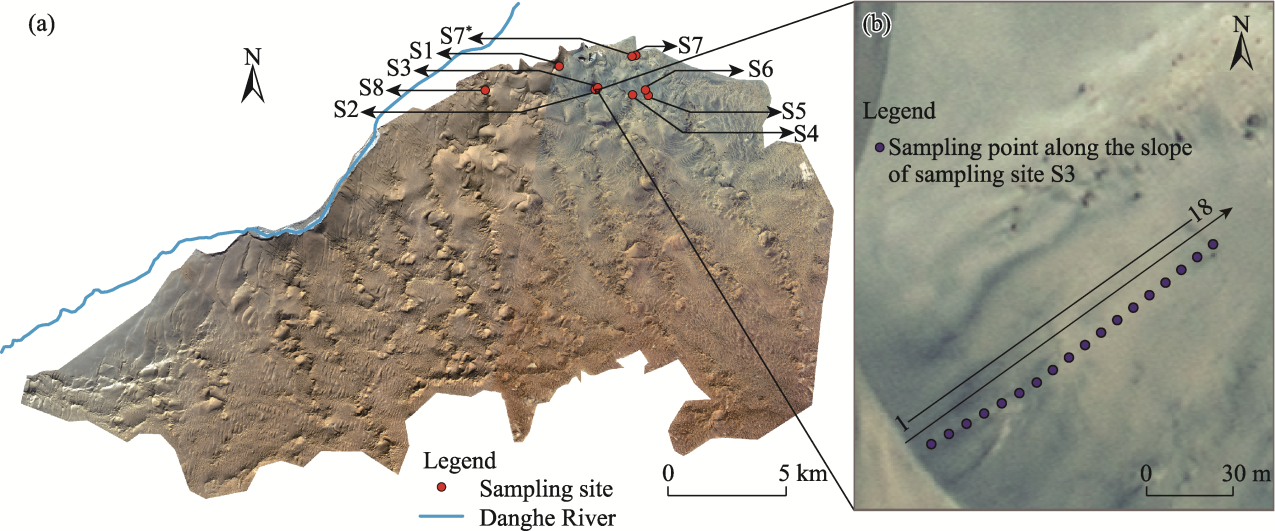
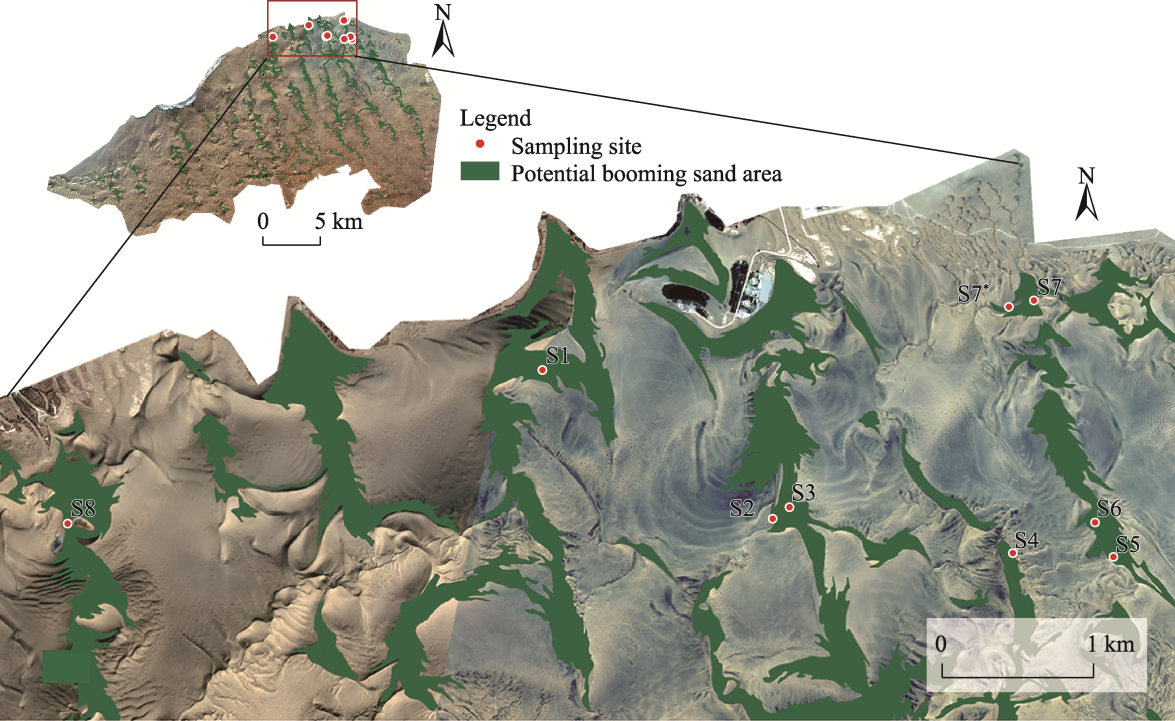
Fig. 1Landform overview of the Mingsha Mountain showing the spatial distribution of (a) nine sampling sites and (b) 18 sampling points linearly from the crest to the toe along the slope of sampling site S3. The basemap was generated from three scenes of Gaofen-7 (GF-7) satellite imagery, with two acquired on 9 February 2023 and one on 12 June 2023.
Sorting coefficient
Sorting class
Sorting coefficient
Sorting class
<0.35
Very well sorted
1.00-2.00
Poorly sorted
0.35-0.50
Well sorted
2.00-4.00
Very poorly sorted
0.50-1.00
Moderately sorted
>4.00
Extremely poorly sorted
Table 1 Classification criteria for grain-size sorting
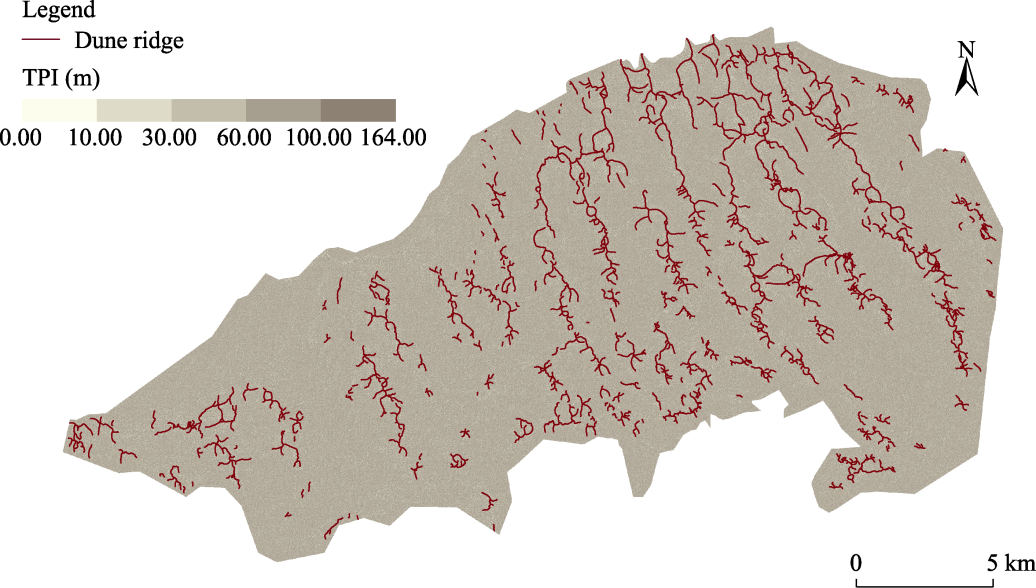
Fig. 2Topographic Position Index (TPI) and extracted major dune ridges in the Mingsha Mountain
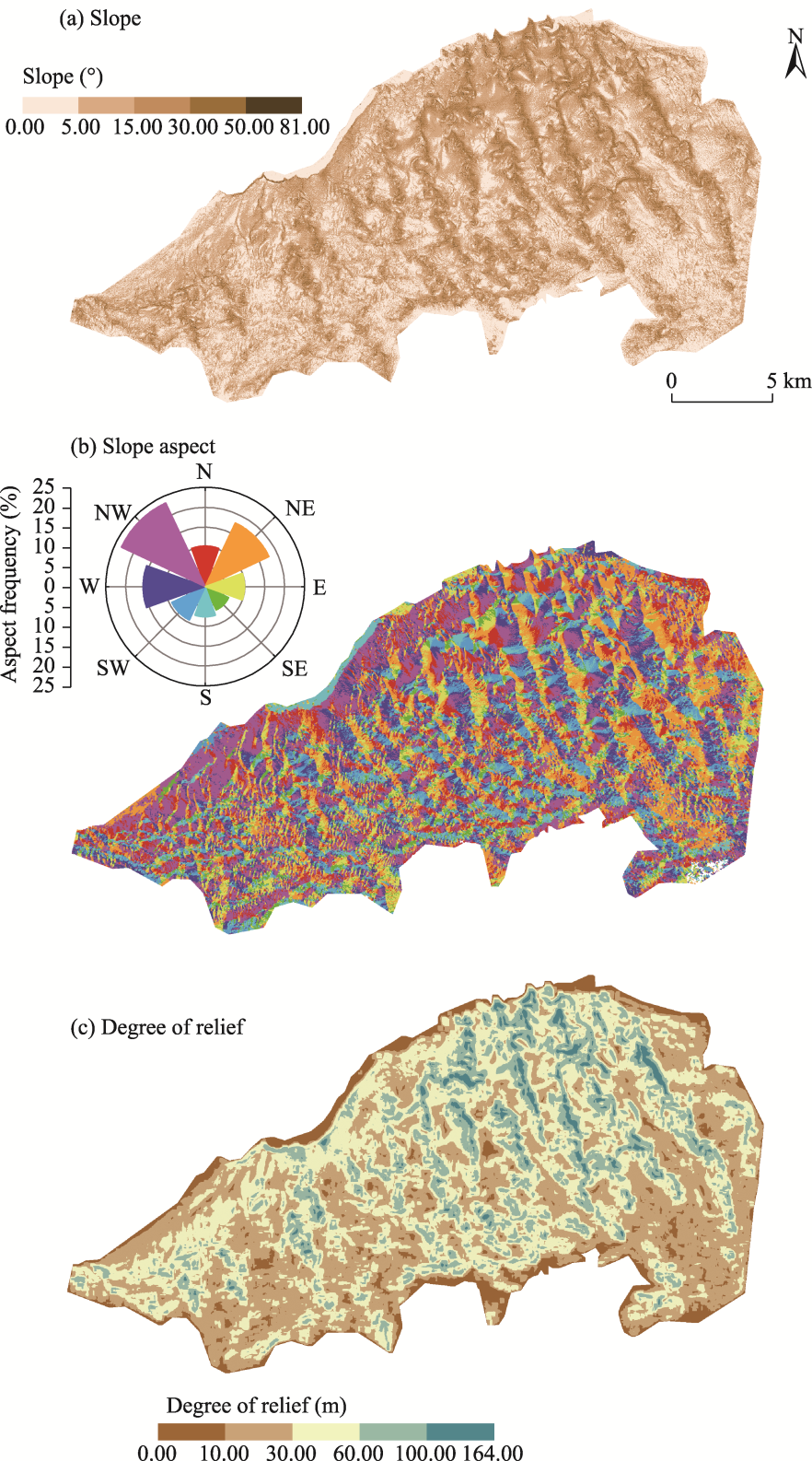
Fig. 3Topographic characteristics of the Mingsha Mountain. (a), slope characteristics; (b), slope aspect features; (c), degree of relief. N, north; NE, northeast; E, east; SE, southeast; S, south; SW, southwest; W, west; NW, northwest.
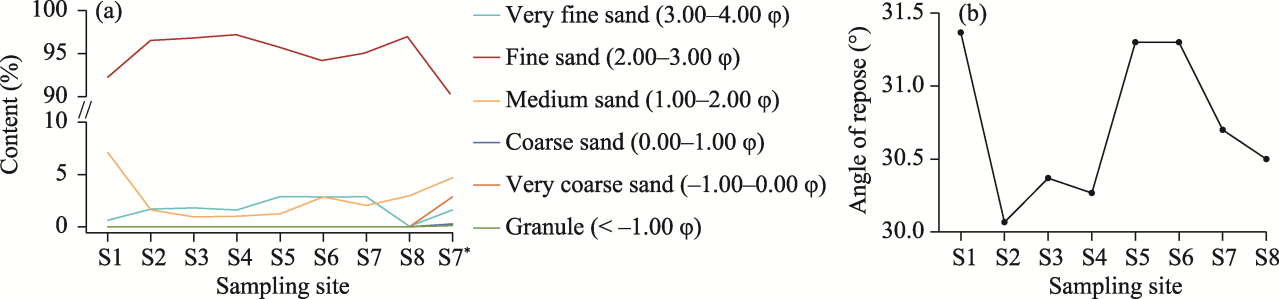
Fig. 4Grain size content (a) and angle of repose (b) of sand samples from different sampling sites. Silt content does not exceed 0.50% in any sample and was therefore considered negligible, so it is not included in the figure.
Sampling site
S1
S2
S3
S4
S5
S6
S7
S7*
S8
Sorting coefficient
0.37
0.32
0.32
0.32
0.32
0.33
0.32
0.43
0.32
Table 2 Sorting coefficients of sand samples from nine sampling sites
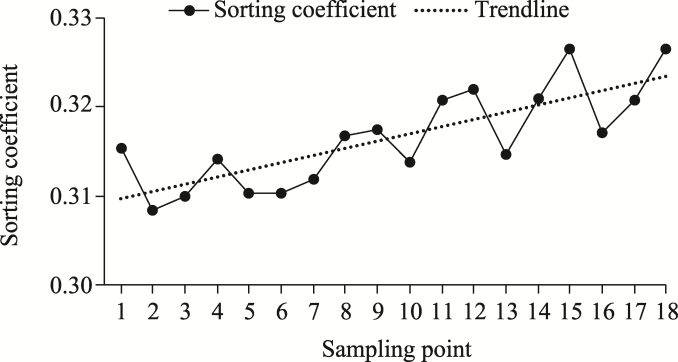
Fig. 5Sorting coefficients of sampling points (1-18) from the crest to the toe along the slope of site S3
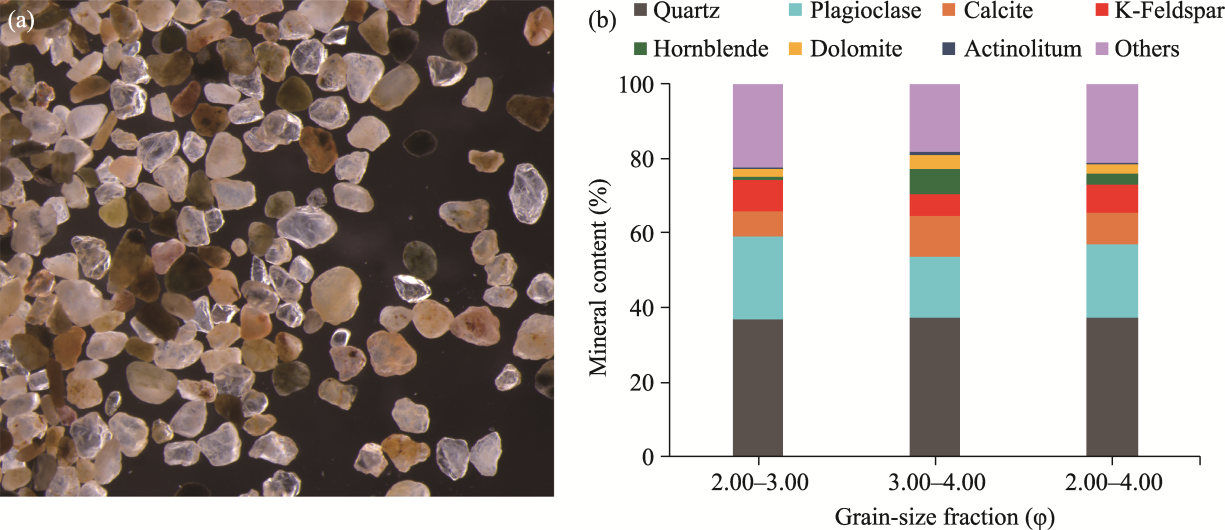
Fig. 6Mineral microphotographs (a) and mineral composition (b) of sand samples
Grain-size fraction (ϕ)
Sample weight (g)
Light minerals
Heavy minerals
Weight (g)
Content (%)
Weight (g)
Content (%)
2.00-3.00
3.33
3.24
97.20
0.09
2.80
3.00-4.00
1.80
1.56
86.82
0.24
13.18
Table 3 Weights and contents of light and heavy minerals in sand samples
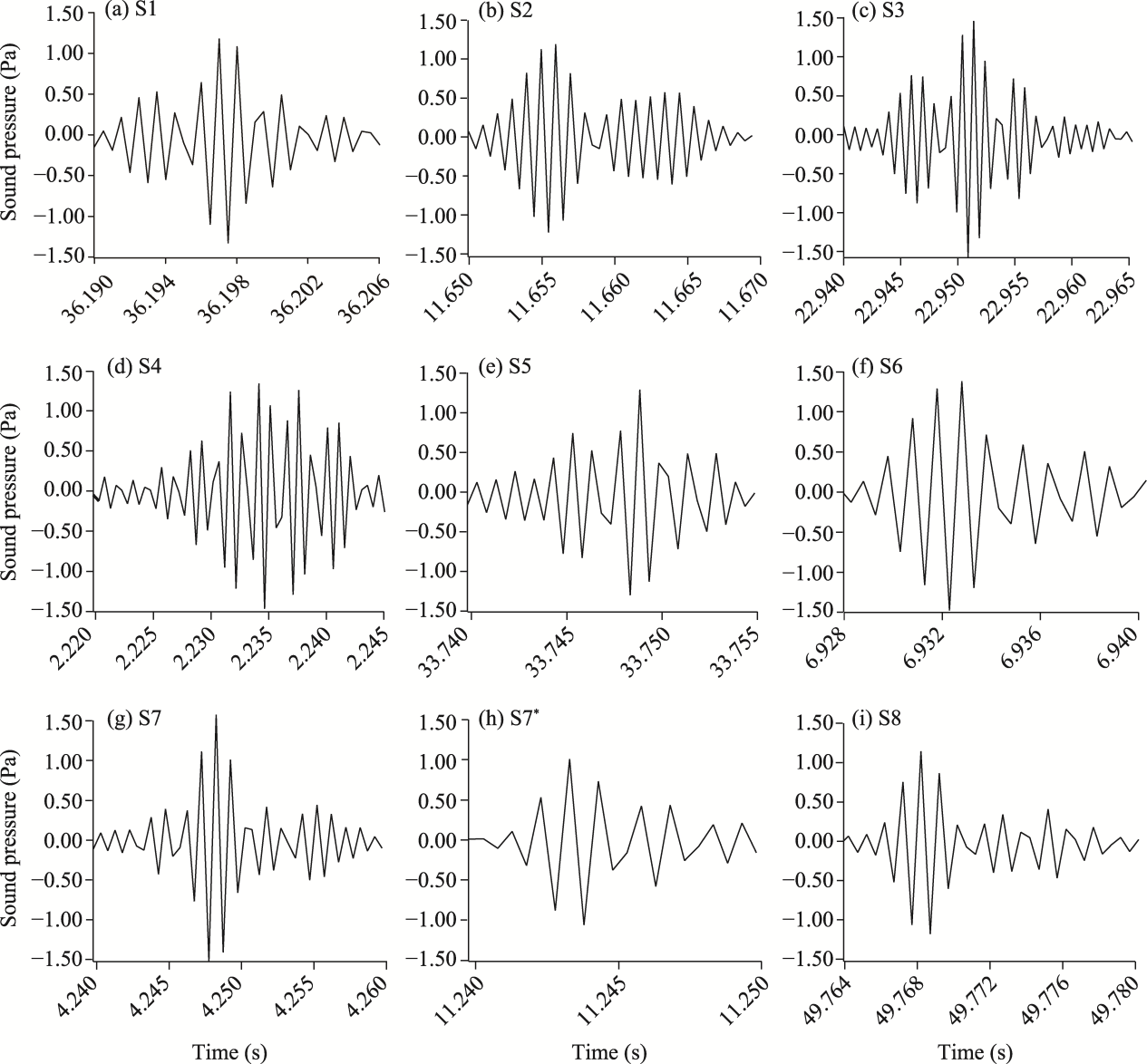
Fig. 7Time-domain waveforms of impact-induced sound-pressure responses from sand samples of nine sampling sites. (a), S1; (b), S2; (c), S3; (d), S4; (e), S5; (f), S6; (g), S7; (h), S7*; (i), S8. It should be noted that sand sample of site S7* was sieved (<0.50 mm fraction) before acoustic testing.
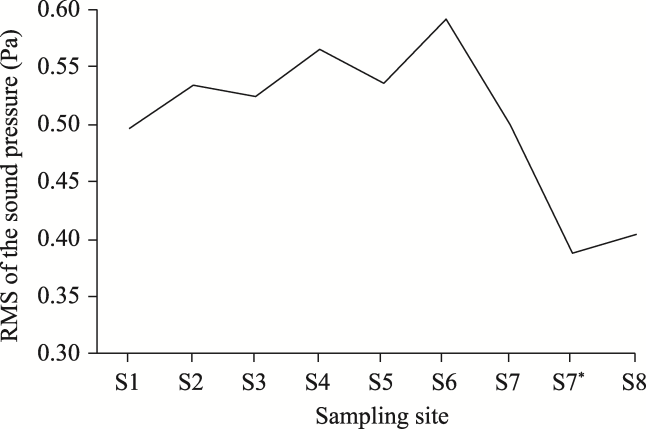
Fig. 8Root mean square (RMS) values of impact-induced sound-pressure responses from sand samples of nine sampling sites
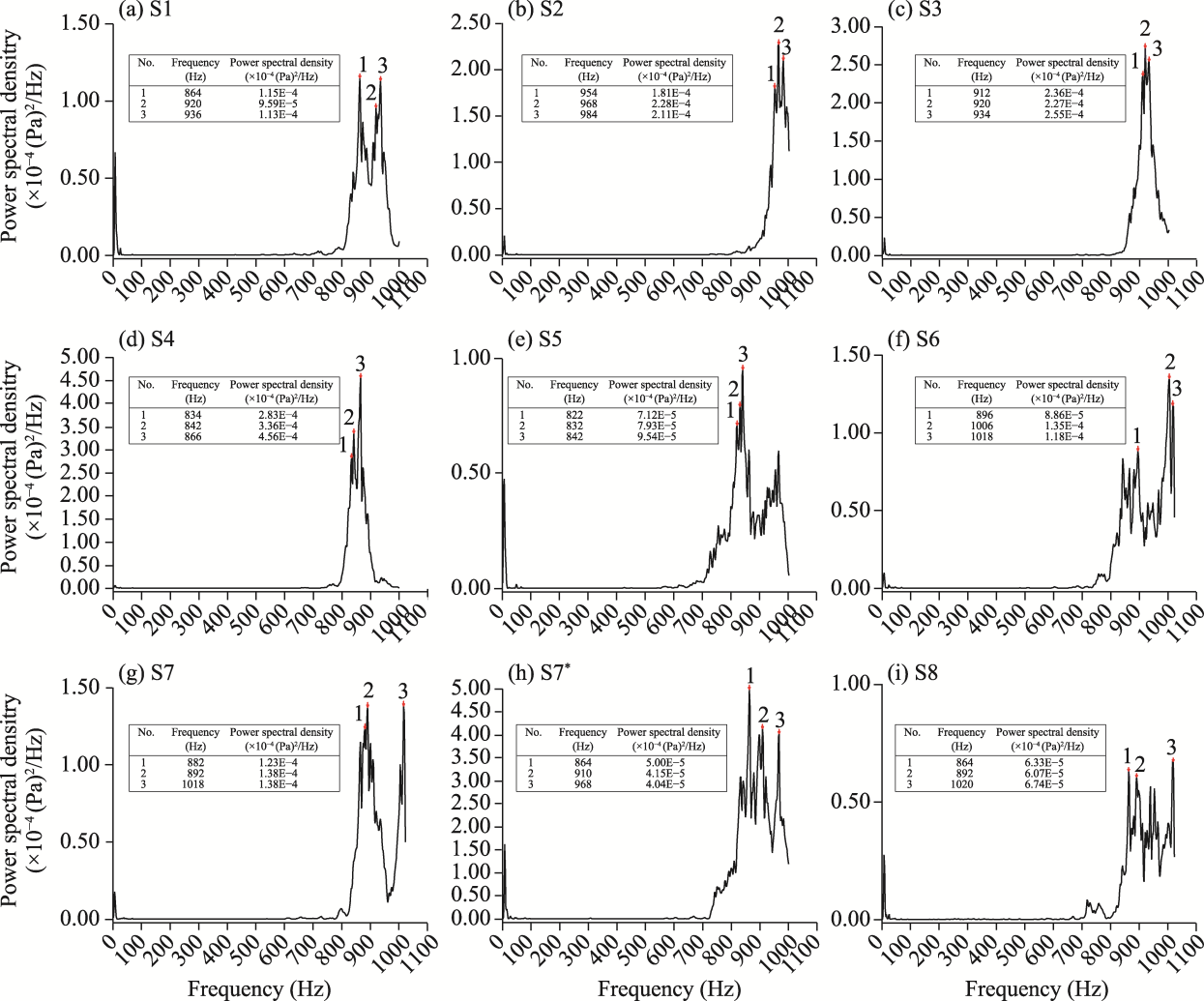
Fig. 9Frequency-domain waveforms of impact-induced sound-pressure responses from sand samples of nine sampling sites. (a), S1; (b), S2; (c), S3; (d), S4; (e), S5; (f), S6; (g), S7; (h), S7*; (i), S8.
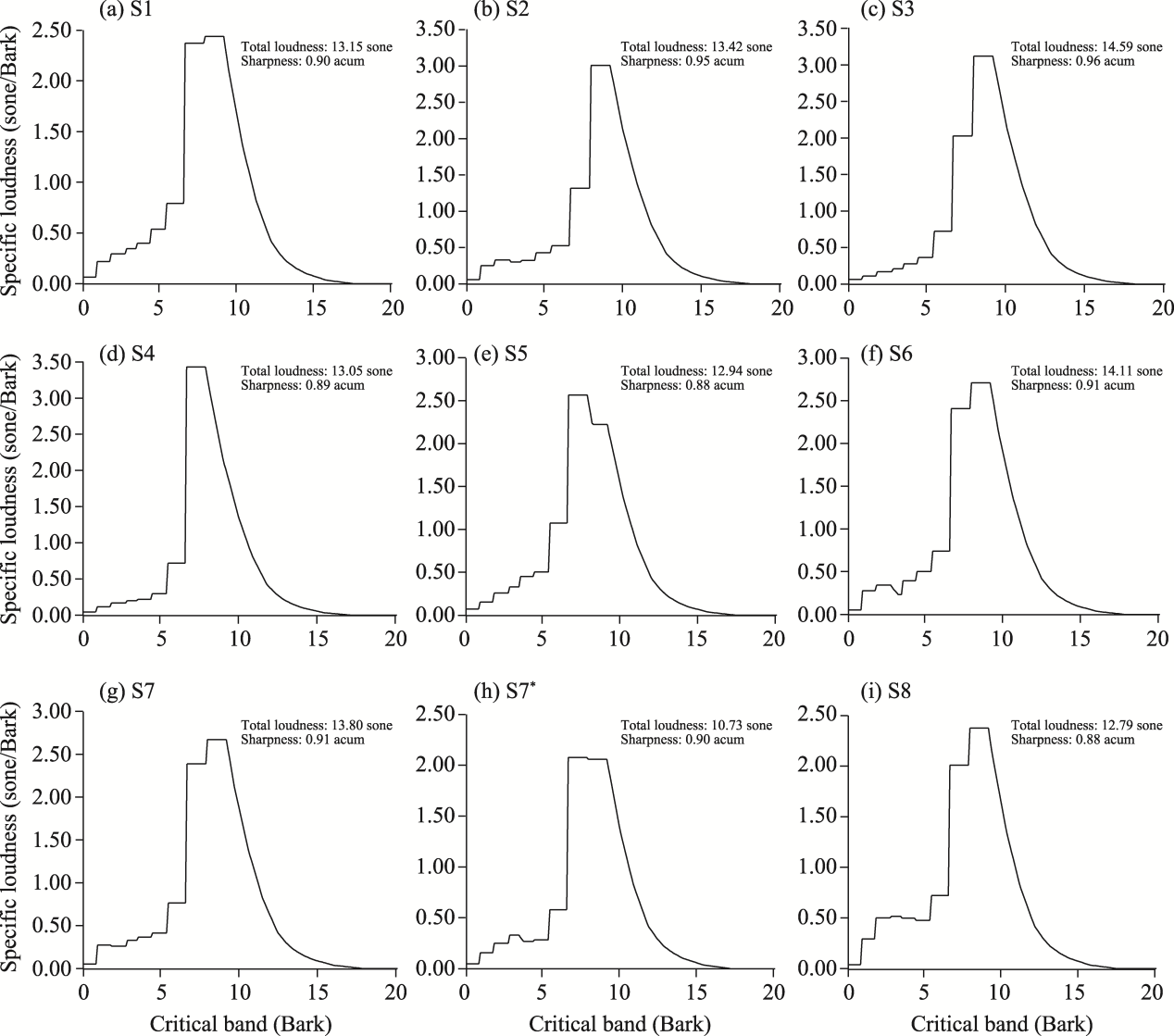
Fig. 10Sound quality analysis of impact-induced sound-pressure responses from sand samples of nine sampling sites. (a), S1; (b), S2; (c), S3; (d), S4; (e), S5; (f), S6; (g), S7; (h), S7*; (i), S8.
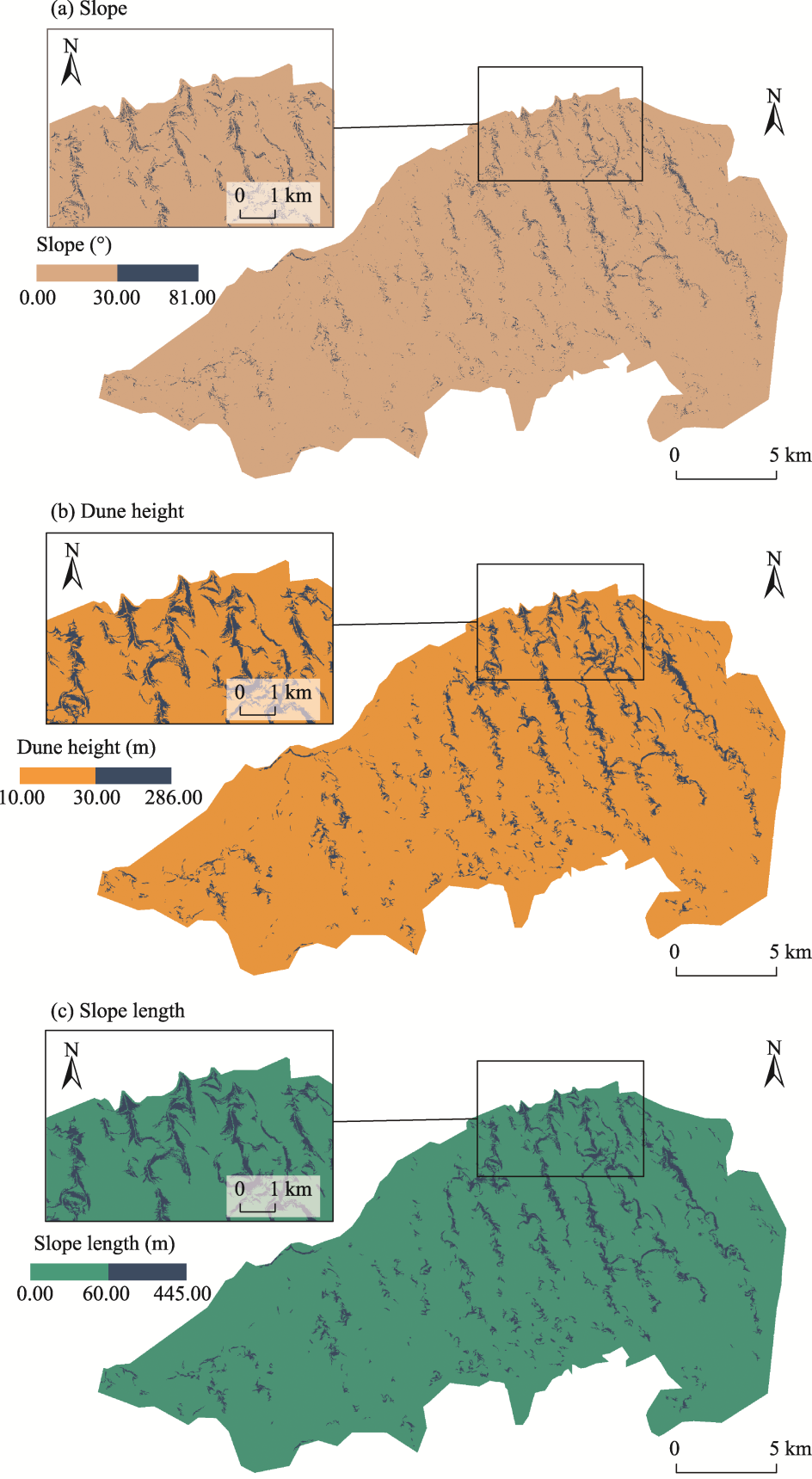
Fig. 11Spatial distribution of areas meeting the individual topographic thresholds (slope≥30.00°, dune height≥30.00 m, and slope length≥60.00 m). (a), slope; (b), dune height; (c), slope length.
Fig. 12Locations of sampling sites relative to the delineated potential booming sand areas in the Mingsha Mountain. The basemap was generated from three scenes of GF-7 satellite imagery, with two acquired on 9 February 2023 and one on 12 June 2023.
[1]
Al-Hashemi H M B, Al-Amoudi O S B. 2018. A review on the angle of repose of granular materials. Powder Technology, 330: 397-417.
doi: 10.1016/j.powtec.2018.02.003
[2]
An Z S, Zhang K C, Wang X L, et al. 2013. Dynamic monitoring of sand hill and wind-blown sand environment in the scenic spots of Crescent Moon Spring in Dunhuang, China. Journal of Arid Land Resources and Environment, 27(3): 115-120. (in Chinese)
[3]
An Z S, Zhang K C, Niu Q H, et al. 2016. Short-term dynamic change of mega-dunes around the Crescent Spring in Dunhuang. Arid Zone Research, 33(5): 981-987. (in Chinese)
[4]
Andreotti B. 2004. The song of dunes as a wave-particle mode locking. Physical Review Letters, 93(23): 238001, doi: 10.1103/PhysRevLett.93.238001.
Bagnold R A. 1954. Experiments on a gravity-free dispersion of large solid spheres in a Newtonian fluid under shear. Proceedings of the Royal Society of London. Series A, Mathematical and Physical Sciences, 225(1160): 49-63.
[7]
Ball P. 2007. The dune chorus. Nature, 449: 10-11.
[8]
Carus-Wilson C. 1891. The production of musical notes from non-musical sands. Nature, 44: 322-323.
doi: 10.1038/044322a0
[9]
Carus-Wilson C. 1932. Musical sands. Nature, 129(3265): 798, doi: 10.1038/129798c0.
[10]
Chen M C, Zhang J, Zhang H L, et al. 2019. Overview on geographical distribution and sounding mechanisms of singing sand soundscape. Journal of Desert Research, 39(5): 120-126. (in Chinese)
doi: 10.7522/j.issn.1000-694X.2018.00124
[11]
Cong Z. 2016. Dunhuang's recreational culture in seasonal festivals-focusing on Shangsi, Dragon Boat, and Qixi festivals. Journal of Dunhuang Studies, 1(1): 73-81. (in Chinese)
[12]
Dagois-Bohy S, Ngo S, Courrech du Pont S, et al. 2010. Laboratory singing sand avalanches. Ultrasonics, 50(2): 127-132.
doi: 10.1016/j.ultras.2009.09.027
pmid: 19880153
[13]
Fan Z J, Qu J J, Zhou H. 2015. The relationship between sand particle internal friction angle and particle size, water content and slope angle. Journal of Desert Research, 35(2): 301-305. (in Chinese)
doi: 10.7522/j.issn.1000-694X.2014.00028
[14]
Folk R L, Ward W C. 1957. Brazos River bar: a study in the significance of grain size parameters. Journal of Sedimentary Research, 27(1): 3-26.
doi: 10.1306/74D70646-2B21-11D7-8648000102C1865D
[15]
Goldsack D E, Leach M F, Kilkenny C. 1997. Natural and artificial 'singing' sands. Nature, 386: 29, doi: 10.1038/386029a0.
[16]
Han F, Tian M Z, Liu S W, et al. 2016. A comparative study of the desert singing sands in northern China. Acta Geoscientica Sinica, 37(2): 247-255. (in Chinese)
[17]
Humphries D W. 1966. The booming sand of Korizo, Sahara, and the squeaking sand of Gower, S. Wales: a comparison of the fundamental characteristics of two musical sands. Sedimentology, 6(2): 135-152.
doi: 10.1111/sed.1966.6.issue-2
[18]
Hunt M L, Vriend N M. 2010. Booming sand dunes. Annual Review of Earth and Planetary Sciences, 38(1): 281-301.
doi: 10.1146/earth.2010.38.issue-1
[19]
Jin B F, Yu J, Wu B, et al. 2025. Mineral characteristics and provenance indicators of medium to coarse silt from the northern and southern regions of the Kumtagh Desert. Journal of Desert Research, 45(2): 236-251. (in Chinese)
doi: 10.7522/j.issn.1000-694X.2025.00008
[20]
Leach M F, Kilkenny C. 1997. Musical sand characterization. Canadian Acoustics, 25(3): 36.
[21]
Lewis A D. 1936. Roaring sands of the Kalahari Desert. South African Geographical Journal, 19(1): 33-49.
doi: 10.1080/03736245.1936.10559175
[22]
Lin G M, Zhao X H. 2015. The mode locking of the booming sand dunes. Acta Scientiarum Naturalium Universitatis Pekinensis, 51(4): 601-605. (in Chinese)
doi: 10.13209/j.0479-8023.2015.055
[23]
Lindsay J F, Criswell D R, Criswell T L, et al. 1976. Sound-producing dune and beach sands. Geological Society of America Bulletin, 87(3): 463-473.
doi: 10.1130/0016-7606(1976)87<463:SDABS>2.0.CO;2
[24]
Liu B L, Zhang K C, Qu J J, et al. 2023. Progress on research and mitigation of wind-blown sand risk in Dunhuang Singing Sand Mountain and Crescent Spring Scenic area, China. Research in Cold and Arid Regions, 15(3): 113-121.
doi: 10.1016/j.rcar.2023.09.002
[25]
Liu H Y, Wang N A, Ye Y H, et al. 2013. Analysis of spatial and temporal characteristics of Chinese desert tourism scenic, with examples of Mingshashan, Shapotou and Badanjilin. Economic Geography, 33(3): 156-163. (in Chinese)
[26]
Liu J B, Wang N A, Cheng H Y, et al. 2010. Influencing factors of repose angle of sand dunes: an experiment. Journal of Desert Research, 30(4): 758-762. (in Chinese)
[27]
Liu S W. 2010. The distribution, developing features and mechanism originesis of singing sands of the SE Badain Jaran Desert. PhD Dissertation. Beijing: China University of Geosciences. (in Chinese)
[28]
Ma R J. 1994. The phenomena of singing sand in ancient Chinese books. Journal of Desert Research, 14(1): 93-96. (in Chinese)
[29]
Pan J P, Zhang K C, An Z S, et al. 2023. Analysis of comprehensive benefits of wind-blown sand control projects: a case study of Heishanzui, Dunhuang, China. Journal of Desert Research, 43(2): 233-242. (in Chinese)
[30]
Patitsas A J. 2022. Sound mechanics from squeaky and booming dune sands. Acoustical Science and Technology, 43(6): 297-305.
doi: 10.1250/ast.43.297
[31]
Qu J J, Dai F N, Kang G D, et al. 1993. Study and prospect of singing sand. Advances in Earth Science, 8(4): 63-65. (in Chinese)
[32]
Qu J J, Sun B, Zhang W M, et al. 1995. Surface textures of quartz grains from singing sands and their acoustic significance. Chinese Science Bulletin, 40(12): 1111-1113. (in Chinese)
[33]
Qu J J, Sun B, Zhang K C, et al. 2007. Simulation experimental study on surface structure characteristics and resonance mechanisms of singing sands. Scientia Sinica (Terrae), 37(7): 949-956. (in Chinese)
[34]
Qu J J, Zhao Z Z, Wang T, et al. 2022. Discovery and significance of singing sand colonies in the coast of Hainan Island, China. Chinese Science Bulletin, 67(30): 3595-3602. (in Chinese)
[35]
Ridgway K, Rupp R. 1970. Whistling sand of Porth Oer, Caernarvonshire. Nature, 226(5241): 158-159.
doi: 10.1038/226158a0
[36]
Smith P J. 1976. Let booming sands boom. Nature, 259: 368, doi: 10.1038/259368a0.
[37]
Sutton S L F, McKenna Neuman C, Nickling W. 2013. Avalanche grainflow on a simulated aeolian dune. Journal of Geophysical Research: Earth Surface, 118(3): 1767-1776.
doi: 10.1002/jgrf.v118.3
[38]
Vriend N M, Hunt M L, Clayton R W, et al. 2007. Solving the mystery of booming sand dunes. Geophysical Research Letters, 34: L16306, doi: 10.1029/2007GL030276.
[39]
Wang B Y, Song X Q, Du X W. 2021. Behind the echoing of the hoarse sand in Dunhuang's Mingsha Mountain. [2025-10-13]. https://epaper.gmw.cn/gmrb/html/2021-09/02/nw.D110000gmrb_20210902_2-08.htm. (in Chinese)
[40]
Wang J Q, Qu J J, Wang Y X, et al. 2025. Characteristics of singing sands in Mulei, Xinjiang. Arid Zone Research, 42(4): 708-717. (in Chinese)
doi: 10.13866/j.azr.2025.04.12
[41]
Wang W, Xie Z X. 2021. Sports characteristics and contemporary value of Dunhuang recreation at the age of age. Journal of Zaozhuang University, 38(4): 81-85. (in Chinese)
[42]
Wang W, Qu J J, Niu Q H, et al. 2026. The impact of wind corridor dredging project on the regional aeolian dynamics in the Mingsha Mountain Crescent Spring Scenic Area. Journal of Desert Research, 46(3): 231-239. (in Chinese)
doi: 10.7522/j.issn.1000-694X.2026.00052
[43]
Wang X L. 2025. The study of Tang Dynasty women's sports in Dunhuang murals. MSc Thesis. Lanzhou: Northwest Normal University. (in Chinese)
[44]
Wentworth C K. 1922. A scale of grade and class terms for clastic sediments. The Journal of Geology, 30(5): 377-392.
doi: 10.1086/622910
[45]
Wu Y H, Yin J, Wu Z F, et al. 2024. Barchan dune dynamics in the sand belt between the Badain Jaran Desert and Ulan Buh Desert. Journal of Desert Research, 44(2): 78-89. (in Chinese)
doi: 10.7522/j.issn.1000-694X.2023.00124
[46]
Xu L Q. 2017. Grain size features for aeolian sediments from Balikun Mingshashan Desert, Xinjiang, China. Journal of Desert Research, 37(5): 836-842. (in Chinese)
doi: 10.7522/j.issn.1000-694X.2016.00062
[47]
Zhang W J, Guo G. 2021. Ecological protection helps Dunhuang Mingsha Mountain regain its "singing". [2025-10-13]. https://www.eco.gov.cn/news_info/47949.html. (in Chinese)