Effect of vegetation types on moisture migration in eco-protected loess slopes, China
WANG Juntian1, WANG Yunyi1, BAO Han1,2,*(), YAN Changgen1, WANG Geng1, DONG Qi1,3, JIANG Ziyang4
1School of Highway, Chang'an University, Xi'an 710064, China 2State Key Laboratory of Loess Science, Xi'an 710054, China 3Shaanxi Science and Technology Holding Group, Xi'an 710061, China 4Shaanxi Province Highway and Transportation Society, Xi'an 710064, China
Slopes in arid and semi-arid areas typically have low vegetation cover and are highly susceptible to extreme precipitation-induced hazards such as landslides and debris flows. Although ecological slope protection can regulate soil water dynamics through canopy interception, transpiration, and root water uptake, the specific moisture-regulation roles of different vegetation types remain unclear. In this study, Festuca arundinacea Schreb. (tall fescue) and Medicago sativa L. (alfalfa) were selected as representative slope-protecting species. Long-term field monitoring combined with HYDRUS 2D/3D numerical simulations was employed to analyze soil moisture dynamics under precipitation events. The results indicated that the dense canopy of tall fescue effectively delayd surface runoff and enhanced infiltration, increasing shallow soil moisture to 33.400%; however, its strong transpiration caused rapid post-precipitation depletion, with moisture decreasing by approximately 1.500%. In contrast, the sparse canopy of alfalfa leads to lower surface soil moisture (32.800%), while its deep taproot system facilitated downward water migration, gradually increasing deep soil moisture and maintaining post-precipitation stability. Numerical simulations further revealed distinct interspecific differences in precipitation response, soil moisture evolution, and vertical water redistribution. Shallow-rooted tall fescue exhibited rapid, short-term responses in the shallow layer, whereas deep-rooted alfalfa demonstrated deep-layer water storage and long-term stability. The findings demonstrate that vegetation type exerts distinct regulatory effects on overall slope moisture dynamics, offering a scientific foundation for optimizing slope-protection plant selection and enhancing hydrological regulation under extreme climatic conditions in arid and semi-arid areas.
Received: 27 November 2025
Published: 30 June 2026
Conceptualization: WANG Juntian; Data curation: WANG Yunyi, WANG Geng; Writing - original draft preparation: WANG Juntian, WANG Yunyi; Project administration: YAN Changgen, BAO Han; Formal analysis: BAO Han, WANG Juntian; Writing - review and editing: WANG Juntian, HanBao; Validation: WANG Yunyi; Methodology: DONG Qi; Visualization: JIANG Ziyang; Investigation: WANG Yunyi, WANG Geng. All authors approved the manuscript.
WANG Juntian, WANG Yunyi, BAO Han, YAN Changgen, WANG Geng, DONG Qi, JIANG Ziyang. Effect of vegetation types on moisture migration in eco-protected loess slopes, China. Journal of Arid Land, 2026, 18(6): 1014-1030.
Fig. 1Structural design of the slope model test chamber. (a), front view; (b), left view; (c), right view.
Layer
Thickness (cm)
Loess (%)
Guar gum (%)
Wood fiber (%)
SAP (%)
Modifier (%)
Base layer
5
97.300
1.000
1.500
0.100
0.100
Surface layer
2
94.300
0.500
5.000
0.100
0.100
Table 1 Composition and mixing ratios of slope base materials
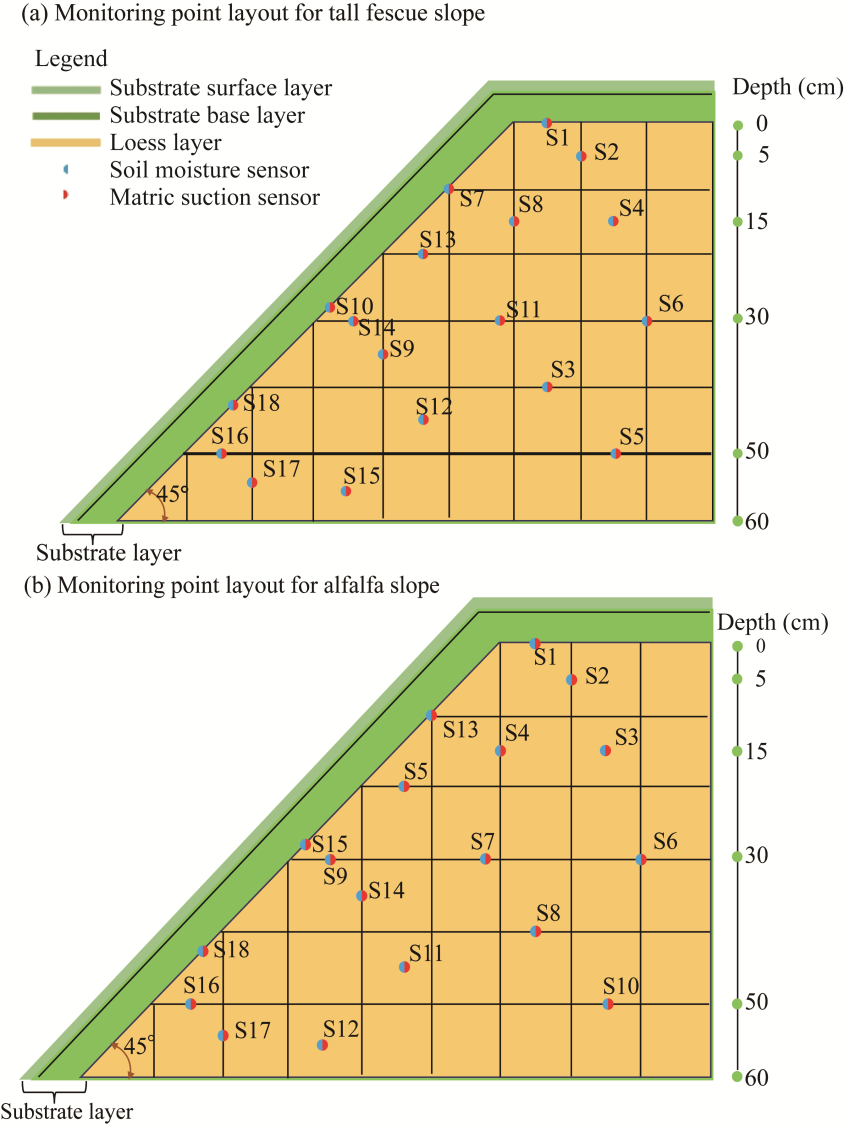
Fig. 2Schematic diagram of moisture monitoring of the model slopes with tall fescue (a) and alfalfa (b)
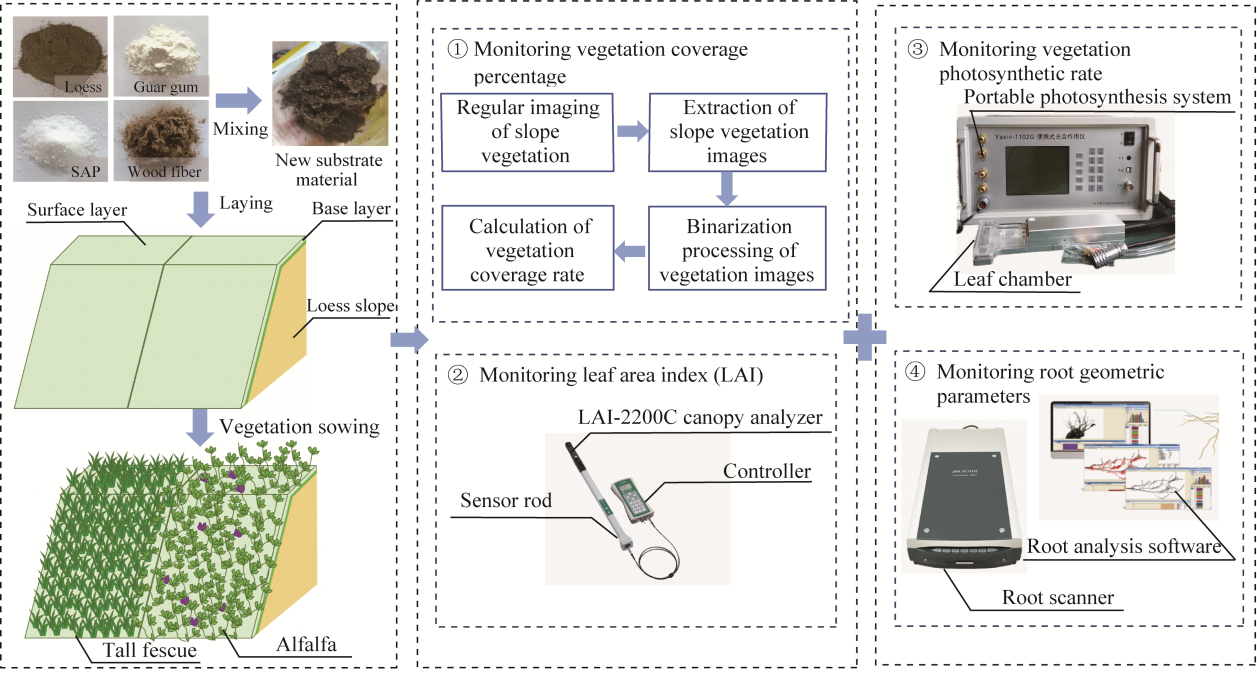
Fig. 3Flowchart of sample preparation for slope model test. SAP, super absorbent polymer.
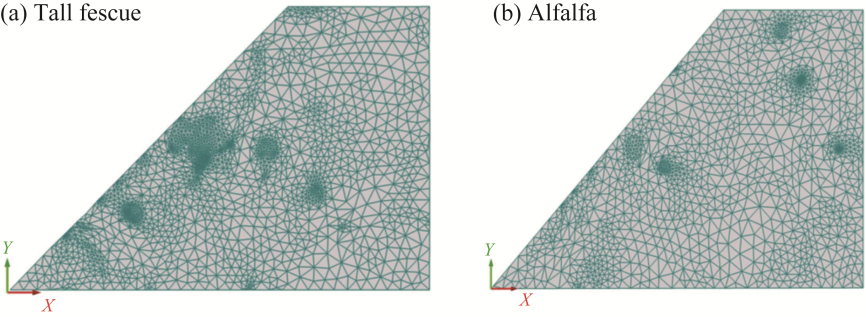
Fig. 4Grid division of the slope in the HYDRUS 2D/3D software. (a), slope with tall fescue; (b), slope with alfalfa.
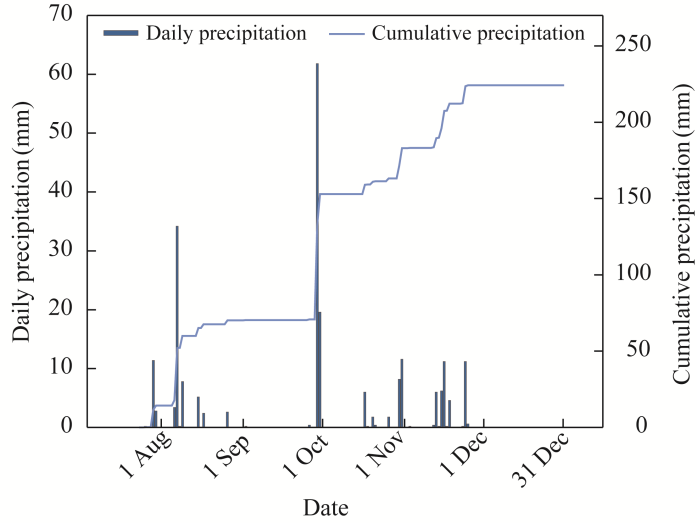
Fig. 5Daily precipitation and cumulative precipitation from 24 July to 31 December, 2024
Precipitation type
Count
Proportion (%)
Total precipitation (mm)
Average precipitation (mm)
Proportion (%)
Trace
0
0.000
0.0
0.0
0.000
Light
25
78.100
62.2
2.5
27.900
Moderate
5
15.600
65.0
13.0
28.900
Heavy
1
3.100
34.2
34.2
15.400
Extreme
1
3.100
61.8
61.8
27.800
Total
32
100.000
224.2
7.0
100.000
Table 2 Precipitation characteristics
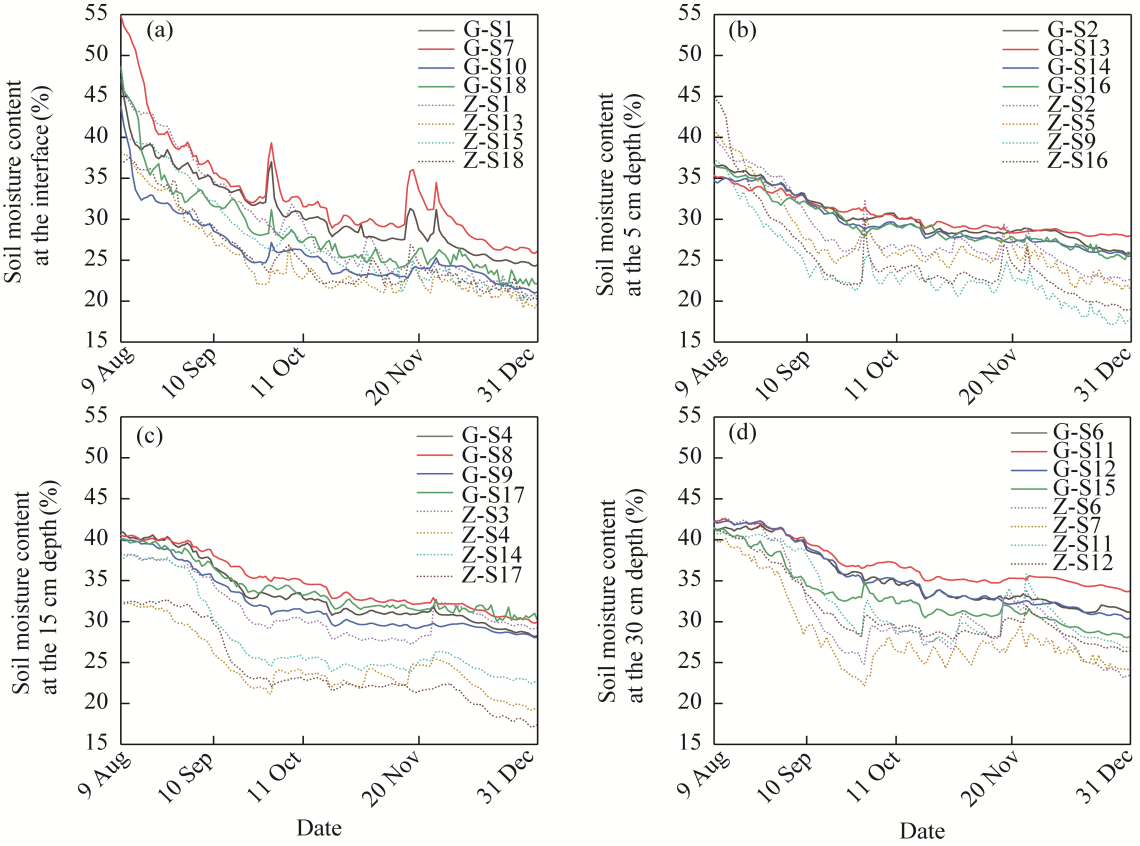
Fig. 6Comparison of soil moisture content between the two planting slopes in 2024. (a), moisture at the interface; (b), moisture at the 5 cm depth; (c), moisture at the 15 cm depth; (d), moisture at the 30 cm depth. G and Z denote tall fescue and alfalfa, respectively. Numbers indicate monitoring points.
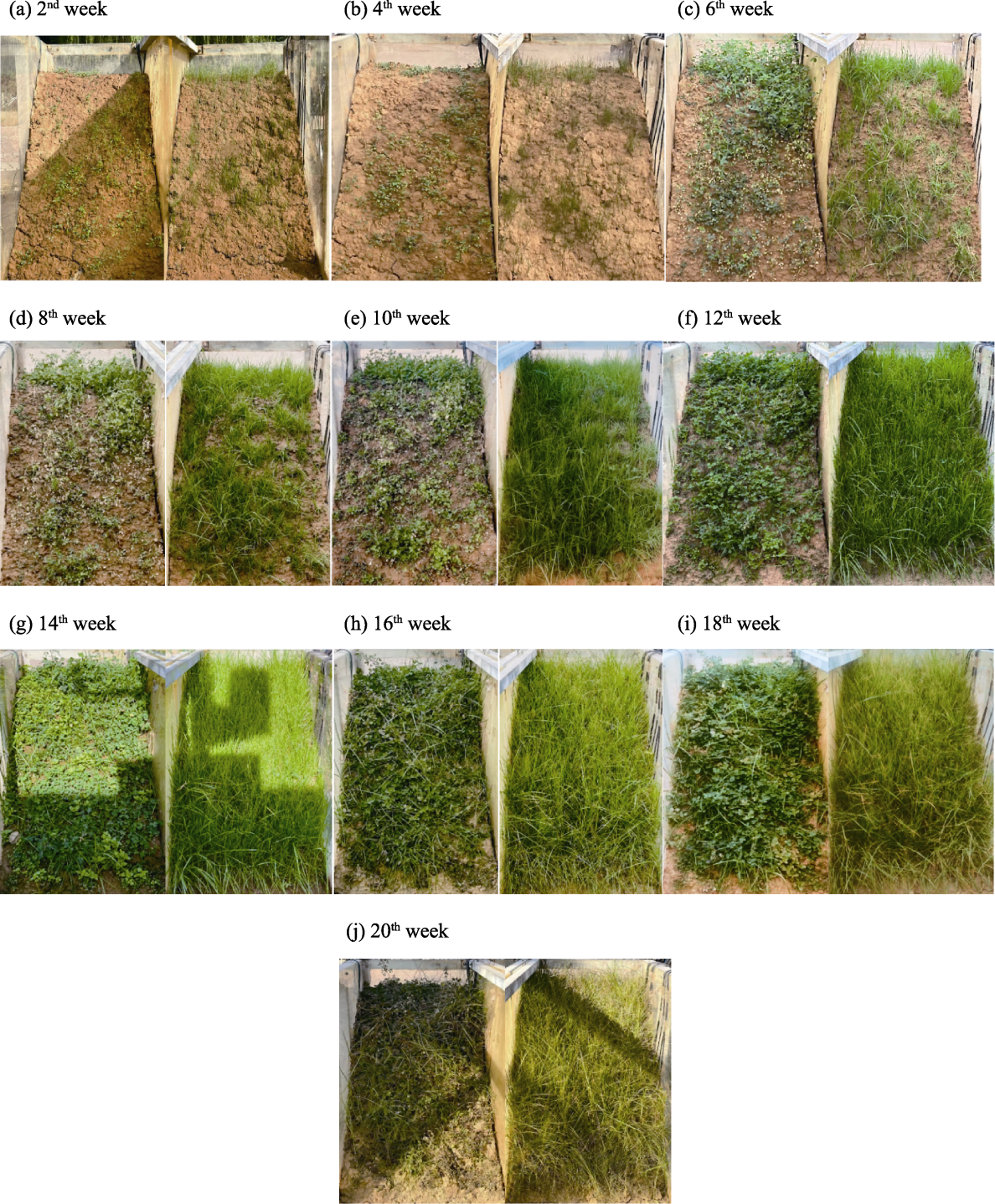
Fig. 7Growth status of alfalfa (left) and tall fescue (right) monitored every two weeks. (a), 2nd week; (b), 4th week; (c), 6th week; (d), 8th week; (e), 10th week; (f), 12th week; (g), 14th week; (h), 16th week; (i), 18th week; (j), 20th week.
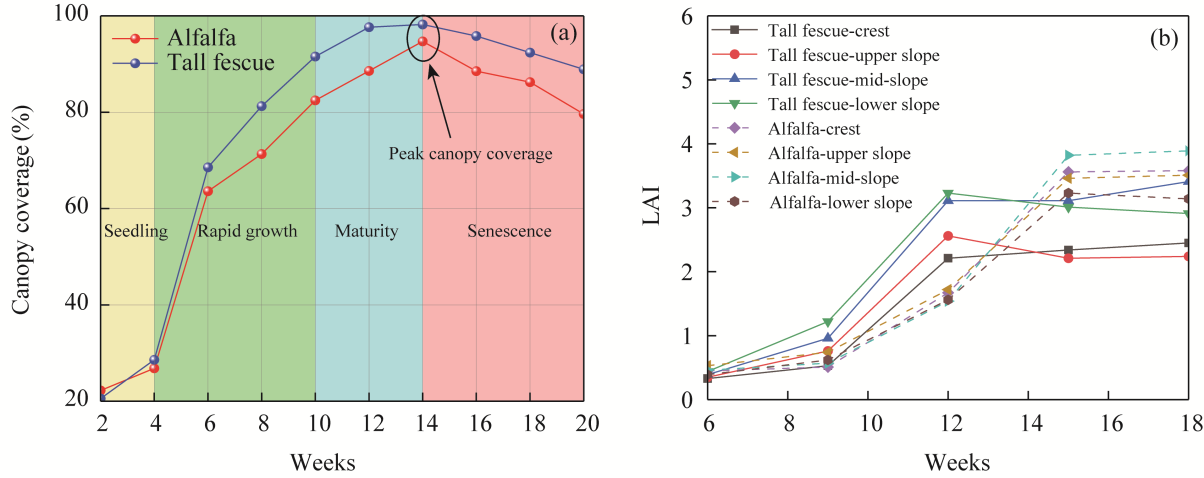
Fig. 8Comparison of canopy coverage (a) and leaf area index (LAI; b) between tall fescue and alfalfa
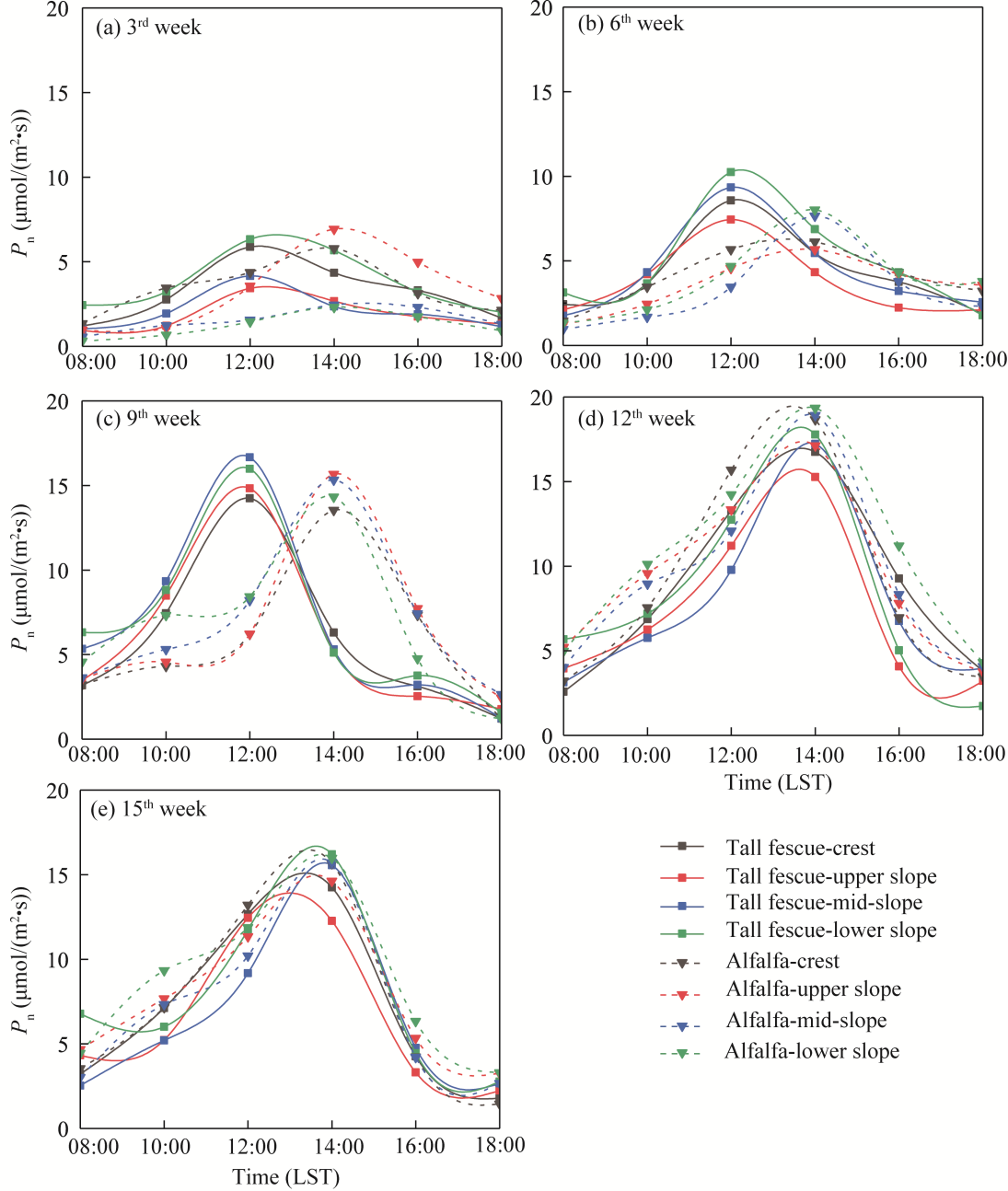
Fig. 9Pn (net photosynthetic rate) of tall fescue and alfalfa measured every three weeks. (a), 3rd week; (b), 6th week; (c), 9th week; (d), 12th week; (e), 15th week.
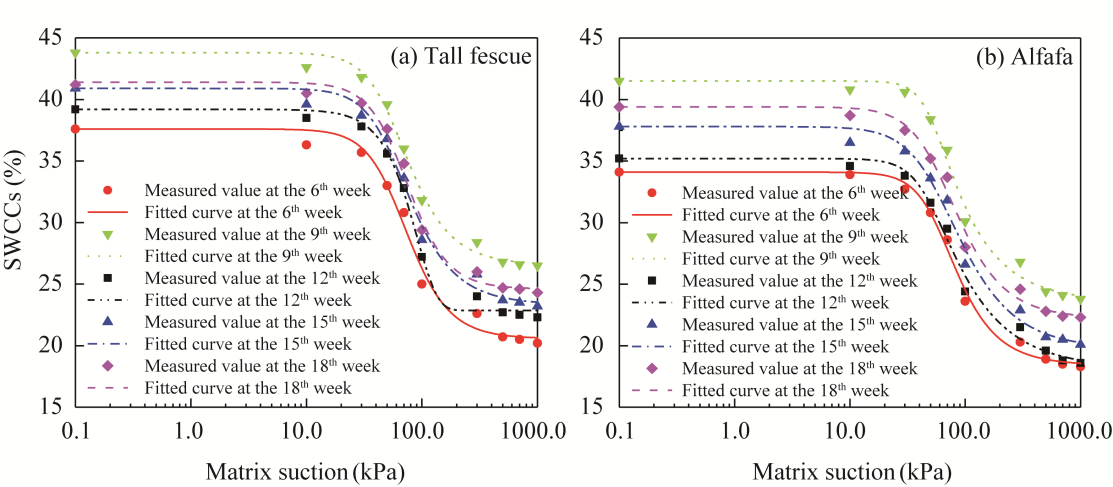
Fig. 11Soil water characteristic curves (SWCCs) for slopes with different vegetation types. (a), tall fescue; (b), alfalfa.
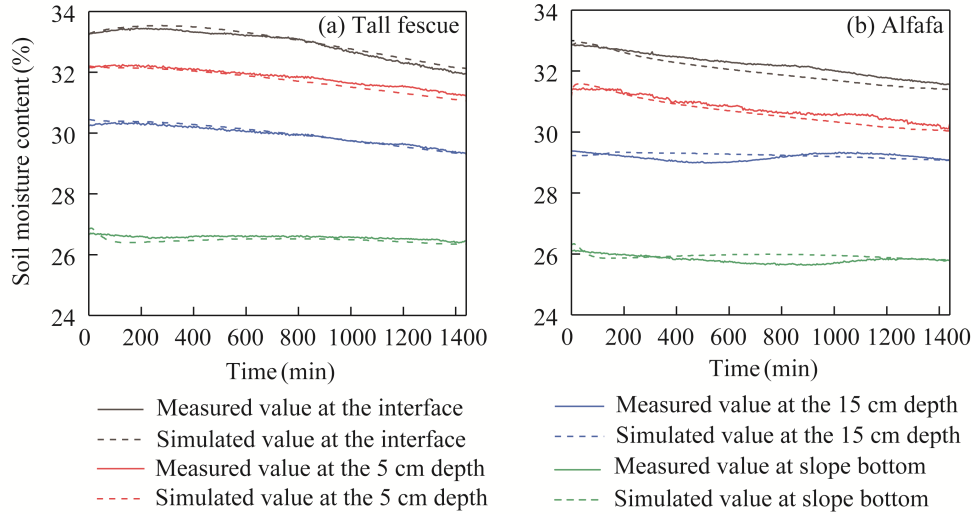
Fig. 12Measured and simulated soil moisture in monitoring points of the slope with tall fescue (a) and alfalfa (b)
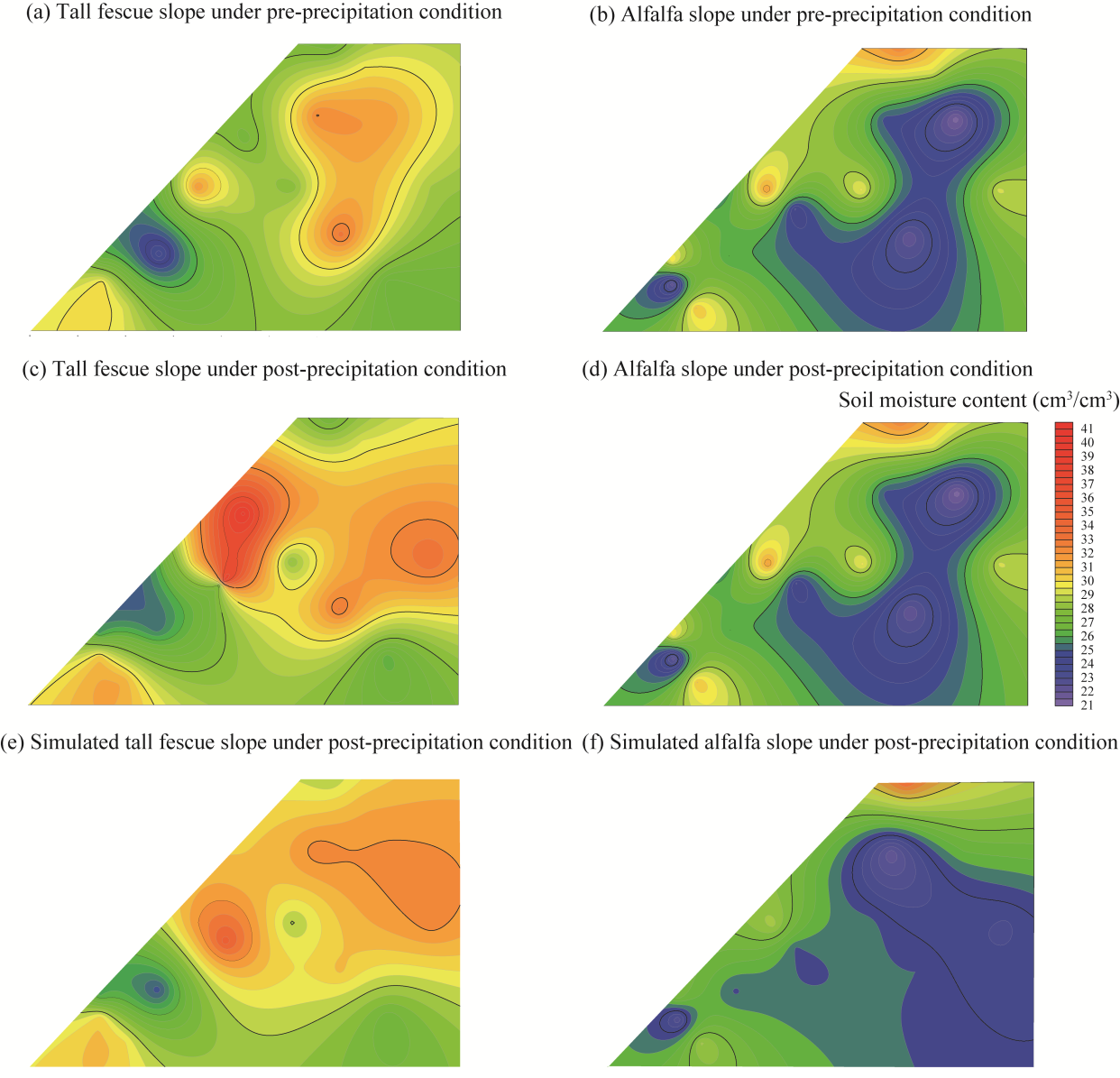
Fig. 13Contour maps of soil moisture content for slopes with different vegetation types. (a), tall fescue slope under pre-precipitation condition; (b), alfalfa slope under pre-precipitation condition; (c), tall fescue slope under post-precipitation condition; (d) alfalfa slope under post-precipitation condition; (e), simulated tall fescue slope under post-precipitation condition; (f), simulated alfalfa slope under post-precipitation condition.
Vegetation type
Depth
RMSE (%)
Vegetation type
Depth
RMSE (%)
Tall fescue
Surface
0.231
Alfalfa
Surface
0.232
5 cm
0.178
5 cm
0.178
15 cm
0.163
15 cm
0.163
30 cm
0.189
30 cm
0.188
Table 3 RMSE (root mean square error) of soil moisture simulations at different depths and vegetation types
[1]
Alam M S, Lamb D W, Warwick N W. 2021. A canopy transpiration model based on scaling up stomatal conductance and radiation interception as affected by leaf area index. Water, 13(3): 252, doi: 10.3390/w13030252.
[2]
Bao H, Lann T S, Ao X L, et al. 2024. Evolution characteristic of soil water in loess slopes with different slope angles. Geoenvironmental Disasters, 11(1): 43, doi: 10.1186/s40677-024-00293-6.
[3]
Chang Z L, Huang F M, Huang J S, et al. 2021. Experimental study of the failure mode and mechanism of loess fill slopes induced by rainfall. Engineering Geology, 280: 105941, doi: 10.1016/j.enggeo.2020.105941.
[4]
Cui Z, Huang Z, Liu Y, et al. 2022. Natural compensation mechanism of soil water infiltration through decayed roots in semi-arid vegetation species. Science of The Total Environment, 819: 151985, doi: 10.1016/j.scitotenv.2021.151985.
[5]
Davies-Barnard T, Valdes P J, Jones C D, et al. 2014. Sensitivity of a coupled climate model to canopy interception capacity. Climate Dynamics, 42(7): 1715-1732.
doi: 10.1007/s00382-014-2100-1
[6]
Dong Y Q, Lei T W, Li S Q, et al. 2015. Effects of rye grass coverage on soil loss from loess slopes. International Soil and Water Conservation Research, 3(3): 170-182.
doi: 10.1016/j.iswcr.2015.05.006
[7]
Feddes R A, Kowalik P J, Zaradny H. 1978. Simulation of Field Water Use and Crop Yield. Wageningen: Centre for Agricultural Publishing and Documentation.
[8]
Gao X G, Wang J P, Ge S, et al. 2024. Investigation of canopy interception characteristics in slope protection grasses: A laboratory experiment. Science of The Total Environment, 948: 174731, doi: 10.1016/j.scitotenv.2024.174731.
[9]
Gao X G, Wang J P, Li X W, et al. 2025. Combined effects of tree canopy and root systems on soil hydraulic properties: A field monitoring of a Populus alba. Rhizosphere, 35: 101123, doi: 10.1016/j.rhisph.2025.101123.
[10]
Gu Q, Gu T F, Zhang D F, et al. 2024. Experimental investigation of water infiltration law in loess with black locust (Robinia pseudoacacia) roots. Agronomy, 14(2): 276, doi: 10.3390/agronomy14020276.
[11]
Hou G R, Zheng J K, Cui X L, et al. 2022. Suitable coverage and slope guided by soil and water conservation can prevent non-point source pollution diffusion: A case study of grassland. Ecotoxicology and Environmental Safety, 241: 113804, doi: 10.1016/j.ecoenv.2022.113804.
[12]
Lann T S, Bao H, Lan H X, et al. 2024. Hydro-mechanical effects of vegetation on slope stability: A review. Science of The Total Environment, 926: 171691, doi: 10.1016/j.scitotenv.2024.171691.
[13]
Jia Z L, Yang C G, Li B, et al. 2023. Performance test and effect evaluation of guar gum-stabilized loess as a sustainable slope protection material. Journal of Cleaner Production, 408: 137085, doi: 10.1016/j.jclepro.2023.137085.
[14]
Jiao J, Su D R, Han L L, et al. 2016. A rainfall interception model for alfalfa canopy under simulated sprinkler irrigation. Water, 8(12): 585, doi: 10.3390/w8120585.
[15]
Jing K, Yan D, Song W, et al. 2022. Evidence of hydraulic redistribution and its water sharing mechanism in a Karst field of Southwest China. Journal of Hydrology, 610: 127987, doi: 10.1016/j.jhydrol.2022.127987.
[16]
Kang W P, Wang T, Liu S L. 2018. The response of vegetation phenology and productivity to drought in semi-arid regions of northern China. Remote Sensing, 10(5): 727, doi: 10.3390/rs10050727.
[17]
Koehler T, Schaum C, Tung S Y, et al. 2022. Above and belowground traits impacting transpiration decline during soil drying in 48 maize (Zea mays) genotypes. Annals of Botany, 131(2): 373-386.
doi: 10.1093/aob/mcac147
pmid: 36479887
[18]
Kumar M, Paramaputra K, Mousa A, et al. 2025. Field-based analysis of vegetation and climate impacts on the hydrological properties of urban vegetated slope. Scientific Reports, 15(1): 7702, doi: 10.1038/s41598-025-92031-7.
[19]
Li J, Wang X, Jia H X, et al. 2021. Assessing the soil moisture effects of planted vegetation on slope stability in shallow landslide-prone areas. Journal of Soils and Sediments, 21(7): 2551-2565.
doi: 10.1007/s11368-021-02957-4
[20]
Liu H Y, Liu L, Zhang K L, et al. 2023. Effect of combining biogeotextile and vegetation cover on the protection of steep slope of highway in northern China: A runoff plot experiment. International Journal of Sediment Research, 38(3): 387-395.
doi: 10.1016/j.ijsrc.2022.11.003
[21]
Liu Q, Su L J, Xia Z Y, et al. 2019. Effects of soil properties and illumination intensities on matric suction of vegetated soil. Sustainability, 11(22): 6475, doi: 10.3390/su11226475.
[22]
Luo X X, Zhou X L, Xiao H L, et al. 2024a. Experiment study on temporal stability of soil moisture content in ecological slopes under different vegetation covers. Environmental Research Communications, 6(9): 095004, doi: 10.1088/2515-7620/ad6ee4.
[23]
Luo Z B, Fan J, Shao M A, et al. 2024b. Rock moisture reinforces belowground water storage under different precipitation scenarios and vegetation coverage. Journal of Hydrology, 636: 131276, doi: 10.1016/j.jhydrol.2024.131276.
[24]
Mao Z J, Ma X, Geng M M, et al. 2025. Development characteristics and quantitative analysis of cracks in root-soil complex during different growth periods under dry-wet cycles. Biogeotechnics, 3(1): 100121, doi: 10.1016/j.bgtech.2024.100121.
[25]
Ni J J, Cheng Y F, Wang Q H, et al. 2019. Effects of vegetation on soil temperature and water content: Field monitoring and numerical modelling. Journal of Hydrology, 571: 494-502.
doi: 10.1016/j.jhydrol.2019.02.009
[26]
Ni J J, Ng W W C, Gao Y F. 2020. Modelling root growth and soil suction due to plant competition. Journal of Theoretical Biology, 484: 110019, doi: 10.1016/j.jtbi.2019.110019.
[27]
Niu J Q, Liu Z J, Chen F Y, et al. 2025. Variations of soil moisture and its influencing factors in arid and semi-arid areas, China. Journal of Arid Land, 17(5): 624-643.
doi: 10.1007/s40333-025-0014-x
[28]
Niu J Y, Zhang J J, Yan S J, et al. 2024. Seismic stability analysis of shallow overburden slopes with vegetation protection. Environmental Earth Sciences, 83(16): 477, doi: 10.1007/s12665-024-11782-0.
[29]
Peng J B, Fan Z J, Wu D, et al. 2018. Landslides triggered by excavation in the Loess Plateau of China: A case study of middle Pleistocene loess slopes. Journal of Asian Earth Sciences, 171: 246-258.
doi: 10.1016/j.jseaes.2018.11.014
[30]
Pirnajmedin F, Majidi M M, Gheysari M. 2015. Root and physiological characteristics associated with drought tolerance in Iranian tall fescue. Euphytica, 202: 141-155.
doi: 10.1007/s10681-014-1239-5
[31]
Pirnajmedin F, Majidi M M, Gheysari M. 2016. Survival and recovery of tall fescue genotypes: Association with root characteristics and drought tolerance. Grass and Forage Science, 71(4): 632-640.
doi: 10.1111/gfs.2016.71.issue-4
[32]
Qiu H J, Regmi A D, Cui P, et al. 2016. Size distribution of loess slides in relation to local slope height within different slope morphologies. CATENA, 145: 155-163.
doi: 10.1016/j.catena.2016.06.005
[33]
Qu Y Y, Wu Q X, Khan U F, et al. 2025. The impact of root systems on soil macropore abundance and soil infiltration capacity. Plant and Soil, 513: 1197-1214.
doi: 10.1007/s11104-025-07237-5
[34]
Scholl P, Leitner D, Kammerer G, et al. 2014. Root-induced changes of effective 1D hydraulic properties in a soil column. Plant and Soil, 381(1-2): 193-213.
pmid: 25834290
[35]
Vesala T, Sevanto S, Grönholm T, et al. 2017. Effect of leaf water potential on internal humidity and CO2 dissolution: Reverse transpiration and improved water use efficiency under negative pressure. Frontiers in Plant Science, 8: 54, doi: 10.3389/fpls.2017.00054.
pmid: 28220128
[36]
Wang F C, Tao H, Shi X, et al. 2024a. Study on the sand reduction effect of slope vegetation combination in loess areas. Sustainability, 16(20): 9132, doi: 10.3390/su16209132.
[37]
Wang H T, Wang Q J, Guo L, et al. 2020. An enhanced rainfall-runoff model with coupled canopy interception. Hydrological Processes, 34(8): 1837-1853.
doi: 10.1002/hyp.v34.8
[38]
Wang Q N, Han B, Liu L X, et al. 2014. Study on infiltration characteristics and stability of excavated loess slope in an industry site. Advanced Materials Research, 1035-1036: 12-17.
[39]
Wang X Y, Ma C, Liu L Q, et al. 2024b. Erosion characteristics of shallow landslides under various land-use conditions: An example of the Caijiachuan landslide. Arid Zone Research, 41(4): 697-705. (in Chinese)
[40]
Xu L, Zheng C L, Yi M. 2020. Variations in precipitation extremes in the arid and semi-arid regions of China. International Journal of Climatology, 41(3): 1542-1554.
doi: 10.1002/joc.v41.3
[41]
Xu R, Li X C, Yang W, et al. 2019. Use of local plants for ecological restoration and slope stability: A possible application in Yan'an, Loess Plateau, China. Geomatics, Natural Hazards and Risk, 10(1): 2106-2128.
doi: 10.1080/19475705.2019.1679891
[42]
Zhang M, Hu D D, Fan J, et al. 2020. Study on the application of vegetation protection and ecological restoration technology in stone slope. IOP Conference Series: Earth and Environmental Science, 510(4): 042024, doi: 10.1088/1755-1315/510/4/042024.
[43]
Zhang W D, Bao H, Lan H X, et al. 2025. Study on the moisture migration and evolution characteristics of ecological protection loess slopes under different slope angles. Northwest Geology, 58(2): 121-135. (in Chinese)
[44]
Zhang X C, Li M L, Yao Z S, et al. 2024a. Study of loess ecological slope protection optimization measures and prediction of the erosion control effect. Journal of Geographical Sciences, 34(6): 1083-1108.
doi: 10.1007/s11442-024-2240-0
[45]
Zhang X L, Fu Y M, Pei Q H, et al. 2024b. Study on the root characteristics and effects on soil reinforcement of slope-protection vegetation in the Chinese Loess Plateau. Forests, 15(3): 464, doi: 10.3390/f15030464.
[46]
Zhang Y J, Pang Q G, Liu Y, et al. 2024c. Influence of the root-soil composite characteristics of purple locust on the stability of loess slopes. Soil and Water Conservation Bulletin, 44(4): 33-44. (in Chinese)
[47]
Zhou C, Xia Z, Chen D B, et al. 2024. Extreme rainfall events triggered loess collapses and landslides in Chencang District, Shanxi, China, during June-October 2021. Water, 16(16): 2279, doi: 10.3390/w16162279.
[48]
Zhu H, Zhang L M. 2019. Root-soil-water hydrological interaction and its impact on slope stability. Georisk: Assessment and Management of Risk for Engineered Systems and Geohazards, 13(4): 349-359.