Laboratory soil-column investigation of thermo-hydro-saline migration in saline soil with sand replacement layers under evaporation
GAO Junli1,2, LI Zihao1, LIU Feiyu1,*(), DAI Zili1, GAO Jinbo1, ZHANG Zhen2
1School of Mechanics and Engineering Science, Shanghai University, Shanghai 200072, China 2Key Laboratory of Geotechnical and Underground Engineering of Ministry of Education, Tongji University, Shanghai 200092, China
In arid regions, saline subgrades are highly susceptible to deterioration caused by evaporation-driven water-salt migration, which can induce salt accumulation, cracking, and long-term loss of stability. To investigate the role of sand replacement layers in regulating thermo-hydro-saline (THS) migration under evaporation, we conducted indoor soil-column experiments in combination with microstructural observations. The effects of sand type (coarse, medium, and fine sand) and replacement ratio (0.00%, 20.00%, 35.00%, and 50.00%) were systematically examined under simulated high-temperature and strong-evaporation conditions typical of northwestern China, with continuous monitoring of temperature, relative humidity (RH), and electrical conductivity (EC). The results show that sand replacement effectively inhibited capillary rise, reduced surface salt accumulation, and alleviated shrinkage cracking. Among the tested sand types, coarse sand exhibited the strongest inhibitory effect on upward water-salt migration, whereas fine sand showed the weakest effect because its smaller pores and stronger capillary continuity facilitated upward water-salt migration. Under the medium sand condition, increasing the replacement ratio was associated with stronger suppression of surface salt accumulation, with the 50.00% replacement ratio showing the strongest effect. However, the influence of replacement ratio was not monotonic across all response indicators. A replacement ratio of approximately 35.00% maintained relatively continuous pathways for heat and moisture transfer, whereas higher replacement ratios produced a looser soil skeleton and weaker capillary continuity. Microstructural observations further revealed that salt crystals mainly accumulated near the evaporation front and the lower replenishment zone, while coarse sand tended to form larger pores and reduce matric suction, thereby disrupting upward migration pathways. These findings provide a theoretical basis and technical support for optimizing saline subgrade design and mitigating salt-related damage in arid regions.
Received: 31 December 2025
Published: 30 June 2026
Conceptualization: LI Zihao; Methodology: GAO Junli, LI Zihao; Formal analysis: DAI Zili; Writing - original draft preparation: LI Zihao; Writing - review and editing: LIU Feiyu; Funding acquisition: GAO Junli, LIU Feiyu, ZHANG Zhen; Resources: DAI Zili; Supervision: GAO Junli; Project administration: GAO Junli, LIU Feiyu; Visualization: LI Zihao, ZHANG Zhen; Validation: DAI Zili; Investigation: GAO Jinbo; Data curation: GAO Jinbo. All authors approved the manuscript.
GAO Junli, LI Zihao, LIU Feiyu, DAI Zili, GAO Jinbo, ZHANG Zhen. Laboratory soil-column investigation of thermo-hydro-saline migration in saline soil with sand replacement layers under evaporation. Journal of Arid Land, 2026, 18(6): 1031-1058.
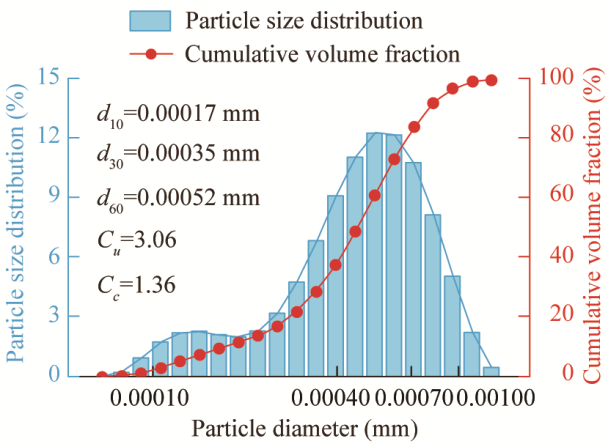
Fig. 2Particle size distribution of the saline soil. d10, d30, and d60 are the particle diameters corresponding to 10.00%, 30.00%, and 60.00% cumulative volume fractions, respectively; Cu, coefficient of uniformity; Cc, coefficient of curvature.
Sample type
Optimum moisture content (%)
Maximum dry density (g/cm3)
Minimum dry density (g/cm3)
Liquid limit (%)
Plastic limit (%)
Internal friction angle (°)
Saline soil
16.20
1.54
1.27
24.10
13.90
26.13
Table 1 Index properties of the saline soil
Sand sample
Particle size range (mm)
Coefficient of curvature (Cc)
Coefficient of uniformity (Cu)
Maximum dry density (g/cm3)
Minimum dry density (g/cm3)
Coarse sand
0.50000-1.00000
2.23
4.48
1.92
1.50
Medium sand
0.25000-0.50000
1.62
3.06
1.85
1.44
Fine sand
0.10000-0.25000
1.35
2.54
1.76
1.32
Table 2 Basic physical properties of river sand
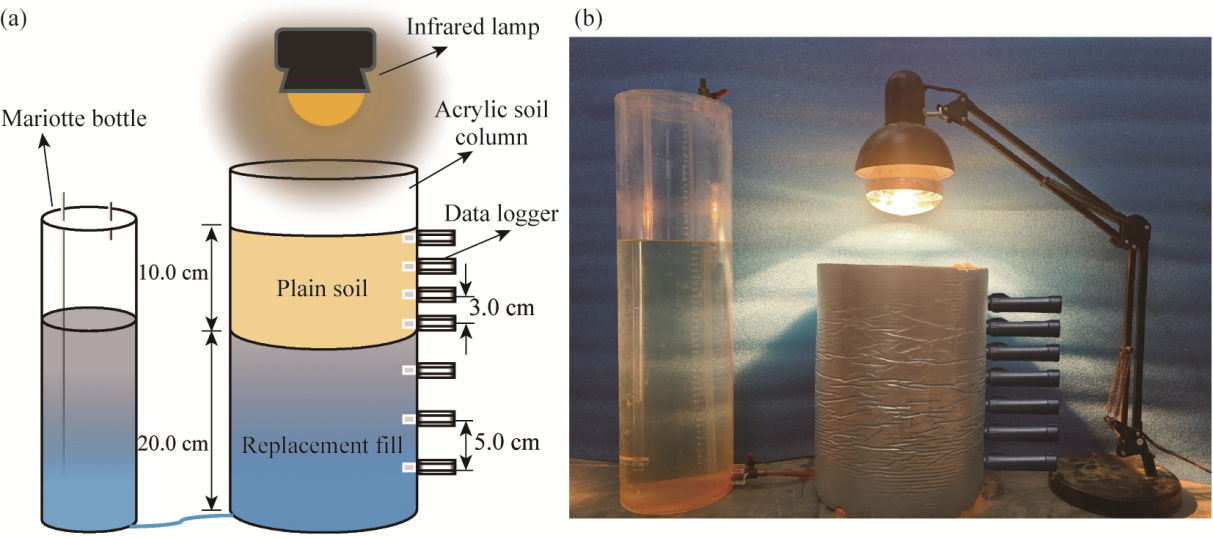
Fig. 3Schematic diagram (a) and photograph (b) of the water-salt migration test
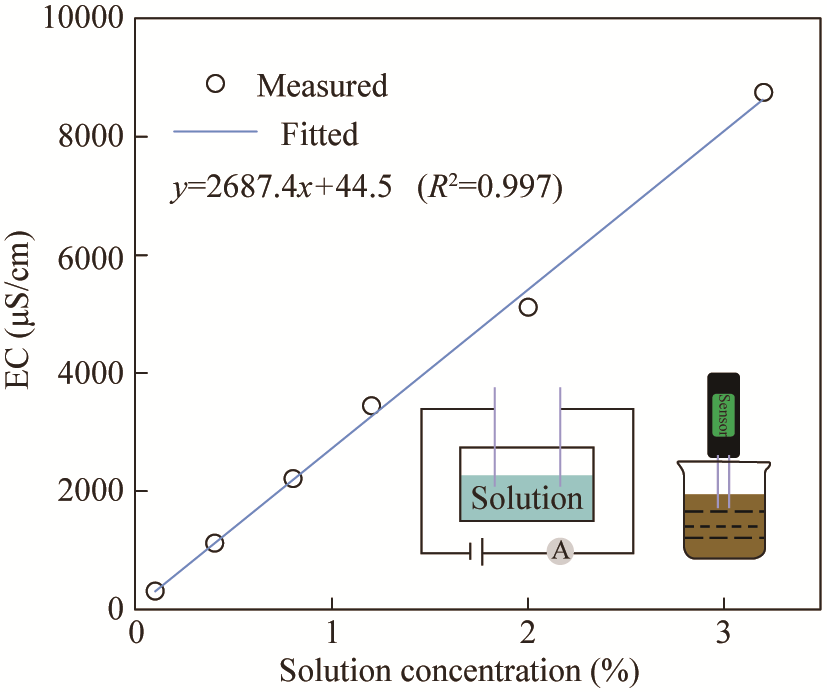
Fig. 4Relationship between electrical conductivity (EC) and salt content. In the fitted equation, x denotes the NaCl solution concentration.
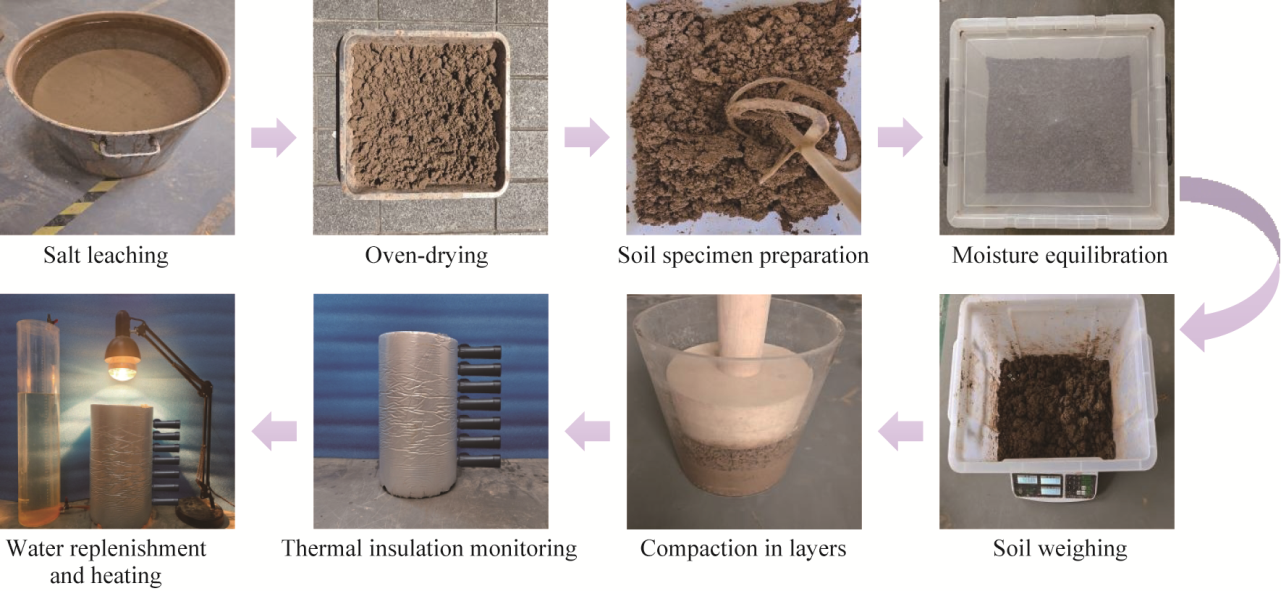
Fig. 5Process flow diagram of the water-salt migration test
Test ID
T1
T2
T3
R1
R2
R3
C
Sand type
Coarse sand
Medium sand
Fine sand
Medium sand
Medium sand
Medium sand
None
Sand replacement ratio (%)
35.00
35.00
35.00
20.00
35.00
50.00
0.00
Table 3 Experimental design
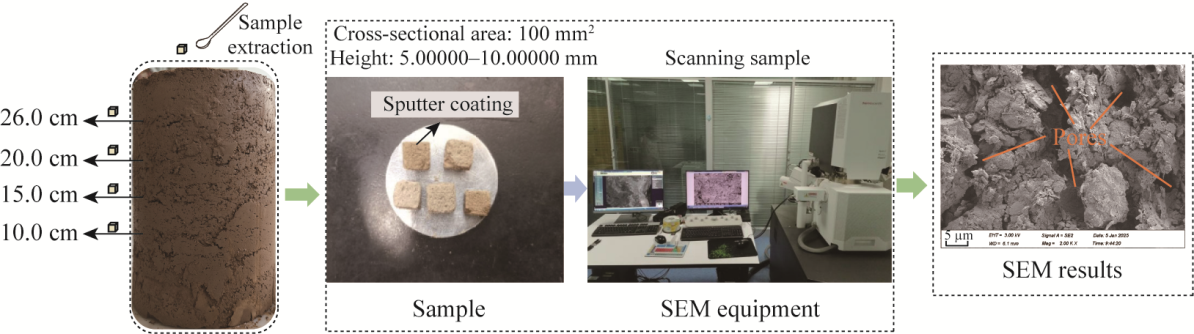
Fig. 6Sampling locations for scanning electron microscopy (SEM) observation within the soil column
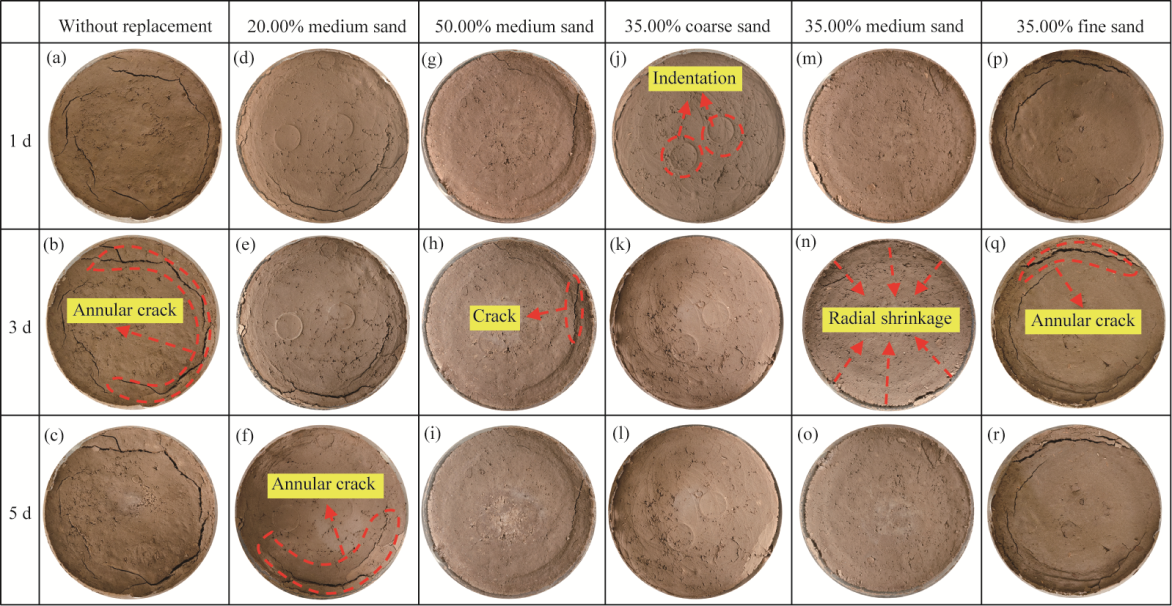
Fig. 7Evolution of macroscopic surface crack patterns on the circular soil-column surface under different conditions during evaporation after 1 d (a, d, g, j, m, and p), 3 d (b, e, h, k, n, and q), and 5 d (c, f, i, l, o, and r) heating. The small circular marks visible in some photographs are contact marks caused by microscope positioning and do not affect the identification of macroscopic crack patterns.
Fig. 8Evolution of surface salt crystallization on local areas of soil columns under different sand replacement conditions after 1 d (a, d, g, j, m, and p), 3 d (b, e, h, k, n, and q), and 5 d (c, f, i, l, o, and r) heating. The white particles or patches shown in the images are surface sodium chloride (NaCl) crystals.
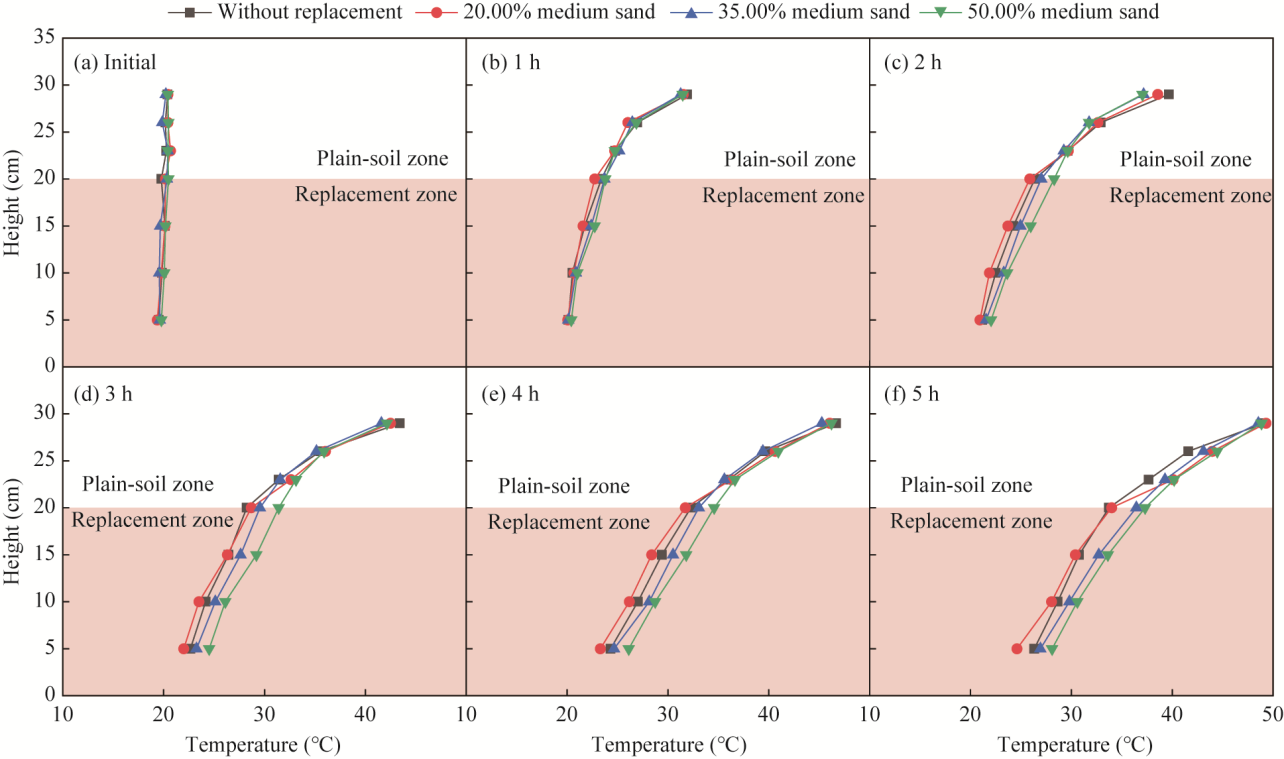
Fig. 9Temperature profiles along the soil-column height from the initial state through the first 5 h of heating on Day 1 under different medium sand replacement ratios. (a), initial; (b), 1 h; (c), 2 h; (d), 3 h; (e), 4 h; (f), 5 h.
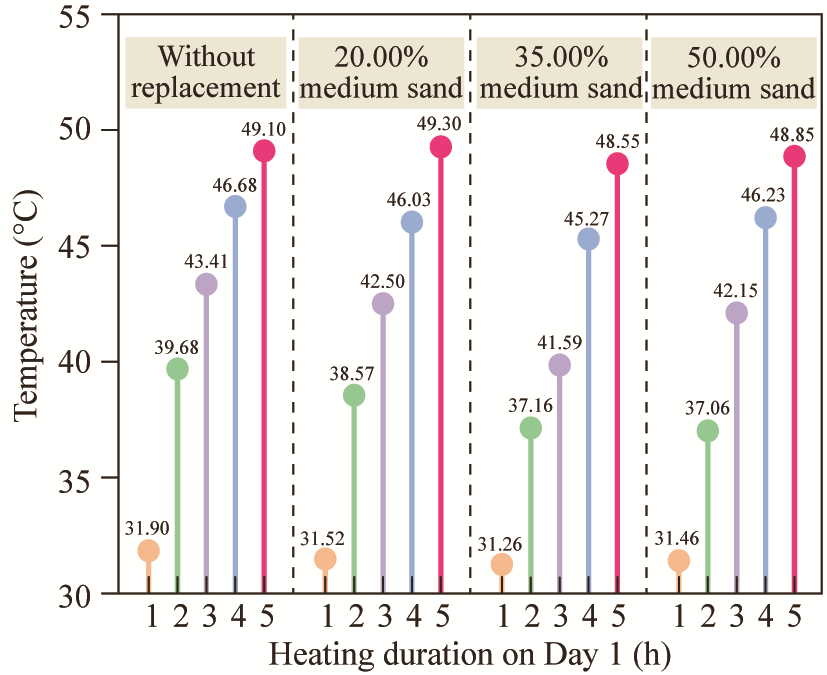
Fig. 10Variation in soil temperature at a height of 29.0 cm during the first 5 h heating period on Day 1 under different medium sand replacement ratios
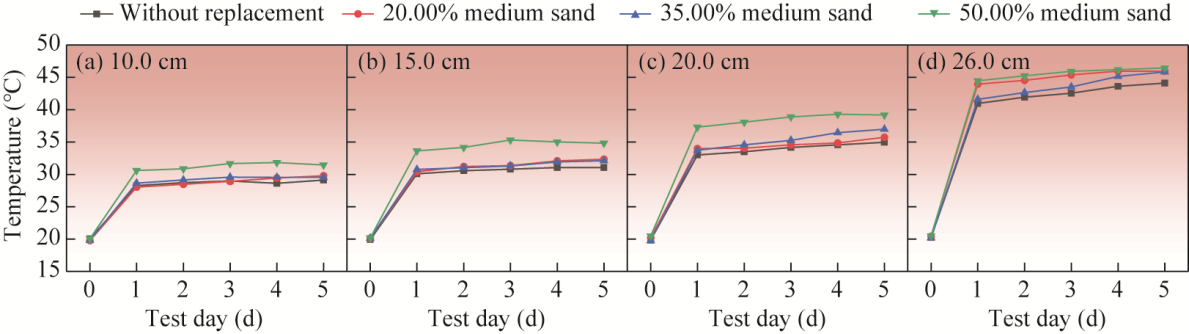
Fig. 11Temperature responses at heights of 10.0 (a), 15.0 (b), 20.0 (c), and 26.0 cm (d) measured at the end of each daily 5 h heating cycle over the 5 d test period under different medium sand replacement ratios. In this figure, 0 denotes the initial state before heating, whereas 1-5 denote the measurements recorded at the end of each daily 5 h heating cycle on Days 1-5, respectively.
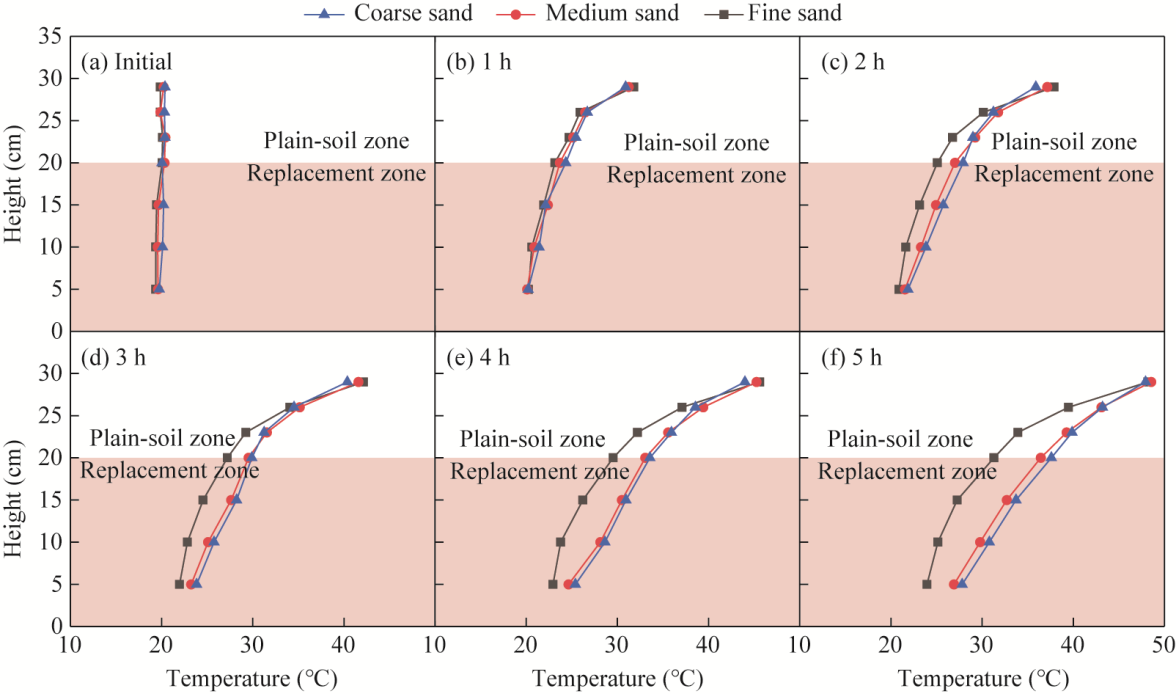
Fig. 12Temperature profiles along the soil-column height from the initial state through the first 5 h of heating on Day 1 for different sand types. (a), initial; (b), 1 h; (c), 2 h; (d), 3 h; (e), 4 h; (f), 5 h.
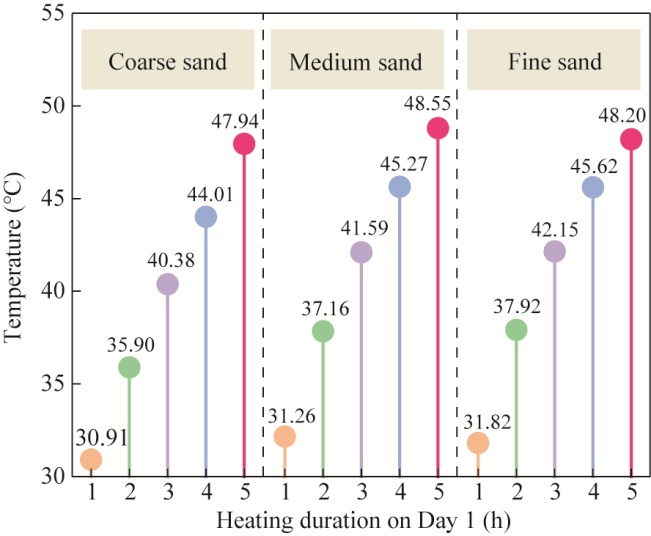
Fig. 13Variation in soil temperature at a height of 29.0 cm during the first 5 h of heating on Day 1 for different sand types
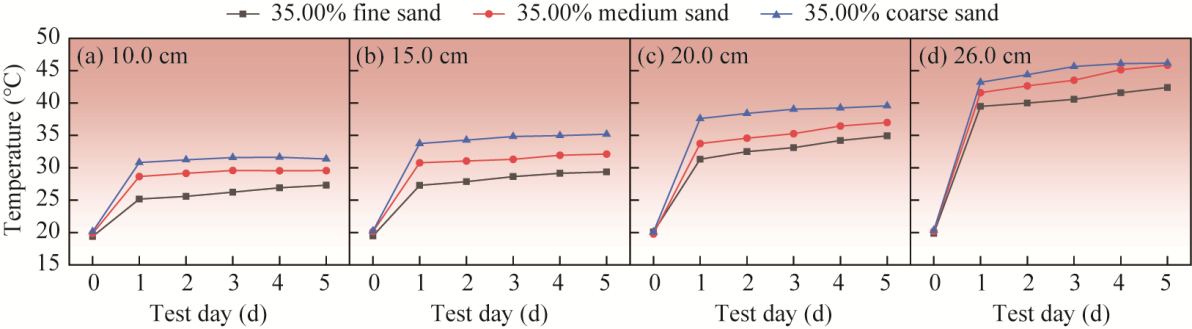
Fig. 14Temperature responses at heights of 10.0 (a), 15.0 (b), 20.0 (c), and 26.0 cm (d) measured at the end of each daily 5 h heating cycle over the 5 d test period under 35.00% coarse, medium, and fine sand replacement. In this figure, 0 denotes the initial state before heating, whereas 1-5 denote the measurements recorded at the end of each daily 5 h heating cycle on Days 1-5, respectively.
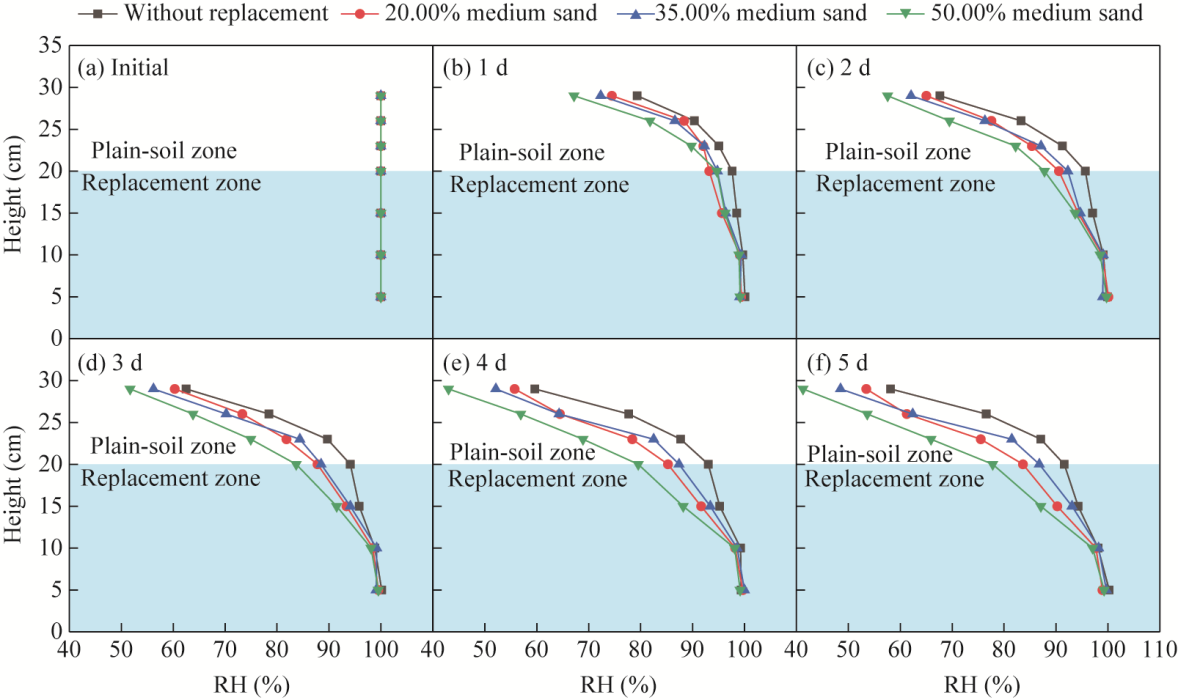
Fig. 15Variation in relative humidity (RH) along the soil-column height from the initial state to the end of each daily 5 h heating cycle over the 5 d test period under different medium sand replacement ratios. (a), initial; (b), 1 d; (c), 2 d; (d), 3 d; (e), 4 d; (f), 5 d.
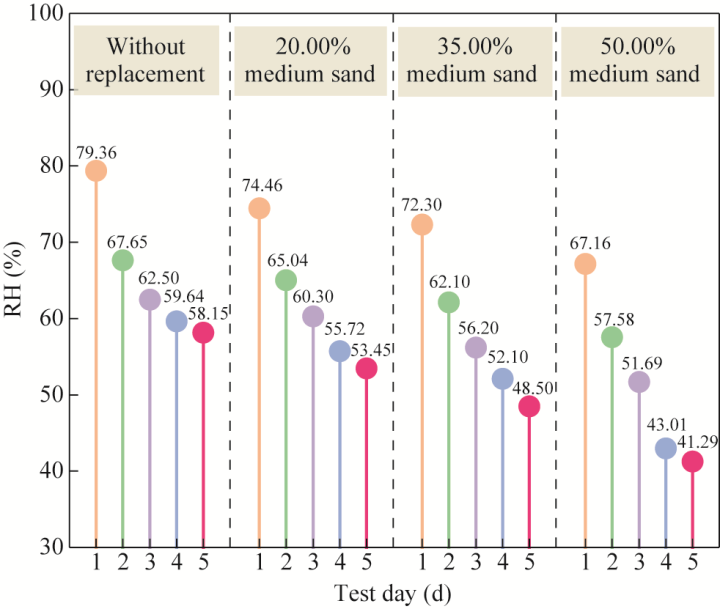
Fig. 16Variation in RH at a height of 29.0 cm over Days 1-5 under different medium sand replacement ratios. At the beginning of the test, the RH profile remained close to saturation, with the initial RH being approximately 100.00% throughout the column.
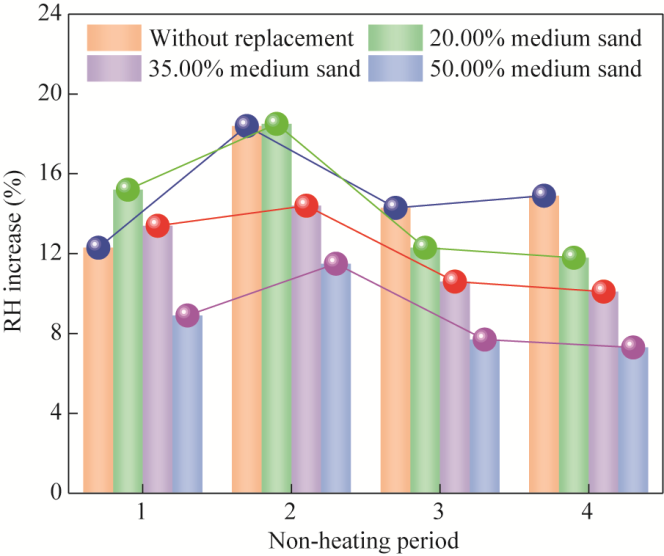
Fig. 17Increase in RH at a height of 29.0 cm during the four non-heating periods under different medium sand replacement ratios
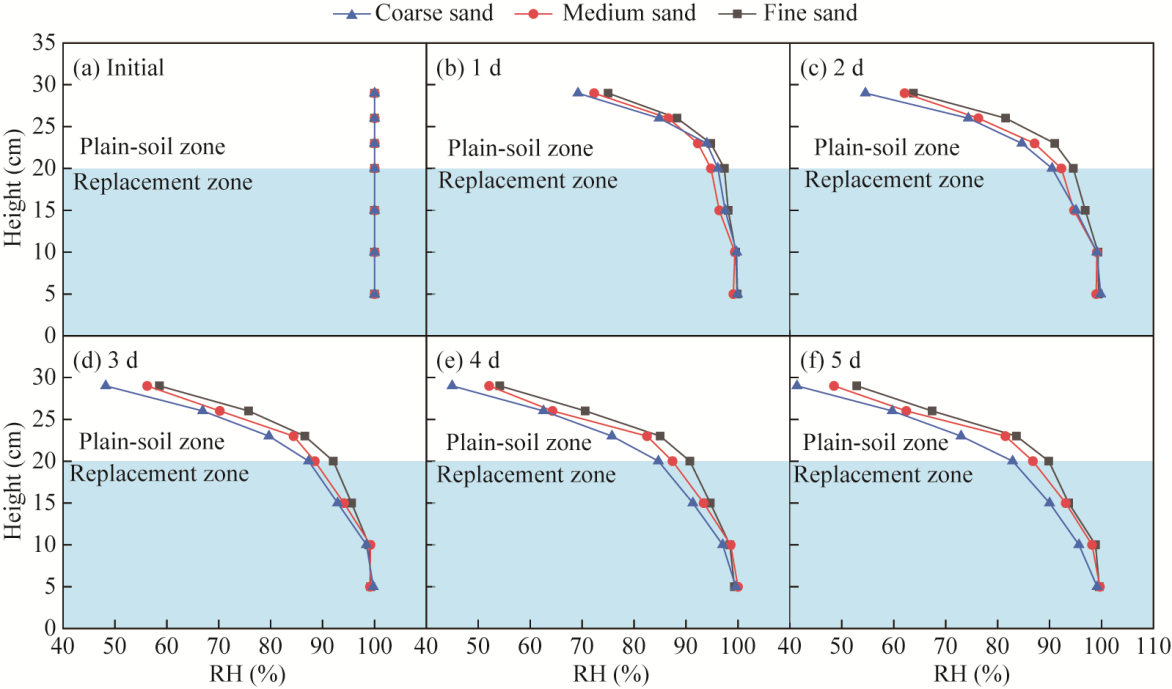
Fig. 18Variation in RH along the soil-column height from the initial state to the end of each daily 5 h heating cycle over the 5-day test period for columns with 35.00% coarse, medium, and fine sand replacement. (a), initial; (b), 1 d; (c), 2 d; (d), 3 d; (e), 4 d; (f), 5 d.
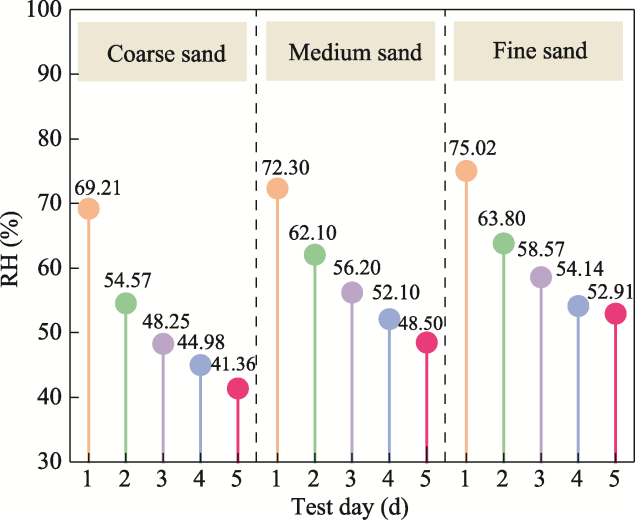
Fig. 19Variation in RH at a height of 29.0 cm measured at the end of each daily 5 h heating cycle over Days 1-5 for columns with 35.00% coarse, medium, and fine sand replacement
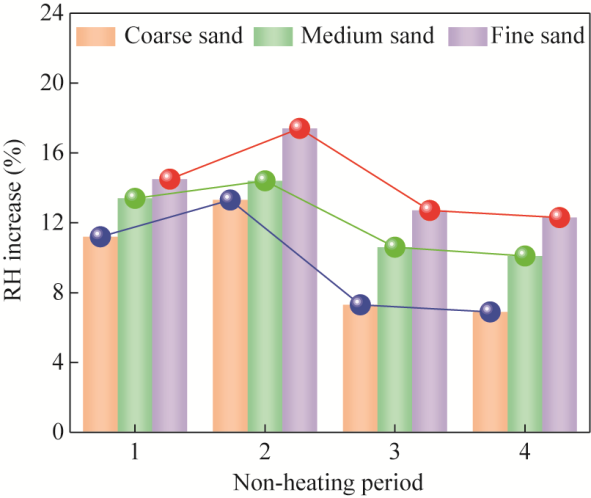
Fig. 20Increase in RH at a height of 29.0 cm during the four non-heating periods for columns with 35.00% coarse, medium, and fine sand replacement
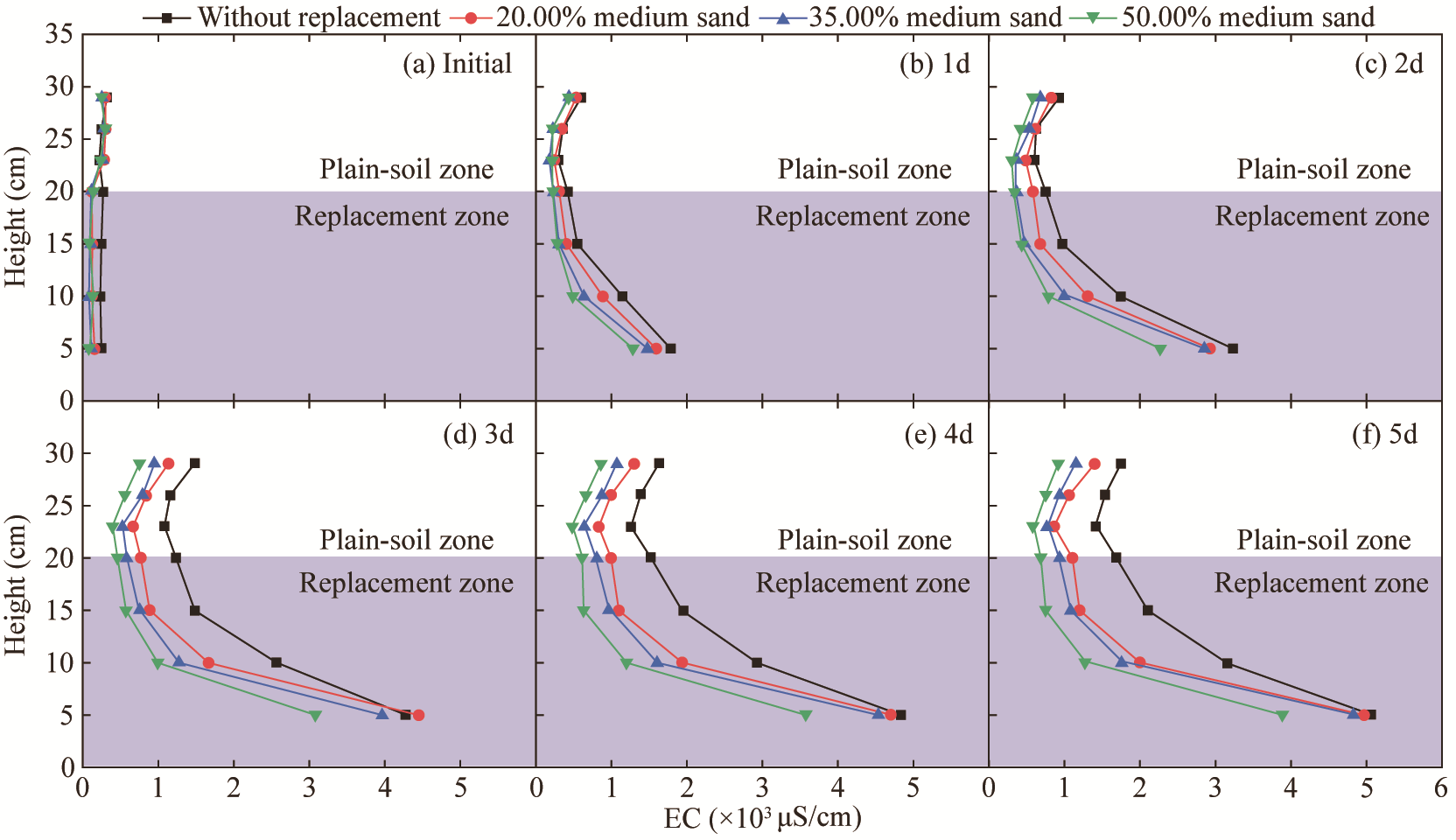
Fig. 21Variation in soil EC along the soil-column height from the initial state to the end of each daily 5 h heating cycle over the 5 d test period under different medium sand replacement ratios. (a), initial; (b), 1 d; (c), 2 d; (d), 3 d; (e), 4 d; (f), 5 d.
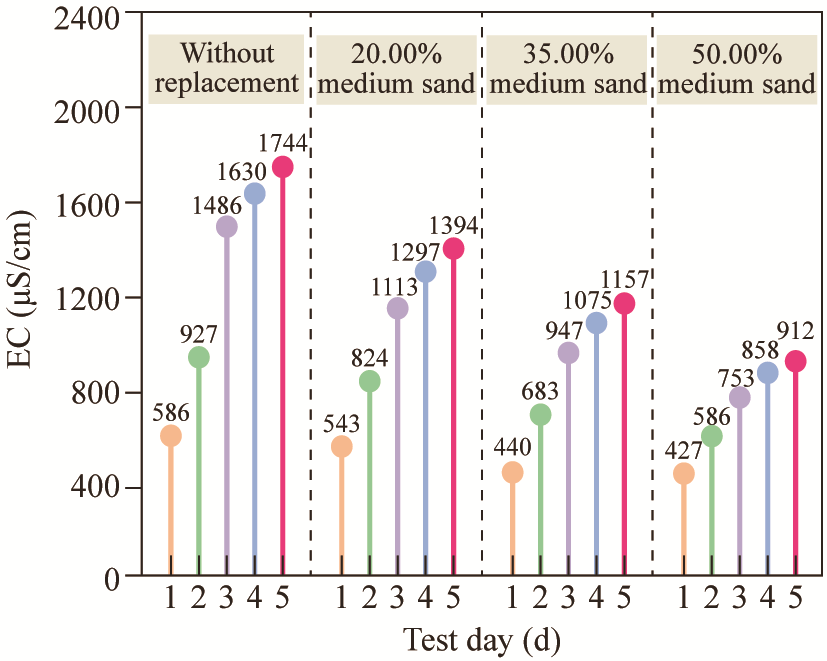
Fig. 22Variation in EC at a height of 29.0 cm measured at the end of each daily 5 h heating cycle over Days 1-5 under different medium-sand replacement ratios
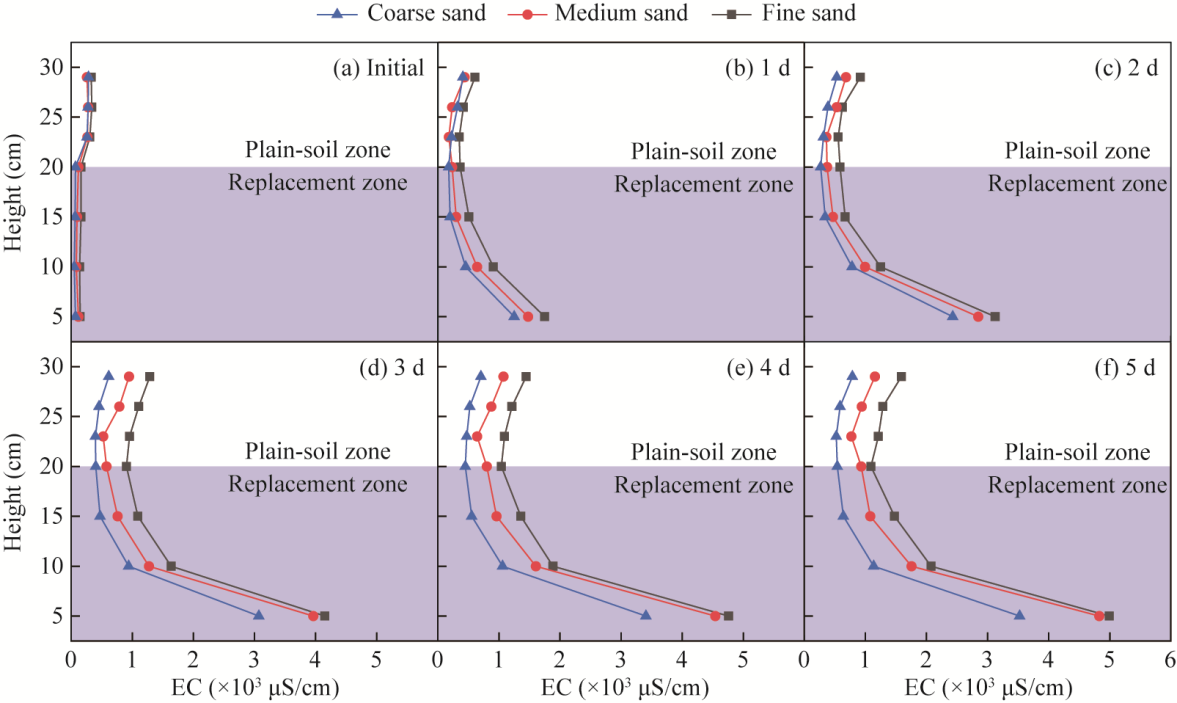
Fig. 23Variation in soil EC along the soil-column height from the initial state to the end of each daily 5 h heating cycle over the 5 d test period for columns with 35.00% coarse, medium, and fine sand replacement. (a), initial; (b), 1 d; (c), 2 d; (d), 3 d; (e), 4 d; (f), 5 d.
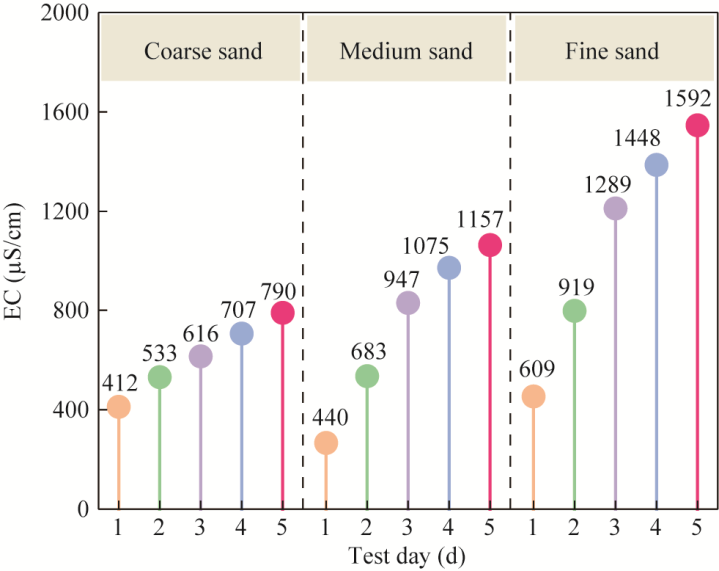
Fig. 24Variation in EC at a height of 29.0 cm measured at the end of each daily 5 h heating cycle over Days 1-5 for columns with 35.00% coarse, medium, and fine sand replacement
Fig. 25SEM images of the soil column with 35.00% medium sand replacement at 10.0 cm (a), 15.0 cm (b), 20.0 cm (c), and 26.0 cm (d). The left and right columns correspond to 500× and 2000× magnifications, respectively.
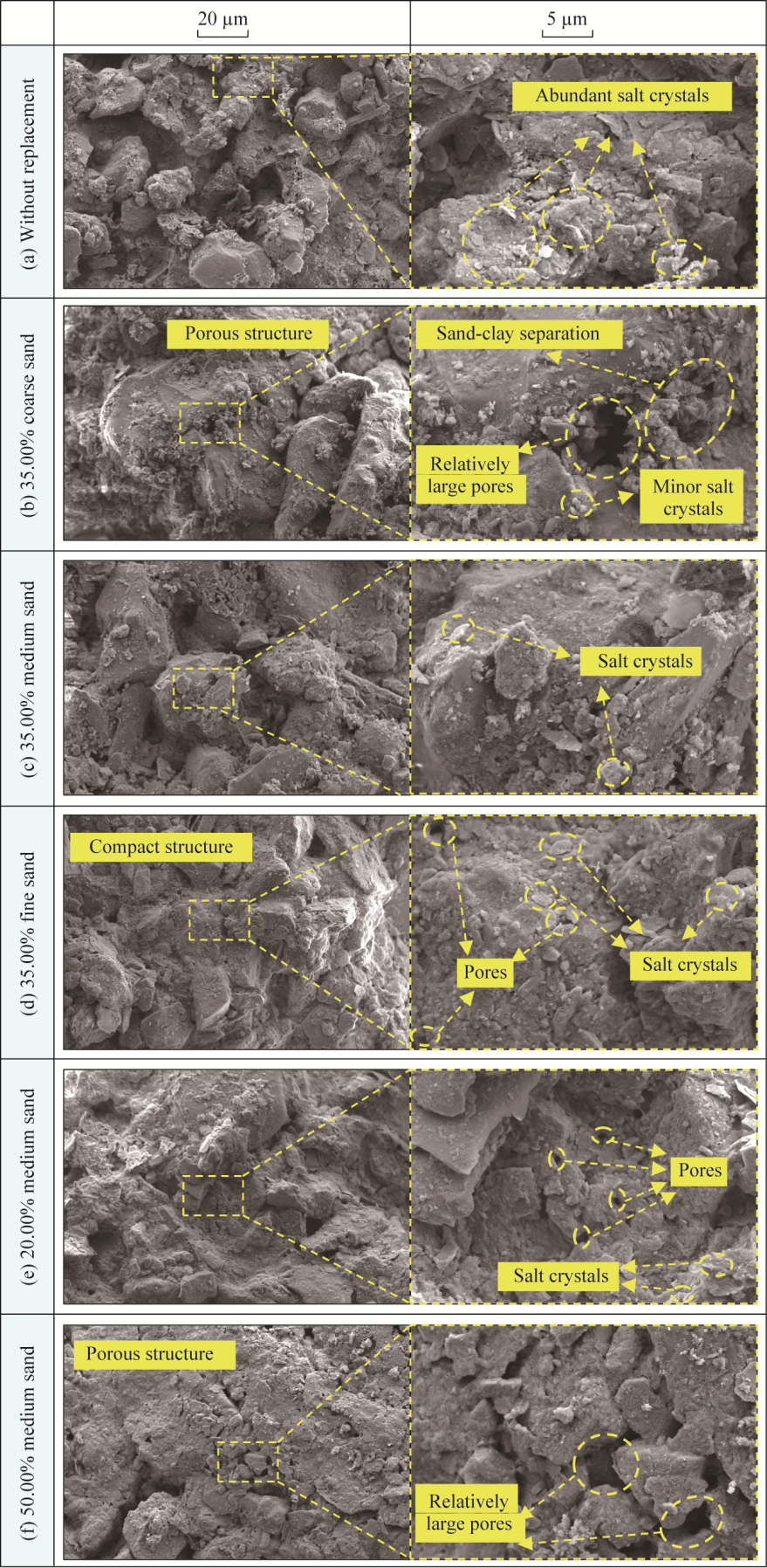
Fig. 26SEM images at a height of 20.0 cm for soil columns under different replacement conditions. (a), without replacement; (b), 35.00% coarse sand; (c), 35.00% medium sand; (d), 35.00% fine sand; (e), 20.00% medium sand; (f), 50.00% medium sand. The left and right columns correspond to 500× and 2000× magnifications, respectively.
Fig. 27Mechanism of crack formation and salt crystallization in saline soil under evaporation, and typical cracking and salinization distress observed in subgrades of saline soil regions. (a), ground cracking; (b), continuous evaporation in saline soil; (c), soil salinization.
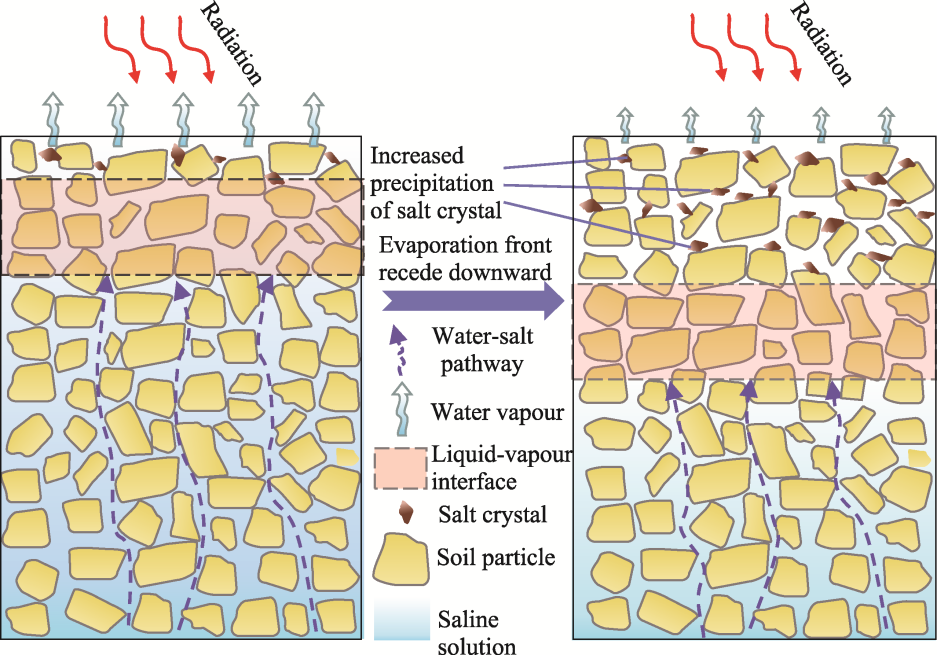
Fig. 28Evaporation front downward shift under continuous evaporation in saline soil subgrade
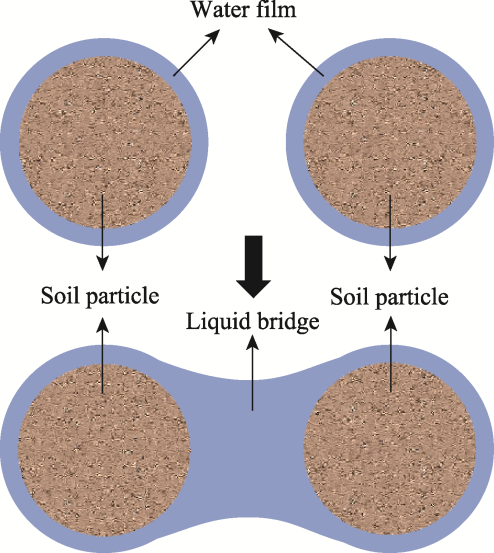
Fig. 29Schematic diagram of the "liquid bridge" phenomenon. The thin arrows indicate local heat transfer between soil particles and the surrounding water films, while the thick arrow represents the enhanced heat-transfer pathway formed by the liquid bridge.
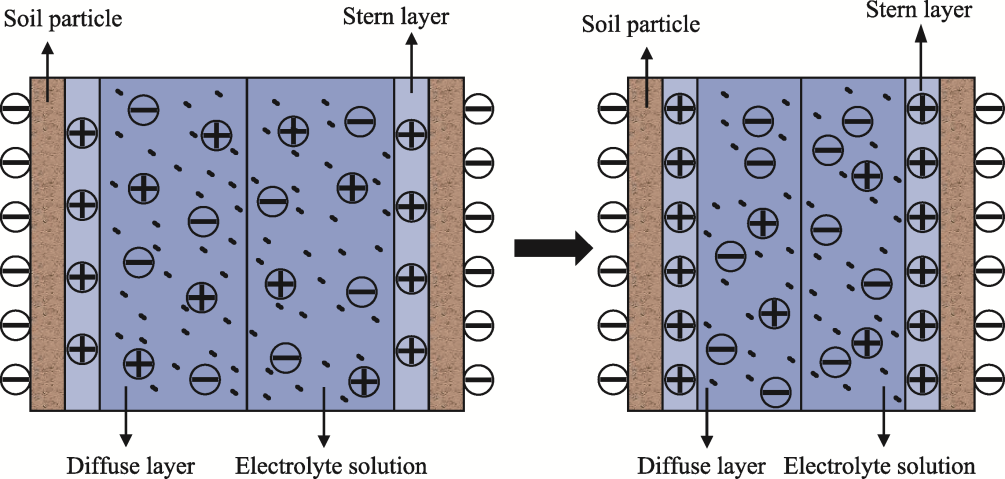
Fig. 30Schematic diagram of electrical double layer compression
[1]
Bayomy F M, Al-Shaikh A M, Abduljauwad S N, et al. 1996. Effect of geotextiles on permanent deformation in salt-encrusted subgrade soils. Transportation Research Board, 1534(1): 40-49.
doi: 10.1177/0361198196153400107
[2]
Bing H, Wu J J, Deng J. 2011. Variations of physical and mechanical properties of saline loess before and after desalting. Journal of Glaciology and Geocryology, 33(4): 796-800.
[3]
Cho J M, Park S Y, Baek K. 2010. Electrokinetic restoration of saline agricultural lands. Journal of Applied Electrochemistry, 40: 1085-1093.
doi: 10.1007/s10800-010-0072-3
[4]
Chou Y L, Zhang P, Yang W W, et al. 2024. Study on salt-frost heave characteristics, improvement effect, and curing mechanism of loess-like sulphate soil. Cold Regions Science and Technology, 224: 104241, doi: 10.1016/j.coldregions.2024.104241
[5]
Dai S, Shin H, Santamarina J. 2016. Formation and development of salt crusts on soil surfaces. Acta Geotechnica, 11: 1103-1109.
doi: 10.1007/s11440-015-0421-9
[6]
Dong L, Xiong Y W, Huang Q Z, et al. 2021. Evaporation-induced salt crystallization and feedback on hydrological functions in porous media with different grain morphologies. Journal of Hydrology, 598: 126427, doi: 10.1016/j.jhydrol.2021.126427.
[7]
Fujimaki H, Shimano T, Inoue M, et al. 2006. Effect of a salt crust on evaporation from a bare saline soil. Vadose Zone Journal, 5(4): 1246-1256.
doi: 10.2136/vzj2005.0144
[8]
Gao J S, Chen Z, Liang Y P. 2025. Analysis and implementation of improvement methods for saline soil subgrade in Xinjiang. Journal of Changchun Institute of Technology (Natural Science Edition), 26(1): 82-87. (in Chinese)
[9]
Gong X Y, Yang L, Liao X D, et al. 2025. Liquid bridge morphology and capillary bridge force between particles: Insights from experiment and numerical simulation. Chemical Engineering Science, 313(1): 121743, doi: 10.1016/j.ces.2025.121743.
[10]
Lai Y M, Wen W, Pei W S, et al. 2021. A novel transport model to predict the moisture-heat-gas-salt behavior in unsaturated saline soil under evaporation. Journal of Hydrology, 603: 127052, doi: 10.1016/j.jhydrol.2021.127052.
[11]
Li G Y, Yu W B, Ma W, et al. 2009. Experimental study of characteristics of frost and salt heaves of saline highway foundation soils in seasonally frozen regions in Gansu Province. Rock and Soil Mechanics, 30(8): 2276-2280. (in Chinese)
[12]
Li J Z, Lin H J, Liu J K, et al. 2023. Macro-micro characteristics of geopolymer-stabilized saline soil in seasonal frozen soil region. Case Studies in Construction Materials, 19: e02496, doi: 10.1016/j.cscm.2023.e02496.
[13]
Li P, Yang X, Wang Y. 2024. Experimental study on water and salt migration of replacement layer saline soil subgrade in Hexi Corridor. Engineering Journal of Wuhan University, 57(5): 582-592. (in Chinese)
[14]
Li X, Liu J Y, Zhang C. 2019. Study on subgrade water-salt migration and its influence on road performance weakening. Subgrade Engineering, 2019(6): 28-34. (in Chinese)
[15]
Li X H, Guo M. 2022. Experimental study of evaporation flux, salt precipitation, and surface temperature on homogeneous and heterogeneous porous media. Advances in Civil Engineering, 2022: 7434471, doi: 10.1155/2022/7434471.
[16]
Li X T, Zhang G, Wang C, et al. 2020. Water harvesting from soils by light-to-heat induced evaporation and capillary water migration. Applied Thermal Engineering, 175(5): 115417, doi: 10.1016/j.applthermaleng.2020.115417.
[17]
Licsandru G, Noiriel C, Duru P, et al. 2019. Dissolution-precipitation-driven upward migration of a salt crust. Physical Review E, 100: 032802, doi: 10.1103/PhysRevE.100.032802.
[18]
Liu B, Zhao W Z, Wen Z J, et al. 2019. Mechanisms and feedbacks for evapotranspiration-induced salt accumulation and precipitation in an arid wetland of China. Journal of Hydrology, 568: 403-415.
doi: 10.1016/j.jhydrol.2018.11.004
[19]
Lü Q F, Chang C R, Ma B, et al. 2018. Experimental study on water and salt migration of solidified sulphate saline soil. Chinese Journal of Rock Mechanics and Engineering, 37(2): 4290-4296. (in Chinese)
[20]
Lü T B, Liu Y F, Bian M H, et al. 2025. Spatial distribution and temporal evolution of soil salinization in the oasis irrigated area. Agronomy, 15(10): 2413, doi: 10.3390/agronomy15102413.
[21]
Ma X Y, Cao J Y, Han J B, et al. 2024. Water-salt migration and deformation characteristics in gravelly sulfate saline soil under the effect of localized fine sand accumulation. Cold Regions Science and Technology, 225: 104269, doi: 10.1016/j.coldregions.2024.104269.
[22]
Mao W, Shao P, Ruheiyan M, et al. 2025. Experimental study on water-salt migration of fine saline soils under different water-isolation condition. In:Proceedings of the 2025 8th International Conference on Traffic Transportation and Civil Architecture (ICTTCA 2025), Atlantis Highlights in Engineering. Dordrecht: Atlantis Press International BV, 940-948.
[23]
Maxwell R, Condon L. 2016. Connections between groundwater flow and transpiration partitioning. Science, 353(6297): 377-380.
doi: 10.1126/science.aaf7891
pmid: 27463671
[24]
Ministry of Transport of the People's Republic of China. 2019. Technical Specification for Construction of Highway Subgrades (JTG/T 3610-2019). Beijing: China Communications Press. (in Chinese)
[25]
Ministry of Transport of the People's Republic of China. 2021. Test Methods of Soils for Highway Engineering (JTG 3430-2020). Beijing: China Communications Press. (in Chinese)
[26]
Nachshon U, Weisbrod N, Katzir R, et al. 2018. NaCl crust architecture and its impact on evaporation: three‐dimensional insights. Geophysical Research Letters, 45(12): 6100-6108.
doi: 10.1029/2018GL078363
[27]
Qiu Y Q, Zhang L J, Liu Y, et al. 2025. Simulation test and engineering application of anti-salt separation layer setting technology of subgrade in inland saline soil region. Journal of Basic Science and Engineering, 33(2): 599-609.
[28]
Shen C, Cui K D, Wei S, et al. 2025. Numerical simulation of water evaporation and migration characteristics of heat storage soil layer at pore scale. Applied Thermal Engineering, 277(15): 127090, doi: 10.1016/j.applthermaleng.2025.127090.
[29]
Shokri-Kuehni S M, Rad M N, Webb C, et al. 2017. Impact of type of salt and ambient conditions on saline water evaporation from porous media. Advances in Water Resources, 105: 154-161.
doi: 10.1016/j.advwatres.2017.05.004
[30]
Teng J D, Zhang X, Zhang S, et al. 2019. An analytical model for evaporation from unsaturated soil. Computers and Geotechnics, 108: 107-116.
doi: 10.1016/j.compgeo.2018.12.005
[31]
Tian Q L, Zhu S Y, Lu J, et al. 2019. Study on water and salt transfer law of asphalt road in cold and drought saline area in Northwest China. Highway, 64(8): 22-27. (in Chinese)
[32]
Wan X S, Gong F M, Qu M F, et al. 2019. Experimental study of the salt transfer in a cold sodium sulfate soil. KSCE Journal of Civil Engineering, 23(4): 1573-1585.
doi: 10.1007/s12205-019-0905-5
[33]
Wang J, Shao M A. 2018. Solute transport characteristics of a deep soil profile in the Loess Plateau, China. Journal of Arid Land, 10(4): 628-637.
doi: 10.1007/s40333-018-0060-8
[34]
Wang X. 2017. Study on construction technology of saline soil subgrade. Highway, 62(12): 54-56. (in Chinese)
[35]
Wu M S, Huang J S, Wu J W, et al. 2016. Experimental study on evaporation from seasonally frozen soils under various water, solute and groundwater conditions in Inner Mongolia, China. Journal of Hydrology, 535: 46-53.
doi: 10.1016/j.jhydrol.2016.01.050
[36]
Xu S, Guo Y, Shan W. 2017. Experimental study on migration and salinity of remolded soil during freezing and thawing. Science Technology and Engineering, 17(30): 285-290. (in Chinese)
[37]
Xu X, Xu H Q, Zhang L, et al. 2025. Hydraulic and strength characteristics of chloride saline soil improved with carbide slag and ground granulated blast furnace slag. Construction and Building Materials, 492(19): 142971, doi: 10.1016/j.conbuildmat.2025.142971.
[38]
Yang B C, Wang W W, Yang L. 2011. Integrated control technology of salt-frost heave deformation in saline soil subgrade of southern Xinjiang. Arid Land Geography, 34(1): 133-142. (in Chinese)
[39]
Yang X, Wang Y, Li P. 2023. Study on water-salt migration rule of replacement of soil on saline soil subgrade under evaporation. Journal of Highway and Transportation Research and Development, 40(7): 68-77. (in Chinese)
[40]
Yang Y, Zhang M J, Zhang Y, et al. 2022. Evaluating the soil evaporation loss rate in a gravel-sand mulching environment based on stable isotopes data. Journal of Arid Land, 14(8): 925-939.
doi: 10.1007/s40333-022-0101-1
[41]
You Z M, Wen W, Lai Y M, et al. 2022. Model tests of the barrier measures on moisture and salt migration in soils subjected to freeze-thaw cycles. Cold Regions Science and Technology, 201: 103607, doi: 10.1016/j.coldregions.2022.103607.
[42]
Zhang L J, Qiu Y Q, Zhang F R, et al. 2023. Water-salt migration rules in chlorine saline soil under precipitation infiltration. Journal of Traffic and Transportation Engineering, 23(4): 116-127. (in Chinese)
[43]
Zhang T, Yang Y L, Cai G J, et al. 2025. A new thermal conductivity model of dry natural sands considering particle morphology. International Communications in Heat and Mass Transfer, 161: 108543, doi: 10.1016/j.icheatmasstransfer.2024.108543.
[44]
Zhang X D, Liu S W, Wang Q, et al. 2019. Experimental investigation of water migration characteristics for saline soil. Polish Journal of Environmental Studies, 28(3): 1495-1505.
doi: 10.15244/pjoes/85952
[45]
Zhang X D, Ye P, Wu Y J, et al. 2022. Experimental study on simultaneous heat-water-salt migration of bare soil subjected to evaporation. Journal of Hydrology, 609: 127710, doi: 10.1016/j.jhydrol.2022.127710.
[46]
Zhang Y B, Chou Y L, Zhao D, et al. 2025a. Experimental and numerical simulation studies on water and salt migration in loess-like sulfate saline soils under evaporation conditions. Journal of Hydrologic Engineering, 30(4): 04025021, doi: 10.1061/JHYEFF.HEENG-6503.
[47]
Zhang Y B, Chou Y L, Zhao D, et al. 2025b. Experimental and model research on the evaporation of loess-like sulfate saline soil considering the influence of initial salt content. Journal of Arid Land, 17(7): 912-932.
doi: 10.1007/s40333-025-0103-x
[48]
Zhao Y, Lu Z, Liu J, et al. 2025. A novel approach to water-salt migration prevention: foamed lightweight soil barrier layer technology. Cold Regions Science and Technology, 236: 104514, doi: 10.1016/j.coldregions.2025.104514.
[49]
Zhou F X, Yang J Y, Ju W T, et al. 2024a. Study on water and salt migration and deformation characteristics of coarse-grained sulfate saline soil. Journal of Glaciology and Geocryology, 46(1): 199-210. (in Chinese)
[50]
Zhou F X, Yang J Y, Ju W T, et al. 2024b. Study on the hydro-thermal-salt-mechanical coupling characteristics of sulfate saline soil under freeze-thaw cycles. Cold Regions Science and Technology, 226: 104289, doi: 10.1016/j.coldregions.2024.104289.
[51]
Zhou T Z, Xin P, Li L, et al. 2020. Effects of large macropores on soil evaporation in salt marshes. Journal of Hydrology, 584: 124754, doi: 10.1016/j.jhydrol.2020.124754.
[52]
Zou Y P, Zhang S Y, Shi Z Y, et al. 2022. Effects of mixed-based biochar on water infiltration and evaporation in aeolian sand soil. Journal of Arid Land, 14(4): 374-389.
doi: 10.1007/s40333-022-0060-6