Characteristics and development patterns of blowout distribution in the Horqin Sandy Land, China
GUAN Xiaopeng1, DU Huishi1,*(), HASI Eerdun2
1College of Geographical Science and Tourism, Jilin Normal University, Siping 136000, China 2Faculty of Geographical Science, Beijing Normal University, Beijing 100875, China
Blowouts are important aeolian landforms in the Horqin Sandy Land, China and their development and evolution are crucial for understanding regional environmental changes. However, relevant studies remain scarce, and those that exist have primarily focused on dune dynamics rather than blowout-specific processes. Based on multi-temporal high-resolution satellite remote sensing images and field measurement data from 2017 to 2024, this study analyzed the distribution pattern, dynamic evolution, developmental models, and driving factors of blowouts in the Horqin Sandy Land. We used the space-for-time substitution method to classify developmental stages according to morphological parameters and employed spatial interpolation (kriging) to construct high-precision digital elevation models (DEMs) from Real-Time Kinematic-Global Positioning System (RTK-GPS) survey data. The results showed that the main types of blowouts in the Horqin Sandy Land are trough, saucer, and composite blowouts, located between 119°19′26′′-119°26′15′′E and 43°05′20′′-43°12′13′′N, mostly distributed in linear or beaded patterns that are closely related to regional wind regimes and gentle terrain. From 2017 to 2024, the areas of saucer, trough, and composite blowouts in the study area increased by 49.20%, 34.88%, and 30.64%, respectively. The evolutionary process of blowouts can be divided into three developmental stages: initial stage (IS), mature stage (MS), and stable stage (SS). The IS can be further subdivided into three subtypes: IS-I (morphological initiation), IS-II (morphological expansion), and IS-III (morphological stabilization). As blowouts evolved from the IS to the SS, their morphology continuously enlarged. The growth rate of the length-to-width ratio gradually decreased, whereas the growth rates of both area and volume showed an increasing trend. These changes were driven by airflow erosion and modulated by vegetation cover and soil texture. Notably, blowouts in the SS exhibited the most significant changes during the study period, with their area and volume changing by 684.74 m2 and 2284.39 m3, respectively, while their length-to-width ratio and height slightly decreased. Erosion-deposition patterns differed among blowout components: in contrast to the erosion-dominated sidewalls and upwind entrance, the erosion pit area was predominantly characterized by deposition, resulting from airflow deceleration and additional sediment input from livestock trampling and sidewall collapse. This study provides a scientific basis for establishing a developmental model of blowouts and promoting the sustainable development of the Horqin Sandy Land.
Received: 17 December 2025
Published: 30 June 2026
Conceptualization: DU Huishi; Methodology: GUAN Xiaopeng; Formal analysis: HASI Eerdun; Writing - original draft preparation: GUAN Xiaopeng; Writing - review and editing: GUAN Xiaopeng; Software: GUAN Xiaopeng; Funding acquisition: DU Huishi; Resources: DU Huishi; Supervision: HASI Eerdun. All authors approved the manuscript.
GUAN Xiaopeng, DU Huishi, HASI Eerdun. Characteristics and development patterns of blowout distribution in the Horqin Sandy Land, China. Journal of Arid Land, 2026, 18(6): 994-1013.
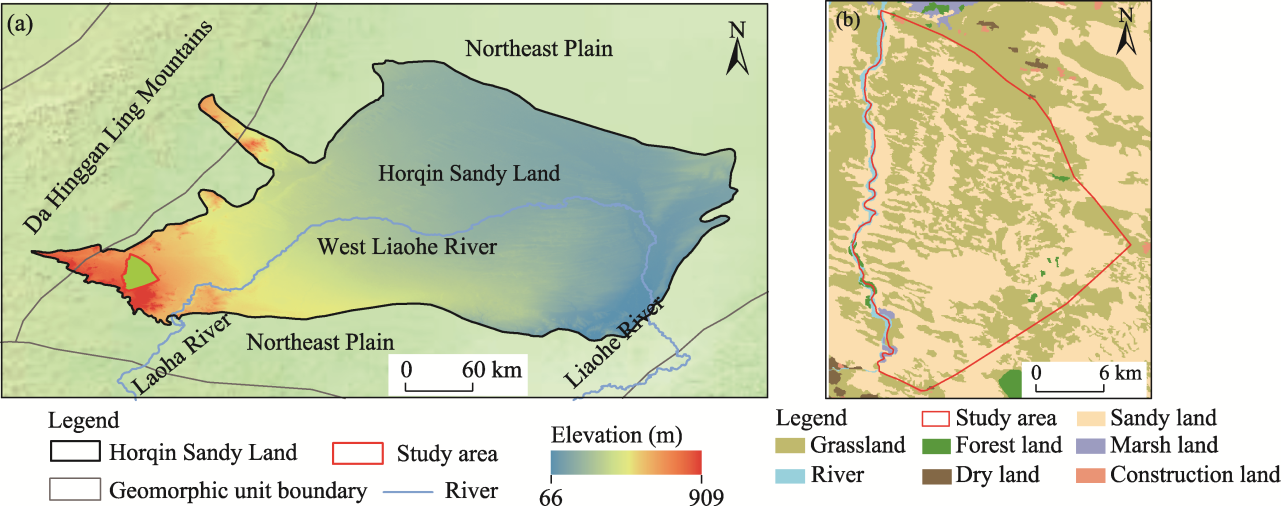
Fig. 1Location of the study area in the Horqin Sandy Land (a) and overview of the study area (b)
Developmental stage
Subtype
Area range (m2)
Depth range (m)
Length-to-width ratio range
Initial stage (IS)
IS-I
≤100.00
≤0.50
1.24-1.80
IS-II
100.00-300.00
0.50-1.50
1.80-2.30
IS-III
300.00-800.00
1.50-2.50
2.30-2.80
Mature stage (MS)
/
800.00-1500.00
2.50-3.50
3.00-3.50
Stable stage (SS)
/
>1500.00
>3.50
2.63-3.76
Table 1 Classification criteria for developmental stages of blowouts in the Horqin Sandy Land
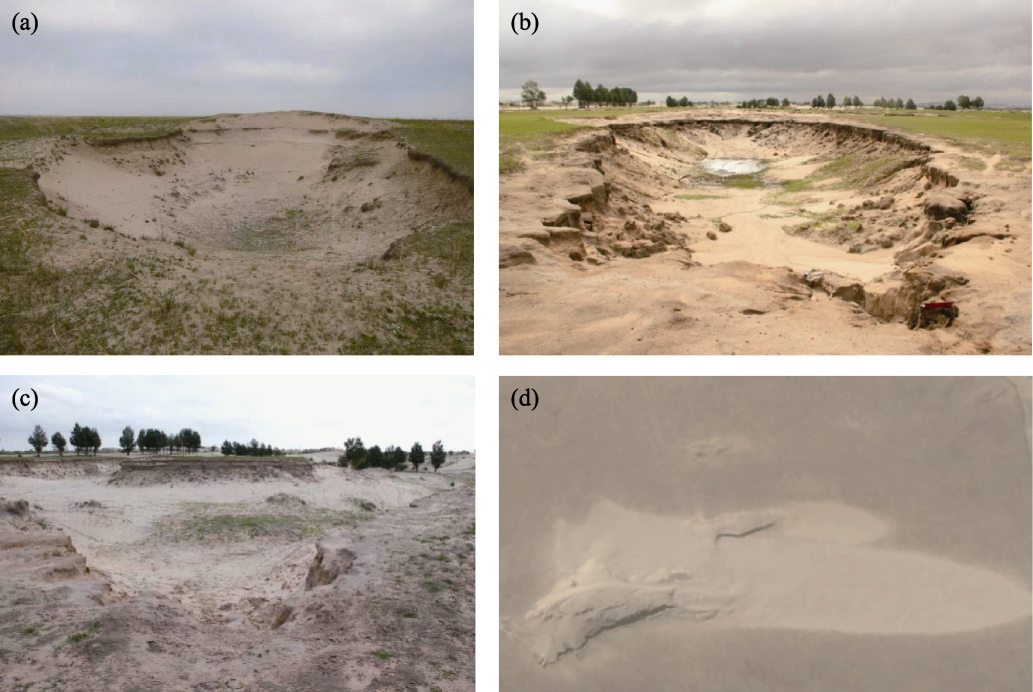
Fig. 2Photos showing the typical blowouts in the Horqin Sandy Land. (a), saucer blowout; (b), trough blowout; (c and d), composite blowouts.
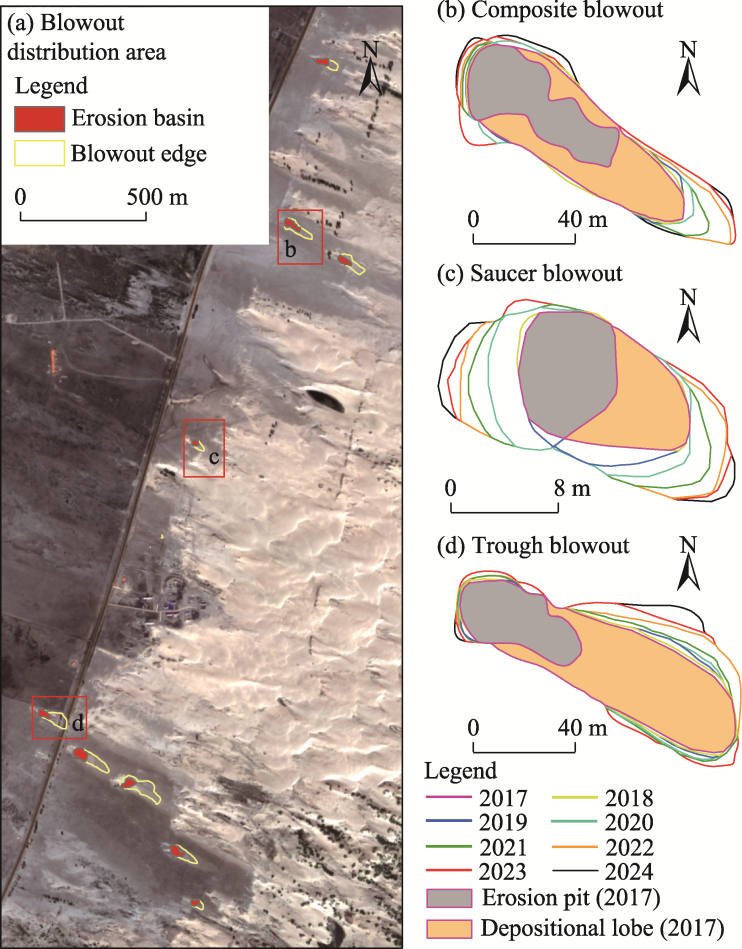
Fig. 3Evolution process of blowout groups. (a), main distribution area of blowouts in the study area (2024 Gaofen-2 satellite image); (b), evolution of composite blowout from 2017 to 2024; (c), evolution of saucer blowout from 2017 to 2024; (d), evolution of trough blowout from 2017 to 2024.
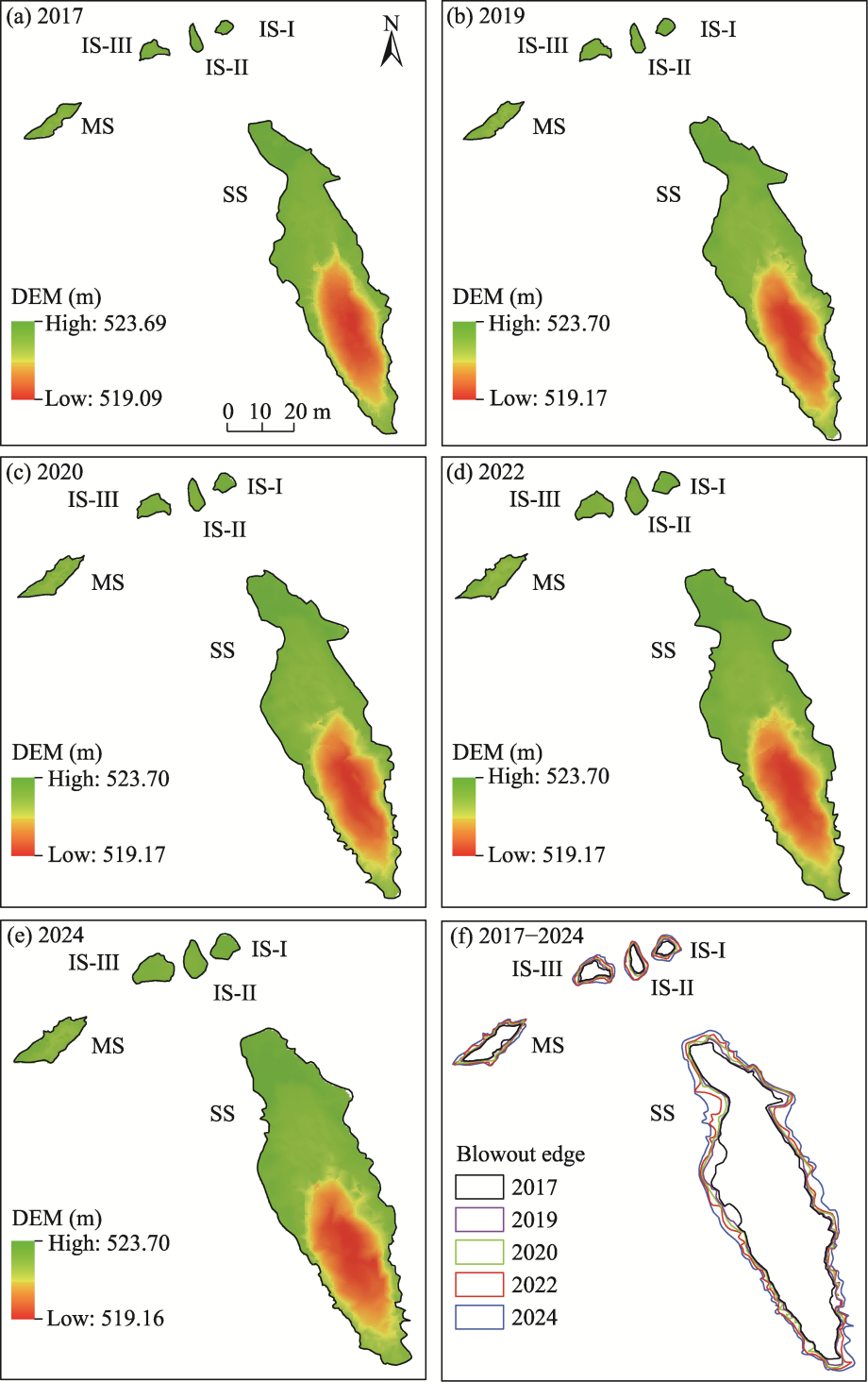
Fig. 4Morphological changes of typical blowouts in the Horqin Sandy Land in different years. (a), 2017; (b), 2019; (c), 2020; (d), 2022; (e), 2024; (f), superimposed dynamic changes of boundary outlines of blowouts from 2017 to 2024. Each panel contains five types of blowouts, representing the three sub-types of initial stage (IS): IS-I (morphological initiation), IS-II (morphological expansion), and IS-III (morphological stabilization), as well as blowouts in the mature stage (MS) and stable stage (SS). DEM, digital elevation model.
Developmental stage
Area of blowouts (m2)
2017
2019
2020
2022
2024
IS-I
13.61
18.14
23.04
31.29
40.93
IS-II
18.25
22.41
27.78
42.55
48.04
IS-III
26.64
34.45
40.76
53.53
69.49
MS
59.17
68.24
83.33
100.57
121.63
SS
1517.53
1674.20
1782.12
1946.09
2202.27
Table 2 Area changes of blowouts in the different developmental stages from 2017 to 2024
Developmental stage
Volume of blowouts (m3)
2017
2019
2020
2022
2024
IS-I
2.93
2.52
3.46
4.54
6.51
IS-II
5.20
12.80
15.78
24.38
28.58
IS-III
15.53
16.98
12.27
22.05
31.83
MS
46.86
59.98
64.91
86.09
107.52
SS
5804.55
6050.56
6445.93
7050.68
8088.94
Table 3 Volume changes of blowouts in the different developmental stages from 2017 to 2024
Developmental stage
Axis
Length in 2017 (m)
Length in 2024 (m)
Increase (m)
Growth rate (%)
IS-I
Long
5.30
8.10
2.80
52.83
Short
3.80
6.55
2.75
72.37
IS-II
Long
8.40
11.15
2.75
32.74
Short
3.00
6.20
3.20
106.67
IS-III
Long
9.00
12.28
3.28
36.44
Short
4.50
8.54
4.04
89.78
MS
Long
19.30
24.52
5.22
27.05
Short
4.60
7.78
3.18
69.13
SS
Long
98.62
104.80
6.18
6.27
Short
26.60
29.60
3.00
11.28
Table 4 Changes in long and short axes of blowouts in the different developmental stages from 2017 to 2024
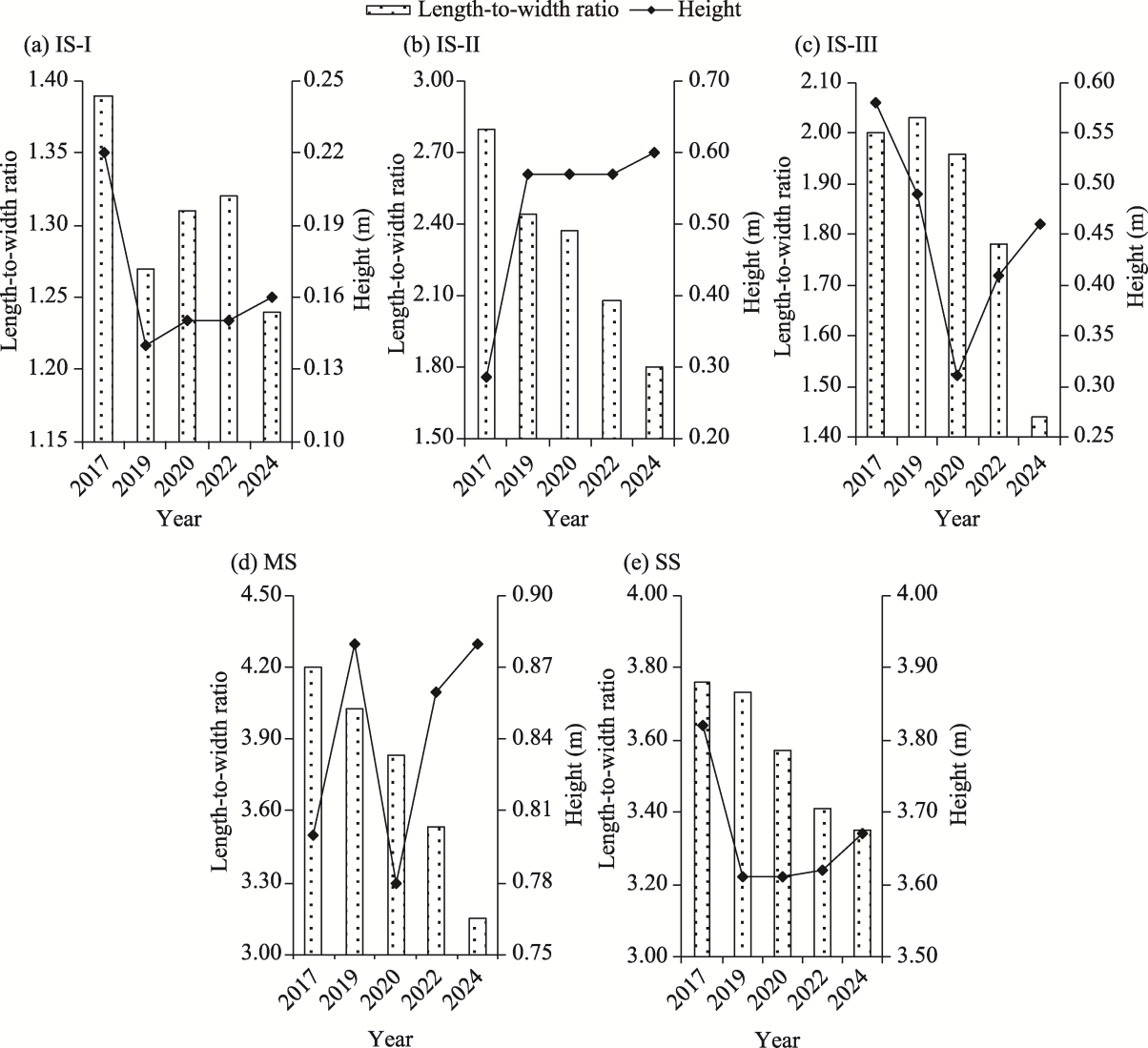
Fig. 5Interannual variations of length-to-width ratio and height of blowouts in the different developmental stages from 2017 to 2024. (a), IS-I; (b), IS-II; (c), IS-III; (d), MS; (e), SS.
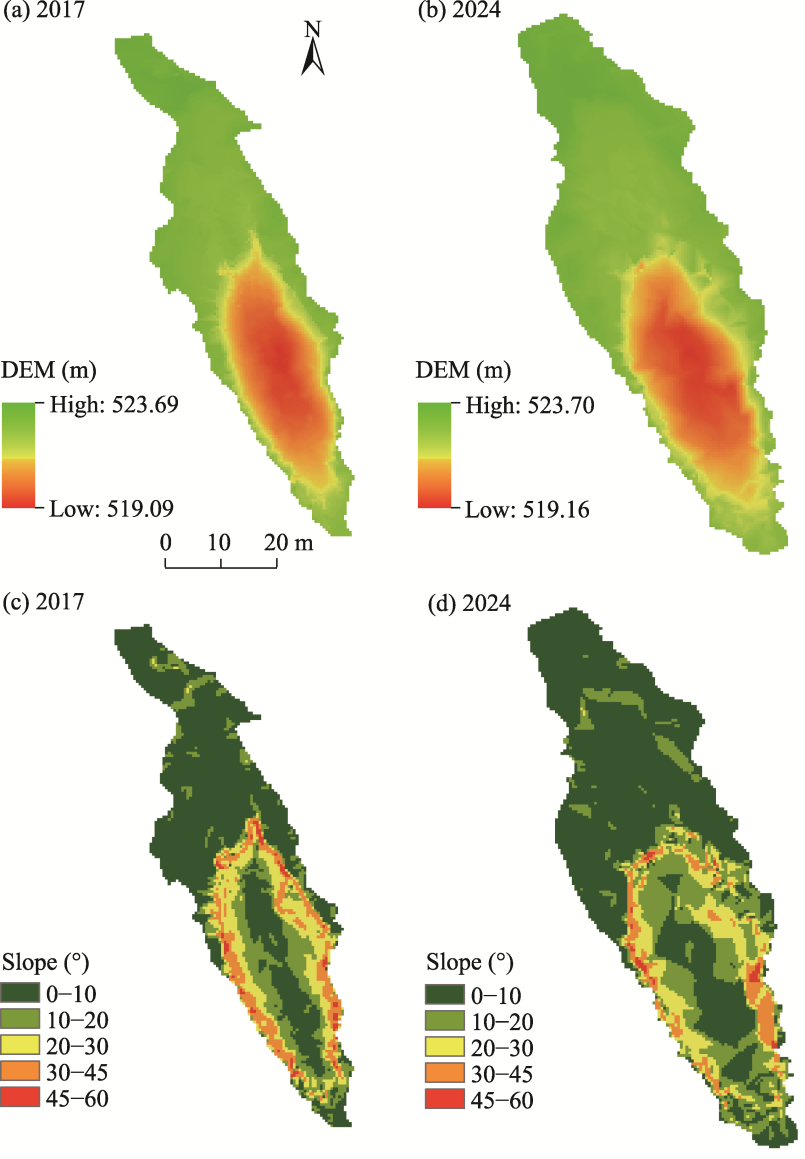
Fig. 6Comparison of DEM (a and b) and slope gradients (c and d) of a typical blowout in the SS in 2017 and 2024
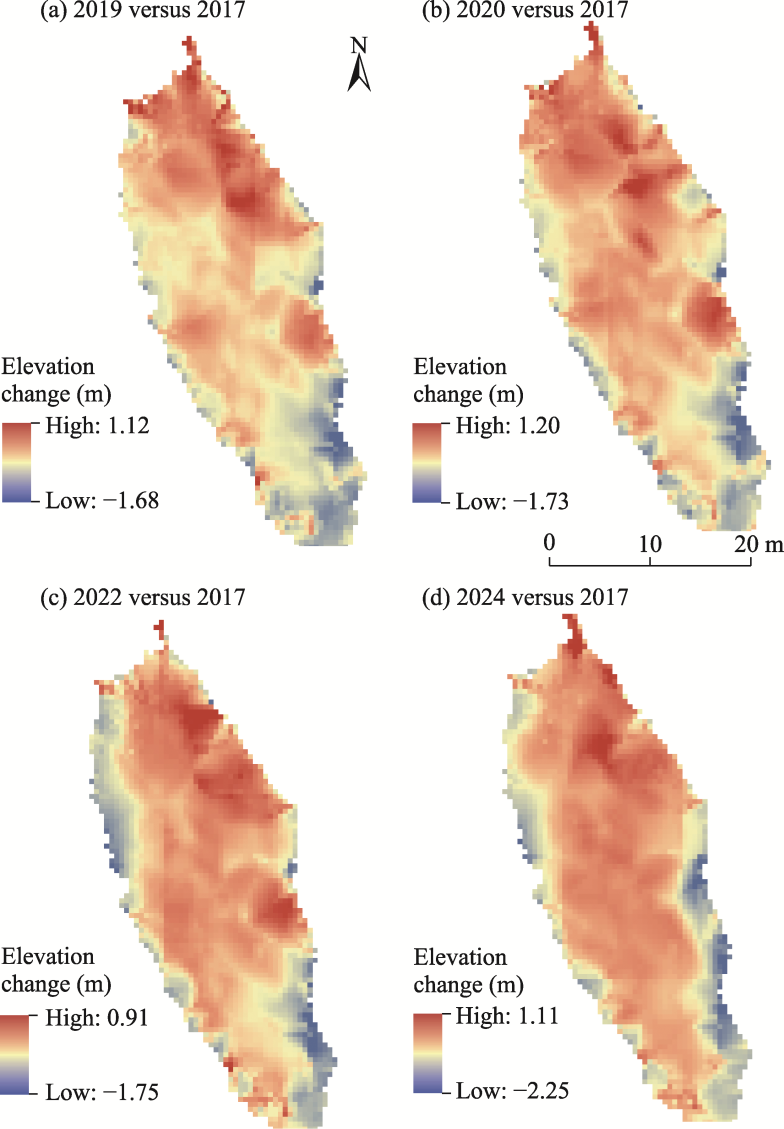
Fig. 7Changes in erosion and deposition patterns of a typical blowout in the SS using 2017 as the baseline year. (a), 2019 versus 2017; (b), 2020 versus 2017; (c), 2022 versus 2017; (d), 2024 versus 2017. Blue color represents sediment erosion, and red color represents sediment deposition.
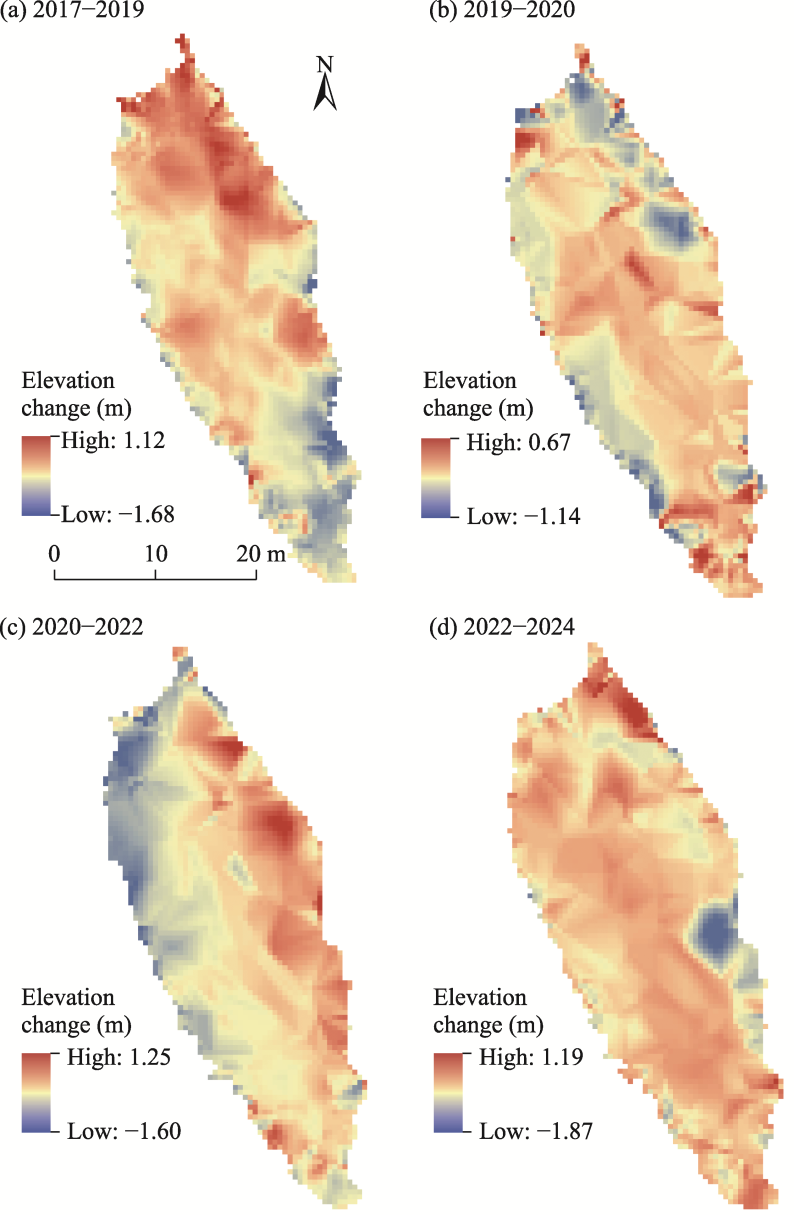
Fig. 8Changes in erosion and deposition patterns of a typical blowout in the SS during different time intervals from 2017 to 2024. (a), changes from 2017 to 2019; (b), changes from 2019 to 2020; (c), changes from 2020 to 2022; (d), changes from 2022 to 2024. Blue color represents erosion, and red color represents deposition.
[1]
Abhar K C, Walker I J, Hesp P A, et al. 2015. Spatial-temporal evolution of aeolian blowout dunes at Cape Cod. Geomorphology, 236: 148-162.
doi: 10.1016/j.geomorph.2015.02.015
[2]
Alamusa, Yang T T, Cao J, et al. 2017. Soil moisture influences vegetation distribution patterns in sand dunes of the Horqin Sandy Land, Northeast China. Ecological Engineering, 105: 95-101.
doi: 10.1016/j.ecoleng.2017.04.035
[3]
Bagnold R A. 1941. The Physics of Blown Sand and Desert Dunes. London: Methuen & Co., Ltd.
[4]
Blanco D P, Cé R, Rostagno M S, et al. 2008. Grazing impacts in vegetated dune fields: predictions from spatial pattern analysis. Rangeland Ecology & Management, 61(2): 194-203.
doi: 10.2111/06-063.1
[5]
Byrne M L. 1997. Seasonal sand transport through a trough blowout at Pinery Provincial Park, Ontario. Canadian Journal of Earth Sciences, 34(11): 1460-1466.
doi: 10.1139/e17-118
[6]
Caster J, Sankey J B, Sankey T T, et al. 2024. Do topographic changes tell us about variability in aeolian sediment transport and dune mobility? Analysis of monthly to decadal surface changes in a partially vegetated and biocrust covered dunefield. Geomorphology, 447: 109021, doi: 10.1016/j.geomorph.2023.109021.
[7]
Che X H, Luo W Y, Shao M, et al. 2021. Form-flow feedback within blowouts at different developing stages in the Gonghe Basin, Qinghai Province. Advances in Earth Science, 36(1): 95-109. (in Chinese)
[8]
Cooper W S. 1958. Coastal Sand Dunes of Oregon and Washington (1st ed.). Boulder: Geological Society of America, 1-189.
[9]
Cui K J, Li S Y, Wang H F, et al. 2022. Three dimensional flow field characteristics of two typical blowout in the dry lake basin of Taitema Lake and their influence on wind erosion. Arid Land Geography, 45(6): 1784-1794. (in Chinese)
doi: 10.12118/j.issn.1000-6060.2022.066
[10]
Cui Z Z, Ma C, Chen D K. 2021. Spatiotemporal variation of vegetation in the Horqin Sandy Land and its response to climate change from 1982-2015. Arid Zone Research, 38(2): 536-544. (in Chinese)
doi: 10.13866/j.azr.2021.02.25
[11]
Dong G R, Li C Z, Jin J, et al. 1987. Some results of wind tunnel simulation experiments on soil wind erosion. Chinese Science Bulletin, 32(24): 1703-1709. (in Chinese)
[12]
Dong Y X, Hesp P A, Namikas S L, et al. 2008. Field measurements of structure of wind-sand flow on coastal transverse ridge in China. Scientia Geographica Sinica, 28(4): 507-512. (in Chinese)
doi: 10.13249/j.cnki.sgs.2008.04.507
[13]
Dong Y X, Zhang Q N, Huang D Q. 2019. Progress and prospect of research on coastal wind-eroded landform. Advances in Earth Science, 34(1): 1-10. (in Chinese)
doi: 10.11867/j.issn.1001-8166.2019.01.0001
[14]
Du H S, Hasi E, Wang Z M. 2017. Boundary delimitation and characteristics of aeolian sand landform in Horqin Sandy Land. Journal of Beijing Normal University (Natural Science), 53(1): 33-37. (in Chinese)
[15]
Du H S, Hasi E, Li S, et al. 2018. Landscape evolution and influence factors of aeolian sand and lakes in Horqin Sandy Land. Scientia Geographica Sinica, 38(12): 2109-2117. (in Chinese)
doi: 10.13249/j.cnki.sgs.2018.12.020
[16]
Du Y, Bagan H, Takeuchi W. 2019. Land-use/land-cover change and drivers of land degradation in the Horqin Sandy Land, China. In:IGARSS 2019-2019 IEEE International Geoscience and Remote Sensing Symposium. Piscataway: IEEE Press, 1-5.
[17]
Duan H C, Wang T, Xue X, et al. 2014. Dynamics of aeolian desertification and its driving forces in the Horqin Sandy Land, Northern China. Environmental Monitoring and Assessment, 186(10): 6083-6096.
doi: 10.1007/s10661-014-3841-3
[18]
Fraser G S, Bennett S W, Olyphant G A, et al. 1998. Windflow circulation patterns in a coastal dune blowout. Journal of Coastal Research, 14(2): 451-460.
[19]
Gares P A, Nordstrom K F. 1995. A cyclic model of foredune blowout evolution for a leeward coast: island beach, New Jersey. Annals of the Association of American Geographers, 85(1): 1-20.
[20]
Guo X Y, Yang G, Li Q H, et al. 2022. Changes in vegetation and soil properties between shelterbelts of Populus simonii in Naiman sand zone of Horqin Sandy Land area. Bulletin of Soil and Water Conservation, 42(6): 129-136. (in Chinese)
[21]
Guo Z Y, Xie Y H, Gao L, et al. 2024. A study on the morphology evolution of blowouts in sandy grassland area: taking Dahekou town, Xilingol League as an example. Acta Ecologica Sinica, 44(22): 10401-10410. (in Chinese)
[22]
Hesp P A. 1996. Flow dynamics in a trough blowout. Boundary-Layer Meteorology, 77(3): 305-330.
doi: 10.1007/BF00123530
[23]
Hesp P A. 2002. Foredunes and blowouts: initiation, geomorphology and dynamics. Geomorphology, 48(1-3): 245-268.
doi: 10.1016/S0169-555X(02)00184-8
[24]
Hesp P A, Walker I J. 2012. Three-dimensional aeolian dynamics within a bowl blowout during offshore winds: Greenwich dunes, Prince Edward Island, Canada. Aeolian Research, 3(4): 389-399.
doi: 10.1016/j.aeolia.2011.09.002
[25]
Hesp P A, Hilton M, Konlecher T. 2017. Flow and sediment transport dynamics in a slot and cauldron blowout and over a foredune, Mason Bay, Stewart Island (Rakiura), NZ. Geomorphology, 295: 598-610.
doi: 10.1016/j.geomorph.2017.08.024
[26]
Huang D Q, Dong Y X, Hasi E, et al. 2011. Field measurements of movement and topographic change of coastal transverse ridge. Geographical Research, 30(12): 2229-2238. (in Chinese)
[27]
Huang X L, Tang G A, Zhu T X, et al. 2019. Space-for-time substitution in geomorphology. Journal of Geographical Sciences, 29(10): 1670-1680.
doi: 10.1007/s11442-019-1684-0
[28]
Hugenholtz C H, Wolfe S A. 2006. Morphodynamics and climate controls of two aeolian blowouts on the northern Great Plains, Canada. Earth Surface Processes and Landforms, 31(12): 1540-1557.
doi: 10.1002/esp.v31:12
[29]
Jungerius P D, Witter J V, Van Boxel J H. 1991. The effects of changing wind regimes on the development of blowouts in the coastal dunes of the Netherlands. Landscape Ecology, 6(1): 41-48.
doi: 10.1007/BF00157743
[30]
Kono A, Kimura K, Yamada S, et al. 2025. Effectiveness of sand-fixing measures for restoration of vegetation and mitigation of wind erosion and deposition in a degraded sandy rangeland, northern China. Ecological Engineering, 211: 107456, doi: 10.1016/j.ecoleng.2024.107456.
[31]
Li A M, Zhao P C, Han Z W. 2024. The moving trajectory fitting based on three-dimensional digital model of barchan dunes. Journal of Desert Research, 44(2): 48-56. (in Chinese)
doi: 10.7522/j.issn.1000-694X.2023.00122
[32]
Li S Q, Hasi E, Du H S, et al. 2012. Interaction between airflow and shape of saucer blowout in sandy grassland. Journal of Desert Research, 32(5): 1201-1209. (in Chinese)
[33]
Liu J H, Guo Z R, Lei H Y, et al. 2008. A study on coastal dune blowouts in east coast of Changle. Journal of Oceanography in Taiwan Strait, 27(2): 230-236. (in Chinese)
[34]
Luo W Y, Wang Z Y, Lu J F, et al. 2019. Mega-blowouts in Qinghai-Tibet Plateau: Morphology, distribution and initiation. Earth Surface Processes and Landforms, 44(2): 449-458.
doi: 10.1002/esp.v44.2
[35]
Melton F A. 1940. A tentative classification of sand dunes its application to dune history in the Southern High Plains. The Journal of Geology, 48(2): 113-174.
doi: 10.1086/624871
[36]
Mir-Gual M, Pons G X, Martin-Prieto J A, et al. 2013. Geomorphological and ecological features of blowouts in a western Mediterranean coastal dune complex: a case study of the Es Comú de Muro beach-dune system on the island of Mallorca, Spain. Geo-Marine Letters, 33(2-3): 129-141.
doi: 10.1007/s00367-012-0298-7
[37]
Pluis J L A. 1992. Relationships between deflation and near surface wind velocity in a coastal dune blowout. Earth Surface Processes and Landforms, 17(7): 663-673.
doi: 10.1002/esp.v17:7
[38]
Pye K. 1982. Morphological development of coastal dunes in a humid tropical environment, Cape Bedford and Cape Flattery, North Queensland. Geografiska Annaler: Series A, Physical Geography, 64(3-4): 213-227.
doi: 10.1080/04353676.1982.11880067
[39]
René C, Robin N, Smyth T A G, et al. 2025. Dynamics and sediment transport in a path-induced blowout in opposing wind conditions. Science of The Total Environment, 978: 179340, doi: 10.1016/j.scitotenv.2025.179340.
[40]
Shi P J. 1986. A discussion on the surface morphological characteristics and development process of desertified land in the Daqinggou area of southern Horqin. Journal of Inner Mongolia Normal University (Natural Science Edition), (1): 43-54. (in Chinese)
[41]
Shumack S, Hesse P, Turner L. 2017. The impact of fire on sand dune stability: surface coverage and biomass recovery after fires on Western Australian coastal dune systems from 1988 to 2016. Geomorphology, 299: 39-53.
doi: 10.1016/j.geomorph.2017.10.001
[42]
Smith A, Gares P A, Wasklewicz T A, et al. 2017. Three years of morphologic changes at a bowl blowout, Cape Cod, USA. Geomorphology, 295: 425-466.
[43]
Smyth T A G, Jackson D W T, Cooper J A G. 2011. Computational fluid dynamic modelling of three-dimensional airflow over dune blowouts. Journal of Coastal Research, (SI 64): 314-318.
[44]
Smyth T A G, Jackson D W T, Cooper A. 2013. Three dimensional airflow patterns within a coastal trough-bowl blowout during fresh breeze to hurricane force winds. Aeolian Research, 9: 111-123.
doi: 10.1016/j.aeolia.2013.03.002
[45]
Sun Y, Du H S, Liu M P, et al. 2015. A review on morphodynamic processes of blowouts. Scientia Geographica Sinica, 35(7): 898-904. (in Chinese)
doi: 10.13249/j.cnki.sgs.2015.07.898
[46]
Sun Y, Hasi E, Liu M, et al. 2016. Airflow and sediment movement within an inland blowout in Hulun Buir sandy grassland, Inner Mongolia, China. Aeolian Research, 22: 13-22.
doi: 10.1016/j.aeolia.2016.05.002
[47]
Sun Y M, Tian Q, Lv P, et al. 2021. Response of structure of plant community to extreme drought in fixed dunes and grassland in the Horqin Sandy Land. Journal of Desert Research, 41(1): 129-136. (in Chinese)
doi: 10.7522/j.issn.1000-694X.2020.00065
[48]
Wan W, Yan C Z, Xiao S C, et al. 2018. Process, spatial pattern and driving mechanisms of the aeolian desertification in the Alxa Plateau from 1975 to 2015. Journal of Desert Research, 38(1): 17-29. (in Chinese)
doi: 10.7522/j.issn.1000-694X.2017.00086
[49]
Wu Y J, Liu T X, Tong X, et al. 2020. Dynamic evolution analysis of land use (land cover) in Horqin Sandy Land based on long time series Landsat data. Acta Ecologica Sinica, 40(23): 8672-8682. (in Chinese)
[50]
Xiong M, He Q, Yang X H, et al. 2017. The spatial difference of wind sand flow structure over a flat sandy surface of the Taklimakan Desert. Journal of Xinyang Normal University (Natural Science Edition), 30(3): 412-416. (in Chinese)
[51]
Yan D R. 2016. Impact factors and morphological characteristics of blowouts in Hunshandake Sandland. Scientia Geographica Sinica, 36(4): 637-642. (in Chinese)
doi: 10.13249/j.cnki.sgs.2016.04.019
[52]
Yuan L M, Yang Z G, Xue B, et al. 2022. Heterogeneity of soil moisture of blowouts in HulunBuir grassland. Arid Zone Research, 39(5): 1598-1606. (in Chinese)
doi: 10.13866/j.azr.2022.05.24
[53]
Zhang D P, Feng Z W, Wang X K, et al. 2006a. A preliminary study on blowouts in the sandy grassland of Hulunbeier. Progress in Natural Science, 16(10): 1341-1345. (in Chinese)
[54]
Zhang D P, Wang X K, Hasi E, et al. 2006b. HulunBuir sandy grassland blowouts: Geomorphology, classification, and significances. Journal of Desert Research, 26(6): 894-902. (in Chinese)
[55]
Zhang D P, Sun H W, Wang X K, et al. 2007a. HulunBuir sandy grassland blowouts (Ⅱ): Process of development and landscape evolution. Journal of Desert Research, 27(1): 20-24. (in Chinese)
[56]
Zhang D P, Wang X K, Hu R L, et al. 2007b. HulunBuir sandy grassland blowouts (Ⅲ): Influence of soil layer and microrelief. Journal of Desert Research, 27(1): 25-31. (in Chinese)
[57]
Zhang S Y, Dong Y X. 2019. Research progress on morphodynamics of coastal sandy blowout. Advances in Earth Science, 34(10): 1028-1037. (in Chinese)
doi: 10.11867/j.issn.1001-8166.2019.10.1028
[58]
Zhang S Y, Qiu X, Fu S Y, et al. 2022. Evolution of blowouts in artificial foredunes on Pingtan Island, China. Earth Surface Processes and Landforms, 47(10): 2597-2611.
doi: 10.1002/esp.v47.10
[59]
Zhang S Y, Dong Y X, Hasi E, et al. 2024a. Morphodynamics and morphological evolution characteristics of blowouts dunefields: A case study in Haitan Island, Fujian. Geographical Research, 43(1): 255-271. (in Chinese)
doi: 10.1111/ages.2005.43.issue-2
[60]
Zhang S Y, Dong Y X, Tian W, et al. 2024b. Morphological changes and its dynamic mechanism of trough blowout in artificial foredune: a case study in Pingtan Island. Scientia Geographica Sinica, 44(8): 1492-1502. (in Chinese)
[61]
Zhou J, Zhang F R, Xu Y, et al. 2017. Analysis of land use/cover pattern and its changes in the agro-pastoral ecotone based on the precipitation and soil types: a case study of Horqin Left Rear Banner. Geographical Research, 36(7): 1210-1222. (in Chinese)
[62]
Zhou Y G, Hasi E, Wang Z R, et al. 2022a. Dynamics of blowouts indicating the process of grassland desertification. Land Degradation & Development, 33(15): 2885-2897.
doi: 10.1002/ldr.v33.15
[63]
Zhou Y G, Hasi E, Yin J, et al. 2022b. Morphological dynamics of a trough-shaped blowout on a fixed dune in China. Aeolian Research, 59: 100830, doi: 10.1016/j.aeolia.2022.100830.
[64]
Zhou Y G, Wang Z R, Qing D N, et al. 2023. Morphological changes and dynamic mechanism of blowouts on fixed dunes in the Otingdag sandy land, China. Chinese Science Bulletin, 68(11): 1298-1311. (in Chinese)
[65]
Zhuang M Y, Hasi E. 2005. Progress of the study on shapes and dynamical process of blowouts on dunes. Arid Land Geography, 28(5): 632-637. (in Chinese)