Desert legume-derived sucrose transporter EsSUC8 enhances plant growth and salt tolerance via sucrose allocation
ZHU Mimi1,2, JIN Pei2,3, ZHANG Yao2,3, Salih HARON2,3, ZHANG Daoyuan2,3, LI Xiaoshuang2,3,*()
1Key Laboratory of Xinjiang Phytomedicine Resource Utilization, Ministry of Education, College of Life Sciences, Shihezi University, Shihezi 832003, China 2State Key Laboratory of Ecological Safety and Sustainable Development in Arid Lands, Xinjiang Institute of Ecology and Geography, Chinese Academy of Sciences, Urumqi 830011, China 3University of Chinese Academy of Sciences, Beijing 100049, China
Sucrose transporters (SUTs) play a pivotal role in carbon allocation, influencing plant growth, development, and stress responses. Eremosparton songoricum (Litv.) Vassilcz., a desert legume adapted to harsh environments, represents a valuable genetic resource for mining stress-tolerance genes. In this study, we identified 5 sucrose carrier (SUC) genes (EsSUC2, EsSUC3, EsSUC4a, EsSUC4b, and EsSUC8) in the E. songoricum genome, which phylogenetically clustered into the SUT1, SUT2, and SUT4 clades. These genes exhibited tissue-specific expression patterns and differential responses to various abiotic stresses. Notably, EsSUC8 (SUT1 clade) was predominantly up-regulated in response to salt stress, with subcellular localization confirming its targeting to the plasma membrane and validating its sucrose transport activity in the invertase-deficient yeast strain SUSY7/ura3. Heterologous overexpression of EsSUC8 in Arabidopsis thaliana (L.) Heynh. resulted in enhanced vegetative growth, earlier flowering, increased branching, and silique production, and ultimately an 8.65%-18.26% increase in seed yield. These yield improvements were associated with elevated sucrose accumulation in developing seeds. Furthermore, EsSUC8 overexpression enhanced salt tolerance, characterized by longer roots, reduced H2O2 accumulation, and higher root sucrose content under salt stress. Our results suggest that EsSUC8 is associated with changes in sucrose distribution under developmental and environmental stress.
Received: 09 February 2026
Published: 30 September 2026
The first and second authors contributed equally to this work.
Conceptualization: LI Xiaoshuang; Methodology: JIN Pei, ZHU Mimi; Formal analysis: ZHANG Yao, LI Xiaoshuang; Writing - original draft preparation: ZHU Mimi, JIN Pei; Writing - review and editing: ZHANG Yao, Salih HARON, LI Xiaoshuang Funding acquisition: LI Xiaoshuang; Resources: LI Xiaoshuang, ZHANG Daoyuan; Supervision: LI Xiaoshuang, ZHANG Daoyuan. All authors approved the manuscript.
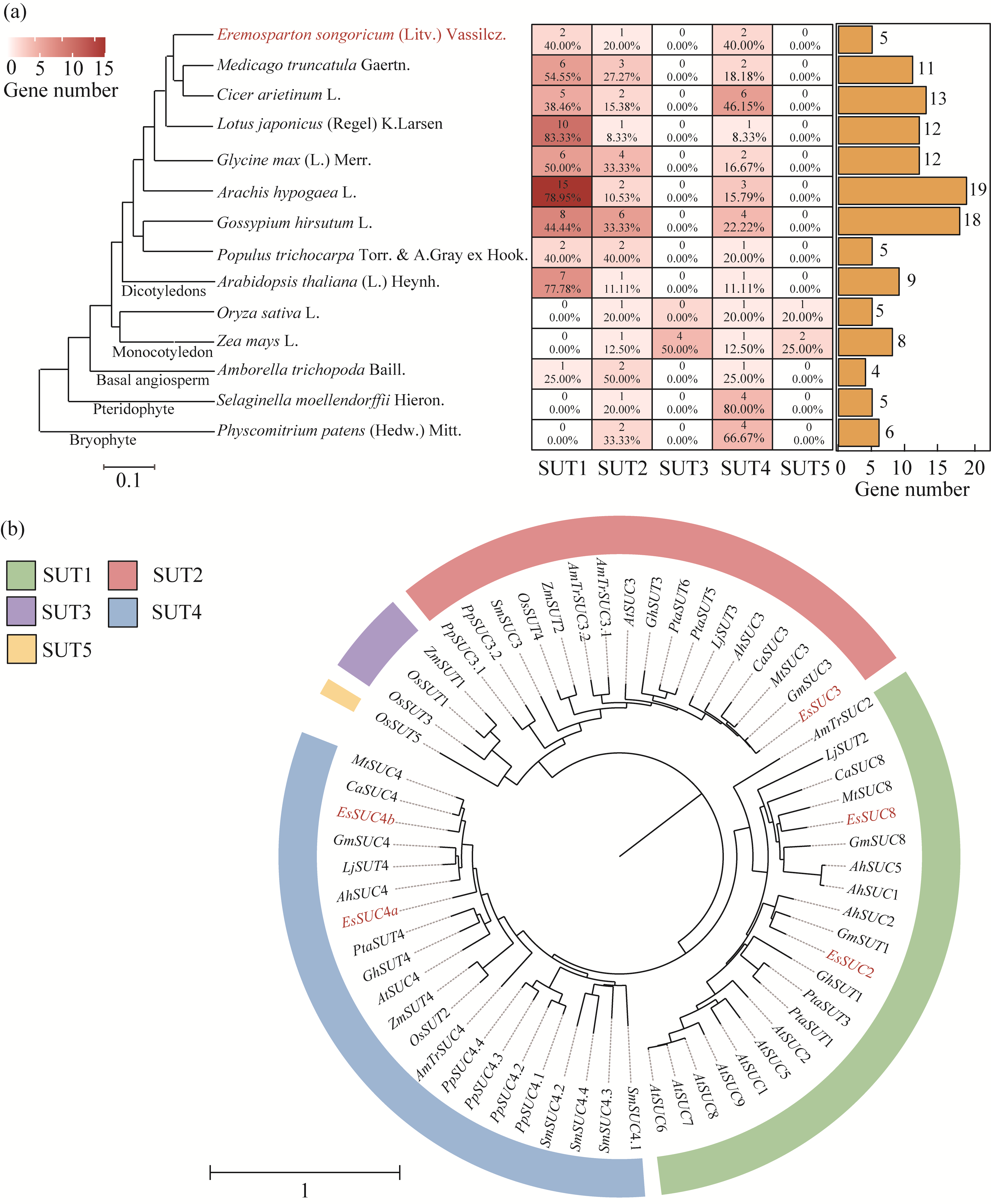
Fig. 1Phylogenetic analyses of sucrose carrier (SUC) proteins from Eremosparton songoricum (Litv.) Vassilcz., and 13 other plant species. (a), evolutionary distribution of SUC genes across the plant species. A corresponding heatmap displays the distribution of genes across different sucrose transporter (SUT) clades (SUT1-SUT5), with rows representing species and columns representing gene clades. The color intensity reflects the number of genes and their proportions; (b), phylogenetic tree constructed using 63 SUC protein sequences. We used 63 SUC sequences to construct the neighbor-joining (NJ) tree by the Molecular Evolutionary Genetics Analysis version 11 (MEGA 11) platform with 1000 bootstraps based on protein sequences, and five EsSUC gene members were identified. Pp, Physcomitrium patens (Hedw.) Mitt.; Sm, Selaginella moellendorffii Hieron.; AmTr, Amborella trichopoda Baill.; Os, Oryza sativa L.; Zm, Zea mays L.; At, Arabidopsis thaliana (L.) Heynh.; Gh, Gossypium hirsutum L.; Pta; Populus trichocarpa Torr. & A. Gray ex Hook.; Es, Eremosparton songoricum (Litv.) Vassilcz.; Ah, Arachis hypogaea L.; Lj, Lotus japonicus (Regel) K. Larsen; Gm, Glycine max (L.) Merr.; Ca, Cicer arietinum L.; Mt, Medicago truncatula Gaertn.
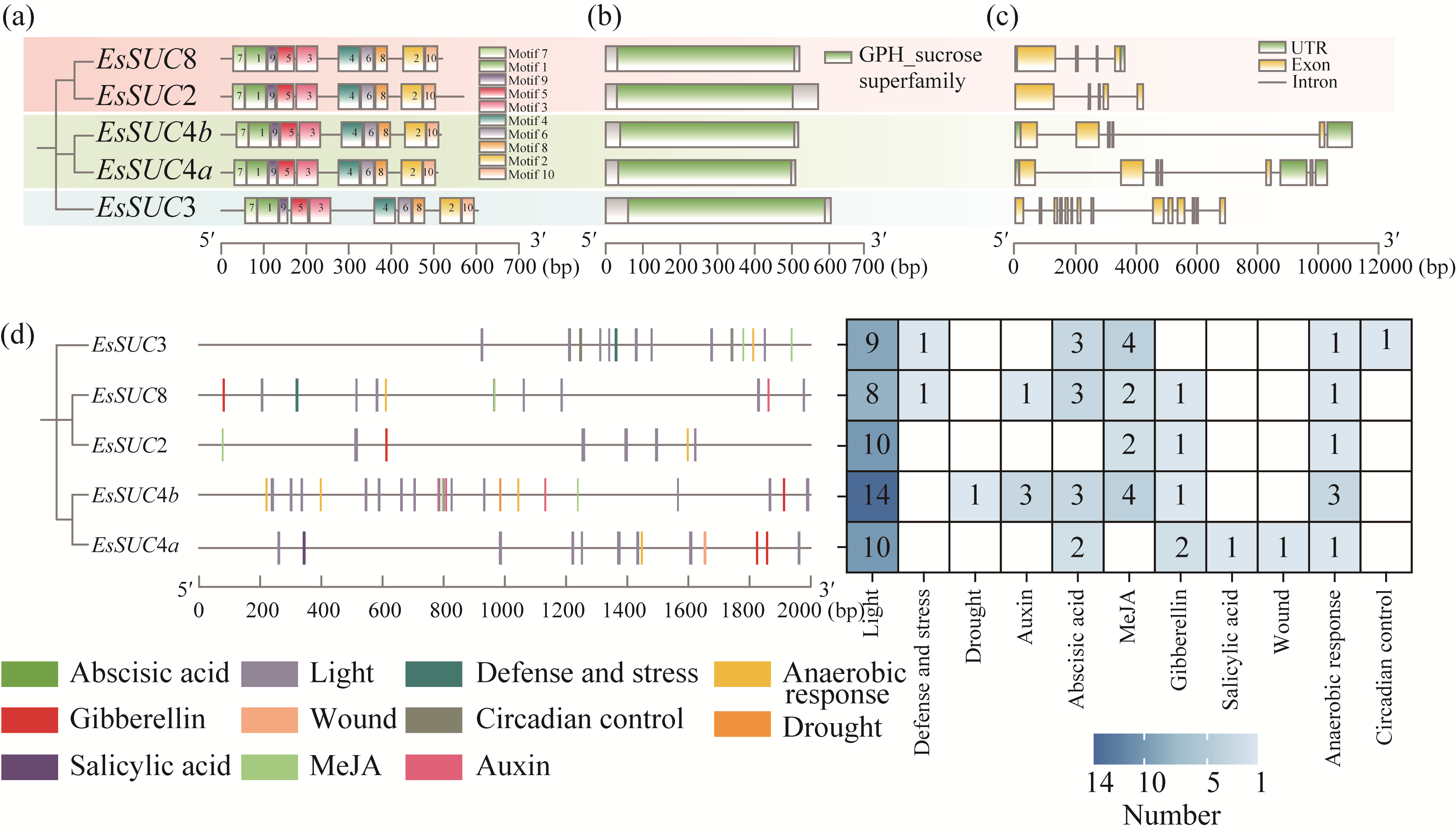
Fig. 2Motifs (a), conserved domain (b), gene structure (c), and promoter cis-element (d) analyses of EsSUC genes in E. songoricum. Distinct colored squares denote different promoter cis-elements and their specific locations within the promoter region. The blue squares contain numerical values that indicate the frequency of each promoter cis-element. GPH, glycoside-pentoside-hexuronide; UTR, untranslated region; MeJA, methyl jasmonate.
Fig. 3Relative expression level of EsSUC genes in different tissues. (a), EsSUC2; (b), EsSUC3; (c), EsSUC4a; (d), EsSUC4b; (e), EsSUC8. (f), EsSUC gene tissue specific expression in E. songoricum. *, P<0.050 level; **, P<0.010 level; ***, P<0.001 level. Bars are standard deviations.
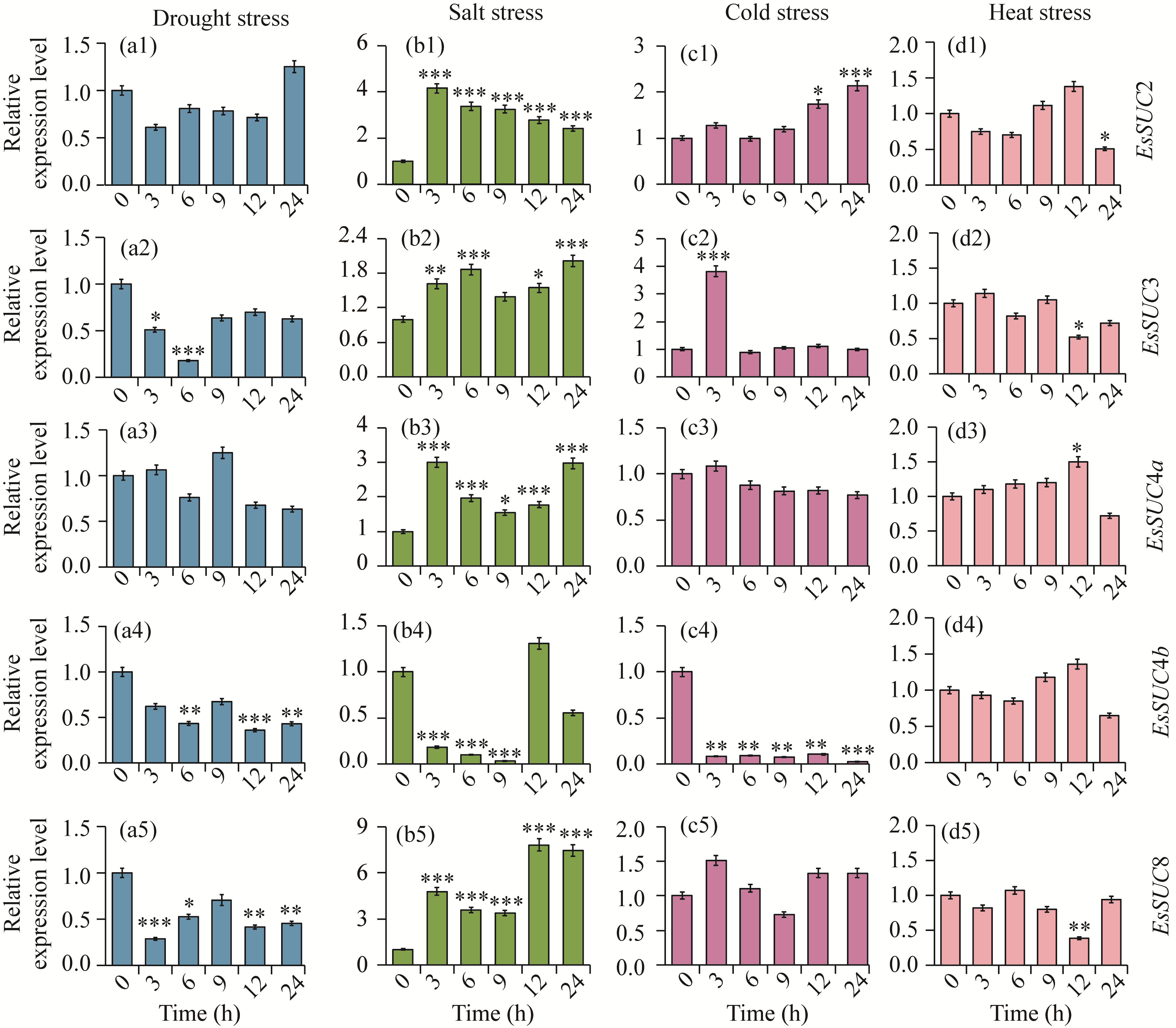
Fig. 4Expressional profiles of EsSUC genes under various abiotic stresses in E. songoricum. (a1-a5), drought stress; (b1-b5), salt stress; (c1-c5), cold stress; (d1-d5), heat stress. *, P<0.050 level; **, P<0.010 level; ***, P<0.001 level. Bars are standard deviations.
Fig. 5Subcellular localization and sucrose transport activity of EsSUC8. (a), subcellular localization of the empty vector and EsSUC8. Bright, visible light image; GFP, green fluorescent protein fluorescence under green light; FM4-64, a fluorescent styryl dye that selectively stains plasma membrane and is internalized via endocytosis to label endosomal compartments; Merged, merged images. (b), yeast complementation assay with serial dilutions (1×10⁻¹, 1×10⁻², 1×10⁻³, and 1×10⁻⁴): the pDR196-EsSUC8 construct and the empty pDR196 vector were separately transformed into the SUSY7/ura3 yeast strain and subsequently tested on the media containing 2.00% glucose or 2.00% sucrose as the sole carbon source.
Fig. 6Phenotype of growth and development in EsSUC8 transgenic Arabidopsis thaliana (L.) Heynh. (a), phenotypes of EsSUC8 transgenic A. thaliana plants were observed on 7, 14, 21, 28, 35, and 49 d; (b), leaf number; (c), flowering time; (d), lateral branch number; (e), silique number; (f), total seed weight per plant; (g), 1000-seed weight; (h), relative expression level of EsSUC8 in different tissues; (i), sucrose concentration in different tissues. AtWT, wild-type plant; AtOE-1 and AtOE-2, EsSUC8 overexpression lines; Seed-6, Seed-9, Seed-12, and Seed-15 are the seeds at the early developmental stage, rapid growth stage, maturation stage, and desiccation stage after pollination, respectively. *, P<0.050 level; **, P<0.010 level; ***, P<0.001 level. Bars are standard deviations.
Fig. 7Overexpression of EsSUC8 enhances salt tolerance in A. thaliana. (a), phenotype of AtWT, AtOE-1, and AtOE-2 plants before treatment, under control and salt stress conditions; (b), relative expression level of EsSUC8; (c), sucrose concentration; (d), fresh weight per plant; (e), root length; (f), lateral root number; (g), H2O2 content; (h), peroxidase (POD) activity; (i), superoxide dismutase (SOD) activity. *, P<0.050 level; **, P<0.010 level; ***, P<0.001 level. Bars are standard deviations.
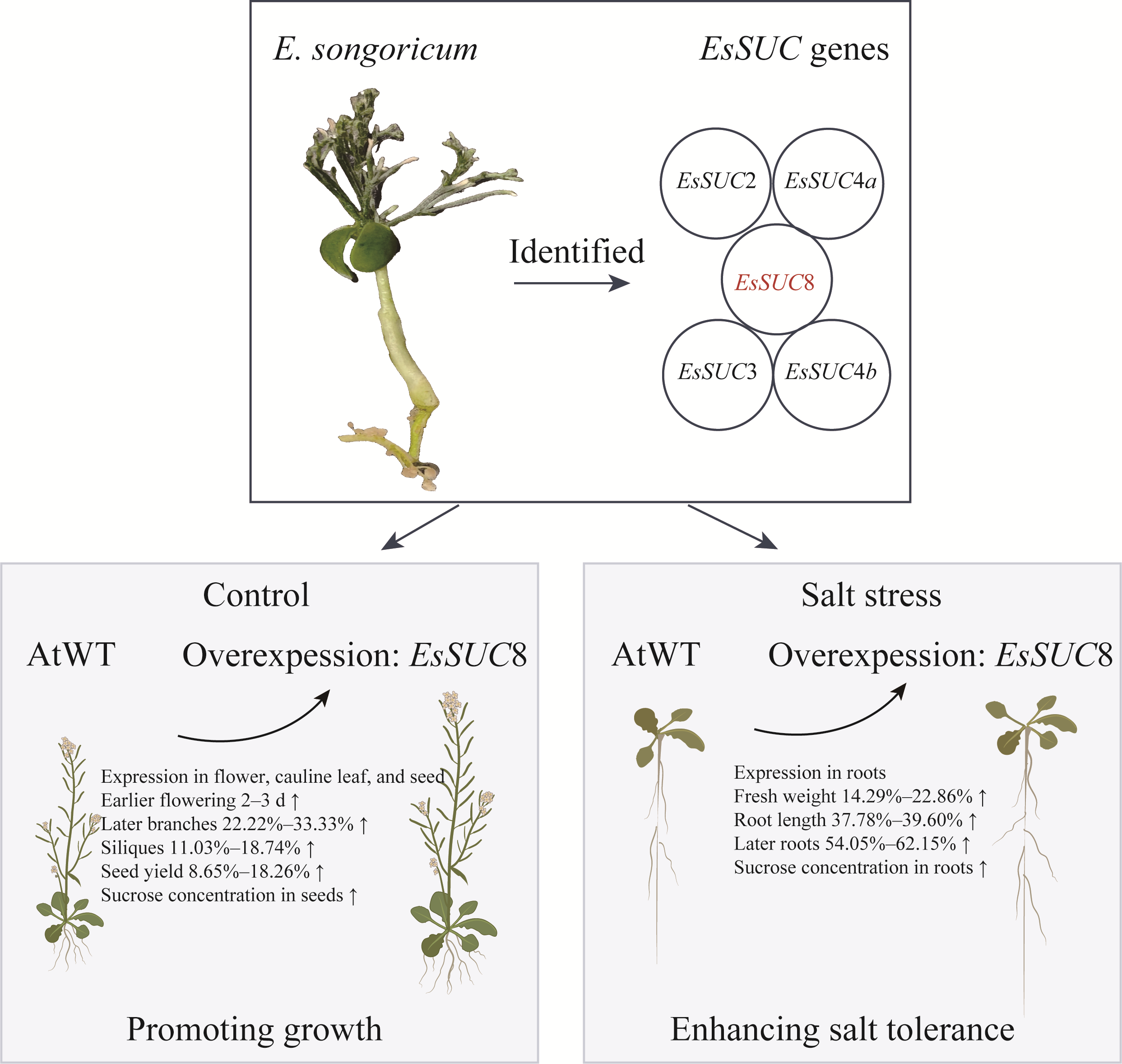
Fig. 8Overexpression of EsSUC8 from desert legume E. songoricum promotes growth and enhances salt tolerance in Arabidopsis
Gene
Primer name
Sequence (5'→3')
EsSUC2
Q-EsSUC2-F
GGATACGCTGCTGGTTCGTA
Q-EsSUC2-R
TAACGTAGATCAGTGCCGCC
EsSUC3
Q-EsSUC3-F
TCCAAATGGGAGCACCTCTG
Q-EsSUC3-R
GGAGGCCAAAACAAAGGCAG
EsSUC4a
Q-EsSUC4a-F
GGAACCCAATGTTGAAGCGG
Q-EsSUC4a-R
GGAAACCACCCAATCCAGGT
EsSUC4b
Q-EsSUC4b-F
CCGGCGACCTTTCATTTTGG
Q-EsSUC4b-R
ACCAACCACTGTATGCTCCG
EsSUC8
Q-EsSUC8-F
CGATGCACTTCTCGTTTCGG
Q-EsSUC8-R
TAAGATCCAGCGGCGTAACC
EsActin
Q-EsActin-F
CGGACATCGTGACTTTATC
Q-EsActin-R
TGTGGTGGCATCCATCTT
Table S1 Primers list for Reverse Transcription Quantitative Polymerase Chain Reaction (RT-qPCR) of EsSUC genes
Gene/Vector
Primer name
Sequence (5'→3')
EsSUC8-CDS
EsSUC8-CDS-F
ATGGAACCTCCTTCTTCTCTGAATA
EsSUC8-CDS-R
ATGAAAACCACCGGCAATTG
pCAMBIA1300- EsSUC8
pCAMBIA1300-KpnI-EsSUC8-F
TTCGTCGACCTGCAGGGTACCATGGAACCTCCTTCTTCTCTGAATA
pCAMBIA1300-KpnI-EsSUC8-R
GCCCTTGCTCACCATGGTACCATGAAAACCACCGGCAATTG
Table S2 List of primers used for Coding Sequence (CDS) full-length clone and vector construction of EsSUC8
[1]
Al-Sheikh Ahmed S, Zhang J J, Ma W J, et al. 2018. Contributions of TaSUTs to grain weight in wheat under drought. Plant Molecular Biology, 98(4-5): 333-347.
[2]
Aluko O O, Li C Z, Wang Q, et al. 2021. Sucrose utilization for improved crop yields: a review article. International Journal of Molecular Sciences, 22(9): 4704, doi: 10.3390/ijms22094704.
[3]
Barker L, Kühn C, Weise A, et al. 2000. SUT2, a putative sucrose sensor in sieve elements. The Plant Cell, 12(7): 1153-1164.
[4]
Baud S, Wuillème S, Lemoine R, et al. 2005. The AtSUC5 sucrose transporter specifically expressed in the endosperm is involved in early seed development in Arabidopsis. The Plant Journal, 43(6): 824-836.
[5]
Bavnhøj L, Driller J H, Zuzic L, et al. 2023. Structure and sucrose binding mechanism of the plant SUC1 sucrose transporter. Nature Plants, 9(6): 938-950.
[6]
Chen C, Yuan Y L, Zhang C, et al. 2017. Sucrose phloem unloading follows an apoplastic pathway with high sucrose synthase in Actinidia fruit. Plant Science, 255: 40-50.
[7]
Chen L Q, Qu X Q, Hou B H, et al. 2012. Sucrose efflux mediated by SWEET proteins as a key step for phloem transport. Science, 335(6065): 207-211.
[8]
Chincinska I A, Gier K, Krügel U, et al. 2013. Photoperiodic regulation of the sucrose transporter StSUT4 affects the expression of circadian-regulated genes and ethylene production. Frontiers in Plant Science, 4: 26, doi: 10.3389/fpls.2013.00026.
[9]
Chincinska I A, Liesche J, Krügel U, et al. 2008. Sucrose transporter StSUT4 from potato affects flowering, tuberization, and shade avoidance response. Plant Physiology, 146(2): 515-528.
[10]
Clough S J, Bent A F. 2008. Floral dip: a simplified method for agrobacterium-mediated transformation of Arabidopsis thaliana. The Plant Journal, 16(6): 735-743.
[11]
Deol K K, Mukherjee S, Gao F, et al. 2013. Identification and characterization of the three homeologues of a new sucrose transporter in hexaploid wheat (Triticum aestivum L.). BMC Plant Biology, 13: 181, doi: 10.1186/1471-2229-13-181.
[12]
Dobbelstein E, Fink D, Öner-Sieben S, et al. 2019. Seasonal changes of sucrose transporter expression and sugar partitioning in common European tree species. Tree Physiology, 39(2): 284-299.
[13]
Endler A, Meyer S, Schelbert S, et al. 2006. Identification of a vacuolar sucrose transporter in barley and Arabidopsis mesophyll cells by a tonoplast proteomic approach. Plant Physiology, 141(1): 196-207.
[14]
Eom J S, Cho J I, Reinders A, et al. 2011. Impaired function of the tonoplast-localized sucrose transporter in rice, OsSUT2, limits the transport of vacuolar reserve sucrose and affects plant growth. Plant Physiology, 157(1): 109-119.
[15]
Frost C J, Nyamdari B, Tsai C J, et al. 2012. The tonoplast-localized sucrose transporter in Populus (PtaSUT4) regulates whole-plant water relations, responses to water stress, and photosynthesis. PLoS ONE, 7(8): e44467, doi: 10.1371/journal.pone.0044467.
[16]
Gong X, Liu M L, Zhang L J, et al. 2013. Sucrose transporter gene AtSUC 4 responds to drought stress by regulating the sucrose distribution and metabolism in Arabidopsis thaliana. Advanced Materials Research, 2584(765-767): 2971-2975.
[17]
Gong X, Liu M L, Zhang L J, et al. 2015. Arabidopsis AtSUC2 and AtSUC4, encoding sucrose transporters, are required for abiotic stress tolerance in an ABA-dependent pathway. Physiologia Plantarum, 153(1): 119-136.
[18]
Gottwald J R, Krysan P J, Young J C, et al. 2000. Genetic evidence for the in planta role of phloem-specific plasma membrane sucrose transporters. Proceedings of the National Academy of Sciences of the United States of America, 97(25): 13979-13984.
[19]
Gu J H, Zeng Z H, Wang Y R, et al. 2020. Transcriptome analysis of carbohydrate metabolism genes and molecular regulation of sucrose transport gene LoSUT on the flowering process of developing oriental hybrid lily ''Sorbonne'' bulb. International Journal of Molecular Sciences, 21(9): 3092, doi: 10.3390/ijms21093092.
[20]
Hackel A, Schauer N, Carrari F, et al. 2006. Sucrose transporter LeSUT1 and LeSUT 2 inhibition affects tomato fruit development in different ways. The Plant Journal, 45(2): 180-192.
[21]
Hirose T, Imaizumi N, Scofield G N, et al. 1997. cDNA cloning and tissue specific expression of a gene for sucrose transporter from rice (Oryza sativa L.). Plant Cell Physiology, 38(12): 1389-1396.
[22]
Ibraheem O, Dealtry G, Roux S, et al. 2011. The effect of drought and salinity on the expressional levels of sucrose transporters in rice (Oryza sativa Nipponbare) cultivar plants. Plant Omics, 4(2): 68-74.
[23]
Iftikhar J, Lyu M L, Liu Z Y, et al. 2020. Sugar and hormone dynamics and the expression profiles of SUT/SUC and SWEET sugar transporters during flower development in Petunia axillaris. Plants, 9(12): 1770, doi: 10.3390/plants9121770.
[24]
Jin P, Wu D, Dai H, et al. 2022. Characterization and functional divergence of genes encoding sucrose transporters in oilseeds castor bean. Oil Crop Science, 7(1): 31-39.
[25]
Kühn C, Grof C P. 2010. Sucrose transporters of higher plants. Current Opinion in Plant Biology, 13(3): 288-298.
[26]
Lao X A, Jin P, Yang R R, et al. 2024. Establishment of Agrobacterium-mediated transient transformation system in desert legume Eremosparton songoricum (Litv.) Vass. International Journal of Molecular Sciences, 25(22): 11934, doi: 10.3390/ijms252211934.
[27]
Leach K A, Tran T M, Slewinski T L, et al. 2017. Sucrose transporter 2 contributes to maize growth, development, and crop yield. Journal of Integrative Plant Biology, 59(6): 390-408.
[28]
Li H Y, Li X S, Zhang D Y, et al. 2013. Effects of drought stress on the seed germination and early seedling growth of the endemic desert plant Eremosparton songoricum (Fabaceae). EXCLI Journal, 12: 89-101.
[29]
Li X S, Yang H L, Zhang D Y, et al. 2012. Reference gene selection in the desert plant Eremosparton songoricum. International Journal of Molecular Sciences, 13(6): 6944-6963.
[30]
Li X S, Zhang D Y, Li H Y, et al. 2014. EsDREB2B, a novel truncated DREB2-type transcription factor in the desert legume Eremosparton songoricum, enhances tolerance to multiple abiotic stresses in yeast and transgenic tobacco. BMC Plant Biology, 14: 44, doi: 10.1186/1471-2229-14-44.
[31]
Liang Z C. 2020. Cloning, expression and function of soybean sucrose transporter gen GmSUT4. MSc Thesis. Nanning: Guangxi University. (in Chinese)
[32]
Liesche J, Schulz A, Krügel U, et al. 2008. Dimerization and endocytosis of the sucrose transporter StSUT1 in mature sieve elements. Plant Signaling & Behavior, 3(12): 1136-1137.
[33]
Liu H L, Tao Y, Qiu D, et al. 2013. Effects of artificial sand fixing on community characteristics of a rare desert shrub. Conservation Biology, 27(5): 1011-1019.
[34]
Livak K J, Schmittgen T D. 2001. Analysis of relative gene expression data using real-time quantitative PCR and the 2(-Delta Delta C(T)) method. Methods, 25(4): 402-408.
[35]
Lu M Z, Snyder R, Grant J, et al. 2020. Manipulation of sucrose phloem and embryo loading affects pea leaf metabolism, carbon and nitrogen partitioning to sinks as well as seed storage pools. The Plant Journal, 101(1): 217-236.
[36]
Lundmark M, Cavaco A M, Trevanion S, et al. 2006. Carbon partitioning and export in transgenic Arabidopsis thaliana with altered capacity for sucrose synthesis grown at low temperature: a role for metabolite transporters. Plant, Cell & Environment, 29(9): 1703-1714.
[37]
Ma Q J, Sun M H, Liu Y J, et al. 2016. Molecular cloning and functional characterization of the apple sucrose transporter gene MdSUT2. Plant Physiology and Biochemistry, 109: 442-451.
[38]
Ma Q J, Sun M H, Lu Y J, et al. 2017. Transcription factor AREB2 is involved in soluble sugar accumulation by activating sugar transporter and amylase genes. Plant Physiology, 174(4): 2348-2362.
[39]
Meyer S, Lauterbach C, Niedermeier M, et al. 2004. Wounding enhances expression of AtSUC3, a sucrose transporter from Arabidopsis sieve elements and sink tissues. Plant Physiology, 134(2): 684-693.
[40]
Misra V, Mall A K. 2021. Plant sugar transporters and their role in abiotic stress. In: RoychoudhuryA, Tripathi DK, DeshmukhR. Plant OsmoticStress. Cambridge: Academic Press, 101-112.
[41]
Nieberl P, Ehrl C, Pommerrenig B, et al. 2017. Functional characterisation and cell specificity of BvSUT1, the transporter that loads sucrose into the phloem of sugar beet (Beta vulgaris L.) source leaves. Plant Biology, 19(3): 315-326.
[42]
Niño-González M, Novo-Uzal E, Richardson D N, et al. 2019. More transporters, more substrates: the Arabidopsis major facilitator superfamily revisited. Molecular Plant, 12(9): 1182-1202.
[43]
Noiraud N, Delrot S, Lemoine R. 2000. The sucrose transporter of celery. Identification and expression during salt stress. Plant Physiology, 122(4): 1447-1455.
[44]
Okubo-Kurihara E, Higaki T, Kurihara Y, et al. 2011. Sucrose transporter NtSUT4 from tobacco BY-2 involved in plant cell shape during miniprotoplast culture. Journal of Plant Research, 124(3): 395-403.
[45]
Öner-Sieben S, Lohaus G. 2014. Apoplastic and symplastic phloem loading in Quercus robur and Fraxinus excelsior. Journal of Experimental Botany, 65(7): 1905-1916.
[46]
Payyavula R S, Tay K H, Tsai C J, et al. 2011. The sucrose transporter family in Populus: the importance of a tonoplast PtaSUT4 to biomass and carbon partitioning. The Plant Journal, 65(5): 757-770.
[47]
Peng D, Gu X, Xue L J, et al. 2014. Bayesian phylogeny of sucrose transporters: ancient origins, differential expansion and convergent evolution in monocots and dicots. Frontiers in Plant Science, 5: 615, doi: 10.3389/fpls.2014.00615.
[48]
Peng Q, Cai Y M, Lai E H, et al. 2020. The sucrose transporter MdSUT4.1 participates in the regulation of fruit sugar accumulation in apple. BMC Plant Biology, 20(1): 191, doi: 10.1186/s12870-020-02406-3.
[49]
Qiao S Q, Jin P, Liu X J, et al. 2023. Establishment of an efficient and rapid regeneration system for a rare shrubby desert legume Eremosparton songoricum. Plants, 12(20): 3535, doi: 10.3390/plants12203535.
[50]
Reddy V S, Shlykov M A, Castillo R, et al. 2012. The major facilitator superfamily (MFS) revisited. FEBS Journal, 279(11): 2022-2035.
[51]
Reinders A, Sivitz A B, Starker C G, et al. 2008. Functional analysis of LjSUT4, a vacuolar sucrose transporter from Lotus japonicus. Plant Molecular Biology, 68(3): 289-299.
[52]
Sauer N. 2007. Molecular physiology of higher plant sucrose transporters. FEBS Letters, 581(12): 2309-2317.
[53]
Schulz A, Beyhl D, Marten I, et al. 2011. Proton-driven sucrose symport and antiport are provided by the vacuolar transporters SUC4 and TMT1/2. The Plant Journal, 68(1): 129-136.
[54]
Schulze W, Weise A, Frommer W B, et al. 2000. Function of the cytosolic N-terminus of sucrose transporter AtSUT2 in substrate affinity. FEBS Letters, 485(2-3): 189-194.
[55]
Siahpoosh M R, Sanchez D H, Schlereth A, et al. 2012. Modification of OsSUT1 gene expression modulates the salt response of rice Oryza sativa cv. Taipei 309. Plant Science, 182: 101-111.
[56]
Singh J, Das S, Jagadis G K, et al. 2023. Physiological implications of SWEETS in plants and their potential applications in improving source-sink relationships for enhanced yield. Plant Biotechnology Journal, 21(8): 1528-1541.
[57]
Sivitz A B, Reinders A, Ward J M. 2005. Analysis of the transport activity of barley sucrose transporter HvSUT1. Plant & Cell Physiology, 46(10): 1666-1673.
[58]
Sivitz A B, Reinders A, Johnson M E, et al. 2007. Arabidopsis sucrose transporter AtSUC9. High-affinity transport activity, intragenic control of expression, and early flowering mutant phenotype. Plant Physiology, 143(1): 188-198.
[59]
Sivitz A B, Reinders A, Ward J M. 2008. Arabidopsis sucrose transporter AtSUC1 is important for pollen germination and sucrose-induced anthocyanin accumulation. Plant Physiology, 147(1): 92-100.
[60]
Slewinski T L, Meeley R, Braun D M. 2009. Sucrose transporter 1 functions in phloem loading in maize leaves. Journal of Experimental Botany, 60(3): 881-892.
[61]
Tamura K, Stecher G, Kumar S. 2021. MEGA11: molecular evolutionary genetics analysis version 11. Molecular Biology and Evolution, 38(7): 3022-3027.
[62]
Thompson J D, Gibson T J, Higgins D G. 2003. Multiple sequence alignment using ClustalW and ClustalX. Current Protocols in Bioinformatics, (1): 2.3.1-2.3.22.
[63]
Wang D D, Liu H J, Wang H X, et al. 2020. A novel sucrose transporter gene IbSUT4 involves in plant growth and response to abiotic stress through the ABF-dependent ABA signaling pathway in sweet potato. BMC Plant Biology, 20(1): 157, doi: 10.1186/s12870-020-02382-8.
[64]
Wang G P, Wu Y, Ma L, et al. 2021. Phloem loading in rice leaves depends strongly on the apoplastic pathway. Journal of Experimental Botany, 72(10): 3723-3738.
[65]
Weise A, Barker L, Kühn C, et al. 2000. A new subfamily of sucrose transporters, SUT4, with low affinity/high capacity localized in enucleate sieve elements of plants. The Plant Cell, 12(8): 1345-1355.
[66]
Wen S, Neuhaus H E, Cheng J T, et al. 2022. Contributions of sugar transporters to crop yield and fruit quality. Journal of Experimental Botany, 73(8): 2275-2289.
[67]
Weschke W, Panitz R, Sauer N, et al. 2000. Sucrose transport into barley seeds: molecular characterization of two transporters and implications for seed development and starch accumulation. The Plant Journal, 21(5): 455-467.
[68]
Wu X, Mubeen S, Luo D J, et al. 2023. Function characterization of a soybean sucrose transporter GmSUT4.2 involved in plant growth, development, and crop yield. Plant Growth Regulation, 102(3): 529-543.
[69]
Yan N. 2013. Structural advances for the major facilitator superfamily (MFS) transporters. Trends in Biochemical Sciences, 38(3): 151-159.
[70]
Yoon J, Cho L H, Tun W, et al. 2021. Sucrose signaling in higher plants. Plant Science, 302: 110703, doi: 10.1016/j.plantsci.2020.110703.
[71]
Zhao M Q, Haxim Y, Liang Y Q, et al. 2022. Genome-wide investigation of AP2/ERF gene family in the desert legume Eremosparton songoricum: identification, classification, evolution, and expression profiling under drought stress. Frontiers in Plant Science, 13: 885694, doi: 10.3389/fpls.2022.885694.