| Research article |
|

|
|
|
| Evaluation of vegetation resilience in mining areas and impact of mining disturbance based on improved critical slowdown model and long time series leaf area index |
LIU Menglin1, WANG Shidong1,2,*( ), WANG Pengfei1, JIAO Yiheng1, ZHANG Hebing1,2, HE Shi1, DU Zebing1, CHEN Zhichao1 |
1 School of Surveying and Land Information Engineering, Henan Polytechnic University, Jiaozuo 454003, China
2 Observation and Research Station of Land Ecology and Land Use in the Grain-Producing Area of Central China, Ministry of Natural Resources, Xinzheng 451100, China |
|
|
|
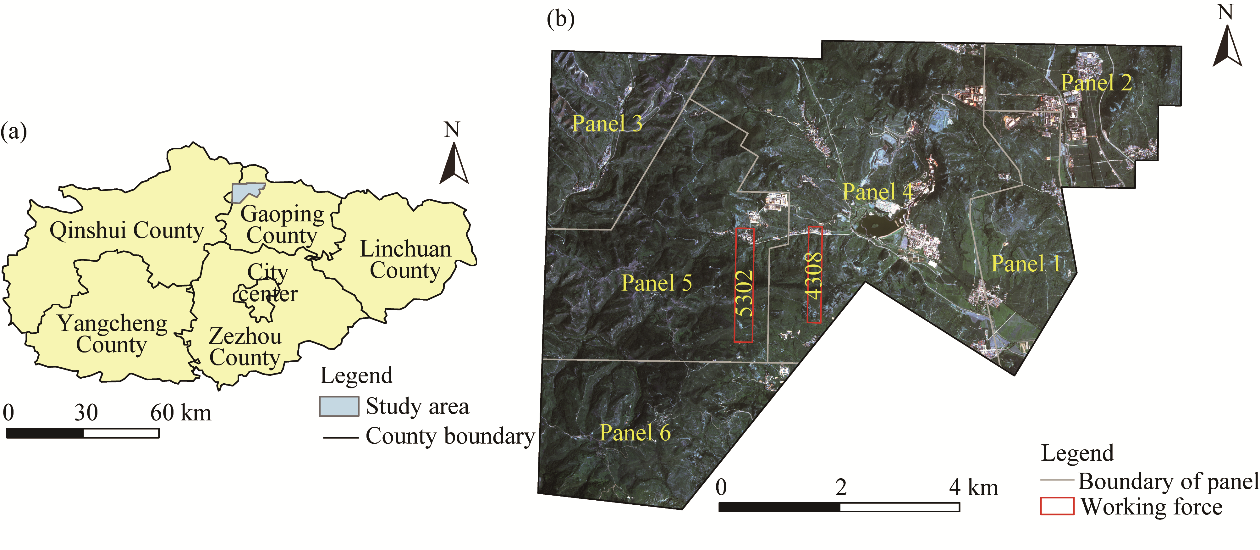
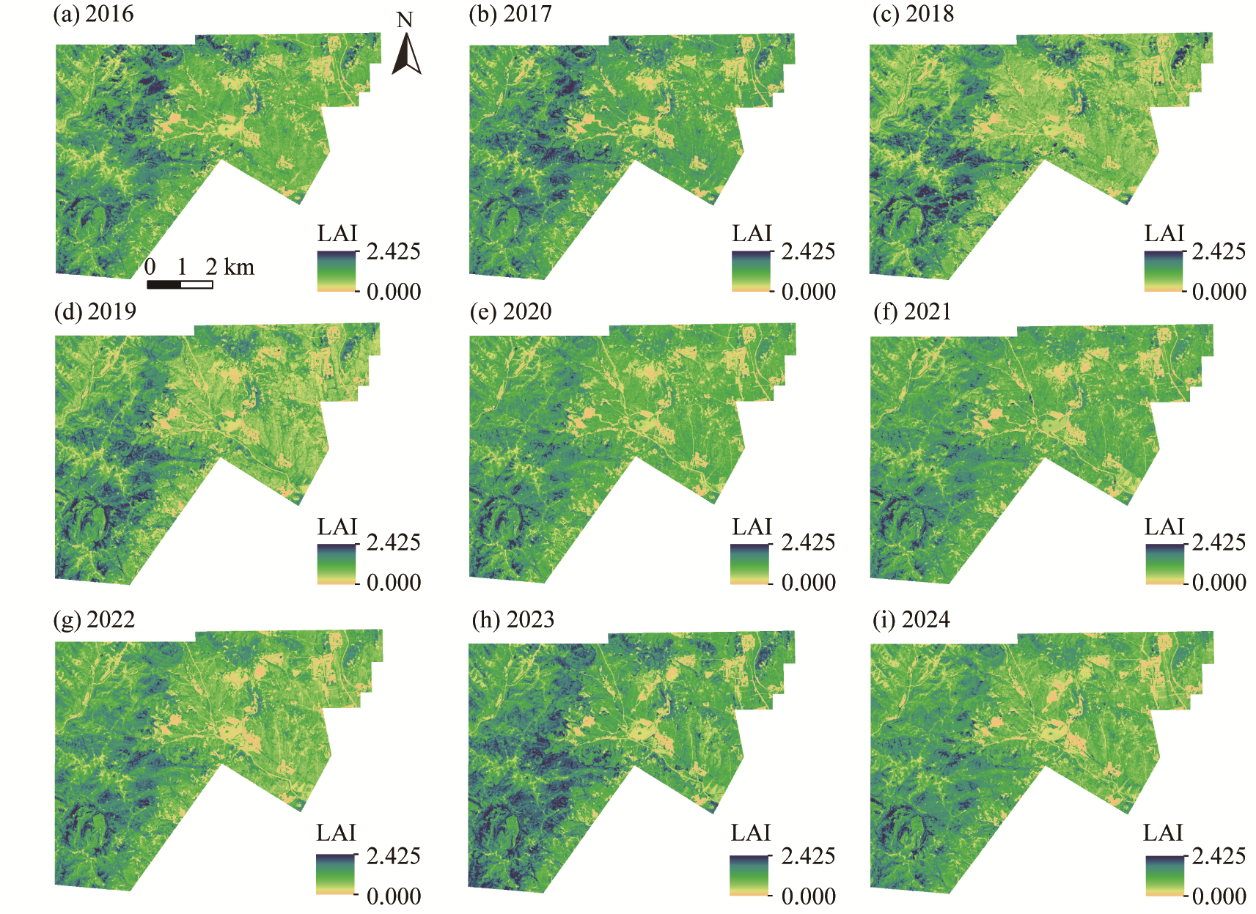
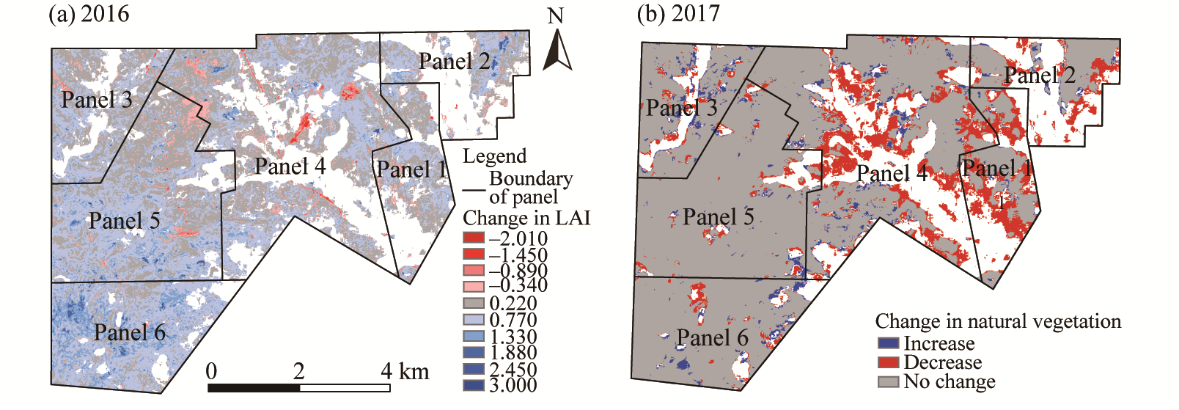
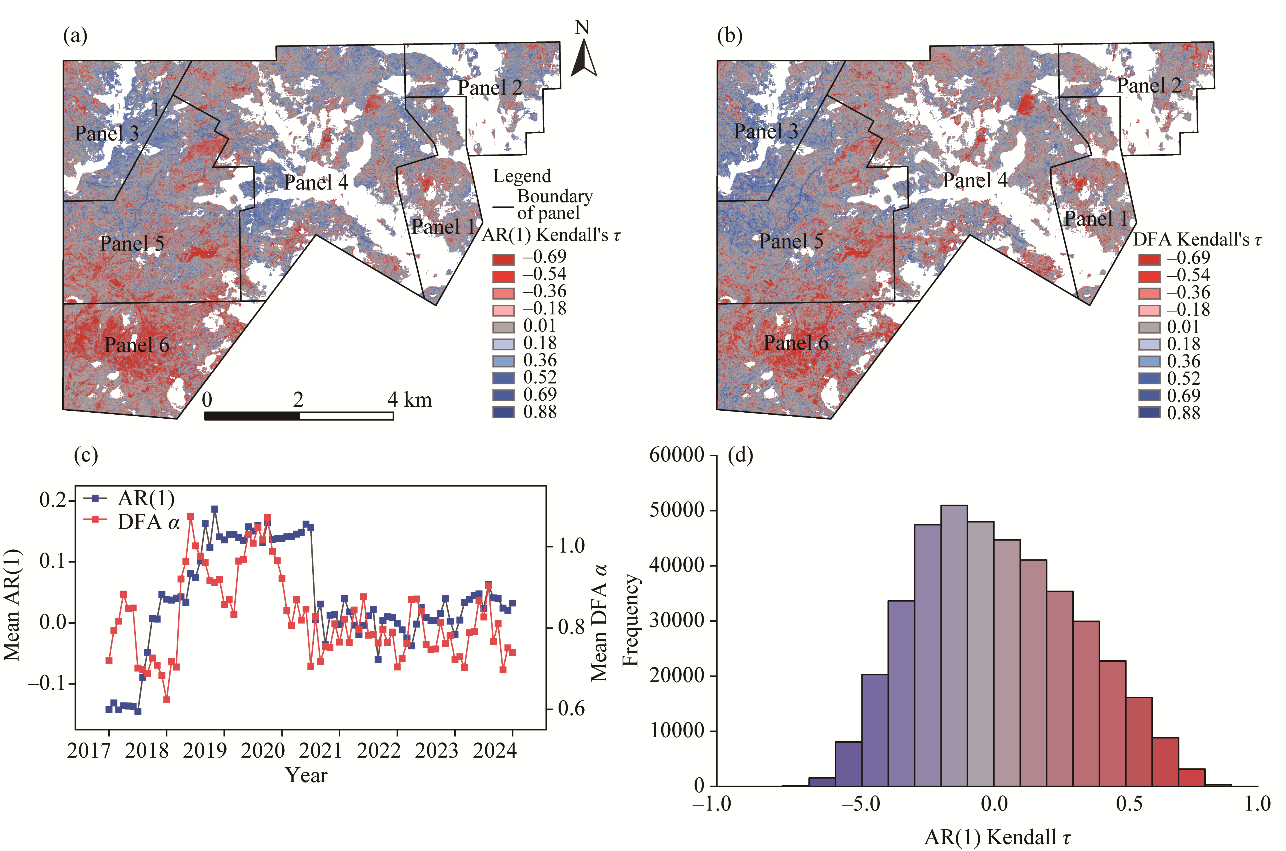
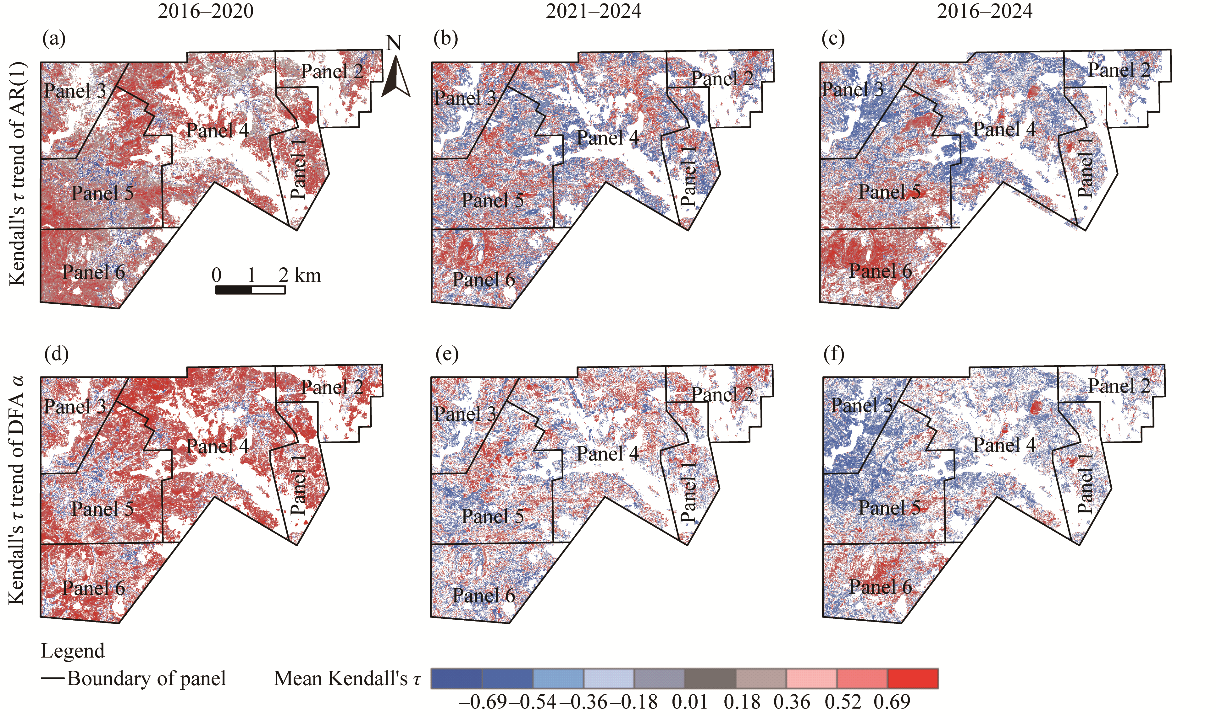
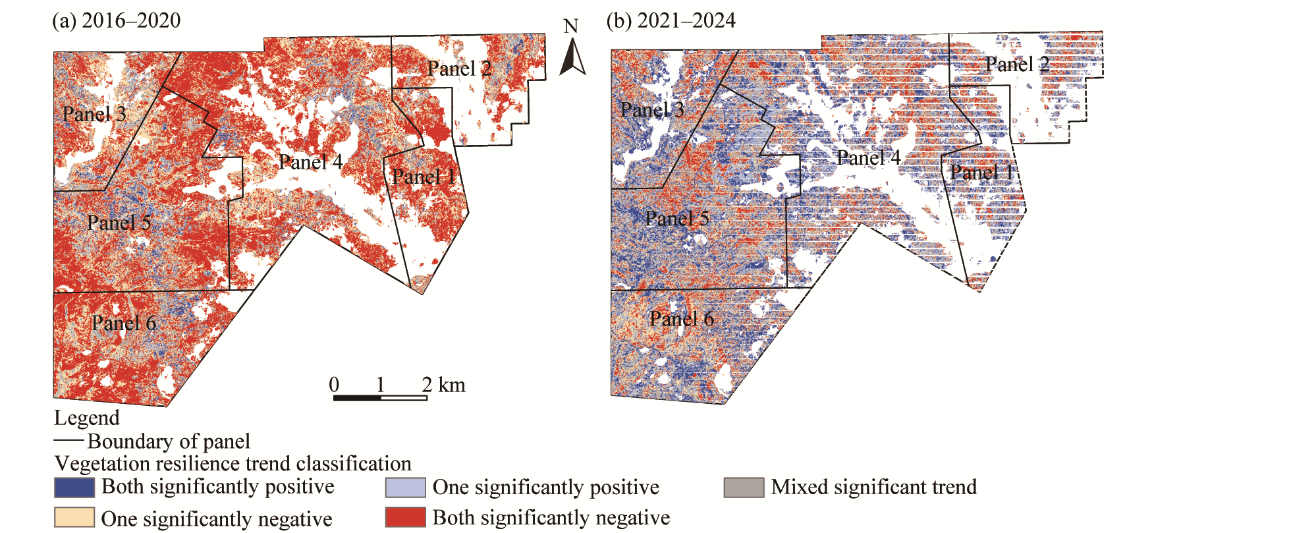
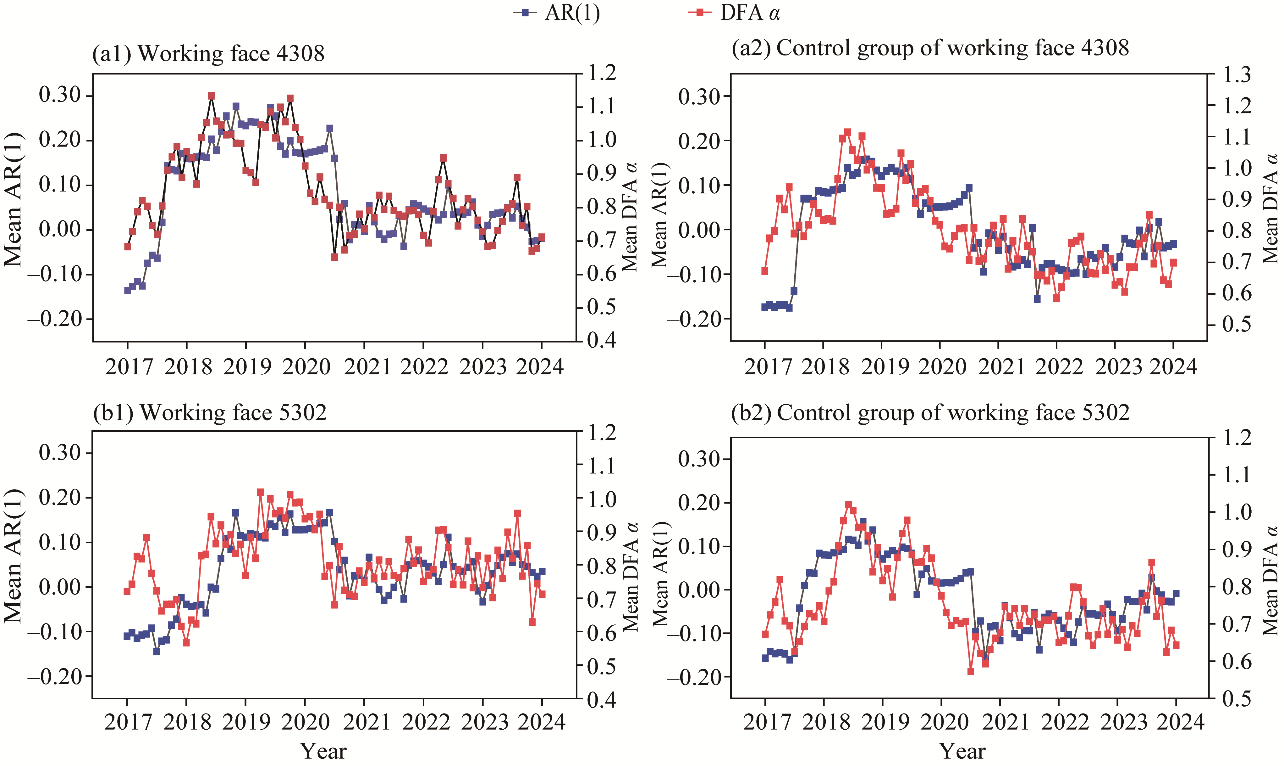
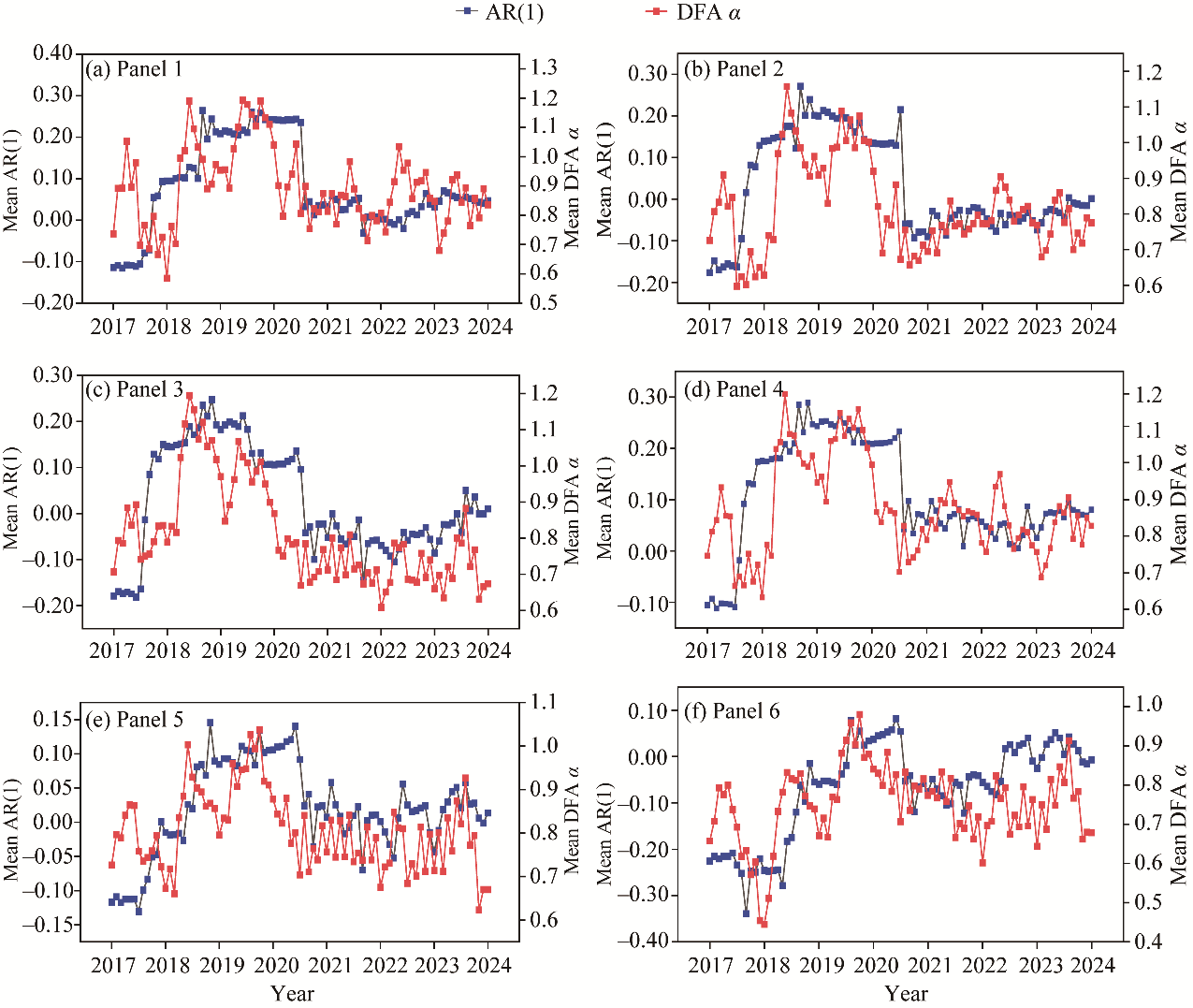
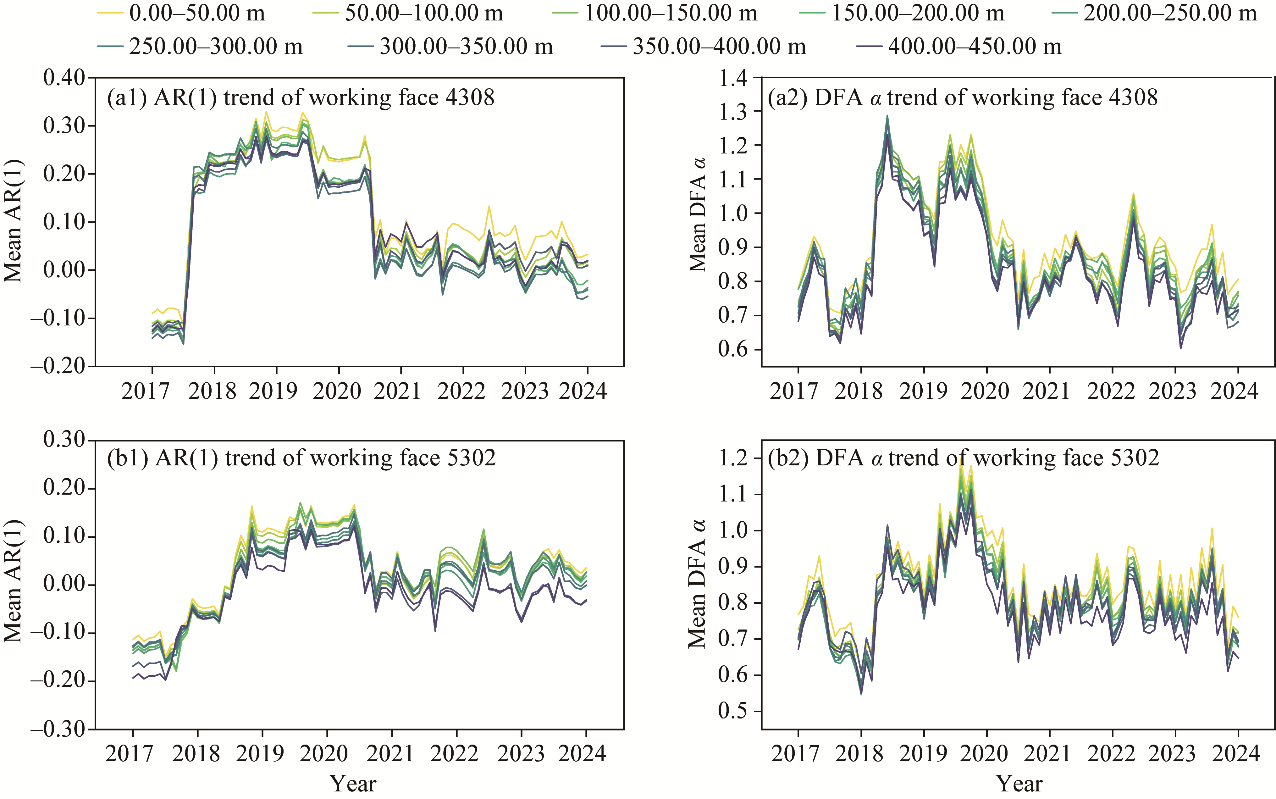
Abstract Mining activities often lead to drastic alterations in surface structure, and the subsequent vegetation recovery process exhibits significant spatiotemporal heterogeneity. The Changping mining area in Shanxi Province, China was selected as the study region. Leaf area index (LAI) data derived from Sentinel-2A/B multispectral imagery were subjected to time series decomposition. Based on the decomposed series, we applied an improved critical slowing down (CSD) model to calculate two indicators—the first-order autoregressive (AR(1)) coefficient and the detrended fluctuation analysis (DFA) scaling exponent—to assess vegetation resilience. The spatiotemporal variation of vegetation resilience and its correlation with mining-induced disturbances were subsequently analyzed in the six panels in the Changping mining area from 2016 to 2024. The results indicated the following: (1) Overall, LAI in the Changping mining area exhibited a spatial pattern of higher values in the west and lower values in the east. Within naturally vegetated areas, the annual mean LAI increased from 0.891 to 1.172, showing a gradual upward trend over time; (2) Overall vegetation resilience in the Changping mining area exhibited a declining trend. Compared with 2016-2020, the proportion of areas with enhanced resilience increased by 33.97% during 2021-2024, with the most pronounced changes observed in the panels 4 and 5, indicating significant impacts of mining activities. At the working face scale, the negative effects of mining on vegetation resilience were particularly evident, as resilience during the mining period was substantially lower than that in the corresponding control areas; And (3) mining activities exerted significant disturbances on vegetation resilience in the Changping mining area, with both temporal and spatial gradients. Owing to differences in mining intensity and operational schedules among zones, the responses of vegetation resilience were spatially heterogeneous. Vegetation resilience tended to increase with distance from the actively mined areas, and this spatial difference diminished after mining ceased, indicating a delayed and partially reversible disturbance effect. These findings provide a theoretical basis and a decision-making reference for the protection and restoration of vegetation ecosystems in mining areas.
|
|
Received: 22 March 2026
Published: 30 November 2026
|
|
Corresponding Authors:
*WANG Shidong (E-mail: wsd0908@hpu.edu.cn)
|
| About author: Author contributions
LIU Menglin: conceptualization, formal analysis, writing - original draft preparation, project administration; WANG Shidong: methodology, investigation, writing - review and editing; WANG Pengfei: investigation, methodology; JIAO Yiheng: methodology, project administration; ZHANG Hebing: investigation; HE Shi: methodology, formal analysis; DU Zebing: project administration, methodology; CHEN Zhichao: data curation, investigation. All authors approved the manuscript.
|
|
|
| [1] |
Aili A, Zhang Y G, Lin T, et al. 2025. Optimizing vegetation restoration: a comprehensive index system for reclaiming abandoned mining areas in arid regions of China. Biology, 14(1): 23, doi: 10.3390/biology14010023.
|
|
|
| [2] |
Asadzadeh A, Kötter T, Salehi P, et al. 2017. Operationalizing a concept: the systematic review of composite indicator building for measuring community disaster resilience. International Journal of Disaster Risk Reduction, 25: 147-162.
|
|
|
| [3] |
Bathiany S, Bastiaansen R, Bastos A, et al. 2025. Ecosystem resilience monitoring and early warning using earth observation data: challenges and outlook. Surveys in Geophysics, 46(2): 265-301.
|
|
|
| [4] |
Ben Abbes A, Bounouh O, Farah I R, et al. 2018. Comparative study of three satellite image time-series decomposition methods for vegetation change detection. European Journal of Remote Sensing, 51(1): 607-615.
|
|
|
| [5] |
Boulton C A, Lenton T M, Boers N. 2022. Pronounced loss of Amazon rainforest resilience since the early 2000s. Nature Climate Change, 12(3): 271-278.
|
|
|
| [6] |
Cains M G, Henshel D. 2021. Parameterization framework and quantification approach for integrated risk and resilience assessments. Integrated Environmental Assessment and Management, 17(1): 131-146.
|
|
|
| [7] |
Chen X X, Vierling L, Deering D. 2005. A simple and effective radiometric correction method to improve landscape change detection across sensors and across time. Remote Sensing of Environment, 98(1): 63-79.
|
|
|
| [8] |
Cheng L H, Lu N, Fu B J, et al. 2023. Are multiple ecosystem stability metrics equally sensitive and consistent to environmental gradient? A test for African terrestrial biomes. Global and Planetary Change, 230: 104264, doi: 10.1016/j.gloplacha.2023.104264.
|
|
|
| [9] |
Dakos V, Carpenter S R, Brock W A, et al. 2012. Methods for detecting early warnings of critical transitions in time series illustrated using simulated ecological data. PLoS ONE, 7(7): e41010, doi: 10.1371/journal.pone.0041010.
|
|
|
| [10] |
Dakos V, Boulton C A, Buxton J E, et al. 2024. Tipping point detection and early warnings in climate, ecological, and human systems. Earth System Dynamics, 15(4): 1117-1135.
|
|
|
| [11] |
Deng X Y, Xiao W, Guo J W. 2025. Ecological resilience study in mining area: Current status and future trends. International Journal of Coal Science & Technology, 12(1): 67, doi: 10.1007/s40789-025-00792-3.
|
|
|
| [12] |
Ding Y C, Peng S P, Du W F. 2024. Ecological disturbance effects of surface vegetation during coal mining in arid regions of Western China. Environmental Monitoring and Assessment, 196(6): 498, doi: 10.1007/s10661-024-12664-5.
|
|
|
| [13] |
Dong J H, Meng L R, Bian Z F, et al. 2019. Investigating the characteristics, evolution and restoration modes of mining area ecosystems. Polish Journal of Environmental Studies, 28(5): 3539-3549.
|
|
|
| [14] |
Fang H L, Baret F, Plummer S, et al. 2019. An overview of global leaf area index (LAI): methods, products, validation, and applications. Reviews of Geophysics, 57(3): 739-799.
|
|
|
| [15] |
Feng Y H, Su H J, Tang Z Y, et al. 2021. Reduced resilience of terrestrial ecosystems locally is not reflected on a global scale. Communications Earth & Environment, 2(1): 88, doi: 10.1038/s43247-021-00163-1.
|
|
|
| [16] |
Forzieri G, Dakos V, McDowell N G, et al. 2022. Emerging signals of declining forest resilience under climate change. Nature, 608(7923): 534-539.
|
|
|
| [17] |
Frappart F, Wigneron J P, Li X J, et al. 2020. Global monitoring of the vegetation dynamics from the vegetation optical depth (VOD): A review. Remote Sensing, 12(18): 2915, doi: 10.3390/rs12182915.
|
|
|
| [18] |
Guo X Y, Zhang H Y, Yuan T, et al. 2015. Detecting the temporal scaling behavior of the normalized difference vegetation index time series in China using a detrended fluctuation analysis. Remote Sensing, 7(10): 12942-12960.
|
|
|
| [19] |
Hodgson D, McDonald J L, Hosken D J. 2015. What do you mean, 'resilient'? Trends in Ecology & Evolution, 30(9): 503-506.
|
|
|
| [20] |
Holling C S. 1973. Resilience and stability of ecological systems. Annual Review of Ecology, Evolution, and Systematics, 4(1): 1-23.
|
|
|
| [21] |
Ji J H, Xu M, Wang S H, et al. 2025. Analysis of spatial pattern of vegetation resilience and influencing factors in Hubei Province based on long time series remote sensing data. Environmental and Sustainability Indicators, 27: 100742, doi: 10.1016/j.indic.2025.100742.
|
|
|
| [22] |
Jiang L L, Liu B, Yuan Y. 2022. Quantifying vegetation vulnerability to climate variability in China. Remote Sensing, 14(14): 3491, doi: 10.3390/rs14143491.
|
|
|
| [23] |
Lenton T M, Buxton J E, McKay D I A, et al. 2022. A resilience sensing system for the biosphere. Philosophical Transactions of the Royal Society B-Biological Sciences, 377(1857): 20210383, doi: 10.1098/rstb.2021.0383.
|
|
|
| [24] |
Li Y G, Cao Y G, Yan Z X, et al. 2024. A review of ecological concepts and quantitative methods of resilience. Journal of Ecology and Rural Environment, 40(7): 841-853.
|
|
|
| [25] |
Liang S L, He T, Huang J X, et al. 2024. Advancements in high-resolution land surface satellite products: a comprehensive review of inversion algorithms, products and challenges. Science of Remote Sensing, 10: 100152, doi: 10.1016/j.srs.2024.100152.
|
|
|
| [26] |
Lin C, He Y L, Wang Z Y. 2023. Sensitivity of vegetation productivity to extreme droughts across the Yunnan Plateau, China. Atmosphere, 14(6): 1026, doi: 10.3390/atmos14061026.
|
|
|
| [27] |
Liu X F, Zhang Z M, Liu B Y, et al. 2022. Assessment and spatial heterogeneity of ecological resilience in the Yangtze River Basin. Research of Environmental Sciences, 35(12): 2758-2767.
|
|
|
| [28] |
Liu Y T, Xiao P F, Zhang X L, et al. 2025. Accelerated decline in vegetation resilience on the Tibetan Plateau. Land Degradation & Development, 36(1): 295-306.
|
|
|
| [29] |
Lu Q G, Zhang Y D, Sun W, et al. 2025. From mountains to basins: asymmetric ecosystem vulnerability and adaptation to extreme climate events in southwestern China. Remote Sensing, 17(3): 392, doi: 10.3390/rs17030392.
|
|
|
| [30] |
Meng F D, Zhou Z, Zhang G J, et al. 2023. Land space ecological restoration zoning based on ecosystem service supply and demand and ecological resilience: a case study in the Beijing-Tianjin-Hebei region. Chinese Journal of Eco-Agriculture, 31(9): 1496-1510.
|
|
|
| [31] |
Mi J X, Hou H P, Jin Z F, et al. 2023. Long-term impact of ground deformation on vegetation in an underground mining area: its mechanism and suggestions for revegetation. Land, 12(6): 1231, doi: 10.3390/land12061231.
|
|
|
| [32] |
Mina M, Messier C, Duveneck M, et al. 2021. Network analysis can guide resilience-based management in forest landscapes under global change. Ecological Applications, 31(1): e2221, doi: 10.1002/eap.2221.
|
|
|
| [33] |
Moesinger L, Zotta R M, van der Schalie R, et al. 2022. Monitoring vegetation condition using microwave remote sensing: the standardized vegetation optical depth index (SVODI). Biogeosciences, 19(21): 5107-5123.
|
|
|
| [34] |
Moraes D, Barbosa B, Costa H, et al. 2024. Continuous forest loss monitoring in a dynamic landscape of Central Portugal with Sentinel-2 data. International Journal of Applied Earth Observation and Geoinformation, 130: 103913, doi: 10.1016/j.jag.2024.103913.
|
|
|
| [35] |
Morr A, Boers N. 2024. Detection of approaching critical transitions in natural systems driven by red noise. Physical Review X, 14(2): 021037, doi: 10.1103/PhysRevX.14.021037.
|
|
|
| [36] |
Murphy B P, Walsworth T E, Belmont P, et al. 2020. Dynamic habitat disturbance and ecological resilience (DyHDER): modeling population responses to habitat condition. Ecosphere, 11(1): e03023, doi: 10.1002/ecs2.3023.
|
|
|
| [37] |
Mutanga O, Masenyama A, Sibanda M. 2023. Spectral saturation in the remote sensing of high-density vegetation traits: a systematic review of progress, challenges, and prospects. ISPRS Journal of Photogrammetry and Remote Sensing, 198: 297-309.
|
|
|
| [38] |
Park J, Hong M, Lee H. 2024. Phenological response of an evergreen broadleaf tree, Quercus acuta, to meteorological variability: evaluation of the performance of time series models. Forests, 15(12): 2216, doi: 10.3390/f15122216.
|
|
|
| [39] |
Prettyman J, Kuna T, Livina V N. 2022. Power spectrum scaling as a measure of critical slowing down and precursor to tipping points in dynamical systems. Environmental Research Letters, 17(3): 035004, doi: 10.1088/1748-9326/ac526f.
|
|
|
| [40] |
Redowan M, Kanan A H. 2012. Potentials and limitations of NDVI and other vegetation indices (vis) for monitoring vegetation parameters from remotely sensed data. Bangladesh Research Publications Journal, 7(3): 291-299.
|
|
|
| [41] |
Sanz E, Saa-Requejo A, Diaz-Ambrona C H, et al. 2021. Generalized structure functions and multifractal detrended fluctuation analysis applied to vegetation index time series: an arid rangeland study. Entropy, 23(5): 576, doi: 10.3390/e23050576.
|
|
|
| [42] |
Satour N, Benyacoub B, Moçayd N E, et al. 2023. Machine learning enhances flood resilience measurement in a coastal area-Case study of Morocco. Journal of Environmental Informatics, 42(1): 53-64.
|
|
|
| [43] |
Shu C Z, Meng Z G, Yang Y, et al. 2025. Deep learning-based InSAR time-series deformation prediction in coal mine areas. Geo-Spatial Information Science, 28(5): 2118-2141.
|
|
|
| [44] |
Smith T, Traxl D, Boers N. 2022. Empirical evidence for recent global shifts in vegetation resilience. Nature Climate Change, 12(5): 477-484.
|
|
|
| [45] |
Smith T, Boers N. 2023. Global vegetation resilience linked to water availability and variability. Nature Communications, 14(1): 498, doi: 10.1038/s41467-023-36207-7.
|
|
|
| [46] |
Sun N, Liu N J, Zhao X, et al. 2022. Evaluation of spatiotemporal resilience and resistance of global vegetation responses to climate change. Remote Sensing, 14(17): 4332, doi: 10.3390/rs14174332.
|
|
|
| [47] |
Thaxton C S, Anderson W P, Gu C H, et al. 2018. Detrended fluctuation analysis and entropy-complexity causality analysis of temperatures in an urbanized mountain stream. Stochastic Environmental Research and Risk Assessment, 32(3): 843-858.
|
|
|
| [48] |
Tian F, Brandt M, Liu Y Y, et al. 2016. Remote sensing of vegetation dynamics in drylands: evaluating vegetation optical depth (VOD) using AVHRR NDVI and in situ green biomass data over West African Sahel. Remote Sensing of Environment, 177: 265-276.
|
|
|
| [49] |
van de Leemput I A, Dakos V, Scheffer M, et al. 2018. Slow recovery from local disturbances as an indicator for loss of ecosystem resilience. Ecosystems, 21(1): 141-152.
|
|
|
| [50] |
Wang G G, Li X M, Zhao K X, et al. 2022a. Quantifying the spatio-temporal variations and impacts of factors on vegetation water use efficiency using STL decomposition and geodetector method. Remote Sensing, 14(23): 5926, doi: 10.3390/rs14235926.
|
|
|
| [51] |
Wang H, Zhang C Y, Ding Y X, et al. 2025. Spatiotemporal dynamics and key climatic influences on vegetation resilience in opencast coal mine dumps after restoration. International Journal of Applied Earth Observation and Geoinformation, 141: 104646, doi: 10.1016/j.jag.2025.104646.
|
|
|
| [52] |
Wang J G, Liu J P, Ren Y Q, et al. 2026. Long-term assessment of post-mining spectral recovery patterns: integrating disturbance timing, land-surface transitions, and benchmark-relative spectral closure. Remote Sensing, 18(12): 1945, doi: 10.3390/rs18121945.
|
|
|
| [53] |
Wang Z B, Ma Y K, Zhang Y N, et al. 2022b. Review of remote sensing applications in grassland monitoring. Remote Sensing, 14(12): 2903, doi: 10.3390/rs14122903.
|
|
|
| [54] |
Wang Z Z, Fu B J, Wu X T, et al. 2023. Vegetation resilience does not increase consistently with greening in China's Loess Plateau. Communications Earth & Environment, 4(1): 336, doi: 10.1038/s43247-023-01000-3.
|
|
|
| [55] |
Wu J H, Zhang L L, Zhao B K, et al. 2023. Remote sensing assessing of vegetation and its resilience based on critical slowing down model and GLASS LAI: a case study in the Three Gorges Reservoir Area. Acta Ecologica Sinica, 43(12): 5084-5095.
|
|
|
| [56] |
Yang Y J, Zhang S L, Hou H P, et al. 2019. Resilience mechanism of land ecosystem in mining area based on nonlinear dynamic model. Journal of China Coal Society, (10), doi: 10.13225/j.cnki.jccs.2018.1272.
|
|
|
| [57] |
Ye W L, Yang X J, Wu K S, et al. 2022. Spatio-temporal characteristics and influencing factors of social-ecological system resilience in the Loess Plateau. Arid Land Geography, 45(3): 912-924. (in Chinese)
|
|
|
| [58] |
Zeng Y L, Hao D L, Huete A, et al. 2022. Optical vegetation indices for monitoring terrestrial ecosystems globally. Nature Reviews Earth & Environment, 3(7): 477-493.
|
|
|
| [59] |
Zhang L L, Yang N, Zhao B K, et al. 2025. Remote sensing and critical slowing down modeling reveal vegetation resilience in the Three Gorges Reservoir Area, China. Remote Sensing, 17(13): 2297, doi: 10.3390/rs17132297.
|
|
|
| [60] |
Zhang X, Zhang X, Terfa B K, et al. 2024. Mapping global drought-induced forest mortality based on multiple satellite vegetation optical depth data. Remote Sensing of Environment, 315: 114406, doi: 10.1016/j.rse.2024.114406.
|
|
|
| [61] |
Zhang Y, Liu X H, Jiao W Z, et al. 2023. Spatial heterogeneity of vegetation resilience changes to different drought types. Earth's Future, 11(4): e2022EF002108, doi: 10.1029/2022EF003108.
|
|
|
| [62] |
Zine H, Hakkou R, Papazoglou E G, et al. 2024. Revegetation and ecosystem reclamation of post-mined land: toward sustainable mining. International Journal of Environmental Science and Technology, 21(15): 9775-9798.
|
|
|
|
Viewed |
|
|
|
Full text
|
|
|
|
|
Abstract
|
|
|
|
|
Cited |
|
|
|
|
| |
Shared |
|
|
|
|
| |
Discussed |
|
|
|
|