| Research article |
|


|
|
|
| Root distribution and water competition mechanism between farmland shelterbelts and cotton under drip irrigation in an oasis of Xinjiang, China |
JIANG Yan1,2, AN Dongliang3,*( ), XUE Bing1,2, YAO Yandi4, HOU Zhen'an1,2 |
1 Agricultural College, Shihezi University, Shihezi 832003, China
2 The Key Laboratory of Oasis Eco-agriculture, Xinjiang Production and Construction Corps, Shihezi 832003, China
3 Shihezi Meteorological Bureau of Xinjiang, Shihezi 832003, China
4 Shihezi Academy of Agricultural Sciences, Shihezi 832003, China |
|
|
|
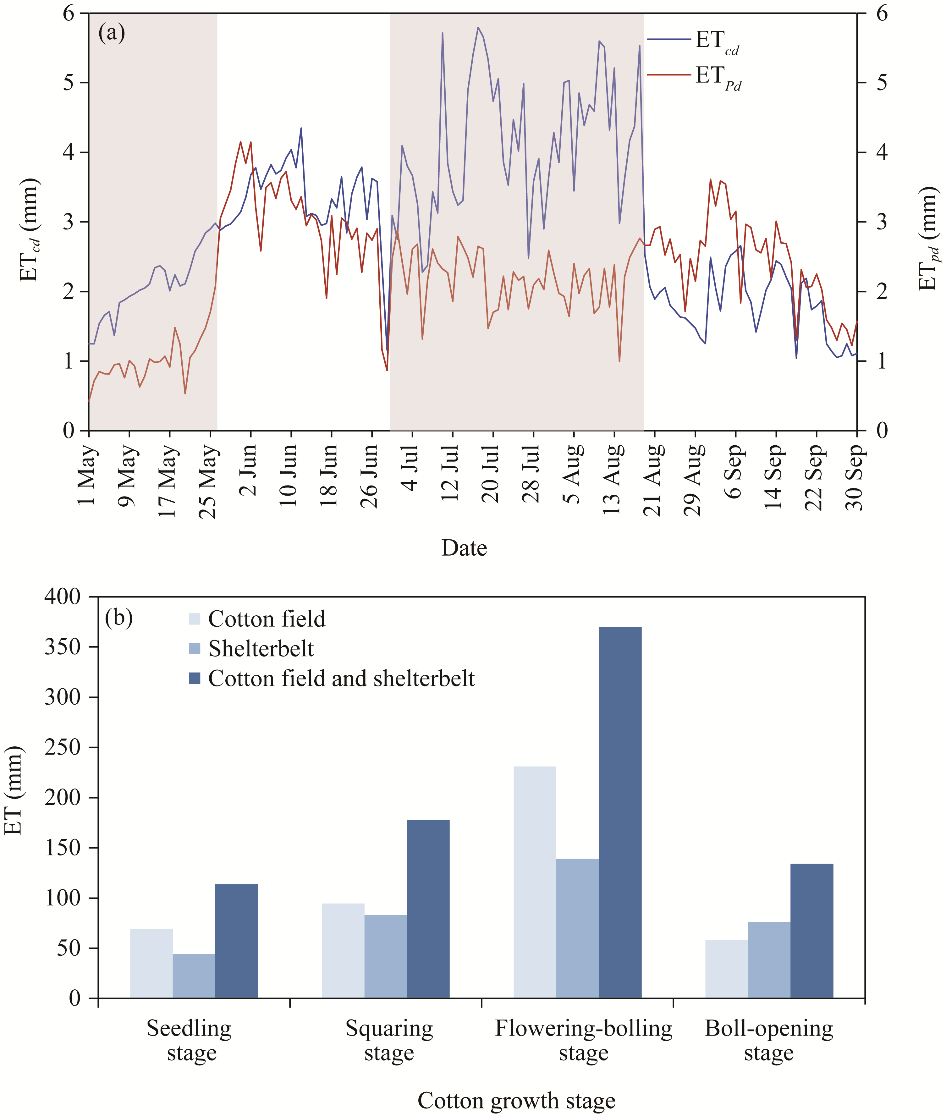
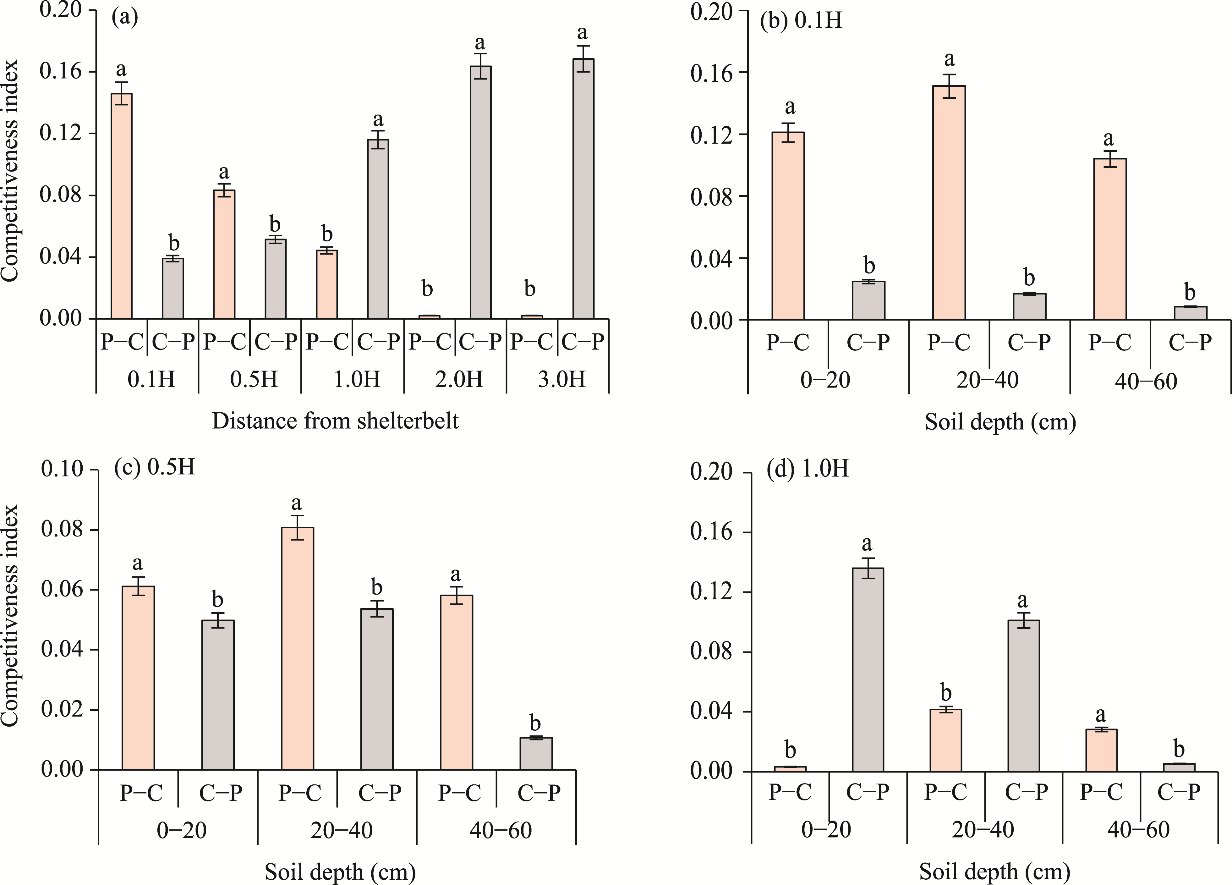
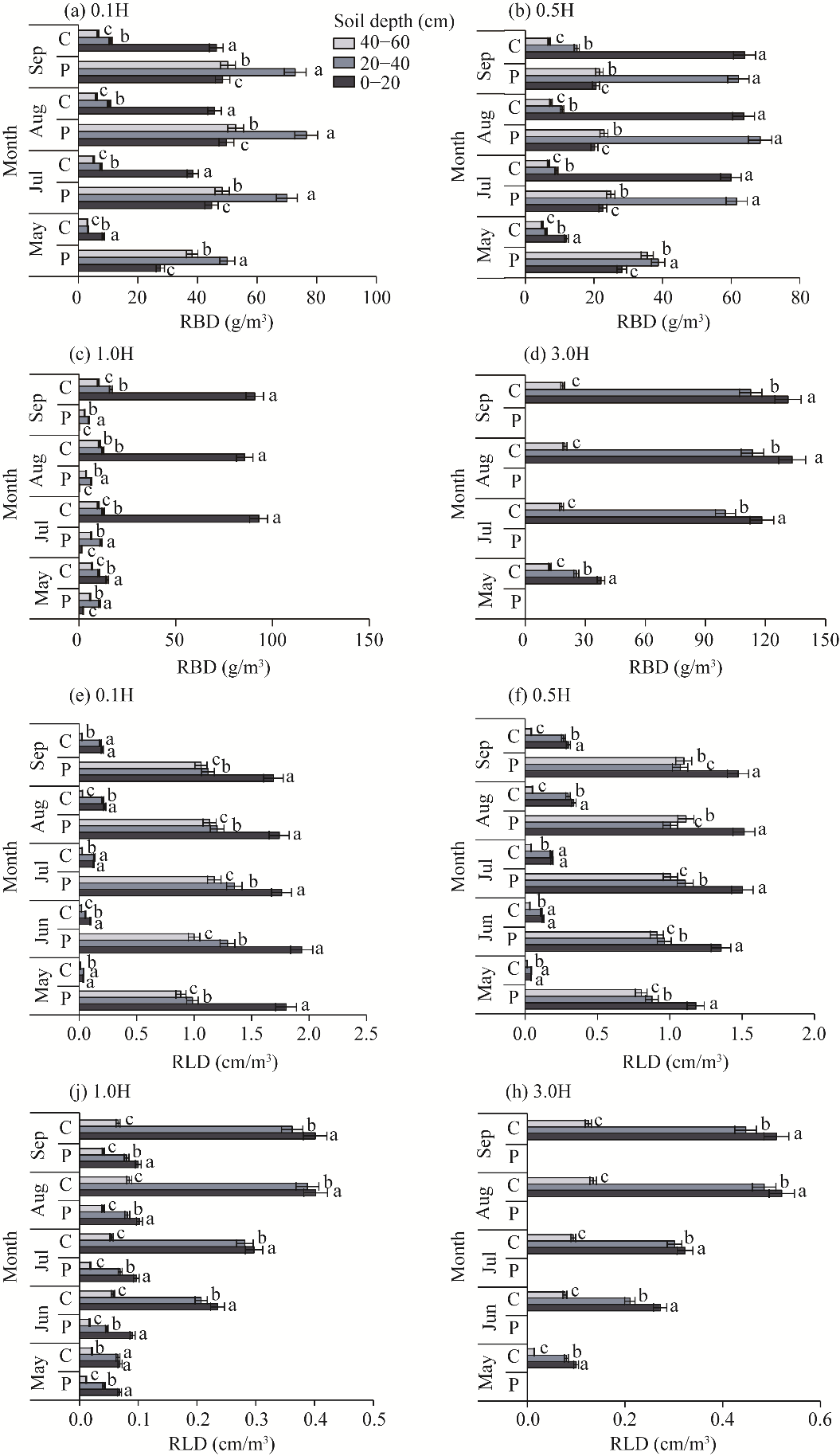
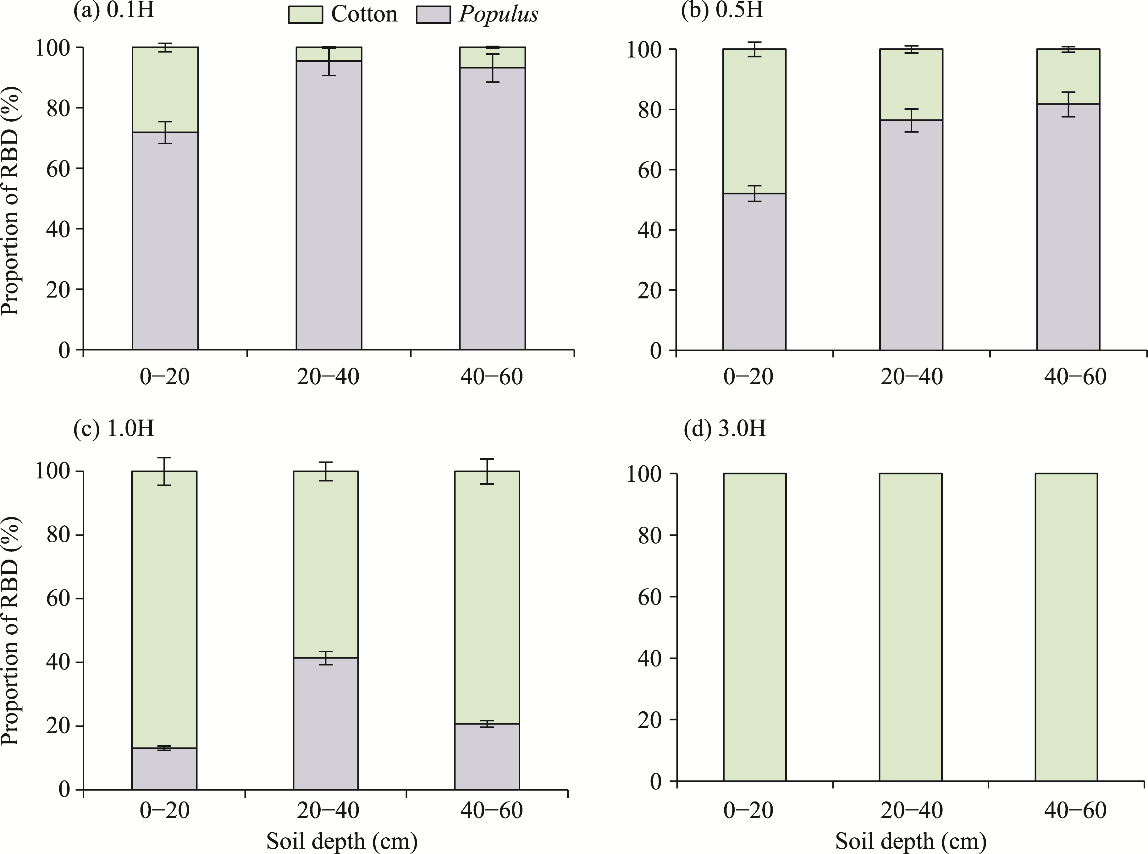
Abstract Farmland shelterbelts play a crucial role in protecting arable land in arid and semi-arid areas, but they may also compete for soil water with crops in agroforestry systems. Film-mulched drip irrigation in adjacent farmland substantially alters the water supply dynamics of shelterbelts, yet studies on the hydrological interactions between farmland shelterbelts and crops under this irrigation regime in the arid oasis areas along the desert margins of Xinjiang Uygur Autonomous Region, China remain limited. This study conducted an experiment in an oasis at the southern margin of the Gurbantunggut Desert in Xinjiang over the 2022-2024 growing seasons. We characterized the evapotranspiration (ET) patterns of the cotton field and adjacent Populus shelterbelt, quantitatively evaluated their interspecific water relationships, and examined fine root distribution to identify the zones and intensity of water competition. The results indicated that during the seedling and flowering-bolling stages, cotton field ET exceeded shelterbelt ET by 56.0%-66.1%; however, during the boll-opening stage, shelterbelt ET was 24.2% higher than cotton field ET. Within the 0.1H-0.5H into the cotton field from the shelterbelt-cotton field interface (where H is the mean tree height), Populus exhibited a competitive advantage in the 20-40 cm soil layer, with a competitiveness index of 0.083-0.146 (versus 0.039-0.051 for cotton), while competition was weakest in the 40-60 cm layer. At 0.1H, Populus root biomass density (RBD) and root length density (RLD) were 1.0-15.2 and 6.0-50.0 times those of cotton, respectively; at 1.0H, cotton RBD accounted for 63.0%-93.5% of total root biomass; and no Populus roots or evidence of water competition were detected at 2.0H and 3.0H. Supplemental irrigation should be applied to cotton fields adjacent to shelterbelts to offset water loss from interspecific competition, particularly during the boll-opening stage. The findings provide a practical basis for optimizing agricultural water management in oasis-desert agroforestry systems under film-mulched drip irrigation and offer regional empirical evidence for global research on water competition in arid-zone agroforestry systems.
|
|
Received: 18 November 2025
Published: 30 November 2026
|
|
Corresponding Authors:
*AN Dongliang (E-mail: an_dongliang@163.com)
|
| About author: Author contributions
Conceptualization: AN Dongliang, YAO Yandi; Data curation: JIANG Yan, XUE Bing; Formal analysis: JIANG Yan, AN Dongliang, YAO Yandi; Funding acquisition: JIANG Yan, AN Dongliang, YAO Yandi; Investigation: XUE Bing; Methodology: AN Dongliang, YAO Yandi; Project administration: AN Dongliang, YAO Yandi; Resources: JIANG Yan, YAO Yandi; Software: XUE Bing, HOU Zhen'an; Supervision: AN Dongliang, YAO Yandi, HOU Zhen'an; Validation: JIANG Yan, AN Dongliang, YAO Yandi; Visualization: JIANG Yan, XUE Bing; Writing - original draft: JIANG Yan; Writing - review & editing: JIANG Yan, AN Dongliang, YAO Yandi. All authors approved the manuscript.
|
|
|
| [1] |
Arenas-Corraliza M G, López-Díaz M L, Rolo V, et al. 2022. Phenological, morphological and physiological drivers of cereal grain yield in Mediterranean agroforestry systems. Agriculture, Ecosystems and Environment, 340: 108158, doi: 10.1016/j.agee.2022.108158.
|
|
|
| [2] |
Bayala J, Prieto I. 2020. Water acquisition, sharing and redistribution by roots: applications to agroforestry systems. Plant and Soil, 453(1-2): 17-28.
|
|
|
| [3] |
Biederman J A, Scott R L, Arnone J A, et al. 2018. Shrubland carbon sink depends upon winter water availability in the warm deserts of North America. Agricultural and Forest Meteorology, 249: 407-419.
|
|
|
| [4] |
Brenner A J, Jarvis P G, Van den beldt R J. 1995. Windbreak-crop interactions in the Sahel. 1. Dependence of shelter on field conditions. Agricultural and Forest Meteorology, 75(4): 235-262.
|
|
|
| [5] |
Cai L L, Xiong K N, Liu Z Q, et al. 2025. Water competition among coexisting plants in rock-dominated habitats of subtropical karst desertification. Agriculture, Ecosystems and Environment, 381: 109419, doi: 10.1016/j.agee.2024.109419.
|
|
|
| [6] |
Chen I C, Shen S F, Chan S F. 2024. Niche theory and species range limits along elevational gradients: perspectives and future directions. Annual Review of Ecology, Evolution, and Systematics, 55: 449-469.
|
|
|
| [7] |
Chen Y B, Hu S J, Lei L, et al. 2025. Determination of soil specific yield under the condition of deep buried groundwater: a case study in the southern edge of Gurbantunggut desert, China. Geographical Science, 45(2): 449-458. (in Chinese)
|
|
|
| [8] |
Daniele P, Josie G, Luisa H, et al. 2020. Water sources for root water uptake: Using stable isotopes of hydrogen and oxygen as a research tool in agricultural and agroforestry systems. Agriculture, Ecosystems and Environment, 291: 106790, doi: 10.1016/j.agee.2019.106790.
|
|
|
| [9] |
Deng J F, Yao J Q, Zheng X, et al. 2021. Transpiration and canopy stomatal conductance dynamics of Mongolian pine plantations in semiarid deserts, Northern China. Agricultural Water Management, 249: 106806, doi: 10.1016/j.agwat.2021.106806.
|
|
|
| [10] |
Fu S, Sun L, Luo Y. 2016. Combining sap flow measurements and modelling to assess water needs in an oasis farmland shelterbelt of Populus simonii Carr in Northwest China. Agricultural Water Management, 177: 172-180.
|
|
|
| [11] |
Fu S, Xiao Y, Li H Y, et al. 2019. Effect of meteorological factor on water consumption of farmland shelterbelt, Northwest China. IOP Conference Series: Earth and Environmental Science, 344: 012118, doi: 10.1088/1755-1315/344/1/012118.
|
|
|
| [12] |
Gong X W, Dang K, Lv S M, et al. 2020. Interspecific root interactions and water-use efficiency of intercropped proso millet and mung bean. European Journal of Agronomy, 115: 126034, doi: 10.1016/j.eja.2020.126034.
|
|
|
| [13] |
Han L, Liu L L, Peng L, et al. 2023. Mixing of tree species with the same water use strategy might lead to deep soil water deficit. Forest Ecology and Management, 534: 120876, doi: 10.1016/j.foreco.2023.120876.
|
|
|
| [14] |
Heiniger C, Barot S, Ponge J F, et al. 2015. Collembolan preferences for soil and microclimate in forest and pasture communities. Soil Biology and Biochemistry, 86: 181-192.
|
|
|
| [15] |
Hu H C, Wen J, Peng Z Y, et al. 2019. High-frequency monitoring of the occurrence of preferential flow on hillslopes and its relationship with rainfall features, soil moisture and landscape. Hydrological Sciences Journal, 64(11): 1385-1396.
|
|
|
| [16] |
Hu H C, Wen J, Peng Z Y, et al. 2020. Spatio-temporal variations of soil moisture and salinity and their effects on cotton growth in a mulched drip irrigation field. Irrigation and Drainage, 69(4): 928-943.
|
|
|
| [17] |
Huang L M, Pei Y W, Shao M A, et al. 2023. Multi-species plantation intensifies soil water competition and groundwater depletion in a water-limited desert region. Forest Ecology and Management, 537: 120953, doi: 10.1016/j.foreco.2023.120953.
|
|
|
| [18] |
Jha S K, Gao Y, Liu H, et al. 2017. Root development and water uptake in winter wheat under different irrigation methods and scheduling for North China. Agricultural Water Management, 182: 139-150.
|
|
|
| [19] |
Jose S, Udawatta R P. 2021. Agroforestry for ecosystem services: An introduction. In: Udawatta R P, Jose S. Agricultural Water Management, Agroforestry and Ecosystem Services. Cham: Springer, 1-17.
|
|
|
| [20] |
Kumar D, Newaj R, Ram A, et al. 2020. Fine roots dynamics and biomass of Phyllanthus emblica-based agroforestry system in Bundelkhand region of Central India. Current Science, 119(10): 1694-1699.
|
|
|
| [21] |
Liu B, Gao P X, Zhang S X. 2022. Study on the root growth dynamics of walnut in agroforestry system in the Loess Plateau. Fresenius Environmental Bulletin, 31(3A): 3376-3389.
|
|
|
| [22] |
Liu Y X, Qiao C L. 2023. Partitioning evapotranspiration in a cotton field under mulched drip irrigation based on the water-carbon fluxes coupling in an arid region in northwestern China. Agriculture, 13(6): 1219, doi: 10.3390/agriculture13061219.
|
|
|
| [23] |
Liu Z Q, Yu X X, Jia G D, et al. 2018. Water consumption by an agroecosystem with shelter forests of corn and Populus in the North China Plain. Agriculture, Ecosystems and Environment, 265: 178-189.
|
|
|
| [24] |
Luedeling E, Smethurst P J, Baudron F, et al. 2016. Field-scale modeling of tree-crop interactions: challenges and development needs. Agricultural Systems, 142: 51-69.
|
|
|
| [25] |
Ma B, Wang Q J, Xue B, et al. 2022. Application of UAV remote sensing in monitoring water use efficiency and biomass of cotton plants adjacent to shelterbelt. Frontiers in Plant Science, 13: 894172, doi: 10.3389/fpls.2022.894172.
|
|
|
| [26] |
Ma L S, Li Y J, Wu P T, et al. 2019. Effects of varied water regimes on root development and its relations with soil water under wheat/maize intercropping system. Plant and Soil, 439(1): 113-130.
|
|
|
| [27] |
Meena H M, Machiwal D, Santra P, et al. 2025. Improving water productivity of sprinkler-irrigated cumin through deficit irrigation in arid areas. Journal of Arid Land, 17(6): 791-807.
|
|
|
| [28] |
Ming G H, Hu H C, Tian F Q, et al. 2021. Carbon budget for a plastic-film mulched and drip-irrigated cotton field in an oasis of Northwest China. Agricultural and Forest Meteorology, 306: 108447, doi: 10.1016/j.agrformet.2021.108447.
|
|
|
| [29] |
Nair P K R, Kumar B M, Nair V D. 2021. An Introduction to Agroforestry: Four Decades of Scientific Developments (2nd ed.). Cham: Springer.
|
|
|
| [30] |
Pastore A I, Barabás G, Bimler M D, et al. 2021. The evolution of niche overlap and competitive differences. Nature Ecology & Evolution, 5: 330-337.
|
|
|
| [31] |
Shan L S, Li Y, Zhao R F, et al. 2013. Effects of deficit irrigation on daily and seasonal variations of trunk sap flow and its growth in Calligonum arborescens. Journal of Arid Land, 5(2): 233-243.
|
|
|
| [32] |
Shen Q, Gao G Y, Hu W, et al. 2016. Spatial-temporal variability of soil water content in a cropland-shelterbelt-desert site in an arid inland river basin of Northwest China. Journal of Hydrology, 540: 873-885.
|
|
|
| [33] |
Siegwart L, Bertrand I, Roupsard O, et al. 2023. Contribution of tree and crop roots to soil carbon stocks in a Sub-Sahelian agroforestry parkland in Senegal. Agriculture, Ecosystems & Environment, 352: 108524, doi: 10.1016/j.agee.2023.108524.
|
|
|
| [34] |
Spanner G C, Gimenez B O, Wright C L, et al. 2022. Dry season transpiration and soil water dynamics in the Central Amazon. Frontiers in Plant Science, 13: 825097, doi: 10.3389/fpls.2022.825097.
|
|
|
| [35] |
Swieter A, Langhof M, Lamerre J, et al. 2022. Competition, stress and benefits: Trees and crops in the transition zone of a temperate short rotation alley cropping agroforestry system. Journal of Agronomy and Crop Science, 208(2): 209-224.
|
|
|
| [36] |
Thomas A, Marron N, Bonal D. 2022. Leaf and tree water-use efficiencies of Populus deltoides×P. nigra in mixed forest and agroforestry plantations. Tree Physiology, 42(12): 2432-2445.
|
|
|
| [37] |
Tosh C R, Smith J. 2025. Can trees and their associated organisms still benefit arable crops in the presence of pesticide use? Agricultural Systems, 225: 104292, doi: 10.1016/j.agsy.2025.104292.
|
|
|
| [38] |
Wang Q, Han S, Zhang L Z, et al. 2016. Density responses and spatial distribution of cotton yield and yield components in jujube (Zizyphus jujube)/cotton (Gossypium hirsutum) agroforestry. European Journal of Agronomy, 79: 58-65.
|
|
|
| [39] |
Wei W W, Liu T T, Zhang S, et al. 2024. Root spatial distribution and belowground competition in an apple/ryegrass agroforestry system. Agricultural Systems, 215: 103869, doi: 10.1016/j.agsy.2024.103869.
|
|
|
| [40] |
Wen J, Li J S, Hu H C, et al. 2021. Impact of lateral depth and irrigation frequency on inorganic nitrogen distribution, yield, and quality of asparagus lettuce utilizing sewage effluent under drip irrigation. Communications in Soil Science and Plant Analysis, 52(20): 2550-2561.
|
|
|
| [41] |
Wen Y R, Liu B, Lin L T, et al. 2024. Shelterbelt effects on soil redistribution on an arable slope by wind and water. CATENA, 241: 108044, doi: 10.1016/j.catena.2024.108044.
|
|
|
| [42] |
Xiao Q L, Huang M B. 2016. Fine root distributions of shelterbelt trees and their water sources in an oasis of arid northwestern China. Journal of Arid Environments, 130: 30-39.
|
|
|
| [43] |
Xiong X, Liao H, Xing Y F, et al. 2022. Soil aggregates and fertilizer treatments drive bacterial interactions via interspecies niche overlap. Microbiology Spectrum, 10(2): e02524-21, doi: 10.1128/spectrum.02524-21.
|
|
|
| [44] |
Xue B, Jiang Y, Wang Q J, et al. 2023. Quantification of the water exchange in an agroforestry system under the background of film-mulching drip irrigation of farmland. Agricultural Water Management, 290: 108597, doi: 10.1016/j.agwat.2023.108597.
|
|
|
| [45] |
Xue B, Jiang Y, Wang Q J, et al. 2024. Seasonal transpiration dynamics and water use strategy of a farmland shelterbelt in Gurbantunggut Desert oasis, northwestern China. Agricultural Water Management, 295: 108777, doi: 10.1016/j.agwat.2024.108777.
|
|
|
| [46] |
Yang J F, Zhang T R, Wang Y J, et al. 2019. Intercropped relationship change the developmental pattern of apple and white clover. Bioengineered, 10(1): 218-228.
|
|
|
| [47] |
Yin W, Chai Q, Zhao C, et al. 2020. Water utilization in intercropping: a review. Agricultural Water Management, 241: 106335, doi: 10.1016/j.agwat.2020.106335.
|
|
|
| [48] |
Zamora D S, Jose S, Nair P K R. 2007. Morphological plasticity of cotton roots in response to interspecific competition with pecan in an alley cropping system in the southern United States. Agroforestry Systems, 69(2): 107-116.
|
|
|
| [49] |
Zhang S, Liu T T, Wei W W, et al. 2025. In arid regions, the different intercropping systems reduce interspecific competition to improve system productivity. Plant and Soil, 506(1-2): 137-155.
|
|
|
| [50] |
Zhang W, Ahanbieke P, Wang B J, et al. 2013. Root distribution and interactions in jujube tree/wheat agroforestry system. Agroforestry Systems, 87(4): 929-939.
|
|
|
| [51] |
Zheng C H, Wang R S, Zhou X, et al. 2021. Effects of mulch and irrigation regimes on water distribution and root competition in an apple-soybean intercropping system in Loess Plateau, China. Agricultural Water Management, 246: 106656, doi: 10.1016/j.agwat.2020.106656.
|
|
|
| [52] |
Zhu Q K, Zhu J Z. 2003. Study on niche of agroforestry systems in the Loess Plateau. Science of Soil and Water Conservation, 1(1): 49-52. (in Chinese)
|
|
|
|
Viewed |
|
|
|
Full text
|
|
|
|
|
Abstract
|
|
|
|
|
Cited |
|
|
|
|
| |
Shared |
|
|
|
|
| |
Discussed |
|
|
|
|