| Research article |
|


|
|
|
| Flammability of plant communities in arid and semi-arid ecosystems: Identifying key drivers and management implications |
Mosayeb HOJATI, Azam KHHOSRAVI MASHIZI*( ) ) |
| Department of Ecological Engineering, Faculty of Natural Resources, University of Jiroft, Jiroft 7867161167, Iran |
|
|
|
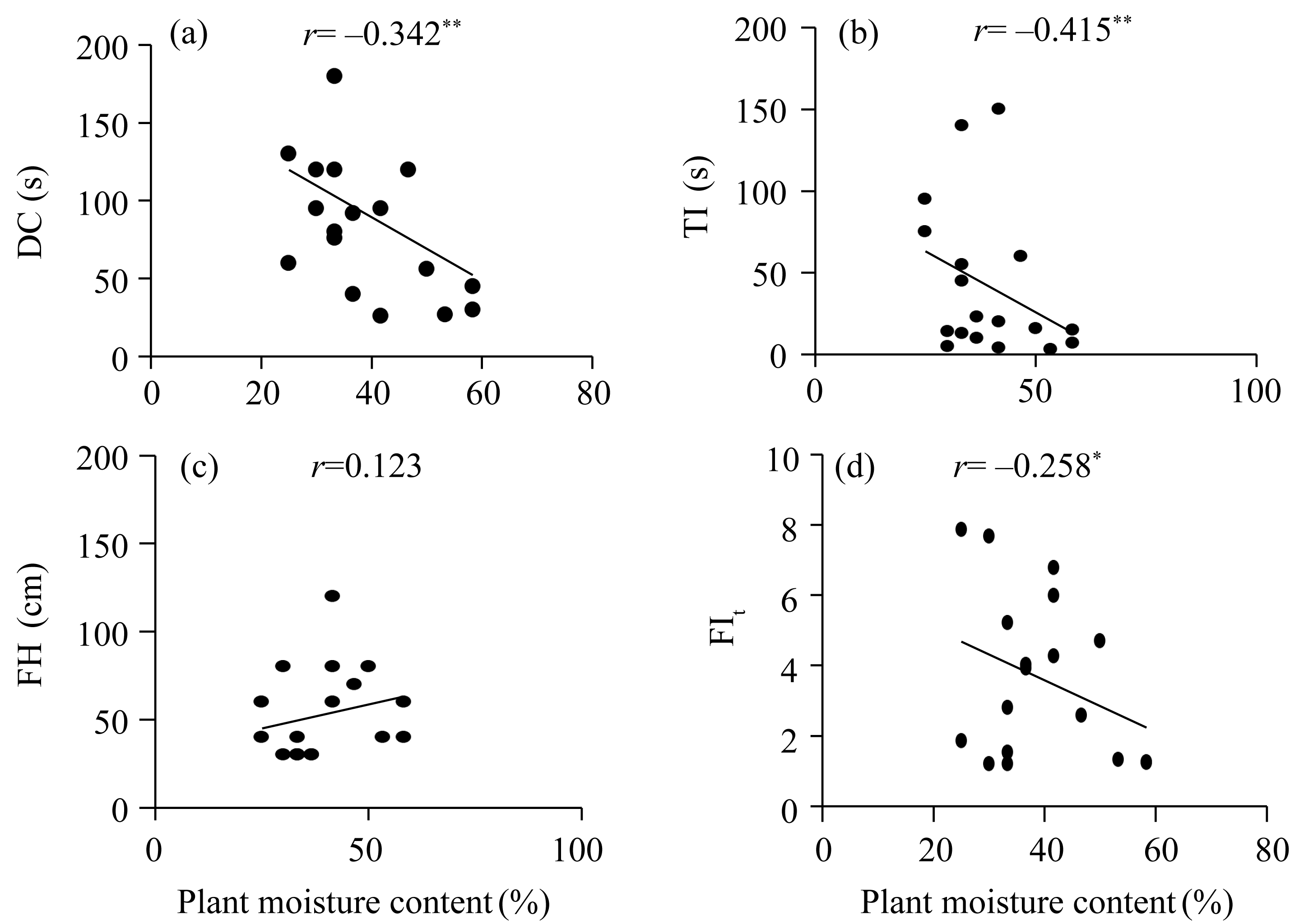
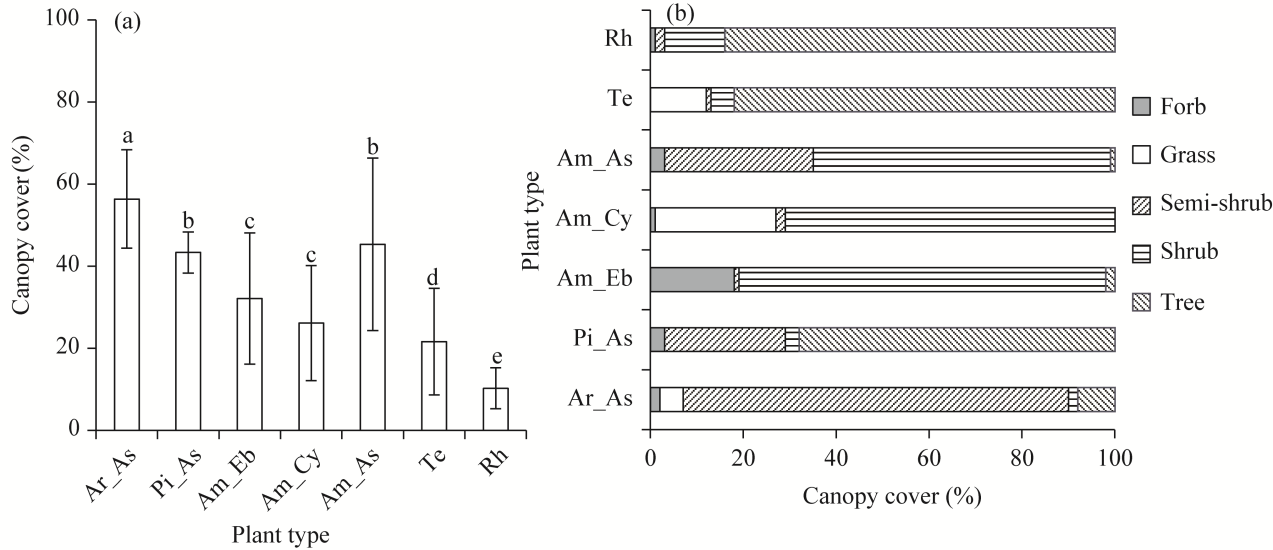
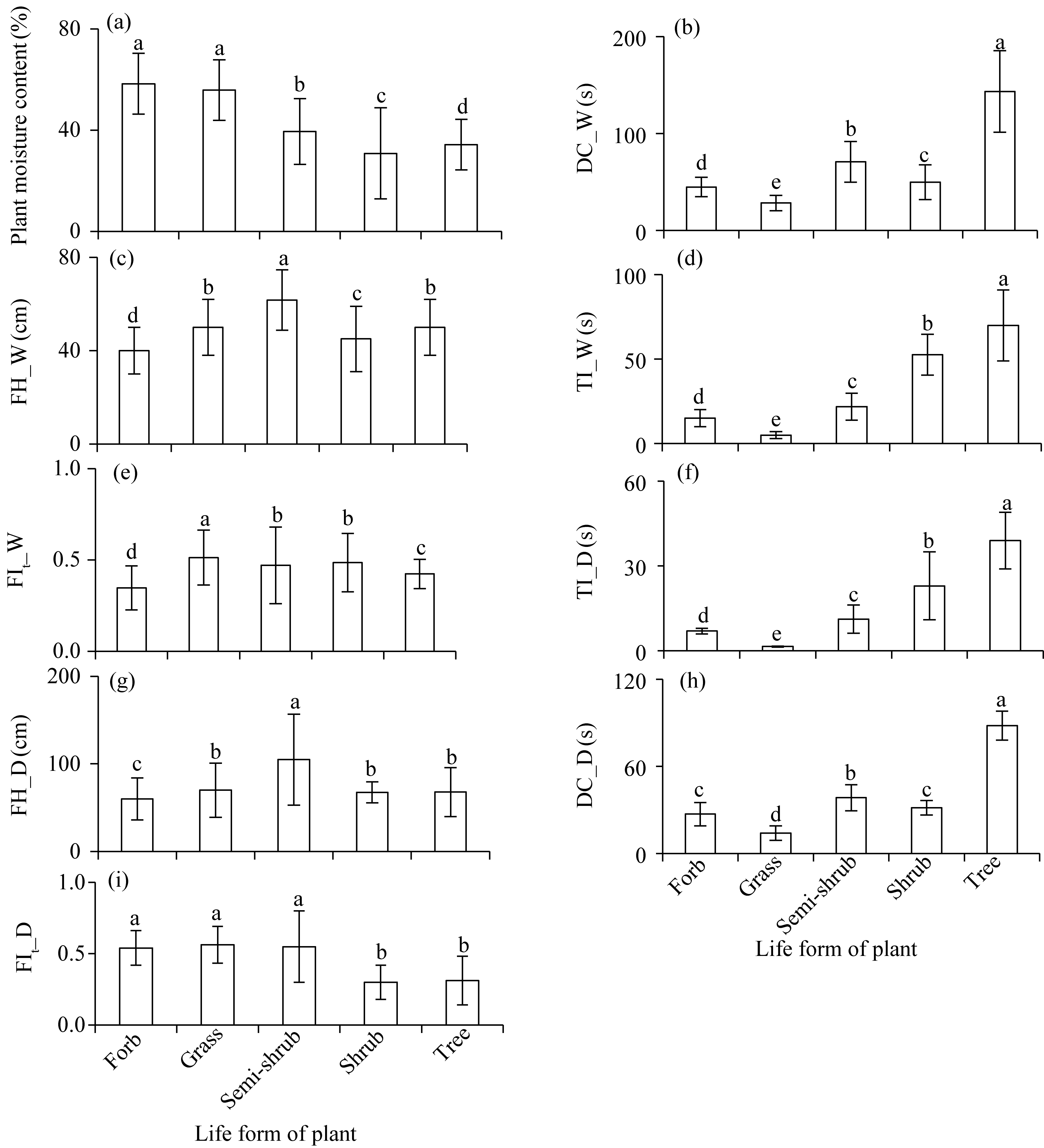
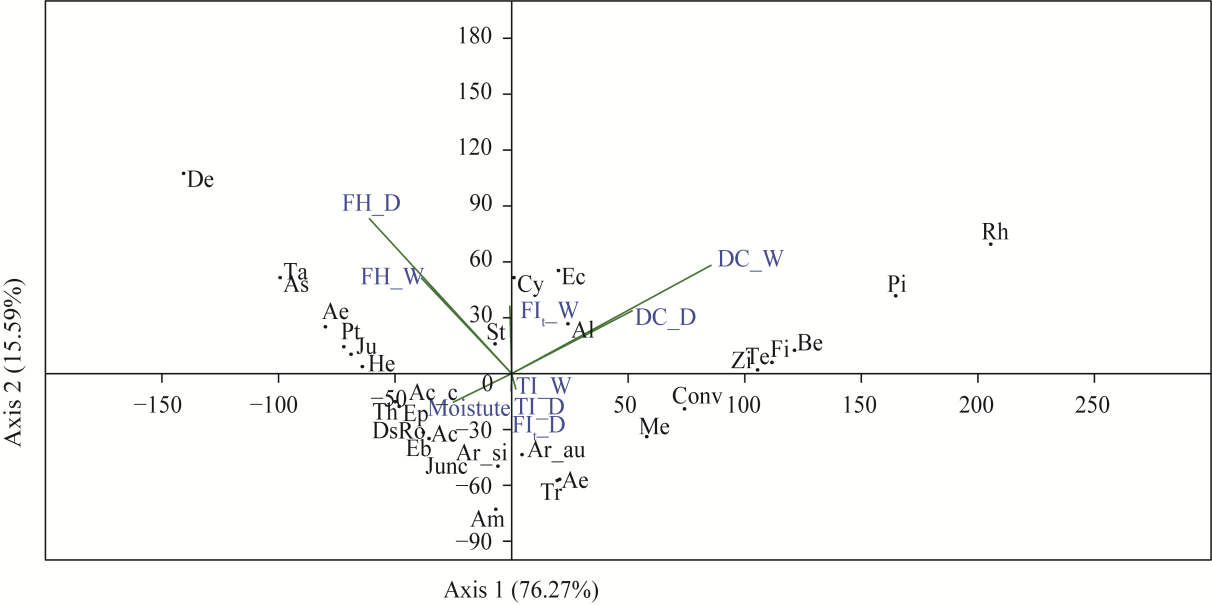
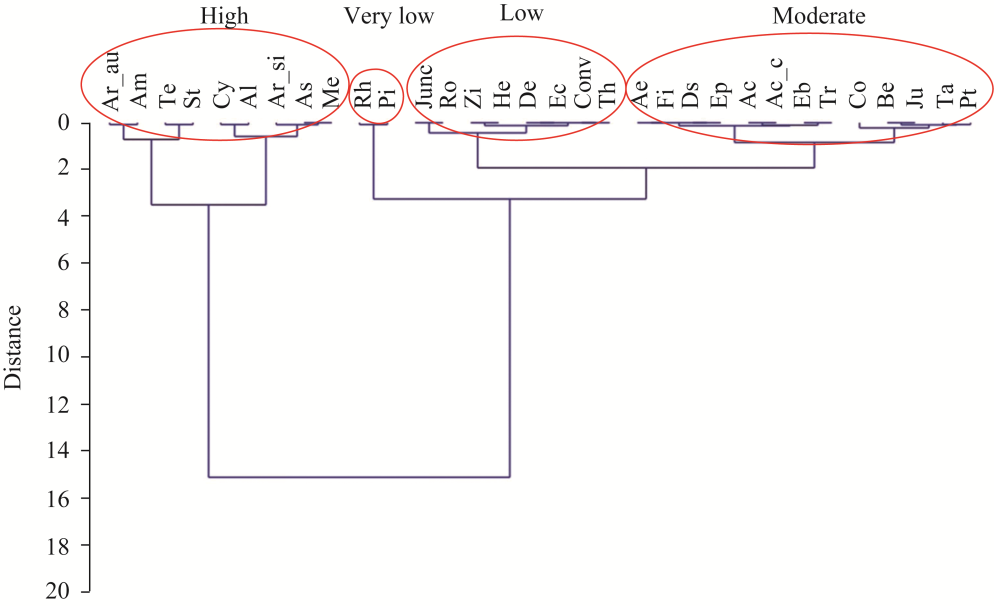
Abstract Arid and semi-arid ecosystems are prone to extensive fires due to specific climatic conditions, sparse vegetation cover, and high density of fine fuels. Understanding the flammability characteristics of land covers is essential for fire management and designing land restoration programs in arid and semi-arid ecosystems. This study provided a new approach to evaluate the flammability of shrublands and woodlands using flammability indices (FIs) including time to ignition (TI), duration of combustion (DC), and flame height (FH) of plant species and their relative frequencies in the Dalfard Basin of southeastern Iran. The results showed that there was a significant difference in FIs between land covers. Shrublands had higher flammability potential compared with woodlands. Plant moisture content had a negative relationship with TI (P<0.010) and no significant relationship with DC and FH (P>0.050). Artemisia spp., Astragalus gossypinus Fischer, Amygdalus scoparia Spach, and Cymbopogon jwarancusa (Jones) Schult. had the highest FI. Tree species such as Rhazya stricta Decne., and Pistacia atlantica Desf. showed greater resistance to fire. Using principal component analysis, the relationship between species and FIs was examined, and TI of wet fuel was the most important FI in relation to species. Structural equation model showed that life form (P<0.001) was the most important flammability driver. Precipitation (P<0.010) and legume species (P<0.010) were significantly related to the flammability in arid land. This study emphasizes the importance of managing high-risk species and using resistant species in vegetation restoration and shows that combining species FIs with their abundance is an effective tool for assessing fire risk and fuel management at the plant community scale.
|
|
Received: 12 July 2025
Published: 28 February 2026
|
|
Corresponding Authors:
*Azam KHOSRAVI MASHIZI (E-mail: Azam.Khosravi@ujiroft.ac.ir)
|
|
|
| [1] |
Afreen T, Singh H. 2024. Differential response of graminoid and forb species to precipitation variability in constructed dry tropical grassland. Tropical Ecology, 65: 124-132.
doi: 10.1007/s42965-023-00313-w
|
|
|
| [2] |
Airey-Lauvaux C, Pierce A D, Skinner C N, et al. 2022. Changes in fire behavior caused by fire exclusion and fuel build-up vary with topography in California montane forests, USA. Journal of Environmental Management, 304: 114255, doi: 10.1016/j.jenvman.2021.114255.
|
|
|
| [3] |
Alam M, Ali S, Khan M A, et al. 2014. Fire resistance of Rhazya stricta: An analysis of fuel properties. Pakistan Journal of Botany, 46: 691-696.
|
|
|
| [4] |
Alam M A, Wyse S V, Buckley H L, et al. 2020. Shoot flammability is decoupled from leaf flammability, but controlled by leaf functional traits. Journal of Ecology, 108(2): 641-653.
doi: 10.1111/jec.v108.2
|
|
|
| [5] |
Albeshri A, Baeshen N A, Bouback T A, et al. 2021. A review of Rhazya stricta Decne phytochemistry, bioactivities, pharmacological activities, toxicity, and folkloric medicinal uses. Plants Basel, 10(11): 2508, doi: 10.3390/plants10112508.
|
|
|
| [6] |
Alcañiz M, Outeiro L, Francos M, et al. 2018. Effects of prescribed fires on soil properties: A review. Science of The Total Environment, 613-614: 944-957.
doi: 10.1016/j.scitotenv.2017.09.144
|
|
|
| [7] |
Al-Tayyar M A, AlKhafaji D, Shahad H A K. 2022. A review on flame height and structure and pollutants formation. NeuroQuantology, 20(7): 2946-2968.
|
|
|
| [8] |
Awang Z, Afthanorhan A, Arsi M A M. 2015. Parametric and non parametric approach in Structural Equation Modeling (SEM): The application of bootstrapping. Modern Applied Science, 9: 58-67.
|
|
|
| [9] |
Bacciu V, Sirca C, Spano D. 2022. Towards a systemic approach to fire risk management. Environmental Science & Policy, 129: 37-44.
|
|
|
| [10] |
Balde B, Vega-Garcia C, Gelabert P J, et al. 2023. The relationship between fire severity and burning efficiency for estimating wildfire emissions in Mediterranean forests. Journal of Forestry Research, 34: 1195-1206.
doi: 10.1007/s11676-023-01599-1
|
|
|
| [11] |
Baruch Z, Guerin G, Martín-Forés I, et al. 2022. Shifts in floristic composition and structure in Australian rangelands. PLoS ONE, 17(12): e0278833, doi: 10.1371/journal.pone.0278833.
|
|
|
| [12] |
Bianchi L O, Defosse G E. 2015. Live fuel moisture content and leaf ignition of forest species in Andean Patagonia, Argentina. International Journal of Wildland Fire, 24(3): 340-348.
doi: 10.1071/WF13099
|
|
|
| [13] |
Blauw L G, Wensink N, Bakker L, et al. 2015. Fuel moisture content enhances nonadditive effects of plant mixtures on flammability and fire behavior. Ecology and Evolution, 5(17): 3830-3841.
doi: 10.1002/ece3.1628
pmid: 26380709
|
|
|
| [14] |
Bond W J, Keeley J E. 2005. Fire as a global 'herbivore': The ecology and evolution of flammable ecosystems. Trends in Ecology & Evolution, 20(7): 387-394.
doi: 10.1016/j.tree.2005.04.025
|
|
|
| [15] |
Bradley B A, Curtis C A, Fusco E J, et al. 2018. Cheatgrass (Bromus tectorum) distribution in the intermountain Western United States and its relationship to fire frequency, seasonality, and ignitions. Biological Invasions, 20: 1493-1506.
doi: 10.1007/s10530-017-1641-8
|
|
|
| [16] |
Burton J E, Cawson J G, Filkov A I, et al. 2021. Leaf traits predict global patterns in the structure and flammability of forest litter beds. Journal of Ecology, 109(3): 1344-1355.
doi: 10.1111/jec.v109.3
|
|
|
| [17] |
Castro Rego F, Morgan P, Fernandes P, et al. 2021. Chemical conditions for ignition. In: RegoF C, MorganP, FernandesP, et al. Fire Science:From Chemistry to Landscape Management. New York: Springer, 7-18.
|
|
|
| [18] |
Cawson J G, Burton J E, Pickering B J, et al. 2023. Quantifying the flammability of living plants at the branch scale: which metrics to use? International Journal of Wildland Fire, 32(10): 1404-1421.
doi: 10.1071/WF23007
|
|
|
| [19] |
Coradi P C, Maldaner V, Lutz É, et al. 2020. Influences of drying temperature and storage conditions for preserving the quality of maize postharvest on laboratory and field scales. Scientific Reports, 10: 22006, doi: 10.1038/s41598-020-78914-x.
pmid: 33319837
|
|
|
| [20] |
Cornwell W K, Elvira A, van Kempen L, et al. 2015. Flammability as a functional trait for species selection in fire-prone ecosystems. New Phytologist, 206: 198-208.
|
|
|
| [21] |
Cui X L, Paterson A M, Wyse S, et al. 2020. Shoot flammability of vascular plants is phylogenetically conserved and related to habitat fire-proneness and growth form. Nature Plants, 6: 355-359.
doi: 10.1038/s41477-020-0635-1
pmid: 32284547
|
|
|
| [22] |
Curt T, Schaffhauser A, Borgniet L, et al. 2011. Litter flammability in oak woodlands and shrublands of southeastern France. Forest Ecology and Management, 261(12): 2214-2222.
doi: 10.1016/j.foreco.2010.12.002
|
|
|
| [23] |
Davies K W, Wollstein K, Dragt B, et al. 2022. Grazing management to reduce wildfire risk in invasive annual grass prone sagebrush communities. Rangelands, 44(3): 194-199.
doi: 10.1016/j.rala.2022.02.001
|
|
|
| [24] |
Dehane B, Hernando C, Guijarro M, et al. 2017. Flammability of some companion species in cork oak Quercus suber L. forests. Annals of Forest Science, 74: 60, doi: 10.1007/s13595-017-0659-5.
|
|
|
| [25] |
Dickman L T, Jonko A K, Linn R R, et al. 2023. Integrating plant physiology into simulation of fire behavior and effects. New Phytologist, 238(3): 952-970.
doi: 10.1111/nph.18770
pmid: 36694296
|
|
|
| [26] |
Dimitrakopoulos A P, Papaioannou K K. 2001. Flammability assessment of Mediterranean forest fuels. Fire Technology, 37: 143-152.
doi: 10.1023/A:1011641601076
|
|
|
| [27] |
Emery N, Roth K, Pivovaroff A L. 2020. Flowering phenology indicates plant flammability in a dominant shrub species. Ecological Indicators, 109: 105745, doi: 10.1016/j.ecolind.2019.105745.
|
|
|
| [28] |
Essaghi S, Hachmi M, Yessef M, et al. 2017. Assessment of flammability of Moroccan forest fuels: New approach to estimate the flammability index. Forests, 8(11): 443, doi: 10.3390/f8110443.
|
|
|
| [29] |
Fares S, Bajocco S, Salvati L, et al. 2017. Characterizing potential wildland fire fuel in live vegetation in the Mediterranean region. Annals of Forest Science, 74(1): 1, doi: 10.1007/s13595-016-0599-5.
|
|
|
| [30] |
Farzaneh M, Ahmadzadeh M, Hadian J, et al. 2006. Chemical composition and antifungal activity of the essential oils of three species of Artemisia on some soil-borne phytopathogens. Communications in Agricultural and Applied Biological Sciences, 71: 1327-1333.
pmid: 17390897
|
|
|
| [31] |
Fatima S, Hameed M, Naz N, et al. 2021. Survival strategies in Khavi grass (Cymbopogon jwarancusa Jones Schult.) colonizing hot hypersaline and arid environments. Water, Air, & Soil Pollution, 232: 82, doi: 10.1007/s11270-021-05050-1.
|
|
|
| [32] |
Fazeli H, Jolly W M, Blunck D L. 2022. Stages and time-scales of ignition and burning of live fuels for different convective heat fluxes. Fuel, 324: 124490, doi: 10.1016/j.fuel.2022.124490.
|
|
|
| [33] |
Feldman A F, Feng X, Felton A J, et al. 2024. Plant responses to changing rainfall frequency and intensity. Nature Reviews Earth & Environment, 5: 276-294.
|
|
|
| [34] |
Fernandes P M, Botelho H S. 2003. A review of prescribed burning effectiveness in fire hazard reduction. International Journal of Wildland Fire, 12(2): 117-128.
doi: 10.1071/WF02042
|
|
|
| [35] |
Gajendiran K, Kandasamy S, Narayanan M. 2024. Influences of wildfire on the forest ecosystem and climate change: A comprehensive study. Environmental Research, 240: 117537, doi: 10.1016/j.envres.2023.117537.
|
|
|
| [36] |
Gnanasekaran L, Priya A K, Thanigaivel S, et al. 2023. The conversion of biomass to fuels via cutting-edge technologies: Explorations from natural utilization systems. Fuel, 331: 125668, doi: 10.1016/j.fuel.2022.125668.
|
|
|
| [37] |
Grau-Andrés R, Moreira B, Pausas J G. 2024. Global plant responses to intensified fire regimes. Global Ecology and Biogeography, 33(8): e13858, doi: 10.1111/geb.13858.
|
|
|
| [38] |
Grootemaat S, Wright I J, van Bodegom P M, et al. 2015. Burn or rot: Leaf traits explain why flammability and decomposability are decoupled across species. Functional Ecology, 29(11): 1486-1497.
doi: 10.1111/fec.2015.29.issue-11
|
|
|
| [39] |
Guo J, Feng P F, Xue H, et al. 2025. A framework of ecological security patterns in arid and semi-arid regions considering differences socioeconomic scenarios in ecological risk: Case of Loess Plateau, China. Journal of Environmental Management, 373: 123923, doi: 10.1016/j.jenvman.2024.12.
|
|
|
| [40] |
Hachmi M, Sesbou A, Benjelloun H, et al. 2011. A simple technique to estimate the flammability index of Moroccan forest fuels. Journal of Combustion, 2011: 263531, doi: 10.1155/2011/263531.
|
|
|
| [41] |
Holdrege M C, Schlaepfer D R, Palmquist K A, et al. 2024. Wildfire probability estimated from recent climate and fine fuels across the big sagebrush. Fire Ecology, 20(1): e27812, doi: 10.1186/s42408-024-00252-4.
|
|
|
| [42] |
Huang Q, Zhang F Y, Zhang Q, et al. 2022. Assessing the effects of human activities on terrestrial net primary productivity of grasslands in typical ecologically fragile areas. Biology, 12(1): 38, doi: 10.3390/biology12010038.
|
|
|
| [43] |
Jaureguiberry P, Bertone G, Díaz S. 2011. Device for the standard measurement of shoot flammability in the field. Austral Ecology, 36(7): 821-829.
doi: 10.1111/aec.2011.36.issue-7
|
|
|
| [44] |
Javidfar A, Rouhi-Moghaddam E, Ebrahimi M. 2017. Some ecological conditions of Amygdalus scoparia Spach in Nehbandan, eastern Iran. Ecopersia, 5(1): 1655-1667.
doi: 10.18869/modares.ecopersia.5.1.1655
|
|
|
| [45] |
Jenkins J S, Abatzoglou J T, Rupp D E, et al. 2023. Human and climatic influences on wildfires ignited by recreational activities in national forests in Washington, Oregon, and California. Environmental Research Communications, 5(9): 095002, doi: 10.1088/2515-7620/acf3e6.
|
|
|
| [46] |
Jian M T, Jian Y, Zeng H, et al. 2024. Current status and prospects of plant flammability measurements. Fire, 7(8): 266, doi: 10.3390/fire7080266.
|
|
|
| [47] |
Kala C P. 2023. Environmental and socioeconomic impacts of forest fires: A call for multilateral cooperation and management interventions. Natural Hazards Research, 3(2): 286-294.
doi: 10.1016/j.nhres.2023.04.003
|
|
|
| [48] |
Kent M. 2012. Vegetation Description and Data Analysis: A Practical Approach (2nd ed.). Hoboken: Wiley-Blackwell.
|
|
|
| [49] |
Maestas J D, Smith J T, Allred B W, et al. 2023. Using dynamic, fuels-based fire probability maps to reduce large wildfires in the Great Basin. Rangeland Ecology & Management, 89: 33-41.
doi: 10.1016/j.rama.2022.08.002
|
|
|
| [50] |
Meza M C, Espelta J M, González T M, et al. 2023. Fire reduces taxonomic and functional diversity in Neotropical moist seasonally flooded forests. Perspectives in Ecology and Conservation, 21: 101-111.
doi: 10.1016/j.pecon.2023.04.003
|
|
|
| [51] |
Mitsopoulos I, Chrysafi I, Bountis D, et al. 2019. Assessment of factors driving high fire severity potential and classification in a Mediterranean pine ecosystem. Journal of Environmental Management, 235: 266-275.
doi: S0301-4797(19)30057-X
pmid: 30685582
|
|
|
| [52] |
Murtagh F, Legendre P. 2011. Ward's hierarchical clustering method: Clustering criterion and agglomerative algorithm. [2025-01-09]. https://arxiv.org/pdf/1111.6285v1.
|
|
|
| [53] |
Pagadala T, Alam M A, Maxwell T M R, et al. 2024. Measuring flammability of crops, pastures, fruit trees, and weeds: A novel tool to fight wildfires in agricultural landscapes. Science of The Total Environment, 906: 167489, doi: 10.1016/j.scitotenv.2023.167489.
|
|
|
| [54] |
Park J, Moon M, Green T, et al. 2024. Impact of tree species composition on fire resistance in temperate forest stands. Forest Ecology and Management, 572: 122279, doi: 10.1016/j.foreco.2024.122279.
|
|
|
| [55] |
Pausas J G, Keeley J E. 2009. A burning story: The role of fire in the history of life. BioScience, 59(7): 593-601.
doi: 10.1525/bio.2009.59.7.10
|
|
|
| [56] |
Pausas J G, Keeley J E, Schwilk D W. 2017. Flammability as an ecological and evolutionary driver. Journal of Ecology, 105(2): 289-297.
doi: 10.1111/jec.2017.105.issue-2
|
|
|
| [57] |
Pausas J G, Bond W J. 2020. On the three major recycling pathways in terrestrial ecosystems. Trends in Ecology & Evolution, 35(9): 767-775.
doi: 10.1016/j.tree.2020.04.004
|
|
|
| [58] |
Pellegrini A F A, Ahlström A, Hobbie S E, et al. 2018. Fire frequency drives decadal changes in soil carbon and nitrogen and ecosystem productivity. Nature, 553: 194-198.
doi: 10.1038/nature24668
|
|
|
| [59] |
Pellizzaro G, Cesaraccio C, Duce P, et al. 2007. Relationships between seasonal patterns of live fuel moisture and meteorological drought indices for Mediterranean shrubland species. International Journal of Wildland Fire, 16(2): 232-241.
doi: 10.1071/WF06081
|
|
|
| [60] |
Penman T D, Christie F J, Andersen A N, et al. 2011. Prescribed burning: How can it work to conserve the things we value? International Journal of Wildland Fire, 20(6): 721-733.
doi: 10.1071/WF09131
|
|
|
| [61] |
Pilliod D S, Welty J L, Arkle R S. 2017. Refining the cheatgrass-fire cycle in the Great Basin: Precipitation timing and fine fuel composition predict wildfire trends. Ecology and Evolution, 7(19): 8126-8151.
doi: 10.1002/ece3.3414
pmid: 29043061
|
|
|
| [62] |
Popović Z, Bojović S, Marković M, et al. 2021. Tree species flammability based on plant traits: A synthesis. Science of The Total Environment, 800: 149625, doi: 10.1016/j.scitotenv.2021.149625.
|
|
|
| [63] |
Pourreza M, Shaw J D, Zangeneh H. 2008. Sustainability of wild pistachio (Pistacia atlantica Desf.) in Zagros forests, Iran. Forest Ecology and Management, 255(11): 3667-3671.
doi: 10.1016/j.foreco.2008.01.057
|
|
|
| [64] |
Prior L D, Murphy B P, Bowman D M J S. 2018. Conceptualizing ecological flammability: An experimental test of three frameworks using various types and loads of surface fuels. Fire, 1(1): 14, doi: 10.3390/fire1010014.
|
|
|
| [65] |
Ringle C, Silva D, Bido D. 2015. Structural Equation Modeling with the SmartPLS. Brazilian Journal of Marketing, 13: 56-73.
|
|
|
| [66] |
Sadeghi S M M, Haghdoost A, Attarod P. 2010. Study of Pistacia atlantica's resistance to fire in Zagros forests. Iranian Journal of Forest and Poplar Research, 18: 45-58. (in Persian)
|
|
|
| [67] |
Scarff F R, Lenz T, Richards A E, et al. 2021. Effects of plant hydraulic traits on the flammability of live fine canopy fuels. Functional Ecology, 35(4): 835-846.
doi: 10.1111/fec.v35.4
|
|
|
| [68] |
Schertzer E, Staver A C. 2018. Fire spread and the issue of community-level selection in the evolution of flammability. Journal of the Royal Society Interface, 15: 20180444, doi: 10.1098/rsif.2018.0444.
|
|
|
| [69] |
Sharifi-Rad J, Herrera-Bravo J, Semwal P, et al. 2022. Artemisia spp.: An update on its chemical composition, pharmacological and toxicological profiles. Oxidative Medicine and Cellular Longevity, 2022: 5628601, doi: 10.1155/2022/5628601.
|
|
|
| [70] |
Simpson E H. 1949. Measurement of diversity. Nature, 163: 688, doi: 10.1038/163688a0.
|
|
|
| [71] |
Singh P K, Chudasama H. 2021. Pathways for climate change adaptations in arid and semi-arid regions. Journal of Cleaner Production, 284: 124744, doi: 10.1016/j.jclepro.2020.124744.
|
|
|
| [72] |
Still C J, Pau S, Edwards E J. 2014. Land surface skin temperature captures thermal environments of C3 and C4 grasses. Global Ecology and Biogeography, 23: 286-296.
doi: 10.1111/geb.2014.23.issue-3
|
|
|
| [73] |
Su B Y, Papp M, Zhang P, et al. 2024. Dependence of ignition delay time on its definition-A case study on methane ignition. Combustion and Flame, 262: 113364, doi: 10.1016/j.combustflame.2024.113364.
|
|
|
| [74] |
van Etten E J B, Davis R A, Doherty T S. 2021. Fire in semi-arid shrublands and woodlands: Spatial and temporal patterns in an Australian landscape. Frontiers in Ecology and Evolution, 9: 653870, doi: 10.3389/fevo.2021.653870.
|
|
|
| [75] |
Weise D R, Koo E, Zhou X Y, et al. 2016. Fire spread in chaparral-a comparison of laboratory data and model predictions in burning live fuels. International Journal of Wildland Fire, 25(9): 980-994.
doi: 10.1071/WF15177
|
|
|
| [76] |
White R H, Zipperer W C. 2010. Testing and classification of individual plants for fire behaviour: Plant selection for the wildland-urban interface. International Journal of Wildland Fire, 19(2): 213-227.
doi: 10.1071/WF07128
|
|
|
| [77] |
Wiggers M S, Kirkman L K, Boyd R S, et al. 2013. Fine-scale variation in surface fire environment and legume germination in the longleaf pine ecosystem. Forest Ecology and Management, 310: 54-63.
doi: 10.1016/j.foreco.2013.07.030
|
|
|
| [78] |
Wragg P D, Mielke T, Tilman D. 2018. Forbs, grasses, and grassland fire behaviour. Journal of Ecology, 106(5): 1983-2001.
doi: 10.1111/jec.2018.106.issue-5
|
|
|
| [79] |
Wyse S V, Perry G L W, Connell D M O, et al. 2016. A quantitative assessment of shoot flammability for 60 tree and shrub species supports rankings based on expert opinion. International Journal of Wildland Fire, 25(4): 466-477.
doi: 10.1071/WF15047
|
|
|
| [80] |
Wyse S V, Perry G L W, Curran T J. 2018. Shoot-level flammability of species mixtures is driven by the most flammable species: Implications for vegetation-fire feedbacks favouring invasive species. Ecosystems, 21: 886-900.
doi: 10.1007/s10021-017-0195-z
|
|
|
| [81] |
Zhang Y, Su J S, Jing G H, et al. 2022. Forbs dominate plant nutrient resorption of plant community along a 34-year grazing exclusion gradient in a semiarid grassland. Ecological Engineering, 175: 106497, doi: 10.1016/j.ecoleng.2021.106497.
|
|
|
| [82] |
Zhao W W, Blauw L G, van Logtestijn R S P, et al. 2014. Interactions between fine wood decomposition and flammability. Forests, 5(4): 827-846.
doi: 10.3390/f5040827
|
|
|
|
Viewed |
|
|
|
Full text
|
|
|
|
|
Abstract
|
|
|
|
|
Cited |
|
|
|
|
| |
Shared |
|
|
|
|
| |
Discussed |
|
|
|
|