| Research article |
|


|
|
|
| Soil aggregate stability influenced by different integrated livestock-forest systems, pastures, and tillage in the Brazilian semi-arid areas |
Handerson Brandão Melo de LIMA1,*( ), Marcelo CAVALCANTE2, Rafael Dantas dos SANTOS3, Maurício Roberto CHERUBIN4, Carlos Eduardo Pellegrino CERRI4, Stoécio Malta Ferreira MAIA5 ), Marcelo CAVALCANTE2, Rafael Dantas dos SANTOS3, Maurício Roberto CHERUBIN4, Carlos Eduardo Pellegrino CERRI4, Stoécio Malta Ferreira MAIA5 |
1Campus of Engineering and Agrarian Sciences, Federal University of Alagoas, Rio Largo 57100000, Brazil
2Federal Institute of Education, Science, and Technology of Alagoas, Maragogi 57955000, Brazil
3Brazilian Agricultural Research Corporation (EMBRAPA), Aracaju 49025040, Brazil
4Luiz de Queiroz College of Agriculture, University of São Paulo, Piracicaba 13418900, Brazil
5Federal Institute of Education, Science, and Technology of Alagoas, Marechal Deodoro 57160000, Brazil |
|
|
|
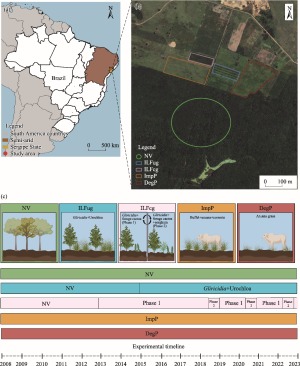
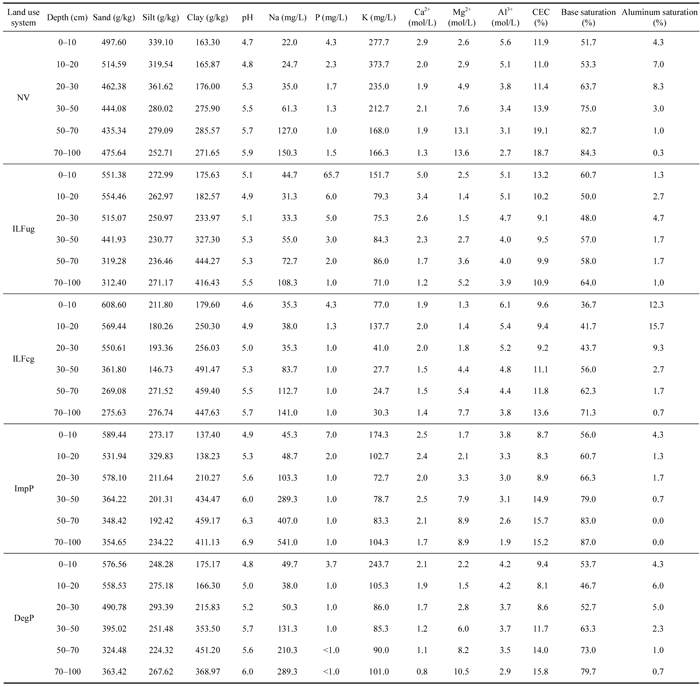
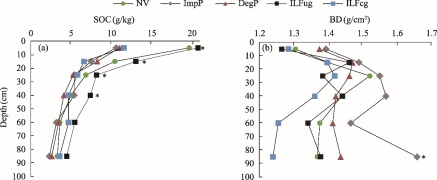
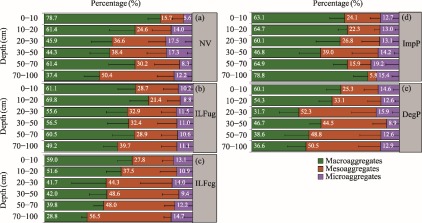
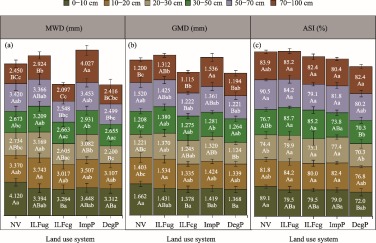
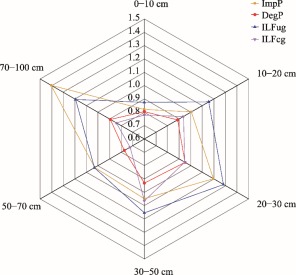
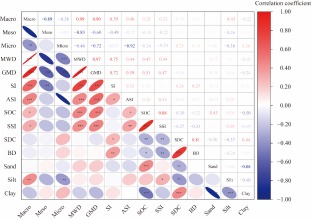
Abstract Soil aggregation is a fundamental process that influences various soil properties, including structure, porosity, water infiltration, and resistance to erosion. In the Caatinga biome, preserving the soil's physical quality is crucial to the development of sustainable agriculture. In this biome, soil aggregation is critical due to the susceptibility of the semi-arid area to erosion and degradation. This study aims to evaluate the impact of converting native vegetation (NV; dense Caatinga) into two grasslands and two integrated livestock-forestry (ILF) systems on soil organic carbon (SOC) content and soil physical quality through water-stable aggregate (WSA) classes (macroaggregates, mesoaggregates, and microaggregates) and aggregation indices (mean weight diameter (MWD), geometric mean diameter (GMD), and aggregate stability index (ASI)). Soil samples were collected at 0-10, 10-20, 20-30, 30-50, 50-70, and 70-100 cm layers in Nossa Senhora da Glória Municipality, Sergipe State, Brazil. The land use systems analyzed in this study included NV, an ILF system with Gliricidia (Gliricidia sepium (Jacq.) Kunth ex Walp.)+Urochloa (Urochloa decumbens (Stapf) R.D. Webster) under no-tillage (ILFug), another ILF system with Gliricidia+forage cactus (Opuntia cochenillifera (Linnaeus) Miller) under convention tillage (ILFcg), improved pasture (ImpP), and degraded pasture (DegP). Almost all parameters studied were significantly correlated with SOC content, demonstrating that soil organic matter (SOM) is a primary agent in binding soil particles together, influencing the variation in WSA and aggregation indices. The ImpP and DegP exhibited similar SOC content; however, the ImpP showed a higher ASI and increased amount of macroaggregates (particle diameter>2.000 mm). The highest SOC content was found in the ILFug system across the soil profile. There was a predominance of macroaggregates in topsoil (0-10 cm layer) regardless of land use, with the highest proportion found in NV (78.7%); while the lowest was observed in the ILFcg system (59.0%). The ILFug system also showed the greatest ASI at almost all soil layers; the exception was the 0-10 and 50-70 cm layers, where the NV had the highest values of 89.1% and 90.5%, respectively. This study demonstrates that implementing integrated systems under no-tillage as a nature-based solution can enhance SOC content and stability of soil aggregates in semi-arid environments.
|
|
Received: 15 July 2025
Published: 31 March 2026
|
|
Corresponding Authors:
*Handerson Brandão Melo de LIMA (E-mail: handerson.lima@ceca.ufal.br)
|
| Cite this article:
Handerson Brandão Melo de LIMA, Marcelo CAVALCANTE, Rafael Dantas dos SANTOS, Maurício Roberto CHERUBIN, Carlos Eduardo Pellegrino CERRI, Stoécio Malta Ferreira MAIA. Soil aggregate stability influenced by different integrated livestock-forest systems, pastures, and tillage in the Brazilian semi-arid areas. Journal of Arid Land, 2026, 18(3): 477-500.
URL:
http://jal.xjegi.com/10.1016/j.jaridl.2026.03.007 OR http://jal.xjegi.com/Y2026/V18/I3/477
|
|
|
| [1] |
Abiven S, Menasseri S, Chenu C. 2009. The effects of organic inputs over time on soil aggregate stability - A literature analysis. Soil Biology and Biochemistry, 41(1): 1-12.
doi: 10.1016/j.soilbio.2008.09.015
|
|
|
| [2] |
Alvares C A, Stape J L, Sentelhas P C, et al. 2013. Köppen's climate classification map for Brazil. Meteorologische Zeitschrift, 22(6): 711-728.
doi: 10.1127/0941-2948/2013/0507
|
|
|
| [3] |
Álvaro-Fuentes J, Arrúe J L, Gracia R, et al. 2007. Soil management effects on aggregate dynamics in semiarid Aragon (NE Spain). Science of The Total Environment, 378(1-2): 179-182.
doi: 10.1016/j.scitotenv.2007.01.046
|
|
|
| [4] |
Álvaro-Fuentes J, Arrúe J L, Gracia R, et al. 2008. Tillage and cropping intensification effects on soil aggregation: Temporal dynamics and controlling factors under semiarid conditions. Geoderma, 145(3-4): 390-396.
doi: 10.1016/j.geoderma.2008.04.005
|
|
|
| [5] |
Álvaro-Fuentes J, Cantero-Martínez C, López M V, et al. 2009. Soil aggregation and soil organic carbon stabilization: effects of management in semiarid Mediterranean agroecosystems. Soil Science Society of America Journal, 73(5): 1519-1529.
doi: 10.2136/sssaj2008.0333
|
|
|
| [6] |
Apolinário V X O, Dubeux J J C B, Lira M A, et al. 2015. Tree legumes provide marketable wood and add nitrogen in warm-climate silvopasture systems. Agronomy Journal, 107(5): 1915-1921.
doi: 10.2134/agronj14.0624
|
|
|
| [7] |
Assunção S A, Pereira M G, Rosset J S, et al. 2019. Carbon input and the structural quality of soil organic matter as a function of agricultural management in a tropical climate region of Brazil. Science of The Total Environment, 658: 901-911.
doi: 10.1016/j.scitotenv.2018.12.271
|
|
|
| [8] |
Bai T S, Wang P, Hall S J, et al. 2020. Interactive global change factors mitigate soil aggregation and carbon change in a semi-arid grassland. Global Change Biology, 26(9): 5320-5332.
doi: 10.1111/gcb.v26.9
|
|
|
| [9] |
Barros J D S, Chaves L H G, de Brito C I, et al. 2013. Carbon and nitrogen stocks under different soil management systems in the coastal tablelands of Paraíba, Brazil. Revista Caatinga, 26(1): 35-42. (in Portuguese)
|
|
|
| [10] |
Bieluczyk W, Souza P A S, Oliveira A S, et al. 2025. From overgrazed land to forests: assessing soil health in the Caatinga biome. Journal of Environmental Management, 374: 124022, doi: 10.1016/j.jenvman.2024.124022.
|
|
|
| [11] |
Bird S B, Herrick J E, Wander M M, et al. 2007. Multi-scale variability in soil aggregate stability: Implications for understanding and predicting semi-arid grassland degradation. Geoderma, 140(1-2): 106-118.
doi: 10.1016/j.geoderma.2007.03.010
|
|
|
| [12] |
Blair N. 2000. Impact of cultivation and sugar-cane green trash management on carbon fractions and aggregate stability for a Chromic Luvisol in Queensland, Australia. Soil and Tillage Research, 55(3-4): 183-191.
doi: 10.1016/S0167-1987(00)00113-6
|
|
|
| [13] |
Blanco-Canqui H, Lal R. 2004. Mechanisms of carbon sequestration in soil aggregates. Critical Reviews in Plant Sciences, 23(6): 481-504.
doi: 10.1080/07352680490886842
|
|
|
| [14] |
Blankinship J C, Fonte S J, Six J, et al. 2016. Plant versus microbial controls on soil aggregate stability in a seasonally dry ecosystem. Geoderma, 272: 39-50.
doi: 10.1016/j.geoderma.2016.03.008
|
|
|
| [15] |
Bolinder M A, Angers D A, Gregorich E G, et al. 1999. The response of soil quality indicators to conservation management. Canadian Journal of Soil Science, 79(1): 37-45.
doi: 10.4141/S97-099
|
|
|
| [16] |
Bronick C J, Lal R. 2005. Soil structure and management: a review. Geoderma, 124(1-2): 3-22.
doi: 10.1016/j.geoderma.2004.03.005
|
|
|
| [17] |
Castro Filho C, Lourenço A F, Guimarães M, et al. 2002. Aggregate stability under different soil management systems in a red latosol in the state of Parana, Brazil. Soil and Tillage Research, 65(1): 45-51.
doi: 10.1016/S0167-1987(01)00275-6
|
|
|
| [18] |
Cavalcante D M, Castro M F, Chaves M T L, et al. 2019. Effects of rehabilitation strategies on soil aggregation, C and N distribution and carbon management index in coffee cultivation in mined soil. Ecological Indicators, 107: 105668, doi: 10.1016/j.ecolind.2019.105668.
|
|
|
| [19] |
Centurion J F, Freddi O S, Aratani R G, et al. 2007. Influence of sugarcane cultivation and clay fraction mineralogy on the physical properties of red Oxisols. Revista Brasileira de Ciência do Solo, 31(2): 199-209. (in Portuguese)
doi: 10.1590/S0100-06832007000200002
|
|
|
| [20] |
Chenu C, Le Bissonnais Y, Arrouays D. 2000. Organic matter influence on clay wettability and soil aggregate stability. Soil Science Society of America Journal, 64(4): 1479-1486.
doi: 10.2136/sssaj2000.6441479x
|
|
|
| [21] |
Cherubin M R, Karlen D L, Franco A L C, et al. 2016. Soil physical quality response to sugarcane expansion in Brazil. Geoderma, 267: 156-168.
doi: 10.1016/j.geoderma.2016.01.004
|
|
|
| [22] |
Costa Junior C, Píccolo M C, Siqueira Neto M, et al. 2012. Carbon in soil aggregates under native vegetation, pasture, and agricultural systems in the Cerrado biome. Revista Brasileira de Ciência do Solo, 36(4): 1311-1322. (in Portuguese)
doi: 10.1590/S0100-06832012000400025
|
|
|
| [23] |
Costa O V, Cantarutti R B, Fontes L E F, et al. 2009. Soil carbon stocks under pasture in a coastal tableland area in southern Bahia, Brazil. Revista Brasileira de Ciência do Solo, 33(5): 1137-1145. (in Portuguese)
doi: 10.1590/S0100-06832009000500007
|
|
|
| [24] |
Cotrufo M F, Lavallee J M. 2022. Soil organic matter formation, persistence, and functioning: A synthesis of current understanding to inform its conservation and regeneration. Advances in Agronomy, 172: 1-66.
|
|
|
| [25] |
Cruz D L S. 2017. Influence of integrated production systems on the physical and chemical characteristics of an Ultisol. PhD Dissertation. Boa Vista: Universidade Federal de Roraima. (in Portuguese)
|
|
|
| [26] |
Don A, Schumacher J, Freibauer A. 2011. Impact of tropical land-use change on soil organic carbon stocks - a meta-analysis. Global Change Biology, 17(4): 1658-1670.
doi: 10.1111/gcb.2011.17.issue-4
|
|
|
| [27] |
dos Santos C C, Cavalcante M, Silva R G, et al. 2025. Enhancing soil quality in the Brazilian semi-arid through integrated livestock-forest systems: a multivariate analysis approach. Agroforestry Systems, 99(7): 201, doi: 10.1007/s10457-025-01302-9.
|
|
|
| [28] |
Eggleston H S, Buendia L, Miwa K, et al. 2006. Agriculture, forestry and other land use. In:2006 IPCC (Intergovernmental Panel on Climate Change) guidelines for national greenhouse gas inventories. IPCC. Kanagawa, Japan.
|
|
|
| [29] |
Fernández-Ugalde O, Virto I, Barré P, et al. 2011. Effect of carbonates on the hierarchical model of aggregation in calcareous semi-arid Mediterranean soils. Geoderma, 164(3-4): 203-214.
doi: 10.1016/j.geoderma.2011.06.008
|
|
|
| [30] |
Ferreira A O, Sá J C M, Lal R, et al. 2018. Macroaggregation and soil organic carbon restoration in a highly weathered Brazilian Oxisol after two decades under no-till. Science of the Total Environment, 621: 1559-1567.
doi: 10.1016/j.scitotenv.2017.10.072
|
|
|
| [31] |
Fonte S J, Nesper M, Hegglin D, et al. 2014. Pasture degradation impacts soil phosphorus storage via changes to aggregate-associated soil organic matter in highly weathered tropical soils. Soil Biology and Biochemistry, 68: 150-157.
doi: 10.1016/j.soilbio.2013.09.025
|
|
|
| [32] |
Freitas I C, Alves M A, Magalhães J R, et al. 2022. Soil carbon and nitrogen stocks under agrosilvopastoral systems with different arrangements in a transition area between Cerrado and Caatinga biomes in Brazil. Agronomy, 12(12): 2926, doi: 10.3390/agronomy12122926.
|
|
|
| [33] |
Gale W J, Cambardella C A, Bailey T B. 2000. Root-derived carbon and the formation and stabilization of aggregates. Soil Science Society of America Journal, 64(1): 201-207.
doi: 10.2136/sssaj2000.641201x
|
|
|
| [34] |
Garcia-Franco N, Martínez-Mena M, Goberna M, et al. 2015. Changes in soil aggregation and microbial community structure control carbon sequestration after afforestation of semiarid shrublands. Soil Biology and Biochemistry, 87: 110-121.
doi: 10.1016/j.soilbio.2015.04.012
|
|
|
| [35] |
Hajabbasi M A, Hemmat A. 2000. Tillage impacts on aggregate stability and crop productivity in a clay-loam soil in central Iran. Soil and Tillage Research, 56(3-4): 205-212.
doi: 10.1016/S0167-1987(00)00140-9
|
|
|
| [36] |
Hernanz J L, López R, Navarrete L, et al. 2002. Long-term effects of tillage systems and rotations on soil structural stability and organic carbon stratification in semiarid central Spain. Soil and Tillage Research, 66(2): 129-141.
doi: 10.1016/S0167-1987(02)00021-1
|
|
|
| [37] |
Jastrow J D, Miller R M. 2018. Soil aggregate stabilization and carbon sequestration:feedbacks through organomineral associations. In: LalR, JohnM K, RonaldF, et al.Soil Processes and the Carbon Cycle (1st ed.). Boca Raton: CRC Press, 207-223.
|
|
|
| [38] |
Junior M A L, Fracetto F J C, Ferreira J S, et al. 2020. Legume-based silvopastoral systems drive C and N soil stocks in a subhumid tropical environment. CATENA, 189: 104508, doi: 10.1016/j.catena.2020.104508.
|
|
|
| [39] |
Kabiri V, Raiesi F, Ghazavi M A. 2015. Six years of different tillage systems affected aggregate-associated SOM in a semi-arid loam soil from central Iran. Soil and Tillage Research, 154: 114-125.
doi: 10.1016/j.still.2015.06.019
|
|
|
| [40] |
Lal R. 2003. Global potential of soil carbon sequestration to mitigate the greenhouse effect. Critical Reviews in Plant Sciences, 22(2): 151-184.
doi: 10.1080/713610854
|
|
|
| [41] |
Lima A Y V, Cherubin M R, Silva D F, et al. 2025. Grazing exclusion restores soil health in Brazilian drylands under desertification process. Applied Soil Ecology, 193: 105107, doi: 10.1016/j.apsoil.2023.105107.
|
|
|
| [42] |
Lima D T, Paula A D M, Lemes E M, et al. 2017. Organic carbon and carbon stock: relations with physical indicators and soil aggregation in areas cultivated with sugar cane. Tropical and Subtropical Agroecosystems, 20(2): 341-352.
|
|
|
| [43] |
Luna D V, Lara-Rodríguez D A, Jarquín Sánchez A, et al. 2019. Tropical legumes as improvers of rangeland and agricultural soils. Tropical and Subtropical Agroecosystems, 22(1): 203-211.
|
|
|
| [44] |
Madejón E, Murillo J M, Moreno F, et al. 2009. Effect of long-term conservation tillage on soil biochemical properties in Mediterranean Spanish areas. Soil and Tillage Research, 105(1): 55-62.
doi: 10.1016/j.still.2009.05.007
|
|
|
| [45] |
Maia S M F, Xavier F A S, Oliveira T S, et al. 2007. Organic carbon pools in a Luvisol under agroforestry and conventional farming systems in the semi-arid region of Ceará, Brazil. Agroforestry Systems, 71: 127-138.
doi: 10.1007/s10457-007-9063-8
|
|
|
| [46] |
Marcolin C D, Klein V A. 2011. Determination of soil relative density using a pedotransfer function for maximum soil bulk density. Acta Scientiarum Agronomy, 33(2): 349-354. (in Portuguese)
|
|
|
| [47] |
Medeiros A S, Silva T S, Silva A V L, et al. 2018. Organic carbon, nitrogen and the stability of soil aggregates in areas converted from sugar cane to eucalyptus in the State of Alagoas. Revista Árvore, 42(4): 420404, doi: 10.1590/1806-90882018000400004.
|
|
|
| [48] |
Medeiros A S, Maia S F M, dos Santos T C, et al. 2020. Soil carbon losses in conventional farming systems due to land-use change in the Brazilian semi-arid region. Agriculture, Ecosystems and Environment, 287: 106690, doi: 10.1016/j.agee.2019.106690.
|
|
|
| [49] |
Medeiros A S, Maia S M F, Santos T C, et al. 2021. Losses and gains of soil organic carbon in grasslands in the Brazilian semi-arid region. Scientia Agricola, 78(3): 20190076, doi: 10.1590/1678-992X-2019-0076.
|
|
|
| [50] |
Medeiros A S, Gonzaga G B M, da Silva T S, et al. 2023. Changes in soil organic carbon and soil aggregation due to deforestation for smallholder management in the Brazilian semi-arid region. Geoderma Regional, 33: e00647, doi: 10.1016/j.geodrs.2023.e00647.
|
|
|
| [51] |
Medeiros A D S, Soares A A S, MAIA S M F. 2022. Soil carbon stocks and compartments of organic matter under conventional systems in Brazilian semi-arid region. Revista Caatinga, 35(3): 697-710.
doi: 10.1590/1983-21252022v35n321rc
|
|
|
| [52] |
Neto J F, Franzluebbers A J, Crusciol C A C, et al. 2021. Soil carbon and nitrogen fractions and physical attributes affected by soil acidity amendments under no-till on Oxisol in Brazil. Geoderma Regional, 24: e00347, doi: 10.1016/j.geodrs.2020.e00347.
|
|
|
| [53] |
Okolo C C, Gebresamuel G, Zenebe A, et al. 2020. Accumulation of organic carbon in various soil aggregate sizes under different land use systems in a semi-arid environment. Agriculture, Ecosystems & Environment, 297: 106924, doi: 10.1016/j.agee.2020.106924.
|
|
|
| [54] |
Pieri C J M G. 1992. Fertility of Soils:a Future for Farming in the West African Savannah. Berlim: Springer Science & Business Media, 149-152.
|
|
|
| [55] |
Plaza-Bonilla D, Cantero-Martínez C, Viñas P, et al. 2013. Soil aggregation and organic carbon protection in a no-tillage chronosequence under Mediterranean conditions. Geoderma, 193-194: 76-82.
doi: 10.1016/j.geoderma.2012.10.022
|
|
|
| [56] |
Ponyane P, Ebouel F J D, Eze P N. 2025. Formation pathways, ecosystem functions, and the impacts of land use and environmental stressors on soil aggregates. Frontiers in Soil Science, 2: 1629431, doi: 10.3389/fenvs.2025.1628746.
|
|
|
| [57] |
Reichert J M, Suzuki L E A S, Reinert D J, et al. 2009. Reference bulk density and critical degree-of-compactness for no-till crop production in subtropical highly weathered soils. Soil and Tillage Research, 102(2): 242-254.
doi: 10.1016/j.still.2008.07.002
|
|
|
| [58] |
Reynolds W D, Drury C F, Tan C S, et al. 2009. Use of indicators and pore volume-function characteristics to quantify soil physical quality. Geoderma, 152(3-4): 252-263.
doi: 10.1016/j.geoderma.2009.06.009
|
|
|
| [59] |
Rigon J P G, Calonego J C. 2020. Soil carbon fluxes and balances of crop rotations under long-term no-till. Carbon Balance and Management, 15: 19, doi: 10.1186/s13021-020-00154-3.
pmid: 32936356
|
|
|
| [60] |
Sá J C M, Lal R, Lorenz K, et al. 2025. No-till systems restore soil organic carbon stock in Brazilian biomes and contribute to the climate solution. Science of The Total Environment, 977: 1793770, doi: 10.1016/j.scitotenv.2025.179370.
|
|
|
| [61] |
Santana M S, Sampaio E V S B, Giongo V, et al. 2019. Carbon and nitrogen stocks of soils under different land uses in Pernambuco State, Brazil. Geoderma Regional, 16: e00205, doi: 10.1016/j.geodrs.2019.e00205.
|
|
|
| [62] |
Santos H G, Jacomine P K T, Anjos L H C, et al. 2025. Brazilian Soil Classification System. Brasilia, D.F.: Embrapa, 327-382. (in Portuguese)
|
|
|
| [63] |
Six J, Elliott E T, Paustian K. 2000. Soil macroaggregate turnover and microaggregate formation: A mechanism for C sequestration under no-tillage agriculture. Soil Biology and Biochemistry, 32(14): 2099-2103.
doi: 10.1016/S0038-0717(00)00179-6
|
|
|
| [64] |
Teixeira P C, Donagemma G K, Fontana A, et al. 2017. Manual of Soil Analysis Methods. Brasília D.F.: Embrapa, 184-196. (in Portuguese)
|
|
|
| [65] |
Thapa V R, Ghimire R, Mikha M M, et al. 2018. Land use effects on soil health in semiarid drylands. Agricultural & Environmental Letters, 3(1): 180022, doi: 10.2134/ael2018.05.0022.
|
|
|
| [66] |
Thiengo C C, Souza G S, Algarin C A V, et al. 2024. Effects of soil tillage practices on soil conservation in pasture-based integrated management systems: a case study on steep slopes in southeastern Brazil. Discover Soil, 1(1): 26, doi: 10.1007/s44378-024-00026-z.
|
|
|
| [67] |
Tivet F, Sá M J C, Lal R, et al. 2013. Aggregate C depletion by plowing and its restoration by diverse biomass-C inputs under no-till in sub-tropical and tropical regions of Brazil. Soil and Tillage Research, 126: 203-218.
doi: 10.1016/j.still.2012.09.004
|
|
|
| [68] |
Tonucci R G, Vogado R F, Silva R D, et al. 2023. Agroforestry system improves soil carbon and nitrogen stocks in depth after land-use changes in the Brazilian semi-arid region. Revista Brasileira de Ciência do Solo, 47: 0220124, doi: 10.36783/18069657rbcs20220124.
|
|
|
| [69] |
Valbrun W, Andrade E M, Almeida A M M, et al. 2018. Carbon and nitrogen stock under different types of land use in a seasonally dry tropical forest. Journal of Agricultural Science, 10(12): 479-492.
|
|
|
| [70] |
Wiesmeier M, Steffens M, Mueller C W, et al. 2012. Aggregate stability and physical protection of soil organic carbon in semi-arid steppe soils. European Journal of Soil Science, 63(1): 22-31.
doi: 10.1111/ejs.2012.63.issue-1
|
|
|
| [71] |
Wiesmeier M, Munro S, Barthold F, et al. 2015. Carbon storage capacity of semi-arid grassland soils and sequestration potentials in northern China. Global Change Biology, 21(10): 3836-3845.
doi: 10.1111/gcb.12957
pmid: 25916410
|
|
|
| [72] |
Wiesmeier M, Urbanski L, Hobley E, et al. 2019. Soil organic carbon storage as a key function of soils - A review of drivers and indicators at various scales. Geoderma, 333: 149-162.
doi: 10.1016/j.geoderma.2018.07.026
|
|
|
| [73] |
Xie Y Z, Wittig R. 2004. The impact of grazing intensity on soil characteristics of Stipa grandis and Stipa bungeana steppe in northern China (autonomous region of Ningxia). Acta Oecologica, 25(3): 197-204.
doi: 10.1016/j.actao.2004.01.004
|
|
|
|
Viewed |
|
|
|
Full text
|
|
|
|
|
Abstract
|
|
|
|
|
Cited |
|
|
|
|
| |
Shared |
|
|
|
|
| |
Discussed |
|
|
|
|