| Research article |
|


|
|
|
| Grassland biomass production and plant species diversity in response to nitrogen and phosphorus addition in central and southwestern Tajikistan |
Mekhrovar OKHONNIYOZOV1,2,3,4, FAN Lianlian1,*( ), MA Xuexi1, Sino YUSUPOV4, Hikmat HISORIEV1,4, Abdullo MADAMINOV4, Fakher ABBAS1, TAO Ye1, LI Yaoming1,2,3 ), MA Xuexi1, Sino YUSUPOV4, Hikmat HISORIEV1,4, Abdullo MADAMINOV4, Fakher ABBAS1, TAO Ye1, LI Yaoming1,2,3 |
1 China-Tajikistan Belt and Road Joint Laboratory on Biodiversity Conservation and Sustainable Use, Xinjiang Institute of Ecology Geography, Chinese Academy of Sciences, Urumqi, 830011, China
2 Research Center for Ecology and Environment of Central Asia, Dushanbe 734063, Tajikistan
3 University of Chinese Academy of Sciences, Beijing 100049, China
4 Institute of Botany, Plant Physiology and Genetics, National Academy of Science of Tajikistan, Dushanbe 734017, Tajikistan |
|
|
|
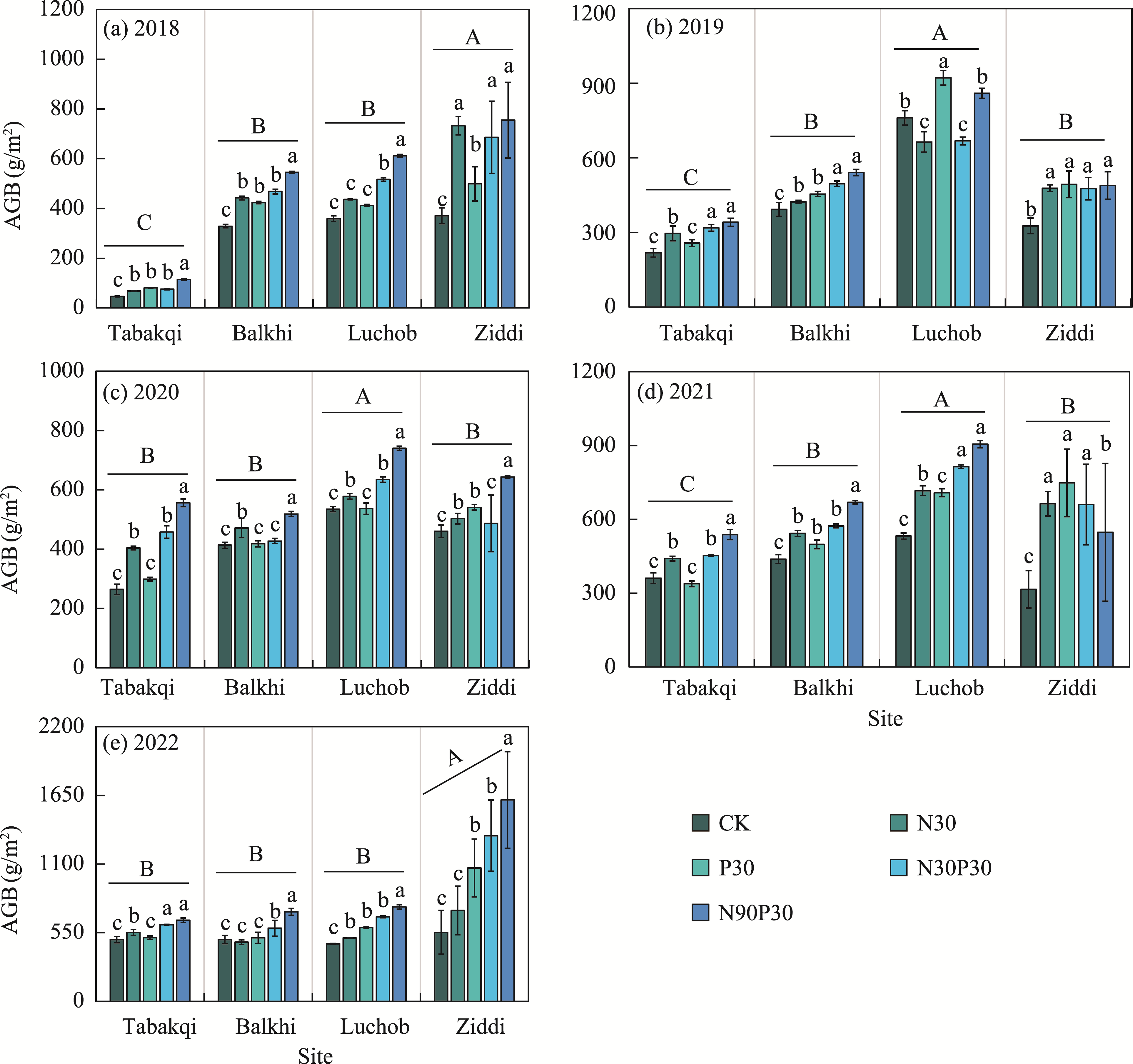
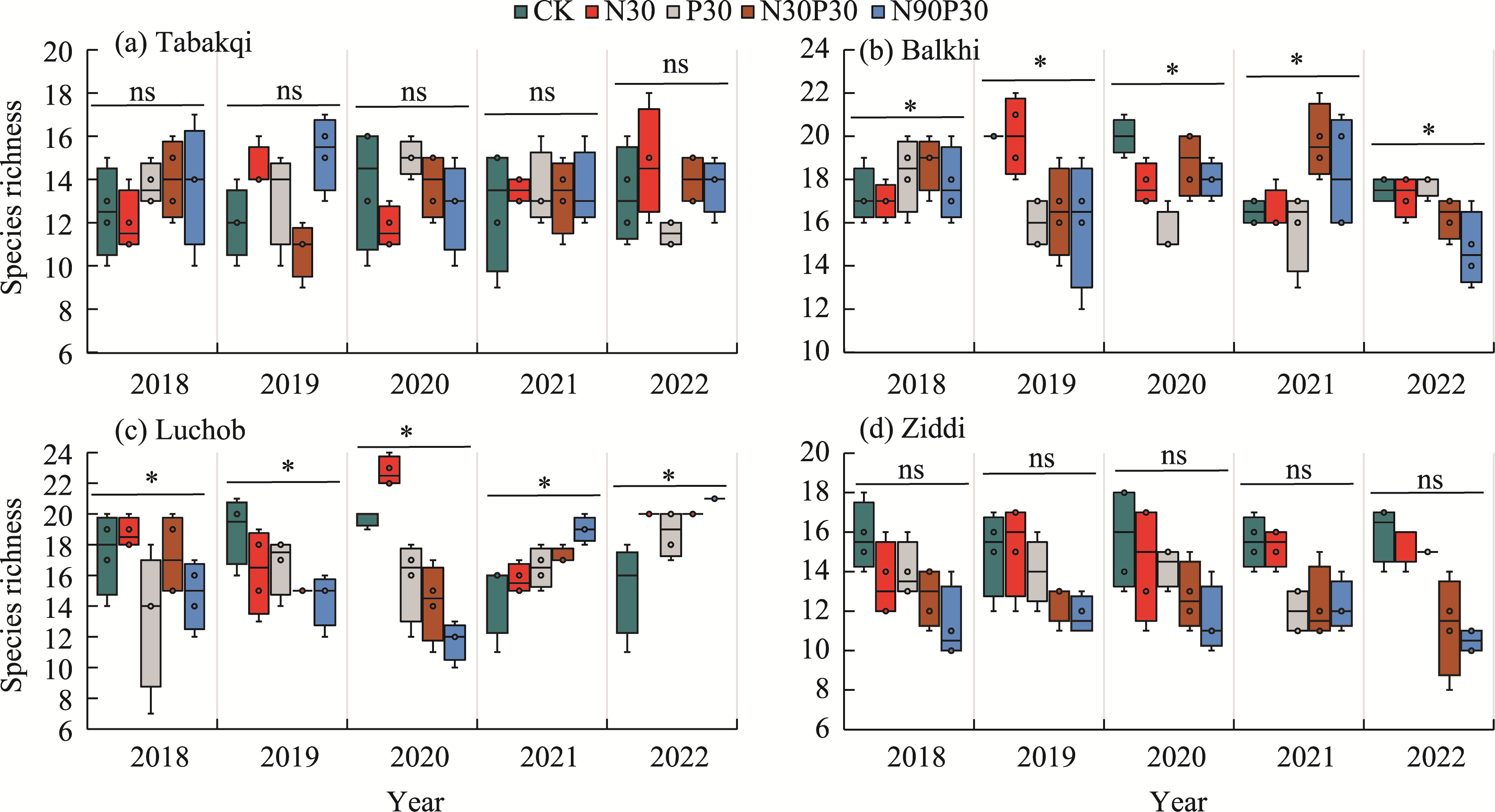
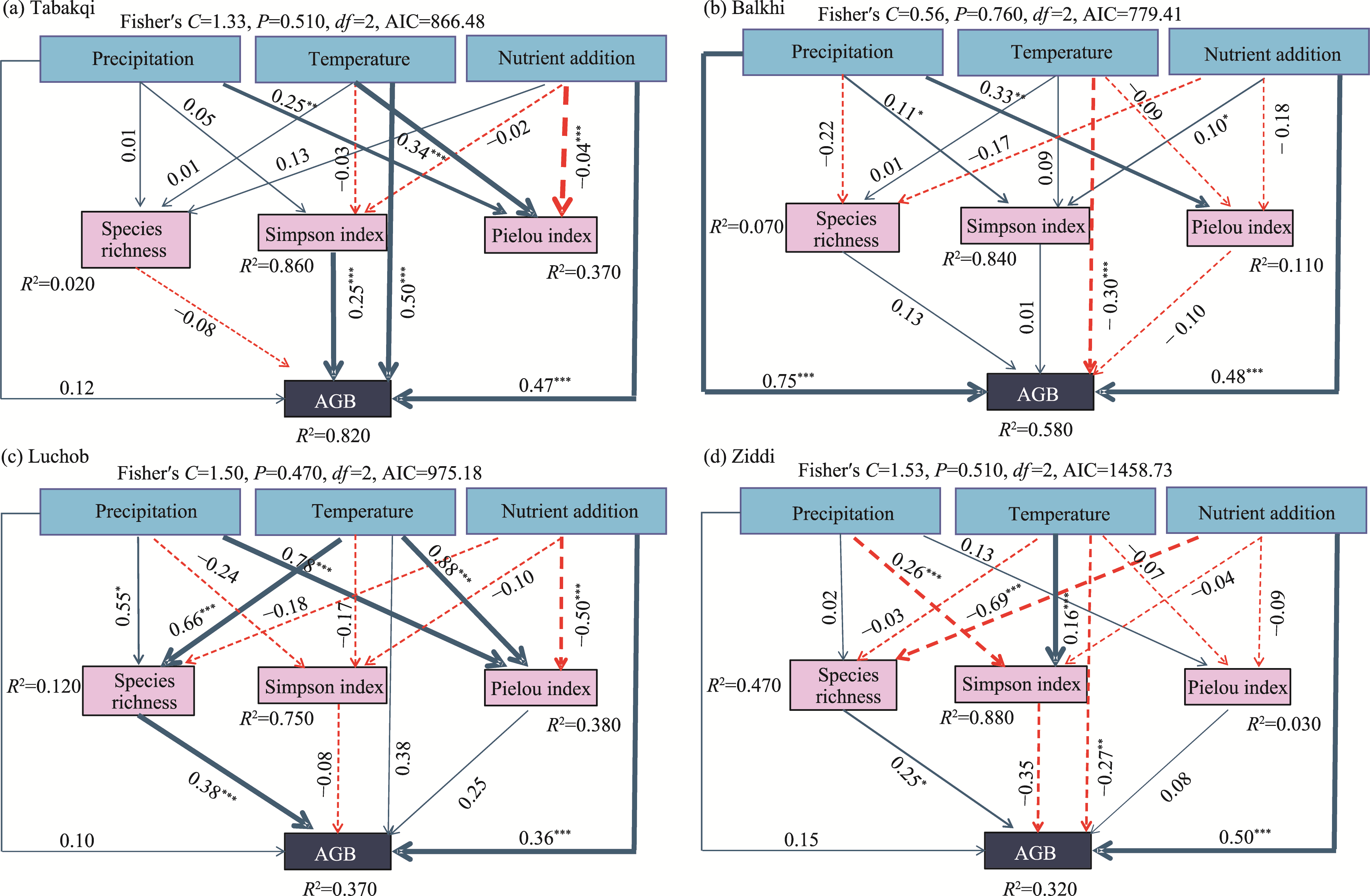
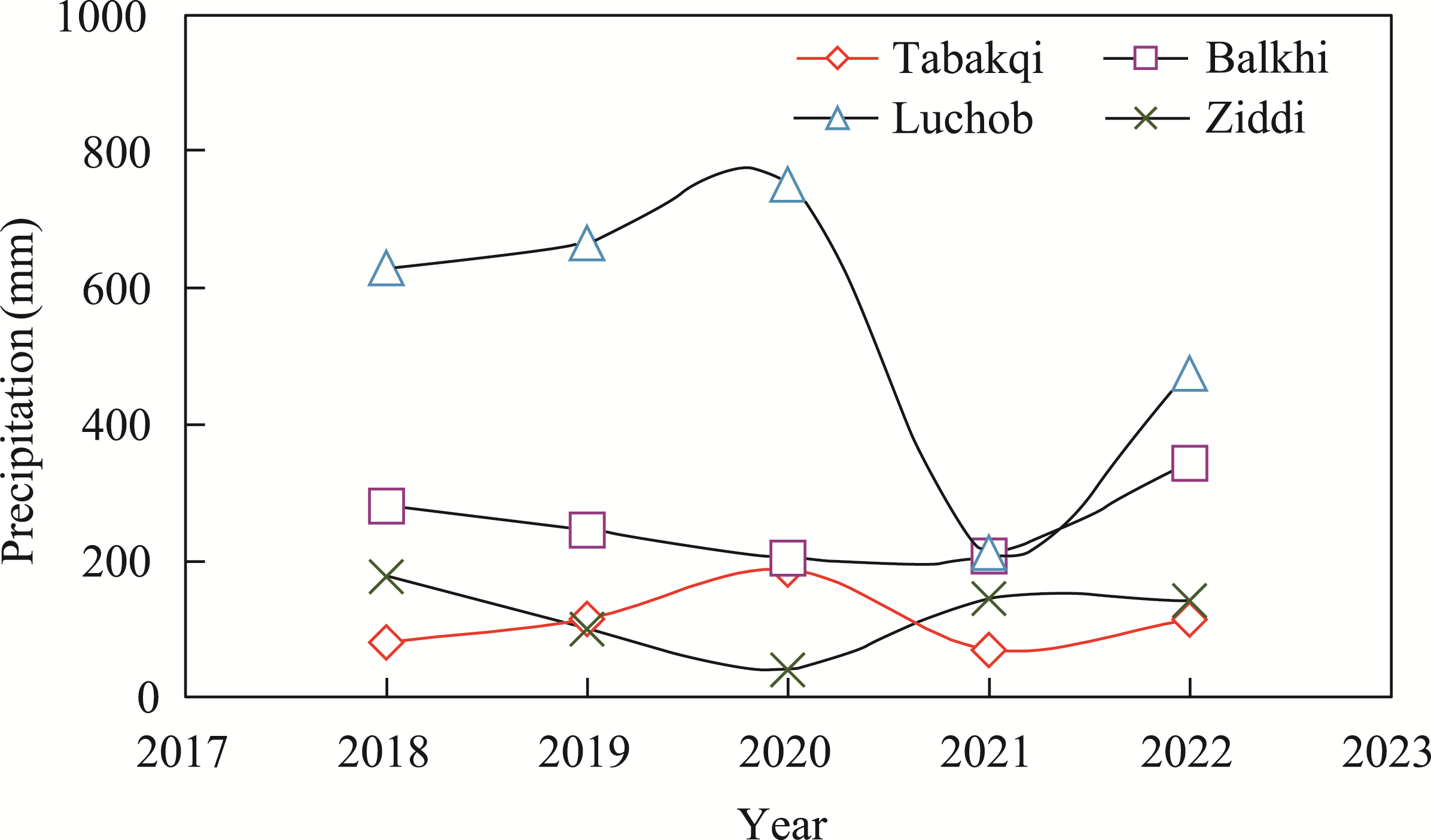
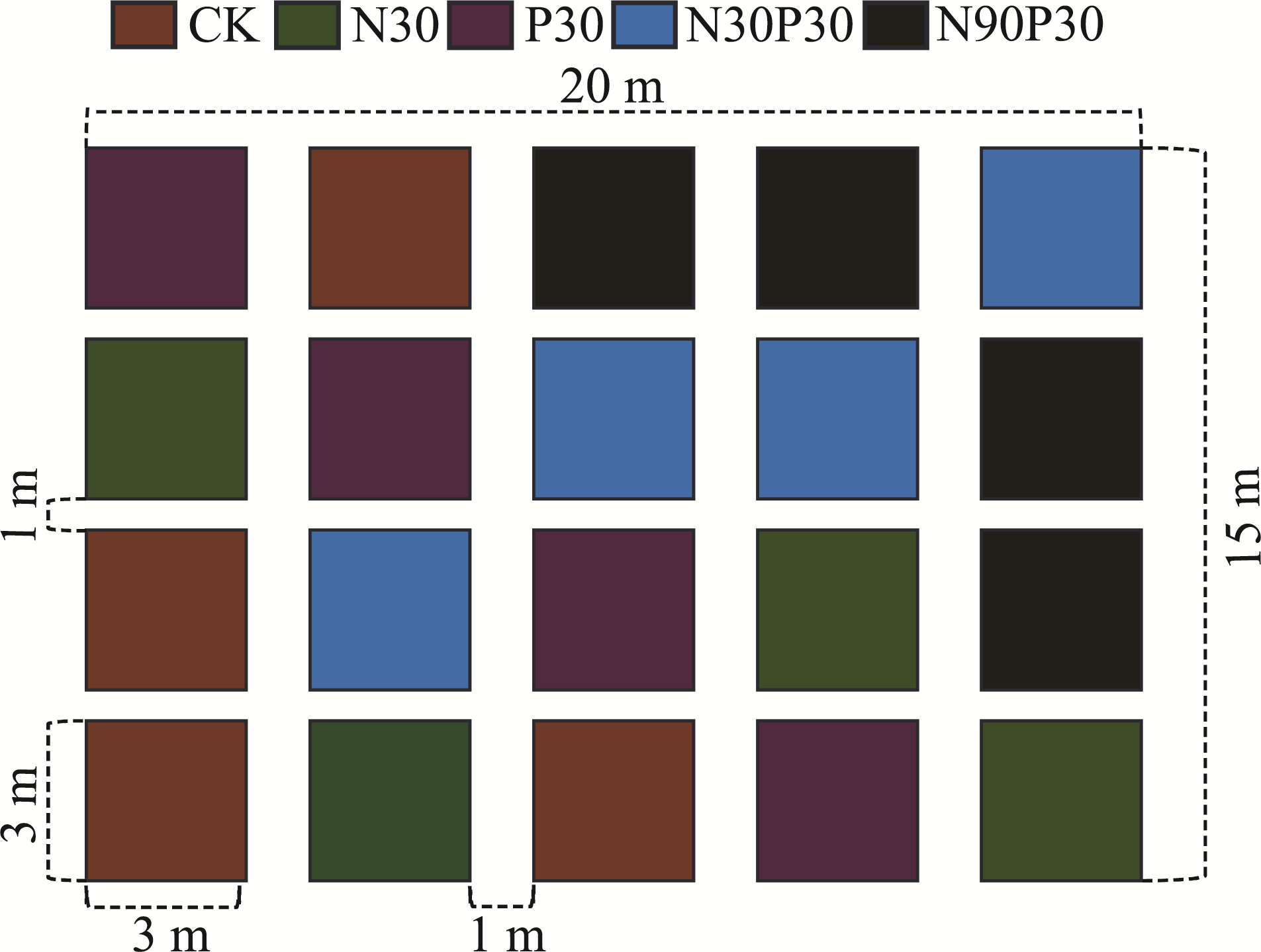
Abstract Nitrogen (N) and phosphorus (P) are essential nutrients regulating plant growth, yet their long-term impacts on grassland ecosystems in Tajikistan remain poorly understood. This study conducted a five-year (2018-2022) field experiment across four grassland sites (Tabakqi, Balkhi, Luchob, and Ziddi) along an elevation gradient in central and southwestern Tajikistan to explore the effects of varying N (0, 30, and 90 kg N/(hm2∙a)) and P (0 and 30 kg P/(hm2∙a)) additions on aboveground biomass (AGB) and plant species diversity. Nutrient addition significantly increased AGB across all sites. Compared with the control (without N or P addition), AGB increased by 20%-80% under moderate N treatment (adding 30 kg N/(hm2∙a)) and by up to 190%-200% under high N and P addition treatment (adding 90 kg N/(hm2∙a) and 30 kg P/(hm2∙a)). In 2022, AGB at the low-elevation site (Tabakqi) increased from 494 g/m2 under the control to 650 g/m2 under high N and P treatment, while at the high-elevation site (Ziddi), it rose from 552 to 1614 g/m2. In contrast, biodiversity responses were elevation-dependent: species richness declined at mid-elevation grassland sites (Balkhi and Luchob) but showed little change at low-elevation (Tabakqi) and high-elevation (Ziddi) sites. Shannon-Wiener index, Simpson's dominance index, and Pielou's equitability index also varied, reflecting complex interactions among nutrient addition, precipitation, and temperature. The structural equation model (SEM) confirmed that nutrient addition directly enhance AGB but generally suppress plant species diversity, while precipitation promotes AGB, and temperature effects are inconsistent across sites. Overall, our findings demonstrate that nutrient enrichment can increase productivity but reduce biodiversity, with responses strongly mediated by elevation and climate. These results provide the first long-term experimental evidence from Tajikistan's grasslands and underscore the need to balance productivity gains with biodiversity conservation in sustainable grassland management.
|
|
Received: 11 March 2025
Published: 31 May 2026
|
|
Corresponding Authors:
*FAN Lianlian (E-mail: flianlian@ms.xjb.ac.cn)
|
| About author: Author contributions
Conceptualization: LI Yaoming, FAN Lianlian; Data curation: Mekhrovar OKHONNIYOZOV, Sino YUSUPOV, MA Xuexi; Formal analysis: Mekhrovar OKHONNIYOZOV, FAN Lianlian; Funding acquisition: LI Yaoming, FAN Lianlian; Methodology: Hikmat HISORIEV, Abdullo MADAMINOV; Resources: Mekhrovar OKHONNIYOZOV, LI Yaoming, FAN Lianlian; Software: Mekhrovar OKHONNIYOZOV, FAN Lianlian, Fakher ABBAS; Validation: LI Yaoming, TAO Ye, Abdullo MADAMINOV; Visualization: Mekhrovar OKHONNIYOZOV; Writing - original draft: Mekhrovar OKHONNIYOZOV, FAN Lianlian; Writing - review and editing: Mekhrovar OKHONNIYOZOV, FAN Lianlian, LI Yaoming. All authors approved the manuscript.
|
| Cite this article:
Mekhrovar OKHONNIYOZOV, FAN Lianlian, MA Xuexi, Sino YUSUPOV, Hikmat HISORIEV, Abdullo MADAMINOV, Fakher ABBAS, TAO Ye, LI Yaoming. Grassland biomass production and plant species diversity in response to nitrogen and phosphorus addition in central and southwestern Tajikistan. Journal of Arid Land, 2026, 18(5): 868-885.
URL:
http://jal.xjegi.com/10.1016/j.jaridl.2026.05.008 OR http://jal.xjegi.com/Y2026/V18/I5/868
|
|
|
| [1] |
Avolio M L, Koerner S E, La Pierre K J, et al. 2014. Changes in plant community composition, not diversity, during a decade of nitrogen and phosphorus additions drive above-ground productivity in a tallgrass prairie. Journal of Ecology, 102(6): 1649-1660.
doi: 10.1111/jec.2014.102.issue-6
|
|
|
| [2] |
Batsaikhan U, Dabrowski M. 2017. Central Asia—twenty-five years after the breakup of the USSR. Russian Journal of Economics, 3(3): 296-320.
doi: 10.1016/j.ruje.2017.09.005
|
|
|
| [3] |
Bobbink R, Hicks K, Galloway J, et al. 2010. Global assessment of nitrogen deposition effects on terrestrial plant diversity: a synthesis. Ecological Applications, 20(1): 30-59.
pmid: 20349829
|
|
|
| [4] |
Ceulemans T, Merckx R, Hens M, et al. 2013. Plant species loss from European semi-natural grasslands following nutrient enrichment—is it nitrogen or is it phosphorus? Global Ecology and Biogeography, 22(1): 73-82.
doi: 10.1111/geb.2013.22.issue-1
|
|
|
| [5] |
Chen Z F, Xiong P F, Zhou J J, et al. 2020. Grassland productivity and diversity changes in responses to N and P addition depend primarily on tall clonal and annual species in semiarid Loess Plateau. Ecological Engineering, 145: 105727, doi: 10.1016/j.ecoleng.2020.105727.
|
|
|
| [6] |
Cheng Z, Zhao J X, Sun J, et al. 2022. Determining the role of richness and evenness in alpine grassland productivity across climatic and edaphic gradients. Oecologia, 200(3): 491-502.
doi: 10.1007/s00442-022-05279-5
|
|
|
| [7] |
Chiarucci A, Maccherini S. 2007. Long-term effects of climate and phosphorus fertilisation on serpentine vegetation. Plant and Soil, 293(1-2): 133-144.
doi: 10.1007/s11104-007-9216-6
|
|
|
| [8] |
Clark C M, Bell M D, Boyd J W, et al. 2017. Nitrogen-induced terrestrial eutrophication: cascading effects and impacts on ecosystem services. Ecosphere, 8(7): e01877, doi: 10.1002/ecs2.1877.
|
|
|
| [9] |
De Beurs K M, Henebry G M, Owsley B C, et al. 2018. Large scale climate oscillation impacts on temperature, precipitation and land surface phenology in Central Asia. Environmental Research Letters, 13(6): 065018, doi: 10.1088/1748-9326/aac4d0.
|
|
|
| [10] |
Du E, De Vries W, Collalti A, et al. 2025. Climate warming alters nutrient cycling and its constraint on CO2 fertilization in Global Forests. Current Climate Change Reports, 11(1): 3, doi: 10.1007/s40641-025-00201-6.
|
|
|
| [11] |
Fan L L, Mekrovar O, Li Y M, et al. 2021. Effect of nutrient addition on the productivity and species richness of grassland along with an elevational gradient in Tajikistan. Frontiers in Plant Science, 12: 765077, doi: 10.3389/fpls.2021.765077.
|
|
|
| [12] |
Fay P A, Carlisle J D, Knapp A K, et al. 2003. Productivity responses to altered rainfall patterns in a C4-dominated grassland. Oecologia, 137: 245-251.
pmid: 12845518
|
|
|
| [13] |
Fay P A, Prober S M, Harpole W S, et al. 2015. Grassland productivity limited by multiple nutrients. Nature Plants, 1(7): 15080, doi: 10.1038/nplants.2015.80.
|
|
|
| [14] |
Fayiah M, Dong S K, Li Y, et al. 2019. The relationships between plant diversity, plant cover, plant biomass and soil fertility vary with grassland type on Qinghai-Tibetan Plateau. Agriculture, Ecosystems and Environment, 286: 106659, doi: 10.1016/j.agee.2019.106659.
|
|
|
| [15] |
Gao L M, Su J, Chen C, et al. 2021. Increases in forage legume biomass as a response to nitrogen input depend on temperature, soil characters and planting system: a meta-analysis. Grass and Forage Science, 76(2): 309-319.
doi: 10.1111/gfs.v76.2
|
|
|
| [16] |
Geng Y X, Hisoriev H, Wang G Y, et al. 2025. Time-lag of seasonal effects of extreme climate events on grassland productivity across an altitudinal gradient in Tajikistan. Plants, 14(8): 1266, doi: 10.3390/plants14081266.
|
|
|
| [17] |
Guo N, Xie M Y, Fang Z, et al. 2022. Divergent responses of plant biomass and diversity to short-term nitrogen and phosphorus addition in three types of steppe in Inner Mongolia, China. Ecological Processes, 11(1): 32, doi: 10.1186/s13717-022-00376-y.
|
|
|
| [18] |
Han Q F, Luo G P, Li C F, et al. 2016. Simulated grazing effects on carbon emission in Central Asia. Agricultural and Forest Meteorology, 216: 203-214.
doi: 10.1016/j.agrformet.2015.10.007
|
|
|
| [19] |
Han X, Ochoa-Hueso R, Ding Y, et al. 2023. Grazing intensity by sheep affects spatial diversity in botanical composition of Inner Mongolian grassland. Agriculture, Ecosystems and Environment, 378: 109311, doi: 10.1016/j.agee.2023.109311.
|
|
|
| [20] |
Harpole W S, Sullivan L L, Lind E M, et al. 2016. Addition of multiple limiting resources reduces grassland diversity. Nature, 537(7618): 93-96.
doi: 10.1038/nature19324
|
|
|
| [21] |
Isbell F, Reich P B, Tilman D, et al. 2013. Nutrient enrichment, biodiversity loss, and consequent declines in ecosystem productivity. Proceedings of the National Academy of Sciences, 110(29): 11911-11916.
|
|
|
| [22] |
Kitikidou K, Milios E, Stampoulidis A, et al. 2024. Using biodiversity indices effectively: considerations for forest management. Ecologies, 5(1): 42-51.
doi: 10.3390/ecologies5010003
|
|
|
| [23] |
Koerner S E, Smith M D, Burkepile D E, et al. 2018. Change in dominance determines herbivore effects on plant biodiversity. Nature Ecology and Evolution, 2(12): 1925-1932.
doi: 10.1038/s41559-018-0696-y
|
|
|
| [24] |
Körner C. 2007. Climatic treelines: conventions, global patterns, causes. Erdkunde, 61(4): 316-324.
doi: 10.3112/erdkunde
|
|
|
| [25] |
Kupari S. 2024. Impacts of fertilization on forest ecosystem services and biodiversity. MSc Thesis. Jyväskylä: University of Jyväskylä.
|
|
|
| [26] |
Li W, Cao W X, Wang J L, et al. 2017. Effects of grazing regime on vegetation structure, productivity, soil quality, carbon and nitrogen storage of alpine meadow on the Qinghai-Tibetan Plateau. Ecological Engineering, 98: 123-133.
doi: 10.1016/j.ecoleng.2016.10.026
|
|
|
| [27] |
Liu Y Z, Zhang M L, Zhao Y Y, et al. 2025. Effect of environmental factors on grassland biodiversity and biomass in the Zhangye Region. Agronomy, 15(2): 476, doi: 10.3390/agronomy15020476.
|
|
|
| [28] |
Ma F F, Song B, Quan Q, et al. 2020. Light competition and biodiversity loss cause saturation response of aboveground net primary productivity to nitrogen enrichment. Journal of Geophysical Research: Biogeosciences, 125(3): e2019JG005556, doi: 10.1029/2019JG005556.
|
|
|
| [29] |
Madaminov A A. 2000. Changing structures and productivity of different types of grassland under anthropogenic influence in Tajikistan. EuroMAB-Symposium: Changing Agriculture and Landscape: Ecology, Management and Biodiversity Decline in Anthropogenous Mountain Grassland. Vienna: Austrian Academy of Science.
|
|
|
| [30] |
Madaminov A A, Saidov M, Yusupov S Y. 2012. Influence of climate and anthropogenic factors on pasture productivity in Tajikistan. In:Ecological Problems and Rational Use of Natural Resources. Proceedings of the Republican Scientific Conference. Dushanbe: Tajik National University, 195-199. (in Russian)
|
|
|
| [31] |
Malghani S, Yoo G Y, Giesemann A, et al. 2020. Combined application of organic manure with urea does not alter the dominant biochemical pathway producing N2O from urea treated soil. Biology and Fertility of Soils, 56: 331-343.
doi: 10.1007/s00374-019-01420-4
|
|
|
| [32] |
Margalef R. 1958. Information theory in ecology. General Systems, 3: 36-71.
|
|
|
| [33] |
Mekhrovar O, Li Y M, Abdullo M, et al. 2024. Nutrient addition alters plant community productivity but not the species diversity of a mountain meadow in Tajikistan. Frontiers in Plant Science, 14: 1235388, doi: 10.3389/fpls.2023.1235388.
|
|
|
| [34] |
Miao Z G, Chen J, Wang C L, et al. 2025. Global dynamics of grassland FVC and LST and spatial distribution of their correlation (2001-2022). Plants, 14(3): 439, doi: 10.3390/plants14030439.
|
|
|
| [35] |
Midolo G, Alkemade R, Schipper A M, et al. 2019. Impacts of nitrogen addition on plant species richness and abundance: A global meta-analysis. Global Ecology and Biogeography, 28(3): 398-413.
doi: 10.1111/geb.v28.3
|
|
|
| [36] |
Muminjanov H. 2008. State of plant genetic resources for food and agriculture (PGRFA) in the Republic of Tajikistan. Country Report, 55. [2025-02-10]. http://www.fao.org/pgrfa-gpa-archive/tjk/Tajikistan2.pdf.(inRussian)
|
|
|
| [37] |
Niu D C, Yuan X B, Cease A J, et al. 2018. The impact of nitrogen enrichment on grassland ecosystem stability depends on nitrogen addition level. Science of The Total Environment, 618: 1529-1538.
doi: 10.1016/j.scitotenv.2017.09.318
|
|
|
| [38] |
Olde Venterink H. 2011. Does phosphorus limitation promote species-rich plant communities? Plant and Soil, 345: 1-9.
doi: 10.1007/s11104-011-0796-9
|
|
|
| [39] |
Ovchinnikov P N, Sidorenko G T. 1977. Pastures and Hayfields of Tajikistan. Dushanbe: Donish. (in Russian)
|
|
|
| [40] |
Palpurina S, Chytrý M, Hölzel N, et al. 2018. The type of nutrient limitation affects the plant species richness-productivity relationship: Evidence from dry grasslands across Eurasia. Journal of Ecology, 106(2): 692-703.
|
|
|
| [41] |
Safarov N. 2003. National strategy and action plan on preservation and rational use of Biodiversity. National Center for Biodiversity and Biosafety of the Republic of Tajikistan. Dushanbe, Tajikistan. (in Russian)
|
|
|
| [42] |
Seabloom E W, Borer E T, Buckley Y M, et al. 2015. Plant species' origin predicts dominance and response to nutrient enrichment and herbivores in global grasslands. Nature Communications, 6: 7710, doi: 10.1038/ncomms8710.
pmid: 26173623
|
|
|
| [43] |
Seabloom E W, Adler P B, Alberti J, et al. 2021. Increasing effects of chronic nutrient enrichment on plant diversity loss and ecosystem productivity over time. Ecology, 102(2): e03218, doi: 10.1002/ecy.3218.
|
|
|
| [44] |
Simpson E H. 1949. Measurement of diversity. Nature, 163(4148): 688, doi: 10.1038/163688a0.
|
|
|
| [45] |
Sinkovsky L P, Madaminov A A. 1989. The Pastures of Low-grass Semi-savannahs of Central Asia (The Biological and Ecological Bases of Their Use and Improvement). Dushanbe: Donish. (in Russian)
|
|
|
| [46] |
Smith B, Wilson J B. 1996. A consumer's guide to evenness indices. Oikos, 76(1): 70-82.
doi: 10.2307/3545749
|
|
|
| [47] |
Spohn M, Bagchi S, Bakker J D, et al. 2025. Interactive and unimodal relationships between plant biomass, abiotic factors, and plant diversity in global grasslands. Communications Biology, 8(1): 97, doi: 10.1038/s42003-025-07518-w.
pmid: 39838124
|
|
|
| [48] |
Stevens C J, Dise N B, Gowing D J, et al. 2006. Loss of forb diversity in relation to nitrogen deposition in the UK: regional trends and potential controls. Global Change Biology, 12(10): 1823-1833.
doi: 10.1111/gcb.2006.12.issue-10
|
|
|
| [49] |
Tang Z S, Deng L, An H, et al. 2017. The effect of nitrogen addition on community structure and productivity in grasslands: a meta-analysis. Ecological Engineering, 99: 31-38.
doi: 10.1016/j.ecoleng.2016.11.039
|
|
|
| [50] |
Tilman D, Knops J, Wedin D, et al. 1997. The influence of functional diversity and composition on ecosystem processes. Science, 277(5330): 1300-1302.
doi: 10.1126/science.277.5330.1300
|
|
|
| [51] |
Van Oijen M, Bellocchi G, Höglind M. 2018. Effects of climate change on grassland biodiversity and productivity: The need for a diversity of models. Agronomy, 8(2): 14, doi: 10.3390/agronomy8020014.
|
|
|
| [52] |
Wang X Y, Zhu J, Pan P P. 2024. Spatiotemporal dynamics of grassland aboveground biomass in northern China and the alpine region: Impacts of climate change and human activities. PLoS ONE, 19(12): e0315329, doi: 10.1371/journal.pone.0315329.
|
|
|
| [53] |
Wankmüller F J P, Delval L, Lehmann P, et al. 2024. Global influence of soil texture on ecosystem water limitation. Nature, 635: 631-638.
doi: 10.1038/s41586-024-08089-2
|
|
|
| [54] |
Wilcots M E, Schroeder K M, Henning J A, et al. 2025. Alleviation of nutrient co-limitation increases grassland biomass production, but not carbon storage. Ecosystems, 28(1): 11, doi: 10.1007/s10021-024-00956-3.
|
|
|
| [55] |
Xu Z W, Wan S Q, Ren H Y, et al. 2012. Effects of water and nitrogen addition on species turnover in temperate grasslands in northern China. PLoS ONE, 7(6): e39762, doi: 10.1371/journal.pone.0039762.
|
|
|
| [56] |
Yao Z Y, Xin Y, Yang L, et al. 2022. Precipitation and temperature regulate species diversity, plant coverage and aboveground biomass through opposing mechanisms in large-scale grasslands. Frontiers in Plant Science, 13: 999636, doi: 10.3389/fpls.2022.999636.
|
|
|
| [57] |
Ye R H, Yu W Y, Yang D, et al. 2023. Effects of precipitation and grazing on the diversity and productivity of desert steppe. Land Degradation and Development, 34(9): 2622-2635.
doi: 10.1002/ldr.v34.9
|
|
|
| [58] |
Zhang F W, Du W, Song C G, et al. 2025a. Long-term multi-nutrient enrichment enhances aboveground biomass without compromising ecosystem temporal stability in a Tibetan alpine meadow. Agriculture, Ecosystems and Environment, 394: 109917, doi: 10.1016/j.agee.2025.109917.
|
|
|
| [59] |
Zhang L J, Du H, Yang Z Q, et al. 2022. Topography and soil properties determine biomass and productivity indirectly via community structural and species diversity in Karst Forest, Southwest China. Sustainability, 14(13): 7644, doi: 10.3390/su14137644.
|
|
|
| [60] |
Zhang P F, Seabloom E W, Foo J, et al. 2025b. Dominant species predict plant richness and biomass in global grasslands. Nature Ecology and Evolution, 9: 924-936.
doi: 10.1038/s41559-025-02701-y
|
|
|
| [61] |
Zhao Y N, Yang B, Li M X, et al. 2019. Community composition, structure and productivity in response to nitrogen and phosphorus additions in a temperate meadow. Science of The Total Environment, 654: 863-871.
doi: 10.1016/j.scitotenv.2018.11.155
|
|
|
|
Viewed |
|
|
|
Full text
|
|
|
|
|
Abstract
|
|
|
|
|
Cited |
|
|
|
|
| |
Shared |
|
|
|
|
| |
Discussed |
|
|
|
|