| Research article |
|


|
|
|
| Identification of dominant plant water-use strategies in arid zones under deuterium depletion conditions |
DAI Ningze1,2,3, SHI Fengzhi1,2,3,*( ), WANG Yuehui4, YAO Peng1,2,3, ZHU Jianting5, ZHAO Chengyi6 ), WANG Yuehui4, YAO Peng1,2,3, ZHU Jianting5, ZHAO Chengyi6 |
1 State Key Laboratory of Desert and Oasis Ecology, Key Laboratory of Ecological Safety and Sustainable Development in Arid Lands, Xinjiang Institute of Ecology and Geography, Chinese Academy of Sciences, Urumqi 830011, China
2 Aksu National Station of Observation and Research for Oasis Agro-ecosystem, Aksu 843017, China
3 University of Chinese Academy of Sciences, Beijing 100049, China
4 Key Laboratory of Surficial Geochemistry, Ministry of Education, Department of Hydrosciences, School of Earth Sciences and Engineering, Nanjing University, Nanjing 210023, China
5 Department of Civil and Architectural Engineering, University of Wyoming, Laramie, WY 82071, USA
6 School of Geographical Sciences, Nanjing University of Information Science & Technology, Nanjing 210044, China |
|
|
|
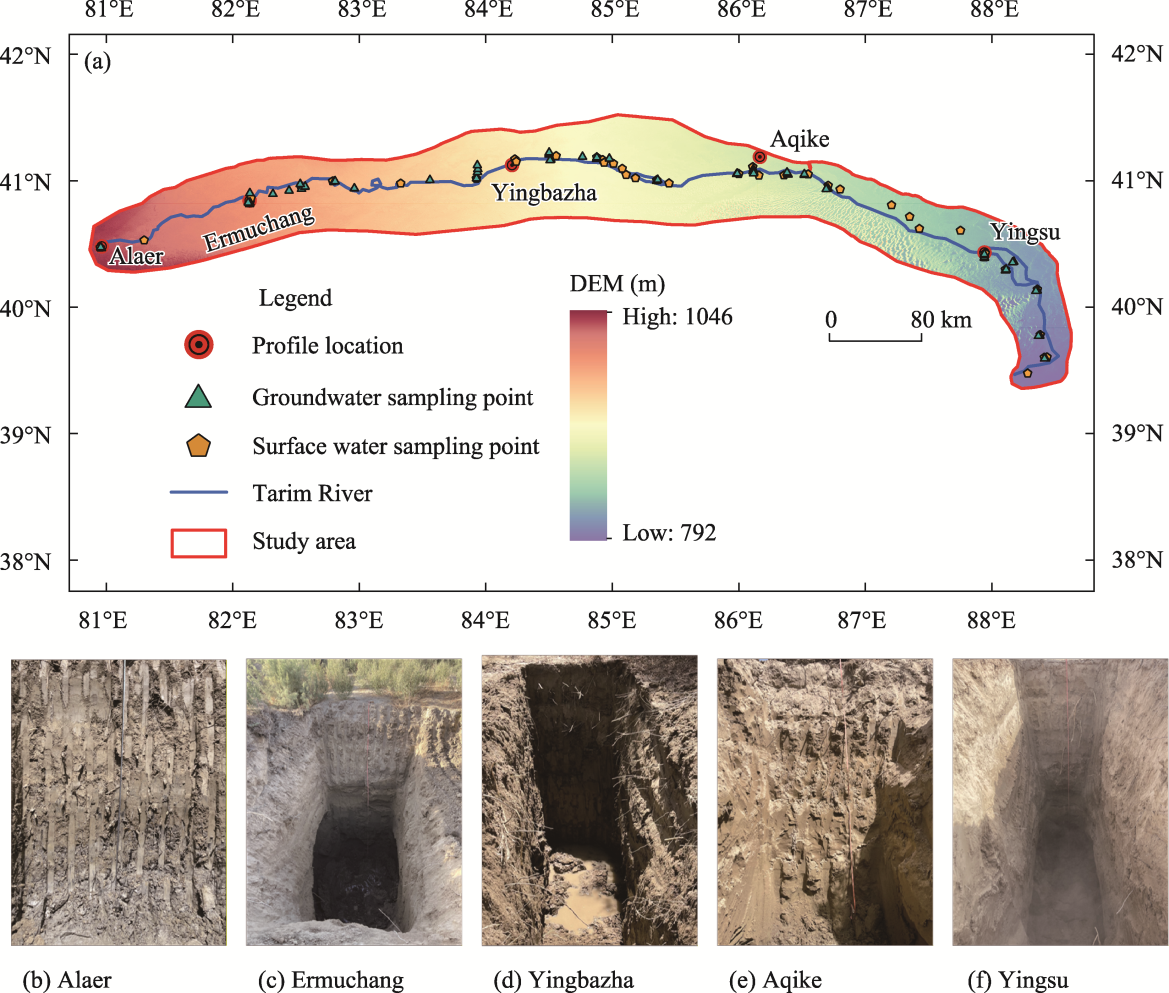
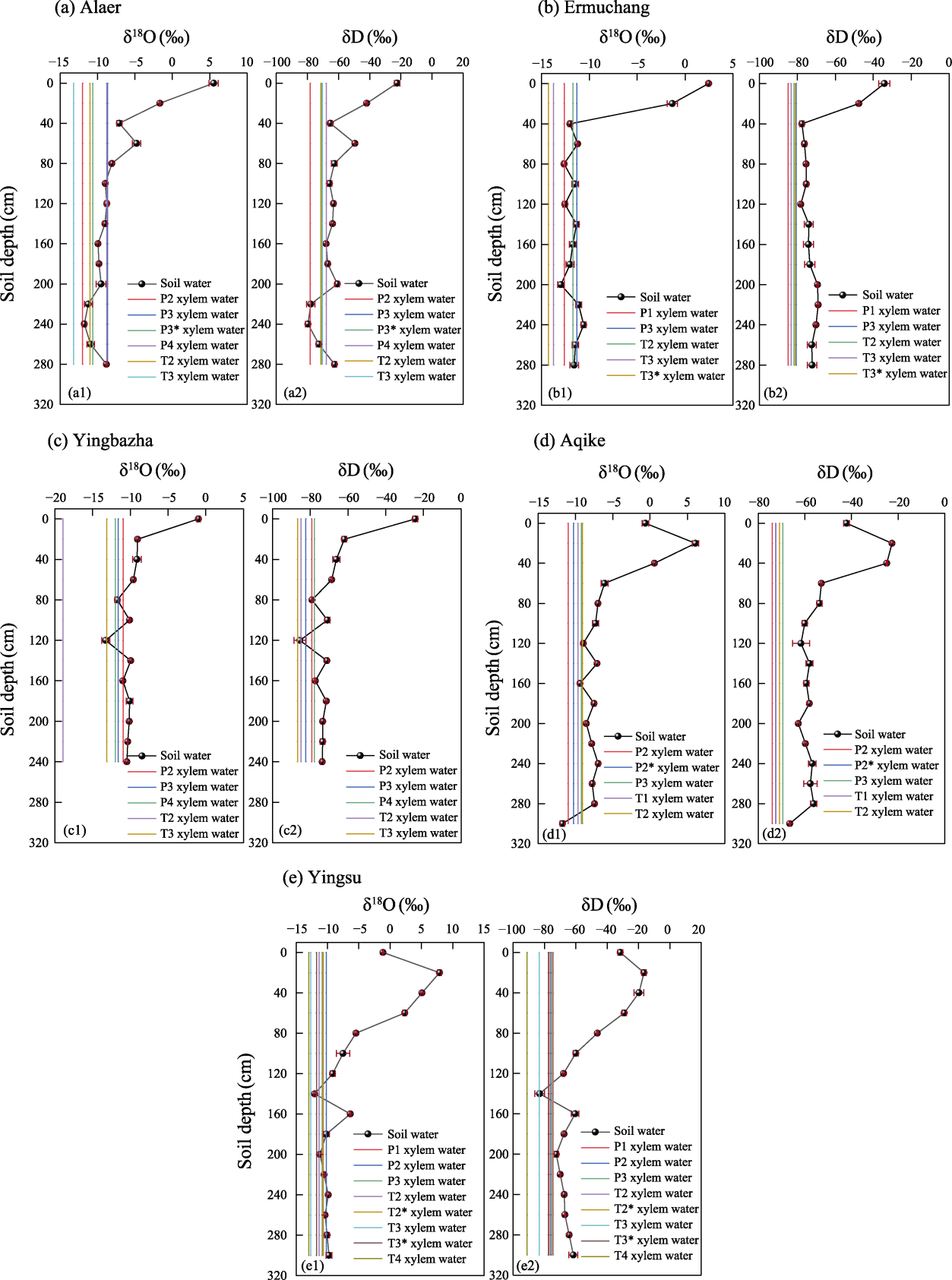
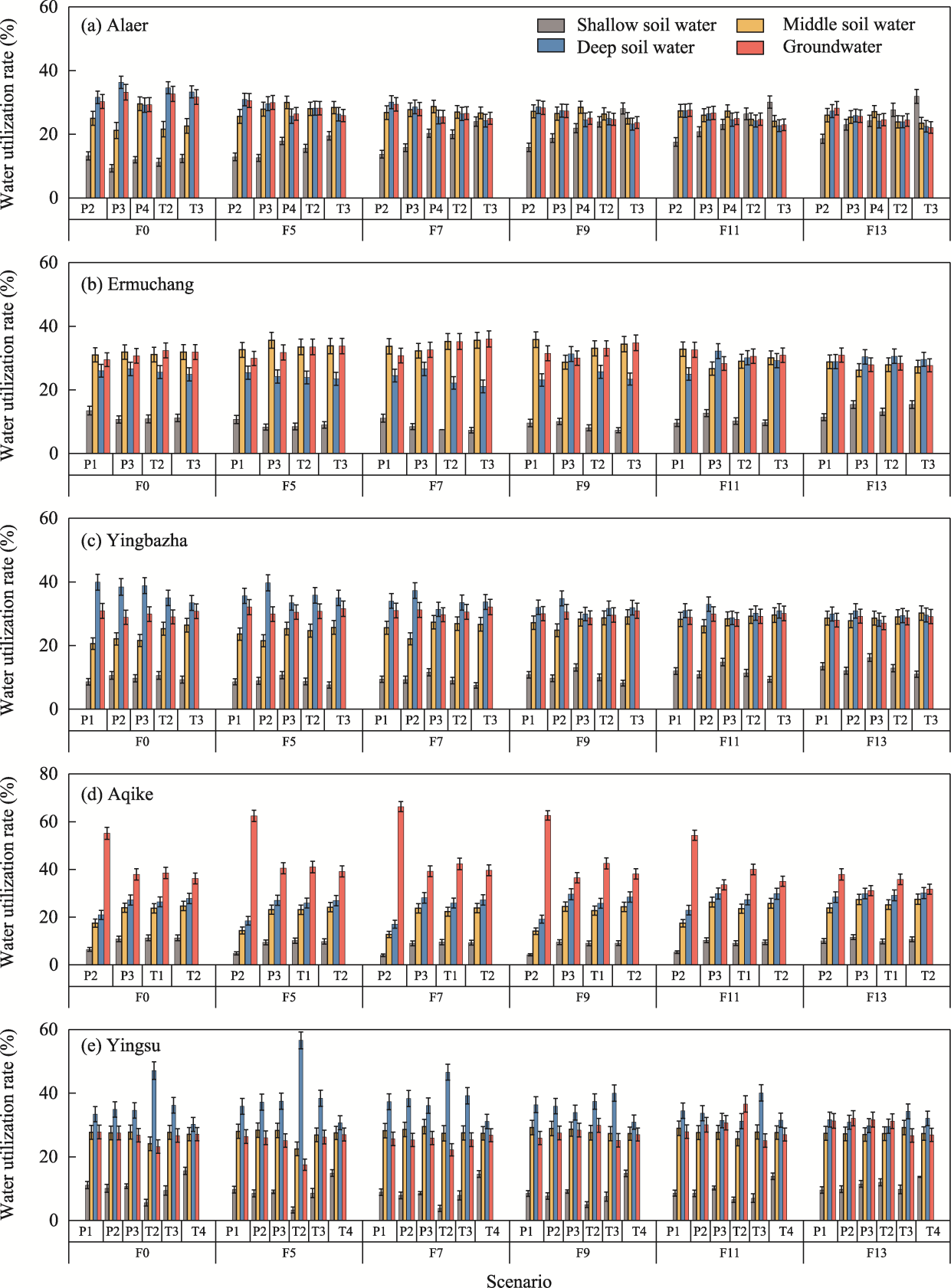
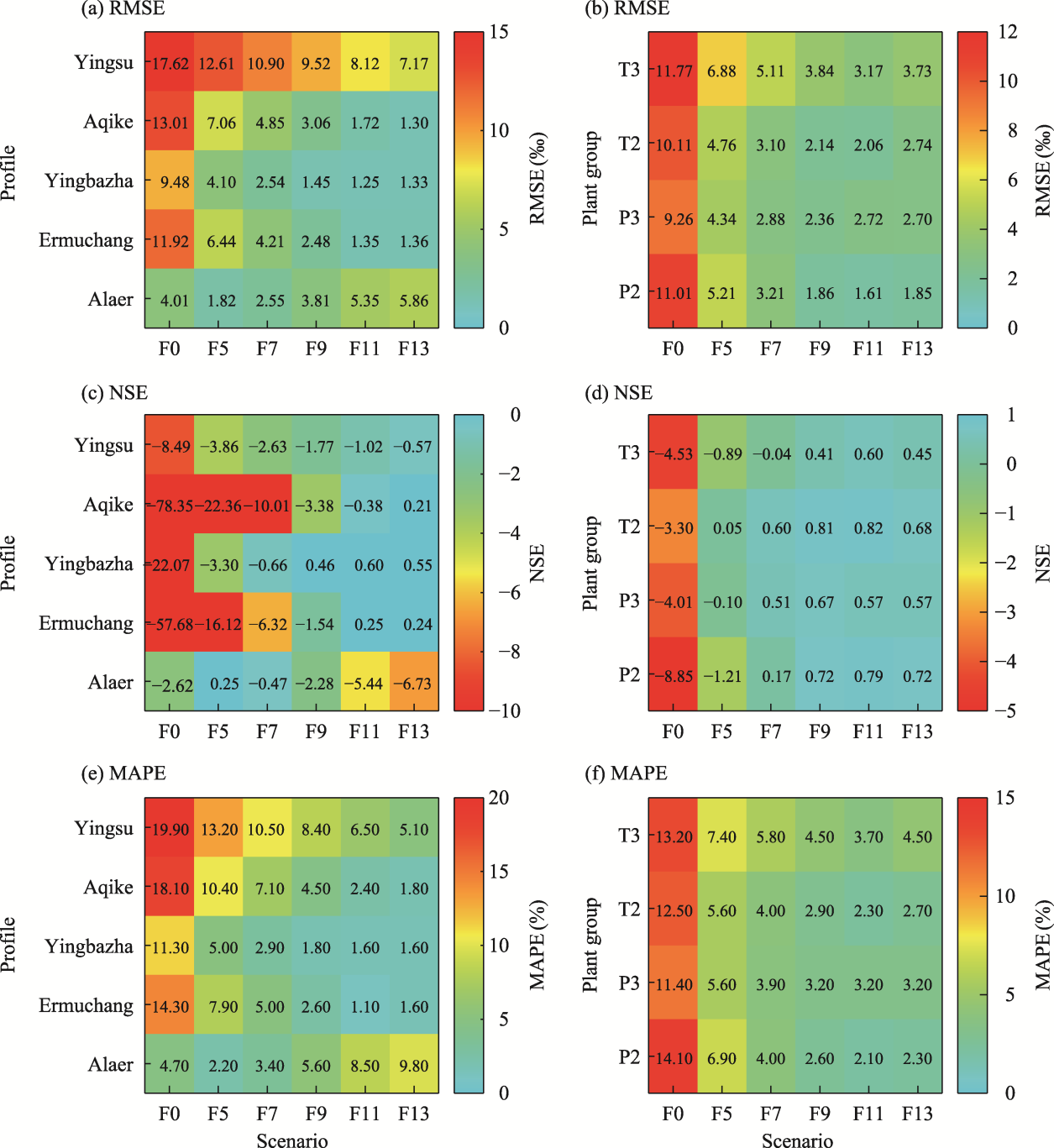
Abstract Identifying plant water sources is fundamental for elucidating ecohydrological processes and improving water resource management in arid zones under climate change. Stable hydrogen and oxygen isotopes are commonly used to trace plant water uptake; however, cryogenic vacuum extraction (CVE), the standard method for extracting plant xylem water, may induce deuterium depletion, thereby biasing source attribution. To systematically assess the effects of CVE-induced deuterium depletion across species, size classes, and habitats, we excavated five representative soil profiles along the mainstream of the Tarim River in northwestern China, in mid-July 2022. A total of 29 individuals, comprising both Populus euphratica and Tamarix ramosissima, were sampled. We divided P. euphratica individuals into four groups based on diameter at breast height (<50, 50-100, 100-250, and >250 cm), while categorized T. ramosissima individuals into four groups according to plant height (<1.0, 1.0-2.0, 2.0-4.0, and >4.0 m). Plant xylem water was extracted using CVE, and five deuterium depletion scenarios (-5.00‰, -7.00‰, -9.00‰, -11.00‰, and -13.00‰) were simulated. The Bayesian Mixing Model for Stable Isotope Analysis in R (MixSIAR) was applied under six input modes to quantify the proportional contributions of potential water sources and associated prediction errors. Model evaluation revealed that P. euphratica achieved the highest accuracy with a -9.00‰ correction of depletion, whereas a -11.00‰ correction was optimal for T. ramosissima, reducing relative prediction errors by 68.65% and 67.73%, respectively, compared with uncorrected scenario. Small-sized P. euphratica individuals exhibited less deuterium depletion, whereas no clear size-dependent pattern was observed for T. ramosissima. Spatially, plant individuals located farther from the river exhibited reduced deuterium depletion in xylem water. Despite differences in species traits and habitat conditions, both species predominantly relied on deep soil water and groundwater, which together contributed, on average, 61.45% and 59.95% for P. euphratica and T. ramosissima, respectively. These findings highlight the necessity of accounting for CVE-induced deuterium depletion when identifying plant water-use strategies and provide methodological guidance for isotope-based ecohydrological studies in arid environments.
|
|
Received: 14 September 2025
Published: 30 April 2026
|
|
Corresponding Authors:
*SHI Fengzhi (E-mail: shifz@ms.xjb.ac.cn)
|
|
|
| [1] |
Barbeta A, Jones S P, Clave L, et al. 2019. Unexplained hydrogen isotope offsets complicate the identification and quantification of tree water sources in a riparian forest. Hydrology and Earth System Sciences, 23(4): 2129-2146.
doi: 10.5194/hess-23-2129-2019
|
|
|
| [2] |
Cai G C, Tötzke C, Kaestner A, et al. 2022. Quantification of root water uptake and redistribution using neutron imaging: a review and future directions. The Plant Journal, 111(2): 348-359.
doi: 10.1111/tpj.15839
pmid: 35603461
|
|
|
| [3] |
Cai Y H, Luo L J, Gao X D, et al. 2024. Effect of hydrogen isotopic offset and input data on the isotope-based estimation of plant water sources. Journal of Hydrology, 637: 131422, doi: 10.1016/j.jhydrol.2024.131422.
|
|
|
| [4] |
Canadell J, Jackson R B, Ehleringer J R, et al. 1996. Maximum rooting depth of vegetation types at the global scale. Oecologia, 108: 583-595.
doi: 10.1007/BF00329030
pmid: 28307789
|
|
|
| [5] |
Chen Y L, Helliker B R, Tang X H, et al. 2020. Stem water cryogenic extraction biases estimation in deuterium isotope composition of plant source water. Proceedings of the National Academy of Sciences of the United States of America, 117(52): 33345-33350.
|
|
|
| [6] |
Chen Y N, Li B F, Fan Y T, et al. 2019. Hydrological and water cycle processes of inland river basins in the arid region of Northwest China. Journal of Arid Land, 11(2): 161-179.
doi: 10.1007/s40333-019-0050-5
|
|
|
| [7] |
Chen Y P, Chen Y N, Xu C C, et al. 2016. The effects of groundwater depth on water uptake of Populus euphratica and Tamarix ramosissima in the hyperarid region of northwestern China. Environmental Science and Pollution Research, 23: 17404-17412.
doi: 10.1007/s11356-016-6914-8
|
|
|
| [8] |
Craig H. 1961. Isotopic variations in meteoric waters. Science, 133(3465): 1702-1703.
pmid: 17814749
|
|
|
| [9] |
Cui Y Q, Niu L Q, Xiang J L, et al. 2021. Water uptake from different soil depths for desert plants in saline lands of Dunhuang, NW China. Frontiers in Environmental Science, 8: 585464, doi: 10.3389/fenvs.2020.585464.
|
|
|
| [10] |
Dai Y, Zhang T T, Abderyim A, et al. 2025. Influence of fluctuation of groundwater depth on the water use characteristics of Tamarix ramosissima at the tail of the Keriya River. Journal of Hydrology: Regional Studies, 59: 102445, doi: 10.1016/j.ejrh.2025.102445.
|
|
|
| [11] |
Dean J F. 2019. Groundwater dependent ecosystems in arid zones can use ancient subterranean carbon as an energy source in the local food web. Journal of Geophysical Research: Biogeosciences, 124(4): 733-736.
doi: 10.1029/2019JG005089
|
|
|
| [12] |
Deng W P, Zhang J, Zhang Z J, et al. 2017. Stable hydrogen and oxygen isotope compositions in soil-plant-atmosphere continuum (SPAC) in rocky mountain area of Beijing, China. Chinese Journal of Applied Ecology, 28(7): 2171-2178. (in Chinese)
|
|
|
| [13] |
Eamus D, Froend R, Loomes R, et al. 2006. A functional methodology for determining the groundwater regime needed to maintain the health of groundwater-dependent vegetation. Australian Journal of Botany, 54(2): 97-114.
doi: 10.1071/BT05031
|
|
|
| [14] |
Ehleringer J R, Phillips S L, Schuster W S F, et al. 1991. Differential utilization of summer rains by desert plants. Oecologia, 88: 430-434.
doi: 10.1007/BF00317589
pmid: 28313807
|
|
|
| [15] |
Ehleringer J R, Dawson T E. 1992. Water uptake by plants: perspectives from stable isotope composition. Plant, Cell & Environment, 15(9): 1073-1082.
doi: 10.1111/pce.1992.15.issue-9
|
|
|
| [16] |
Fan Y, Miguez-Macho G, Jobbagy E G, et al. 2017. Hydrologic regulation of plant rooting depth. Proceedings of the National Academy of Sciences of the United States of America, 114(40): 10572-10577.
|
|
|
| [17] |
Fu A H, Chen Y N, Li W H. 2014. Water use strategies of the desert riparian forest plant community in the lower reaches of Heihe River Basin, China. Science China Earth Sciences, 57(6): 1293-1305.
doi: 10.1007/s11430-013-4680-8
|
|
|
| [18] |
Gai H Q, Shi P J, Li Z. 2023. Untangling the uncertainties in plant water source partitioning with isotopes. Water Resources Research, 59(12): e2022WR033849, doi: 10.1029/2022WR033849.
|
|
|
| [19] |
Gao X D, Wan H, Zeng Y J, et al. 2023. Disentangling the impact of event- and annual-scale precipitation extremes on critical-zone hydrology in semiarid loess vegetated by apple trees. Water Resources Research, 59(3): e2022WR033042, doi: 10.1029/2022WR033042.
|
|
|
| [20] |
Gardner W R. 1964. Relation of root distribution to water uptake and availability. Agronomy Journal, 56: 41-45.
doi: 10.2134/agronj1964.00021962005600010013x
|
|
|
| [21] |
Glanville K, Sheldon F, Butler D, et al. 2023. Effects and significance of groundwater for vegetation: a systematic review. Science of The Total Environment, 875: 162577, doi: 10.1016/j.scitotenv.2023.162577.
|
|
|
| [22] |
Guo S T, Yao Y Y, Ji Q, et al. 2025. Groundwater depletion intensified by irrigation and afforestation in the Yellow River Basin: a spatiotemporal analysis using GRACE and well monitoring data with implications for sustainable management. Journal of Hydrology: Regional Studies, 59: 102324, doi: 10.1016/j.ejrh.2025.102324.
|
|
|
| [23] |
Herczeg A L, Leaney F W. 2011. Review: environmental tracers in arid-zone hydrology. Hydrogeology Journal, 19: 17-29.
doi: 10.1007/s10040-010-0652-7
|
|
|
| [24] |
Holland K L, Tyerman S D, Mensforth L J, et al. 2006. Tree water sources over shallow, saline groundwater in the lower River Murray, south-eastern Australia: implications for groundwater recharge mechanisms. Australian Journal of Botany, 54(2): 193-205.
doi: 10.1071/BT05019
|
|
|
| [25] |
Horton J L, Kolb T E, Hart S C. 2001a. Physiological response to groundwater depth varies among species and with river flow regulation. Ecological Applications, 11(4): 1046-1059.
doi: 10.1890/1051-0761(2001)011[1046:PRTGDV]2.0.CO;2
|
|
|
| [26] |
Horton J L, Kolb T E, Hart S C. 2001b. Responses of riparian trees to interannual variation in ground water depth in a semi-arid river basin. Plant, Cell & Environment, 24(3): 293-304.
doi: 10.1046/j.1365-3040.2001.00681.x
|
|
|
| [27] |
Jackson A L, Inger R, Bearhop S, et al. 2009. Erroneous behaviour of MixSIR, a recently published Bayesian isotope mixing model: a discussion of Moore & Semmens (2008). Ecology Letters, 12(3): E1-E5.
|
|
|
| [28] |
Jiang X Q, Hao S, Ye M, et al. 2025. Water uptake sources of differently aged Populus euphratica in the lower Tarim River under ecological water conveyance. Scientific Reports, 15(1): 40271, doi: 10.1038/s41598-025-24001-y.
|
|
|
| [29] |
Keram A, Halik U, Aishan T, et al. 2021. Tree mortality and regeneration of Euphrates poplar riparian forests along the Tarim River, Northwest China. Forest Ecosystems, 8: 49, doi: 10.1186/s40663-021-00323-x.
|
|
|
| [30] |
Layman C A, Araujo M S, Boucek R, et al. 2012. Applying stable isotopes to examine food-web structure: an overview of analytical tools. Biological Reviews, 87(3): 545-562.
doi: 10.1111/brv.2012.87.issue-3
|
|
|
| [31] |
Li E G, Tong Y Q, Huang Y M, et al. 2019. Responses of two desert riparian species to fluctuating groundwater depths in hyperarid areas of Northwest China. Ecohydrology, 12(3): e2078, doi: 10.1002/eco.2078.
|
|
|
| [32] |
Li J, Hu S J, Sheng Y, et al. 2022. Whole-plant water use and hydraulics of Populus euphratica and Tamarix ramosissima seedlings in adaption to groundwater variation. Water, 14(12): 1869, doi: 10.3390/w14121869.
|
|
|
| [33] |
Li M Y, Li F L, Fu S D, et al. 2024. Identification, mapping, and eco-hydrological signal analysis for groundwater-dependent ecosystems (GDEs) in Langxi River basin, north China. Hydrology and Earth System Sciences, 28(20): 4623-4642.
doi: 10.5194/hess-28-4623-2024
|
|
|
| [34] |
Li Y F, Yu J J, Lu K, et al. 2017. Water sources of Populus euphratica and Tamarix ramosissima in Ejina Delta, the lower reaches of the Heihe River, China. Chinese Journal of Plant Ecology, 41(5): 519-528. (in Chinese)
doi: 10.17521/cjpe.2016.0381
|
|
|
| [35] |
Liu S B, Chen Y N, Chen Y P, et al. 2015. Use of 2H and 18O stable isotopes to investigate water sources for different ages of Populus euphratica along the lower Heihe River. Ecological Research, 30: 581-587.
doi: 10.1007/s11284-015-1270-6
|
|
|
| [36] |
Loheide II S P, Butler Jr J J, Gorelick S M. 2005. Estimation of groundwater consumption by phreatophytes using diurnal water table fluctuations: a saturated-unsaturated flow assessment. Water Resources Research, 41(7): W07030, doi: 10.1029/2005WR003942.
|
|
|
| [37] |
Maihemuti B, Simayi Z, Alifujiang Y, et al. 2021. Development and evaluation of the soil water balance model in an inland arid delta oasis: implications for sustainable groundwater resource management. Global Ecology and Conservation, 25: e01408, doi: 10.1016/j.gecco.2020.e01408.
|
|
|
| [38] |
Moore J W, Semmens B X. 2008. Incorporating uncertainty and prior information into stable isotope mixing models. Ecology Letters, 11(5): 470-480.
doi: 10.1111/j.1461-0248.2008.01163.x
pmid: 18294213
|
|
|
| [39] |
Naumburg E, Mata-Gonzalez R, Hunter R G, et al. 2005. Phreatophytic vegetation and groundwater fluctuations: a review of current research and application of ecosystem response modeling with an emphasis on Great Basin vegetation. Environmental Management, 35: 726-740.
pmid: 15940400
|
|
|
| [40] |
Orellana F, Verma P, Loheide II S P, et al. 2012. Monitoring and modeling water-vegetation interactions in groundwater-dependent ecosystems. Reviews of Geophysics, 50(3): RG3003, doi: 10.1029/2011RG000383.
|
|
|
| [41] |
Orlowski N, Pratt D L, McDonnell J J. 2016. Intercomparison of soil pore water extraction methods for stable isotope analysis. Hydrological Processes, 30(19): 3434-3449.
doi: 10.1002/hyp.v30.19
|
|
|
| [42] |
Phillips D L, Gregg J W. 2003. Source partitioning using stable isotopes: coping with too many sources. Oecologia, 136: 261-269.
doi: 10.1007/s00442-003-1218-3
pmid: 12759813
|
|
|
| [43] |
Phillips D L, Inger R, Bearhop S, et al. 2014. Best practices for use of stable isotope mixing models in food-web studies. Canadian Journal of Zoology, 92(10): 823-835.
doi: 10.1139/cjz-2014-0127
|
|
|
| [44] |
Rohde M M, Albano C M, Huggins X, et al. 2024. Groundwater-dependent ecosystem map exposes global dryland protection needs. Nature, 632: 101-107.
doi: 10.1038/s41586-024-07702-8
|
|
|
| [45] |
Sloan B P, Thompson S E, Feng X. 2021. Plant hydraulic transport controls transpiration sensitivity to soil water stress. Hydrology and Earth System Sciences, 25(8): 4259-4274.
doi: 10.5194/hess-25-4259-2021
|
|
|
| [46] |
Song Y, Wang S J, Zhang M J, et al. 2022. Stable isotopes of precipitation in the eastern Tarim River Basin and water vapor sources. Environmental Science, 43(1): 199-209. (in Chinese)
|
|
|
| [47] |
Soylu M E, Loheide S P, Kucharik C J. 2017. Effects of root distribution and root water compensation on simulated water use in maize influenced by shallow groundwater. Vadose Zone Journal, 16(10): 1-15.
|
|
|
| [48] |
Sprenger M, Stumpp C, Weiler M, et al. 2019. The demographics of water: a review of water ages in the critical zone. Reviews of Geophysics, 57(3): 800-834.
doi: 10.1029/2018RG000633
|
|
|
| [49] |
Stock B C, Jackson A L, Ward E J, et al. 2018. Analyzing mixing systems using a new generation of Bayesian tracer mixing models. PeerJ, 6: e5096, doi: 10.7717/peerj.5096.
|
|
|
| [50] |
Stromberg J C. 2013. Root patterns and hydrogeomorphic niches of riparian plants in the American Southwest. Journal of Arid Environments, 94: 1-9.
doi: 10.1016/j.jaridenv.2013.02.004
|
|
|
| [51] |
Su Y H, Feng Q, Zhu G F, et al. 2022. Evaluating the different methods for estimating groundwater evapotranspiration using diurnal water table fluctuations. Journal of Hydrology, 607: 127508, doi: 10.1016/j.jhydrol.2022.127508.
|
|
|
| [52] |
Tao S Y, Xia J, Xia J Q, et al. 2025. Stable water isotopes in soil-plant systems reveal ecohydrological dynamics in a typical flood wetland in the subtropical monsoon region, China. Ecological Indicators, 178: 114021, doi: 10.1016/j.ecolind.2025.114021.
|
|
|
| [53] |
von Freyberg J, Allen S T, Grossiord C, et al. 2020. Plant and root-zone water isotopes are difficult to measure, explain, and predict: some practical recommendations for determining plant water sources. Methods in Ecology and Evolution, 11(11): 1352-1367.
doi: 10.1111/2041-210X.13461
|
|
|
| [54] |
Wan Y B, Shi Q D, Dai Y, et al. 2022. Water use characteristics of Populus euphratica Oliv. and Tamarix chinensis Lour. at different growth stages in a desert oasis. Forests, 13(2): 236, doi: 10.3390/f13020236.
|
|
|
| [55] |
Wang J, Lu N, Fu B J. 2019. Inter-comparison of stable isotope mixing models for determining plant water source partitioning. Science of The Total Environment, 666: 685-693.
doi: 10.1016/j.scitotenv.2019.02.262
|
|
|
| [56] |
Wang T Y, Wu Z N, Wang P, et al. 2023. Plant-groundwater interactions in drylands: a review of current research and future perspectives. Agricultural and Forest Meteorology, 341: 109636, doi: 10.1016/j.agrformet.2023.109636.
|
|
|
| [57] |
Wen M Y, Lu Y W, Li M L, et al. 2021. Correction of cryogenic vacuum extraction biases and potential effects on soil water isotopes application. Journal of Hydrology, 603(Part B): 127011, doi: 10.1016/j.jhydrol.2021.127011.
|
|
|
| [58] |
Wen M Y, He D, Li M, et al. 2022. Causes and factors of cryogenic extraction biases on isotopes of xylem water. Water Resources Research, 58(8): e2022WR032182, doi: 10.1029/2022WR032182.
|
|
|
| [59] |
Wen M Y, Zhao X N, Si B C, et al. 2023. Inter-comparison of extraction methods for plant water isotope analysis and its indicative significance. Journal of Hydrology, 625(Part B): 130015, doi: 10.1016/j.jhydrol.2023.130015.
|
|
|
| [60] |
Xu Y Q, Zhao H, Zhou B Q, et al. 2024. Variations in water use strategies of Tamarix ramosissima at coppice dunes along a precipitation gradient in desert regions of northwest China. Frontiers in Plant Science, 15: 1408943, doi: 10.3389/fpls.2024.1408943.
|
|
|
| [61] |
Yang B, Wen X F, Sun X M. 2015. Seasonal variations in depth of water uptake for a subtropical coniferous plantation subjected to drought in an East Asian monsoon region. Agricultural and Forest Meteorology, 201: 218-228.
doi: 10.1016/j.agrformet.2014.11.020
|
|
|
| [62] |
Yang G, Li F D, Chen D, et al. 2019. Assessment of changes in oasis scale and water management in the arid Manas River Basin, north western China. Science of The Total Environment, 691: 506-515.
doi: 10.1016/j.scitotenv.2019.07.143
|
|
|
| [63] |
Yang H H, Lv Q L, Yang W, et al. 2020. Study on self recovery of Populus euphratica using capillary action of column soil exchange to enhance groundwater. Water Saving Irrigation, (12): 51-56. (in Chinese)
|
|
|
| [64] |
Yang H L, Hu Q L, Zhao Y, et al. 2025. Beyond deuterium: δ18O offsets from cryogenic vacuum extraction bias water source apportionment in Tamarix chinensis. Hydrological Processes, 40(1): e70368, doi: 10.1002/hyp.70368.
|
|
|
| [65] |
Zeng Y, Zhao C Y, Li J, et al. 2019. Effect of groundwater depth on riparian plant diversity along riverside-desert gradients in the Tarim River. Journal of Plant Ecology, 12(3): 564-573.
doi: 10.1093/jpe/rty048
|
|
|
| [66] |
Zhao L J, Wang L X, Cernusak L A, et al. 2016. Significant difference in hydrogen isotope composition between xylem and tissue water in Populus euphratica. Plant, Cell & Environment, 39(8): 1848-1857.
|
|
|
| [67] |
Zhao L J, Liu X H, Wang N L, et al. 2024. The determining factors of hydrogen isotope offsets between plants and their source waters. New Phytologist, 241(5): 2009-2024.
doi: 10.1111/nph.19492
pmid: 38178796
|
|
|
| [68] |
Zhou H H, Ye Z X, Yang Y H, et al. 2024. Drought stress might induce sexual spatial segregation in dioecious Populus euphratica—insights from long-term water use efficiency and growth rates. Biology, 13(5): 318, doi: 10.3390/biology13050318.
|
|
|
| [69] |
Zhou Y Q, Gao X D, Wang J X, et al. 2021. Lycium barbarum root water uptake characteristics in the Qaidam Basin irrigation. Chinese Journal of Eco-Agriculture, 29(2): 400-409. (in Chinese)
|
|
|
| [70] |
Zhu G F, Yong L L, Zhao X, et al. 2022. Evaporation, infiltration and storage of soil water in different vegetation zones in the Qilian Mountains: a stable isotope perspective. Hydrology and Earth System Sciences, 26(14): 3771-3784.
doi: 10.5194/hess-26-3771-2022
|
|
|
| [71] |
Zou J W, Li H, Ding C, et al. 2024. Mapping natural Populus euphratica forests in the mainstream of the Tarim River using spaceborne imagery and Google Earth Engine. Remote Sensing, 16(18): 3429, doi: 10.3390/rs16183429.
|
|
|
|
Viewed |
|
|
|
Full text
|
|
|
|
|
Abstract
|
|
|
|
|
Cited |
|
|
|
|
| |
Shared |
|
|
|
|
| |
Discussed |
|
|
|
|