Response of Gobi Desert soil to the establishment of sea buckthorn (Hippophae rhamnoides) plantations
ZHOU Mingwang1, DING Junjie2, MA Fanyan1, JIANG Ping3, WANG Mei3, CHU Guangming3, HE Mengyao1, HUI Ying1, YANG Zhen'an3,*()
1College of Agriculture, Shihezi University, Shihezi 832003, China 2Xinjiang Academy of Agricultural and Reclamation Science, Shihezi 832003, China 3College of Urban and Environmental Sciences, Shihezi University, Shihezi 832003, China
Vegetation restoration is a critical approach for improving soil quality in arid ecosystems, yet its effects on soil extracellular enzyme activities (EEAs), stoichiometric relationships, and nutrient dynamics in the Gobi Desert remain poorly understood. This study aimed to address this knowledge gap by analyzing a chronosequence of three stand ages (3, 11, and 14 a) of artificial sea buckthorn (Hippophae rhamnoides L.) plantations in the 170th Regiment of the 9th Agricultural Division of the Xinjiang Production and Construction Corps, China. Three 20 m×20 m quadrats were established for each restoration stage in early to mid-August 2024. Soil samples were collected in 0-10, 10-20, and 20-30 cm soil layers within each quadrat using a five-point method, to explore the ecological changes in Gobi Desert soil throughout the vegetation restoration. The results indicated that soil organic carbon (SOC), particulate organic carbon (POC), dissolved organic carbon (DOC), mineral-associated organic carbon (MAOC), total nitrogen (TN), and microbial biomass carbon (MBC), nitrogen (MBN), and phosphorus (MBP) all significantly increased in the 0-10 cm soil layer during vegetation restoration. In the 10-20 cm soil layer, MAOC and TN significantly increased during vegetation restoration, while in the 20-30 cm soil layer, MAOC, TN, MBN, and MBP significantly increased. Concurrently, the activities of key enzymes (β-1,4-glucosidase and β-1,4-N-acetylglucosaminidase) involved in carbon (C) and nitrogen (N) cycling were also the highest in the 14-year-old plantation in the 0-10 cm soil layer. Further analysis of enzymatic stoichiometry indicated a shift in microbial resource allocation, with significant increases in the C-N and C-phosphorus (P) ratios of EEAs, whereas the N-P ratio remained relatively stable. The drivers of these stoichiometric ratios varied with soil depth: in the 0-20 cm soil layer, the C-N and C-P ratios of EEAs were mainly influenced by soil C content, whereas the N-P ratio was not regulated by any factors. In the 20-30 cm soil layer, the C-N and C-P ratios of EEAs were mainly influenced by soil C, N, and microbial biomass content, whereas the N-P ratio was mainly affected by TP and pH. Overall, the establishment of sea buckthorn plantations, especially over a 14-a period, significantly improved Gobi Desert soil quality by enhancing nutrient content, stimulating microbial activity, and modulating extracellular enzyme strategies. These findings underscore the considerable C sequestration potential and ecological benefits of targeted artificial afforestation in arid land restoration.
Received: 25 August 2025
Published: 31 August 2026
Conceptualization: JIANG Ping, WANG Mei, CHU Guangming, YANG Zhen'an; Visualization: ZHOU Mingwang, MA Fanyan, JIANG Ping; Formal analysis: ZHOU Mingwang, DING Junjie, MA Fanyan, HE Mengyao, HUI Ying; Writing - original draft preparation: ZHOU Mingwang; Writing - review and editing: DING Junjie, JIANG Ping, WANG Mei, CHU Guangming, YANG Zhen'an; Funding acquisition: DING Junjie, YANG Zhen'an; Data curation: ZHOU Mingwang, MA Fanyan, HE Mengyao, HUI Ying, YANG Zhen'an; Investigation: ZHOU Mingwang, DING Junjie, MA Fanyan, HE Mengyao, HUI Ying; Supervision: JIANG Ping, YANG Zhen'an. All authors approved the manuscript.
ZHOU Mingwang, DING Junjie, MA Fanyan, JIANG Ping, WANG Mei, CHU Guangming, HE Mengyao, HUI Ying, YANG Zhen'an. Response of Gobi Desert soil to the establishment of sea buckthorn (Hippophae rhamnoides) plantations. Journal of Arid Land, 2026, 18(8): 1446-1461.
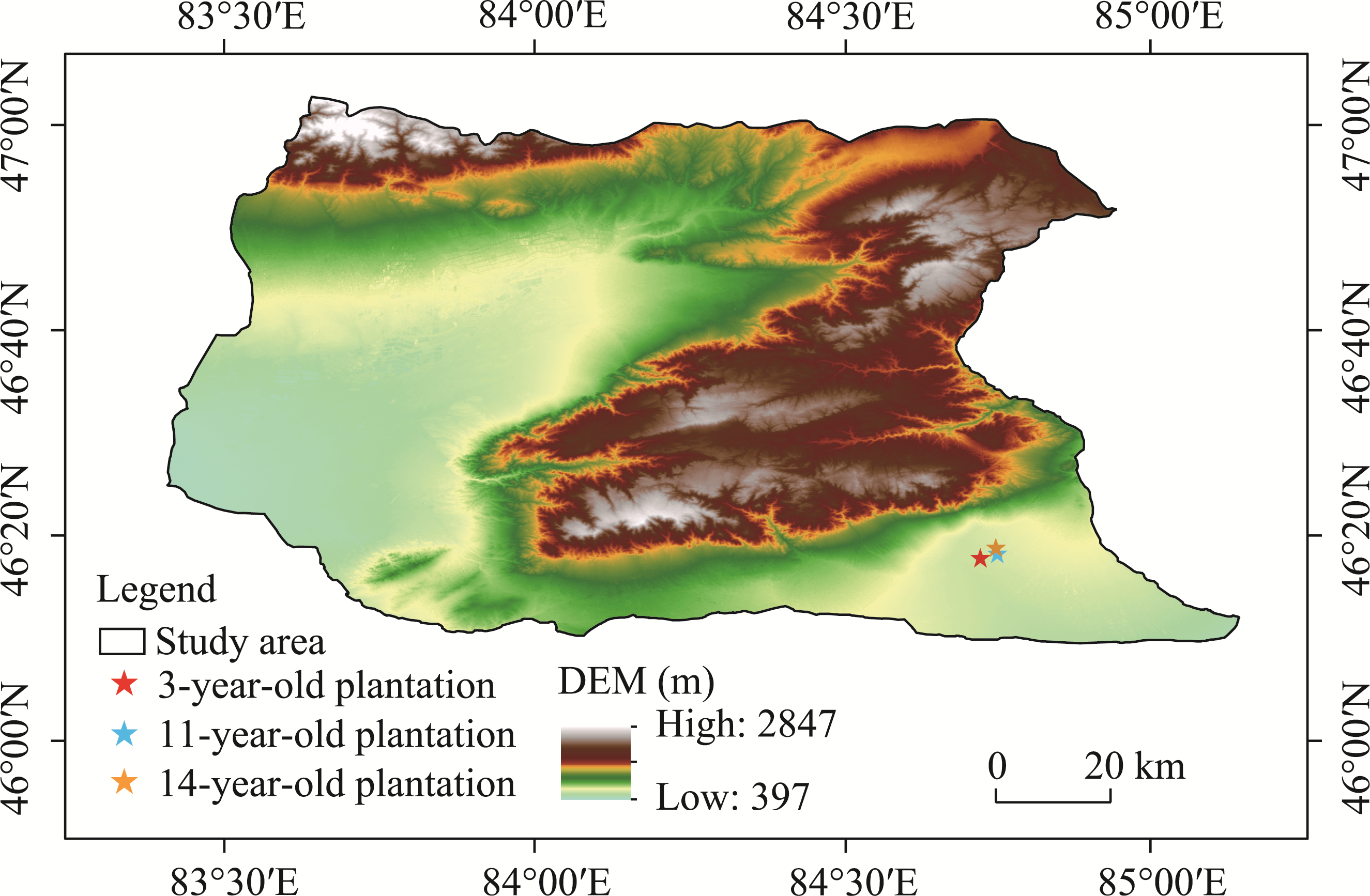
Fig. 1Overview of the study area based on the digital elevation model (DEM) and distribution of sampling plots for sea buckthorn plantations of three ages (3, 11, and 14 a)
Plantation age (a)
Average plant height (cm)
Spacing between plants (m)
Row spacing (m)
Stand density (trees/hm2)
3
162.54±1.62
1.5
4
1666.67
11
240.45±3.19
1.5
4
1666.67
14
255.95±3.72
1.5
4
1666.67
Table 1 Details of the sampling plots
Fig. 2Variations in soil physicochemical properties and microbial biomass across soil layers along a sea buckthorn plantation age gradient. (a), pH; (b), dissolved organic carbon (DOC); (c), soil organic carbon (SOC); (d), particulate organic carbon (POC); (e), mineral-associated organic carbon (MAOC); (f), total nitrogen (TN); (g), total phosphorus (TP); (h), microbial biomass carbon (MBC); (i), microbial biomass nitrogen (MBN); (j), microbial biomass phosphorus (MBP). *, **, and *** indicate significant differences among plantation ages at P<0.050, P<0.010, and P<0.001 levels, respectively; ns indicates that the observed differences are not statistically significant among plantation ages. Different lowercase letters on the bar chart within the same soil depth layer indicate significant differences among plantation ages. Error bars indicate standard errors.
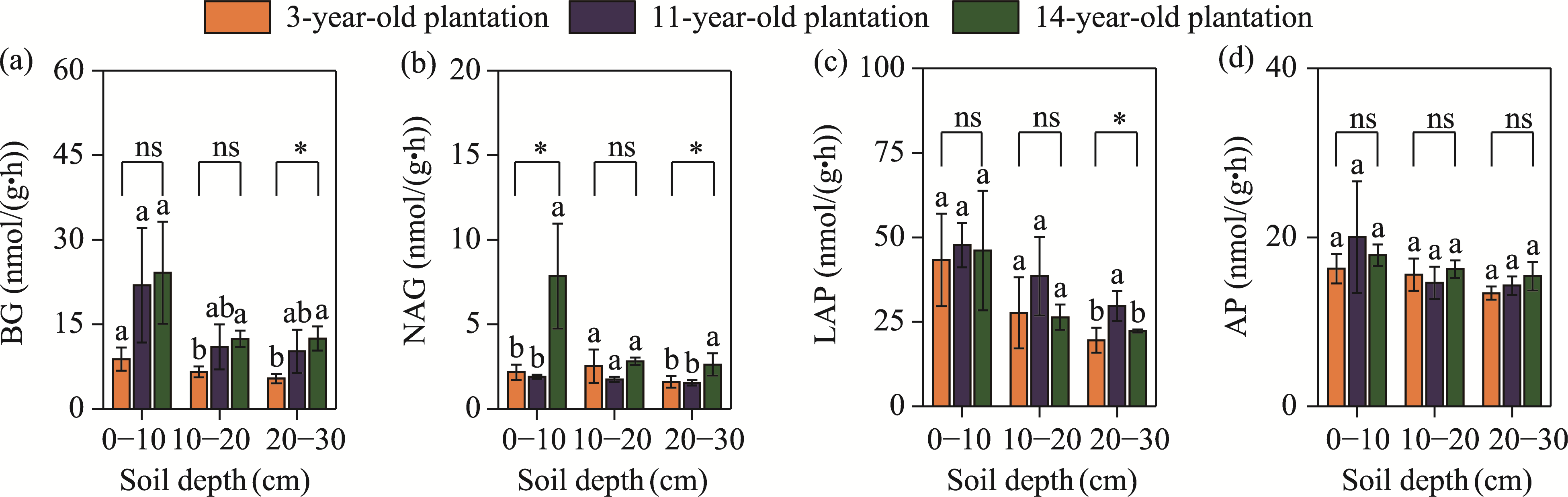
Fig. 3Variations in the activities of β-1,4-glucosidase (BG; a), β-1,4-N-acetylglucosaminidase (NAG; b), L-leucine aminopeptidase (LAP; c), and phosphatase (AP; d) across soil layers along a sea buckthorn plantation age gradient. * indicates that there are significant differences among plantation ages at P<0.050 level; ns indicates that the observed differences are not statistically significant among plantation ages. Different lowercase letters on the bar chart within the same soil depth layer indicate significant differences among plantation ages. Error bars indicate standard errors.
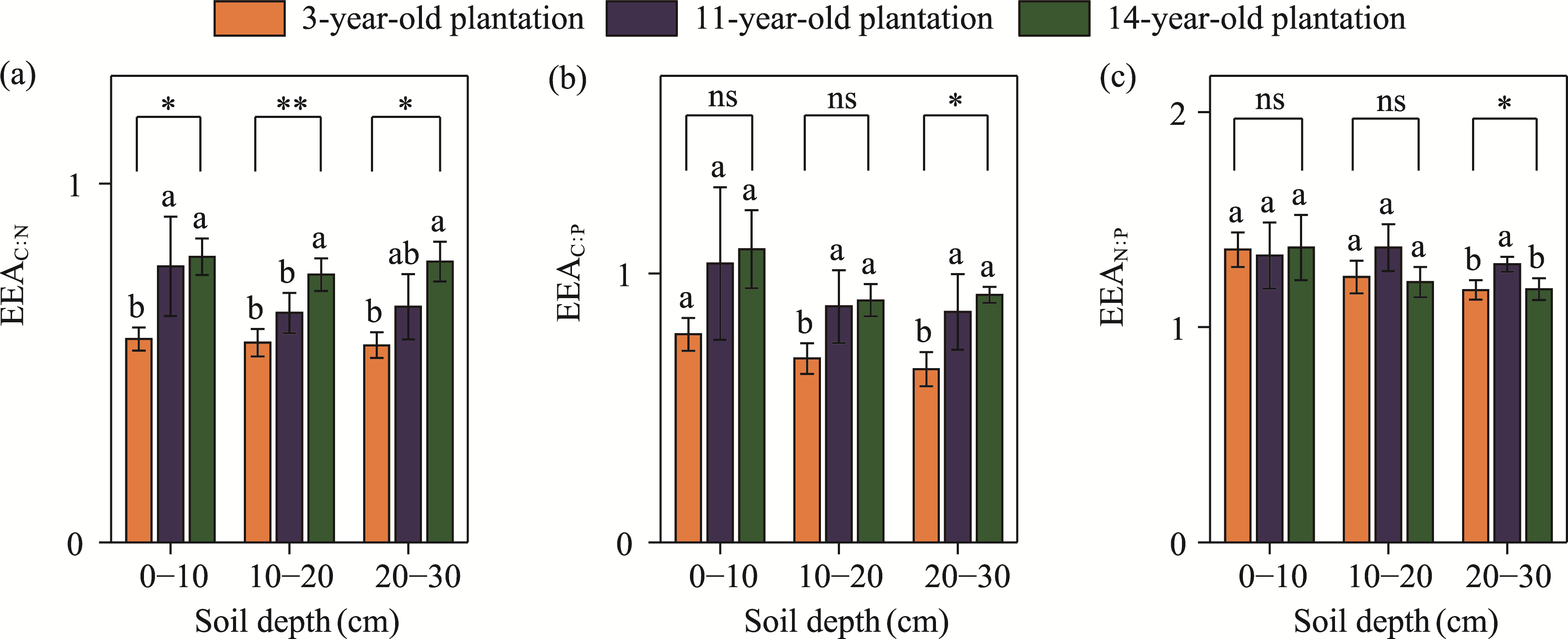
Fig. 4Variations in the carbon and nitrogen stoichiometric ratio (EEAC:N; a), carbon and phosphorous stoichiometric ratio (EEAC:P; b), and nitrogen and phosphorous stoichiometric ratio (EEAN:P; c) of soil extracellular enzyme activities (EEAs) across soil layers along a sea buckthorn plantation age gradient. * and ** indicate there are significant differences among plantation ages at P<0.050 and P<0.010 levels, respectively; ns indicates that the observed differences are not statistically significant among plantation ages. Different lowercase letters on the bar chart within the same soil depth layer indicate significant differences among plantation ages. Error bars indicate standard errors.
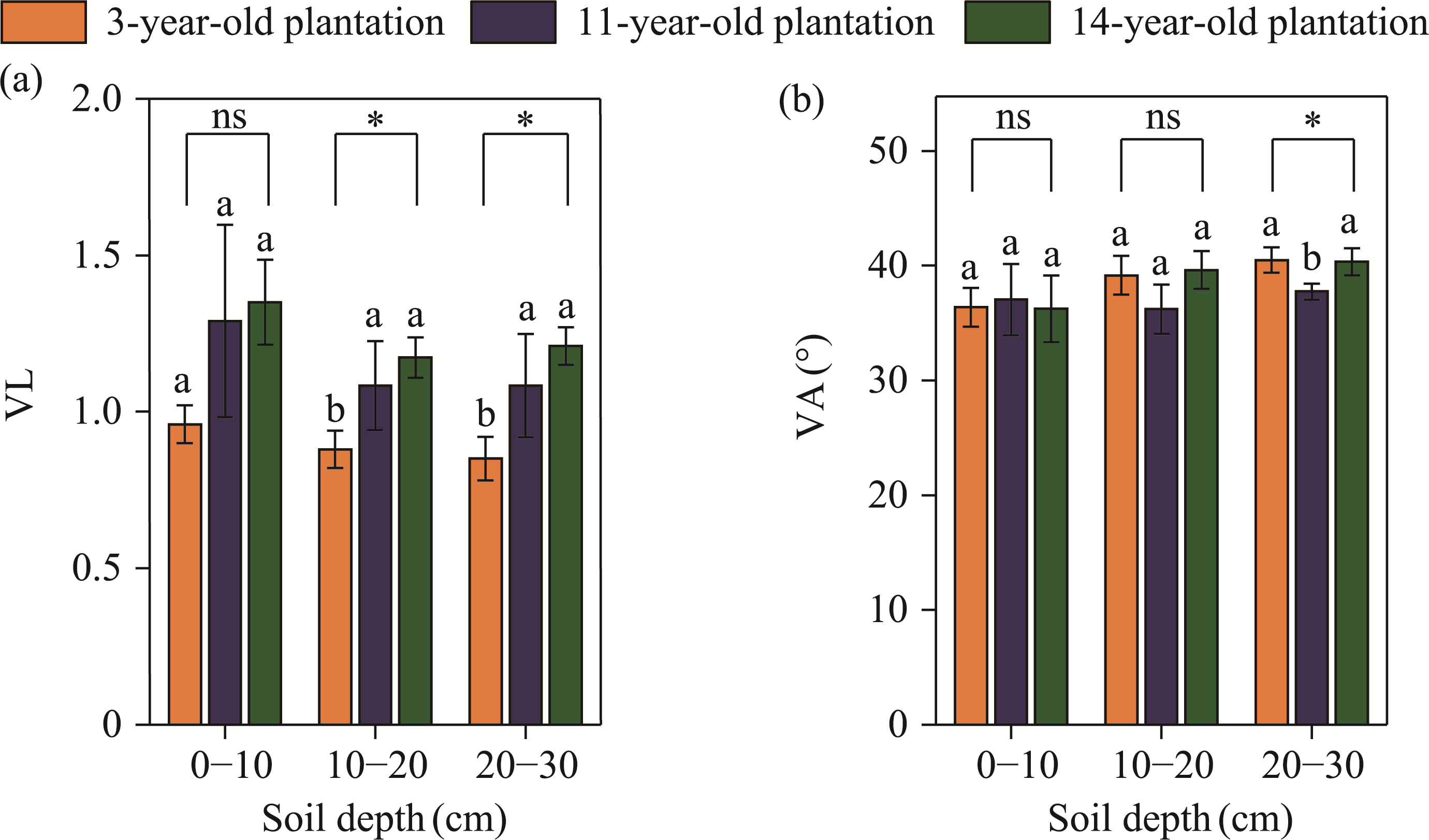
Fig. 5Variations in vector length (VL; a) and vector angle (VA; b) across soil layers along a sea buckthorn plantation age gradient. * indicates there are significant differences among plantation ages at P<0.050 level; ns indicates that the observed differences are not statistically significant among plantation ages. Different lowercase letters on the bar chart within the same soil depth layer indicate significant differences among plantation ages. Error bars indicate standard errors.
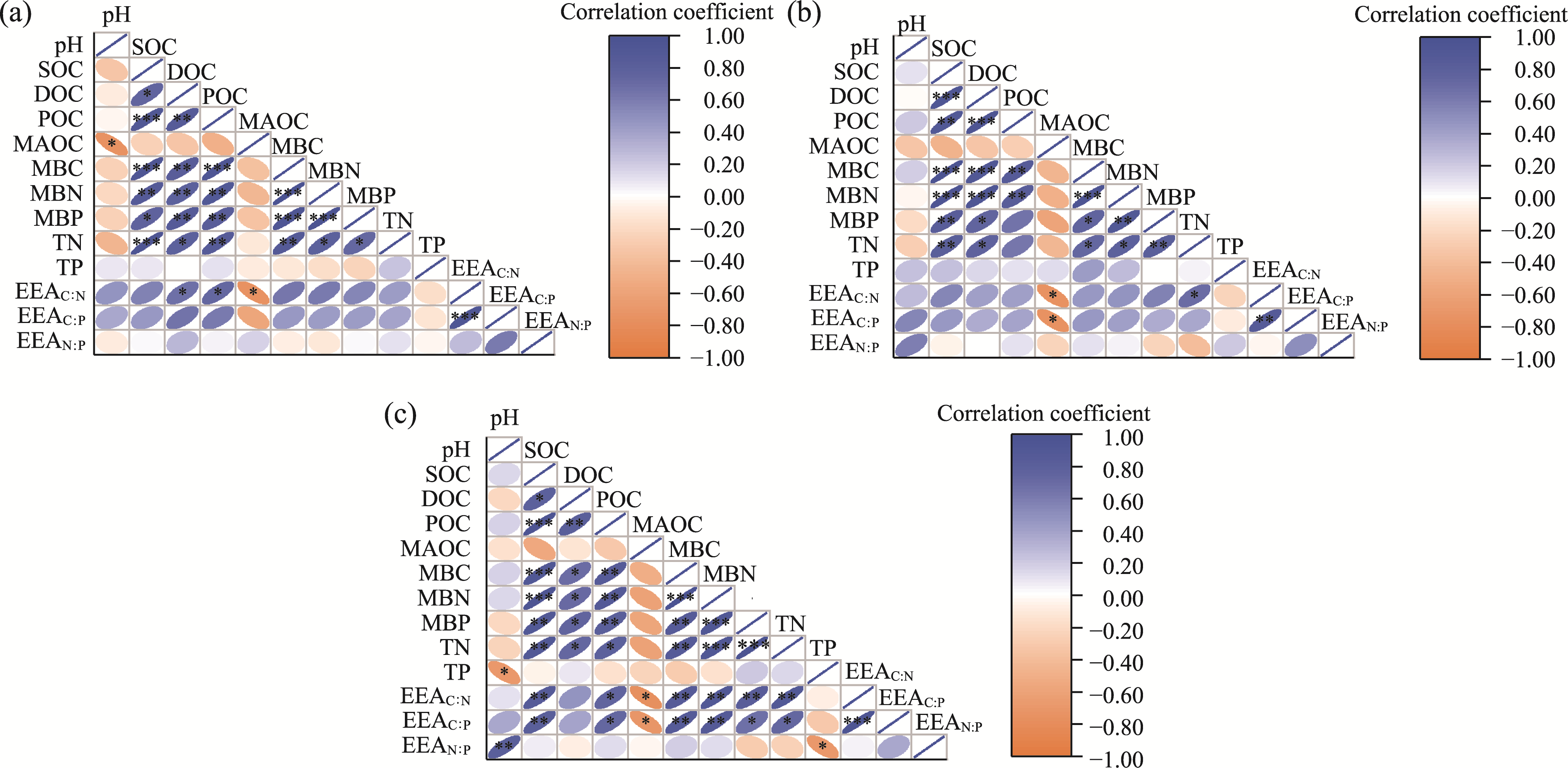
Fig. 6Correlation analysis between the soil EEA stoichiometric ratios and soil physicochemical properties in the 0-10 cm (a), 10-20 cm (b), and 20-30 cm (c) soil layers. *, significance at P<0.050 level; **, significance at P<0.010 level; ***, significance at P<0.001 level.
Fig. 7Model diagram of variations in soil properties and EEAs along a sea buckthorn plantation age gradient. The blue arrow indicates an increase in the content and the orange arrow indicates no change in the content; the yellow arrow indicates the process of action of organic carbon (OC), TN, and TP; and the green arrow indicates the process of action of MBC, MBN, and MBP.
Organic carbon accumulation type
Study area
Mechanism
Reference
Input of exogenous organic carbon and other organic materials
Jiangsu Province, China
Enhancing soil carbon sequestration potential through the input of exogenous organic carbon
Jin et al. (2024)
Xiji County, China
Improving SOC stability via exogenous carbon-enhanced enzyme activities
Qi et al. (2025)
Physicochemical properties of plant inputs
Southern China
Increasing significantly SOC content through the addition of soil nutrients
Wu et al. (2025)
Heilongjiang Province, China
Improving SOC through the release of root exudates into the soil
Zhang et al. (2022)
Pathways of soil organic matter formation
Africa, Asia, Australia, Europe, North America, and South America
Contributing to soil organic matter formation via microbial necrotic biomass inputs
Shahbaz et al. (2017)
Table S1 Studies on the sources of organic carbon
Indicator
0-10 cm soil layer
10-20 cm soil layer
20-30 cm soil layer
pH
8.68±0.45
8.92±0.45
8.92±0.27
DOC (mg/kg)
26.31±0.61
23.64±3.33
20.47±0.82
SOC (g/kg)
2.85±0.30
2.22±0.17
2.39±0.64
POC (g/kg)
1.86±0.09
1.64±0.18
1.68±0.27
MAOC (g/kg)
0.94±0.06
0.59±0.07
0.72±0.11
TN (g/kg)
0.23±0.01
0.21±0.05
0.24±0.08
TP (g/kg)
0.82±0.02
0.68±0.04
0.67±0.05
MBC (mg/kg)
51.21±3.92
35.84±3.40
34.41±3.58
MBN (mg/kg)
3.67±0.24
2.50±0.35
2.28±0.26
MBP (mg/kg)
1.83±0.20
1.22±0.17
1.16±0.13
Table S2 Physicochemical properties of the 0-30 cm soil layer in the Gobi Desert
[1]
Abay P, Gong L, Luo Y, et al. 2024. Soil extracellular enzyme stoichiometry reveals the nutrient limitations in soil microbial metabolism under different carbon input manipulations. Science of The Total Environment, 913: 169793, doi: 10.1016/j.scitotenv.2023.169793.
[2]
Bi Y L, Guo N, Zhang Y X, et al. 2024. Responses of soil stoichiometry and soil enzyme activities in the different distance around opencast coal mine of the Hulun Buir Grassland of China. International Journal of Coal Science and Technology, 11(1): 221-231.
[3]
Cambardella C A, Elliott E T. 1993. Methods for physical separation and characterization of soil organic matter fractions. Geoderma, 56(1-4): 449-457.
doi: 10.1016/0016-7061(93)90126-6
[4]
Chen Y M, Liu G B, Xu B C. 2005. Effects of artificial seabuckthorn forest on soil and water conservation in loess hilly region. Chinese Journal of Applied Ecology, 16(4): 595-599. (in Chinese)
[5]
Cheng Y J, Du A P, Wang Z C, et al. 2023. Soil enzyme activity differs among native species and continuously planted eucalyptus plantations. Forests, 14(11): 2210, doi: 10.3390/f14112210.
[6]
Cong J X, Li G X, Han D X, et al. 2025. Historical variation in carbon fractions in permafrost peatland and its effects on peatland carbon pool. Land Degradation and Development, 36(7): 2303-2314.
doi: 10.1002/ldr.v36.7
[7]
Daunoras J, Kačergius A, Gudiukaitė R. 2024. Role of soil microbiota enzymes in soil health and activity changes depending on climate change and the type of soil ecosystem. Biology, 13(2): 85, doi: 10.3390/biology13020085.
[8]
Díaz F J, Sanchez-Hernandez J C, Notario J S. 2021. Effects of irrigation management on arid soils enzyme activities. Journal of Arid Environments, 185: 104330, doi: 10.1016/j.jaridenv.2020.104330.
[9]
Dong X G, Zhang Z Y, Liu Z W, et al. 2026. Litter mixture decomposition enhances the accumulation of soil active carbon and nitrogen in an alpine grassland. Frontiers in Microbiology, 17: 1801190, doi: 10.3389/fmicb.2026.1801190.
[10]
Feyissa A, Gurmesa G A, Yang F, et al. 2022. Soil enzyme activity and stoichiometry in secondary grasslands along a climatic gradient of subtropical China. Science of The Total Environment, 825: 154019, doi: 10.1016/j.scitotenv.2022.154019.
[11]
Galiano L, Timofeeva G, Saurer M, et al. 2017. The fate of recently fixed carbon after drought release: towards unravelling C storage regulation in Tilia platyphyllos and Pinus sylvestris. Plant, Cell & Environment, 40(9): 1711-1724.
[12]
Glaser B, Lehmann J, Zech W. 2002. Ameliorating physical and chemical properties of highly weathered soils in the tropics with charcoal—a review. Biology and Fertility of Soils, 35(4): 219-230.
doi: 10.1007/s00374-002-0466-4
[13]
Guo H, Tang W P. 2020. Enzyme activity and microbial community diversity in rhizosphere and non-rhizosphere of Larix principis-rupprechtiiEcology and Environmental Sciences, 29(11): 2163-2170. (in Chinese)
[14]
Hartmann M, Six J. 2023. Soil structure and microbiome functions in agroecosystems. Nature Reviews Earth and Environment, 4(1): 4-18.
doi: 10.1038/s43017-022-00366-w
[15]
Heidrich L, Bae S, Levick S, et al. 2020. Heterogeneity-diversity relationships differ between and within trophic levels in temperate forests. Nature Ecology and Evolution, 4(9): 1204-1212.
doi: 10.1038/s41559-020-1245-z
[16]
Jin W, Liu Z T, Cheng Z R, et al. 2024. External carbon addition alters soil photosynthetic carbon accumulation and rhizosphere processes of carbon. Applied Soil Ecology, 201: 105478, doi: 10.1016/j.apsoil.2024.105478.
[17]
Keenan S W, Emmons A L, DeBruyn J M. 2023. Microbial community coalescence and nitrogen cycling in simulated mortality decomposition hotspots. Ecological Processes, 12(1): 45, doi: 10.1186/s13717-023-00451-y.
[18]
Li T P, Wang R Z, Cai J P, et al. 2021. Enhanced carbon acquisition and use efficiency alleviate microbial carbon relative to nitrogen limitation under soil acidification. Ecological Processes, 10(1): 32, doi: 10.1186/s13717-021-00309-1.
[19]
Li X T, Xia K, Wu T X, et al. 2024. Increased precipitation has not enhanced the carbon sequestration of afforestation in Northwest China. Communications Earth and Environment, 5(1): 619, doi: 10.1038/s43247-024-01733-9.
[20]
Li Z, Dong N N, Hou L, et al. 2017. Characteristics of soil and litter organic carbon and total nitrogen in different age groups of Quercus aliena var. acuteserrata forests in the Qinling Mountains. Journal of Central South University of Forestry and Technology, 37(12): 127-132, 138. (in Chinese)
[21]
Ling J, Dungait J A J, Delgado-Baquerizo M, et al. 2025. Soil organic carbon thresholds control fertilizer effects on carbon accrual in croplands worldwide. Nature Communications, 16(1): 3009, doi: 10.1038/s41467-025-57981-6.
[22]
Liu J, Li H, Guo J Y, et al. 2019. Soil improvement of Hippophae rhamnoides under different forest ages in sandstone area based on gray correlation analysis. Bulletin of Soil and Water Conservation, 39(4): 127-133. (in Chinese)
[23]
Liu L, Guo Y F, Liu X Y, et al. 2023. Relationship between the roots of Hippophae rhamnoides at different stump heights and the root microenvironment in feldspathic sandstone areas. PeerJ, 11: e14819, doi: 10.7717/peerj.14819.
[24]
Ma F Y, He M Y, Wang M, et al. 2025. Assessing habitat suitability for Hippophae rhamnoides subsp. turkestanica amid climate change using the MaxEnt model. Forests, 16(3): 468, doi: 10.3390/f16030468.
[25]
Mao L, Miao Y G, Ge Y R, et al. 2024. Effects of different afforestation years on soil moisture and nutrient content in Maxian Mountain of the Loess Plateau. Scientific Reports, 14(1): 16194, doi: 10.1038/s41598-024-66408-z.
pmid: 39003320
[26]
Moreno J L, Bastida F, Díaz-López M, et al. 2022. Response of soil chemical properties, enzyme activities and microbial communities to biochar application and climate change in a Mediterranean agroecosystem. Geoderma, 407: 115536, doi: 10.1016/j.geoderma.2021.115536.
[27]
Mu C H, Li J Q, Huang F C, et al. 2025. Response of extracellular enzyme stoichiometric properties and microbial metabolic limitations to the ecosystem transition mode employed in red jujube economic forests on the Loess Plateau. Microorganisms, 13(4): 729, doi: 10.3390/microorganisms13040729.
[28]
Nannipieri P, Trasar-Cepeda C, Dick R P. 2018. Soil enzyme activity: a brief history and biochemistry as a basis for appropriate interpretations and meta-analysis. Biology and Fertility of Soils, 54: 11-19.
doi: 10.1007/s00374-017-1245-6
[29]
Qi H J, Lei J Y, He J Q, et al. 2025. Exogenous carbon type determines the structure and stability of soil organic carbon in dryland farmlands under a continental semi-arid climate. Agronomy, 15(6): 1425, doi: 10.3390/agronomy15061425.
[30]
Rajper A M, Willing B P, Cahill J F, et al. 2024. Drought and defoliation affect soil extracellular enzyme activity in northern temperate grasslands. Journal of Arid Environments, 223: 105197, doi: 10.1016/j.jaridenv.2024.105197.
[31]
Shahbaz M, Kuzyakov Y, Sanaullah M, et al. 2017. Microbial decomposition of soil organic matter is mediated by quality and quantity of crop residues: mechanisms and thresholds. Biology and Fertility of Soils, 53: 287-301.
doi: 10.1007/s00374-016-1174-9
[32]
Spohn M, Bagchi S, Biederman L A, et al. 2023. The positive effect of plant diversity on soil carbon depends on climate. Nature Communications, 14(1): 6624, doi: 10.1038/s41467-023-42340-0.
[33]
Sun Y, Chen X L. 2024. Differential responses of soil extracellular enzyme activity and stoichiometry to precipitation changes in a poplar plantation. Environmental Research, 241: 117565, doi: 10.1016/j.envres.2023.117565.
[34]
Tamchos S, Dorjey K. 2024. Hippophae rhamnoides subsp. turkestanica: a potential species for sustainable propagation in the cold desert of Ladakh. National Academy Science Letters, 48: 89-94.
doi: 10.1007/s40009-024-01431-2
[35]
Tian L H, Wu W Y, Zhou X, et al. 2019. The ecosystem effects of sand-binding shrub Hippophae rhamnoides in alpine semi-arid Desert in the northeastern Qinghai-Tibet Plateau. Land, 8(12): 183, doi: 10.3390/land8120183.
[36]
Wang C, Zhang W W, Li X N, et al. 2022. A global meta-analysis of the impacts of tree plantations on biodiversity. Global Ecology and Biogeography, 31(3): 576-587.
doi: 10.1111/geb.v31.3
[37]
Wang K, Mao X P, Yang J J, et al. 2024. Soil extracellular enzyme activity and microbial resource limitation exhibited close relationships with groundwater table decline in desert wetlands. CATENA, 236: 107754, doi: 10.1016/j.catena.2023.107754.
[38]
Williams G, Miller R, Deng S P. 2025. Dynamic relationships between microbial community, enzyme activity, and soil properties across global ecosystems. Applied Soil Ecology, 206: 105843, doi: 10.1016/j.apsoil.2024.105843.
[39]
Wu T, Guo J, Li G, et al. 2025. Soil organic carbon contents and their major influencing factors in mangrove tidal flats: a comparison between estuarine and non-estuarine areas. Ecological Processes, 14(1): 15, doi: 10.1186/s13717-025-00581-5.
[40]
Wu Z F, Chen H Y, Pan Y, et al. 2022. Genome of Hippophae rhamnoides provides insights into a conserved molecular mechanism in actinorhizal and rhizobial symbioses. New Phytologist, 235(1): 276-291.
doi: 10.1111/nph.v235.1
[41]
Xu Z W, Yu G R, Zhang X Y, et al. 2017. Soil enzyme activity and stoichiometry in forest ecosystems along the North-South Transect in eastern China (NSTEC). Soil Biology and Biochemistry, 104: 152-163.
doi: 10.1016/j.soilbio.2016.10.020
[42]
Yang K Q, Zhang Z A, Tang M, et al. 2024. Seabuckthorn (Hippophae rhamnoides L.) plantation degradation aggravates microbial metabolic C and P limitations on the Northern Loess Plateau in China. Science of The Total Environment, 945: 174088, doi: 10.1016/j.scitotenv.2024.174088.
[43]
Yang T, Zhang H R, Zheng C H, et al. 2023. Bacteria life-history strategies and the linkage of soil C-N-P stoichiometry to microbial resource limitation differed in karst and non-karst plantation forests in southwest China. CATENA, 231: 107341, doi: 10.1016/j.catena.2023.107341.
[44]
Yang Y, Liang C, Wang Y Q, et al. 2020. Soil extracellular enzyme stoichiometry reflects the shift from P- to N-limitation of microorganisms with grassland restoration. Soil Biology and Biochemistry, 149(1): 107928, doi: 10.1016/j.soilbio.2020.107928.
[45]
Yang Z A, Zhu Q A, Zhan W, et al. 2018. The linkage between vegetation and soil nutrients and their variation under different grazing intensities in an alpine meadow on the eastern Qinghai-Tibetan Plateau. Ecological Engineering, 110: 128-136.
doi: 10.1016/j.ecoleng.2017.11.001
[46]
Yao Y, Dong L J, Fu X H, et al. 2022. HrTCP 20 dramatically enhance drought tolerance of sea buckthorn (Hippophae rhamnoides L.) by mediating the JA signaling pathway. Plant Physiology and Biochemistry, 174: 51-62.
doi: 10.1016/j.plaphy.2022.01.026
[47]
Yi J, Zeng Q C, Mei T Y Z, et al. 2022. Disentangling drivers of soil microbial nutrient limitation in intensive agricultural and natural ecosystems. Science of The Total Environment, 806: 150555, doi: 10.1016/j.scitotenv.2021.150555.
[48]
You M Y, Guo D K, Shi H A, et al. 2025. Microbial nutrient limitations and chemical composition of soil organic carbon regulate the organic carbon mineralization and temperature sensitivity in forest and grassland soils. Plant and Soil, 514(1): 459-476.
doi: 10.1007/s11104-025-07408-4
[49]
Zeng J, Li X Y, Jian J N, et al. 2024. Differences in the regulation of soil carbon pool quality and stability by leaf-litter and root-litter decomposition. Environmental Research, 263: 120285, doi: 10.1016/j.envres.2024.120285.
[50]
Zhang A M, Yin Y R, Sun K. 2020. Research progress in Frankia spp. associated with Hippophae L. Microbiology China, 47(11): 3933-3944. (in Chinese)
[51]
Zhang C, Zhou X H, Wang X Y, et al. 2022. Elaeagnus angustifolia can improve salt-alkali soil and the health level of soil: emphasizing the driving role of core microbial communities. Journal of Environmental Management, 305: 114401, doi: 10.1016/j.jenvman.2021.114401.
[52]
Zhao Y Y, Zhu Y M, Feng S L, et al. 2024. The impact of temperature on cotton yield and production in Xinjiang, China. npj Sustainable Agriculture, 2: 33, doi: 10.1038/s44264-024-00043-z.
[53]
Zhou J, Loeppmann S, Yang H S, et al. 2025. Linking microbial community dynamics to rhizosphere carbon flow depend on arbuscular mycorrhizae and nitrogen fertilization. Biology and Fertility of Soils, 61: 791-804.
doi: 10.1007/s00374-025-01897-2
[54]
Zhu E X, Liu T, Zhou L, et al. 2020. Leaching of organic carbon from grassland soils under anaerobiosis. Soil Biology and Biochemistry, 141: 107684, doi: 10.1016/j.soilbio.2019.107684.
[55]
Zhu E X, Liu Z G, Ma L X, et al. 2024. Enhanced mineral preservation rather than microbial residue production dictates the accrual of mineral-associated organic carbon along a weathering gradient. Geophysical Research Letters, 51(6): e2024GL108466, doi: 10.1029/2024GL108466.