Predicting ecological regulators of thymol and carvacrol biosynthesis in Oliveria decumbens Vent. using a hybrid ensemble machine learning model (RF+SVR-RBF) in arid regions of Iran
Emran DASTRES1,2, Hassan ESMAEILI1,*()
1Department Agriculture, Medicinal Plants and Drugs Research Institute, Shahid Beheshti University, Tehran 1983969411, Iran 2Department of Plant Production and Genetics, School of Agriculture, Shiraz University, Shiraz 7188637911, Iran
Dryland ecosystems, encompassing arid to semi-arid regions, impose strong climatic and edaphic constraints that profoundly shape plant functional traits and secondary metabolism. Understanding how environmental factors regulate phytochemical biosynthesis is essential for biodiversity conservation and sustainable resource management under increasing aridity. Oliveria decumbens Vent., an endemic medicinal species of the drylands of Fars Province, Iran, provides an excellent model for exploring the ecological determinants of metabolite variability in water-limited habitats. We integrated ecological predictors with machine learning to model the spatial variation of thymol and carvacrol concentrations across 59 georeferenced populations of O. decumbens. Three predictive models—Random Forest (RF), Support Vector Regression (SVR) with a Radial Basis Function (RBF) kernel (SVR-RBF), and a hybrid ensemble (RF+SVR-RBF)—were developed and evaluated. Model performance was quantified using root mean squared error (RMSE), mean absolute error (MAE), coefficient of determination (R2), and the concordance correlation coefficient (CCC). Generalized Linear Model (GLM) was applied to identify key environmental variables regulating metabolite biosynthesis. The hybrid ensemble consistently outperformed individual model, achieving the highest predictive accuracy (R2=0.82 for thymol and R2=0.80 for carvacrol). Spatial mapping revealed pronounced heterogeneity in metabolite distribution, with distinct functional hotspots in the northern and western semi-arid regions of Fars Province. GLM analysis indicated that mean annual temperature, slope aspect, slope degree, and sand content were strong positive predictors of thymol and carvacrol accumulation, whereas high soil potassium, clay percentage, and alkaline pH constrained metabolite production. This study shows that hybrid ensemble modeling effectively captures how environmental gradients regulate secondary metabolism in dryland plants. The proposed framework, combining RF with SVR-RBF, is transferable across arid environments. These findings support trait-based ecological predictions and offer practical insights for conservation and sustainable cultivation of high-value medicinal plants in water-limited ecosystems.
Received: 07 November 2025
Published: 31 August 2026
Emran DASTRES, Hassan ESMAEILI. Predicting ecological regulators of thymol and carvacrol biosynthesis in Oliveria decumbens Vent. using a hybrid ensemble machine learning model (RF+SVR-RBF) in arid regions of Iran. Journal of Arid Land, 2026, 18(8): 1425-1445.
Fig. 1Oliveria decumbens Vent. distribution in Fars Province, Iran
Fig. 2Flowchart illustrating the modeling process. GC, gas chromatography; GC-MS, gas chromatography- mass spectrometry; VIF, variance inflation factor; GLM, Generalized Linear Model; RMSE, root mean square error; MAE, mean absolute error; CCC, concordance correlation coefficient; RF, Random Forest; SVR-RBF, Support Vector Regression with Radial Basis Function kernel; EC, electrical conductivity; K, potassium; N, nitrogen; P, phosphorus; OM, organic matter.
Fig. 3Classified raster map depicting 18 environmental influencing factors. (a), elevation; (b), slope degree; (c), slope aspect; (d), plan curvature; (e), profile curvature; (f), EC (electrical conductivity); (g), pH; (h), K (potassium); (i), N (nitrogen); (j), OM (organic matter); (k), P (phosphorus); (l), clay; (m), sand; (n), silt; (o), mean annual precipitation; (p), mean annual temperature; (q), distance from rivers; (r), distance from roads.
Fig. 4Medicinal plant O. decumbens (a) and chemical structure of its main compounds, including thymol and carvacrol (b)
Variable
TOL
VIF
Variable
TOL
VIF
Slope aspect
0.67
1.49
EC
0.59
1.78
Slope degree
0.76
1.12
N
0.33
3.74
Elevation
0.56
2.02
K
0.48
3.01
Profile curvature
0.97
1.02
P
0.21
4.78
Plan curvature
0.89
1.09
OM
0.26
3.92
Silt
0.28
4.05
Mean annual temperature
0.29
4.12
Sand
0.37
3.56
Mean annual precipitation
0.32
4.01
Clay
0.45
3.09
Distance from roads
0.43
3.19
pH
0.29
4.01
Distance from rivers
0.52
2.87
Table 1 Collinearity test of independent variables
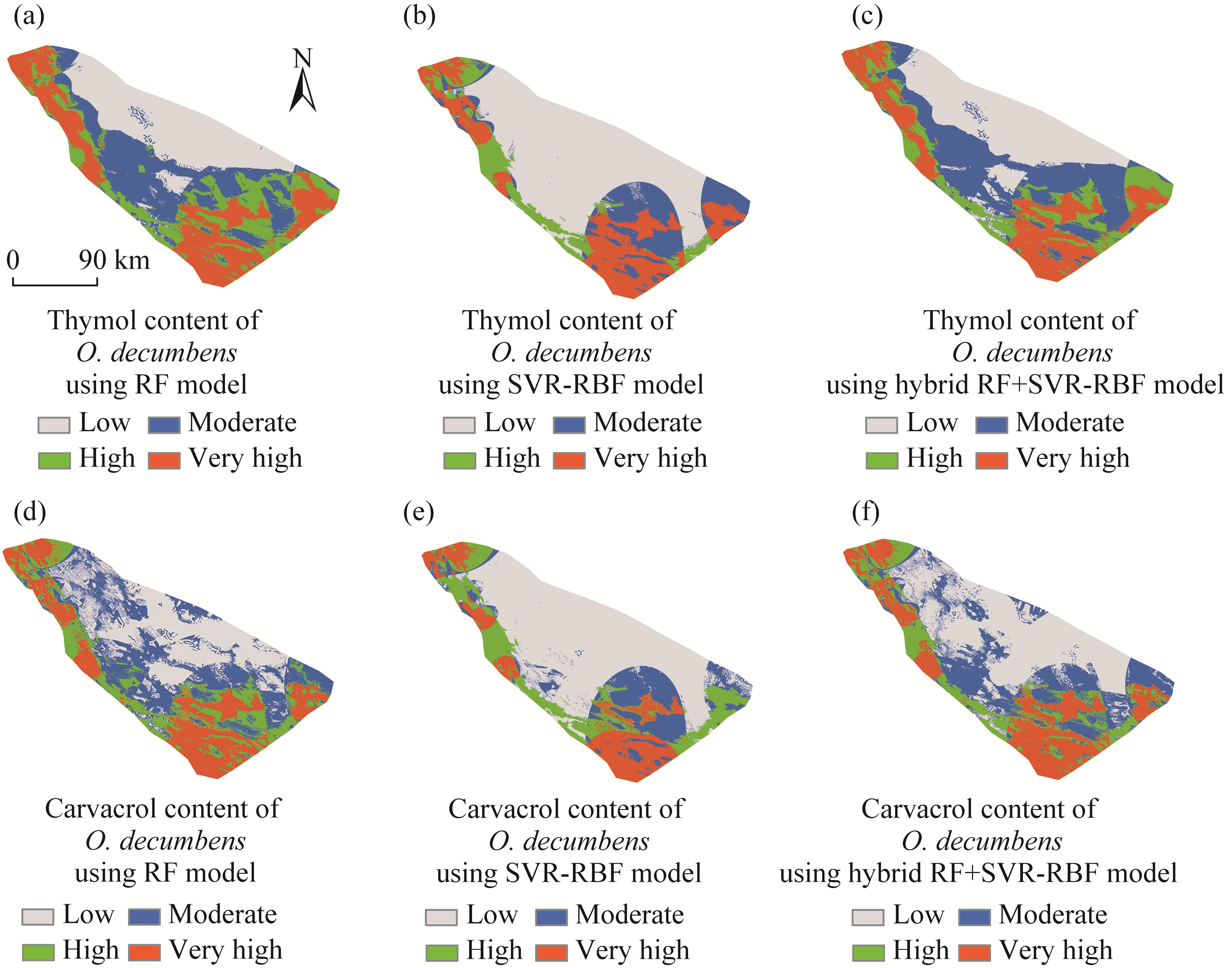
Fig. 5Spatial prediction of thymol (a-c) and carvacrol (d-f) contents in O. decumbens using RF, SVR-RBF, and hybrid RF+SVR-RBF models based on current environmental conditions
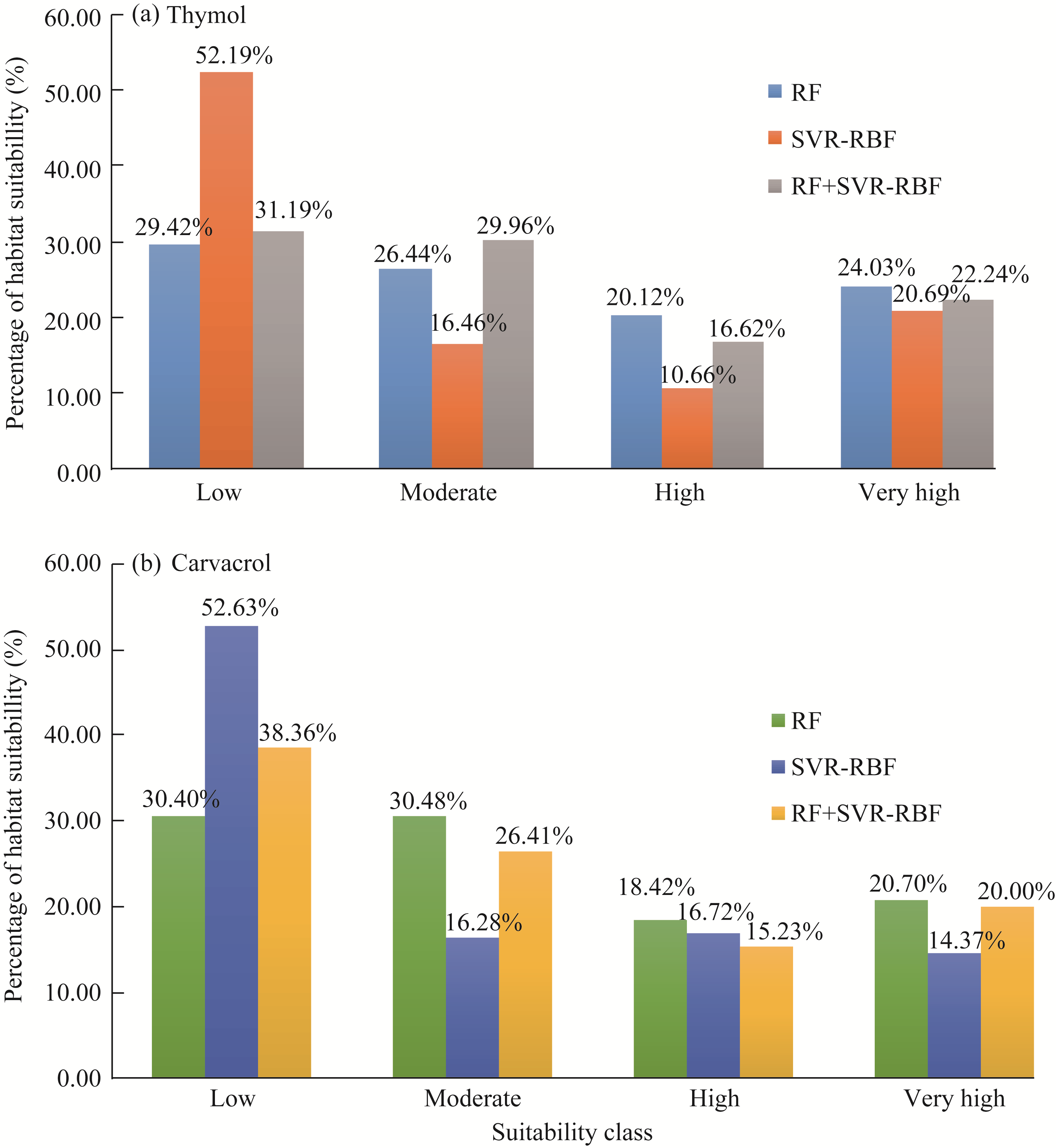
Fig. 6Percentage of habitat suitability of thymol (a) and carvacrol (b) for each suitability class
Model
Classification
Area (km2)
Thymol
Carvacrol
RF
Low
11,837.64
12,232.28
Moderate
10,638.40
12,265.54
High
8096.37
7412.74
Very high
9668.88
8330.73
SVR-RBF
Low
21,001.44
21,179.25
Moderate
6624.14
6551.71
High
4288.34
6728.24
Very high
8327.37
5782.08
RF+SVR-RBF
Low
12,551.09
15,438.29
Moderate
12,055.18
10,626.60
High
6687.24
6128.43
Very high
8947.78
8047.96
Table 2 Area optimal habitat of O. decumbens for the maximum production of thymol and carvacrol
Essential oil
Model
RMSE
MAE
R2
CCC
Thymol
RF
0.019
0.015
0.74
0.81
SVR-RBF
0.021
0.017
0.68
0.76
RF+SVR-RBF
0.015
0.012
0.82
0.88
Carvacrol
RF
0.020
0.016
0.72
0.79
SVR-RBF
0.022
0.018
0.66
0.74
RF+SVR-RBF
0.016
0.013
0.80
0.86
Table 3 Predictive performance of RF, SVR-RBF, and their hybrid RF+SVR-RBF model for thymol and carvacrol concentrations
Model comparison
ΔRMSE
Significant
ΔMAE
Significant
RF+SVR-RBF vs. RF
0.004
Significant
0.003
Marginal
RF+SVR-RBF vs. SVR-RBF
0.006
Significant
0.005
Significant
RF vs. SVR-RBF
0.002
Not significant
0.002
Not significant
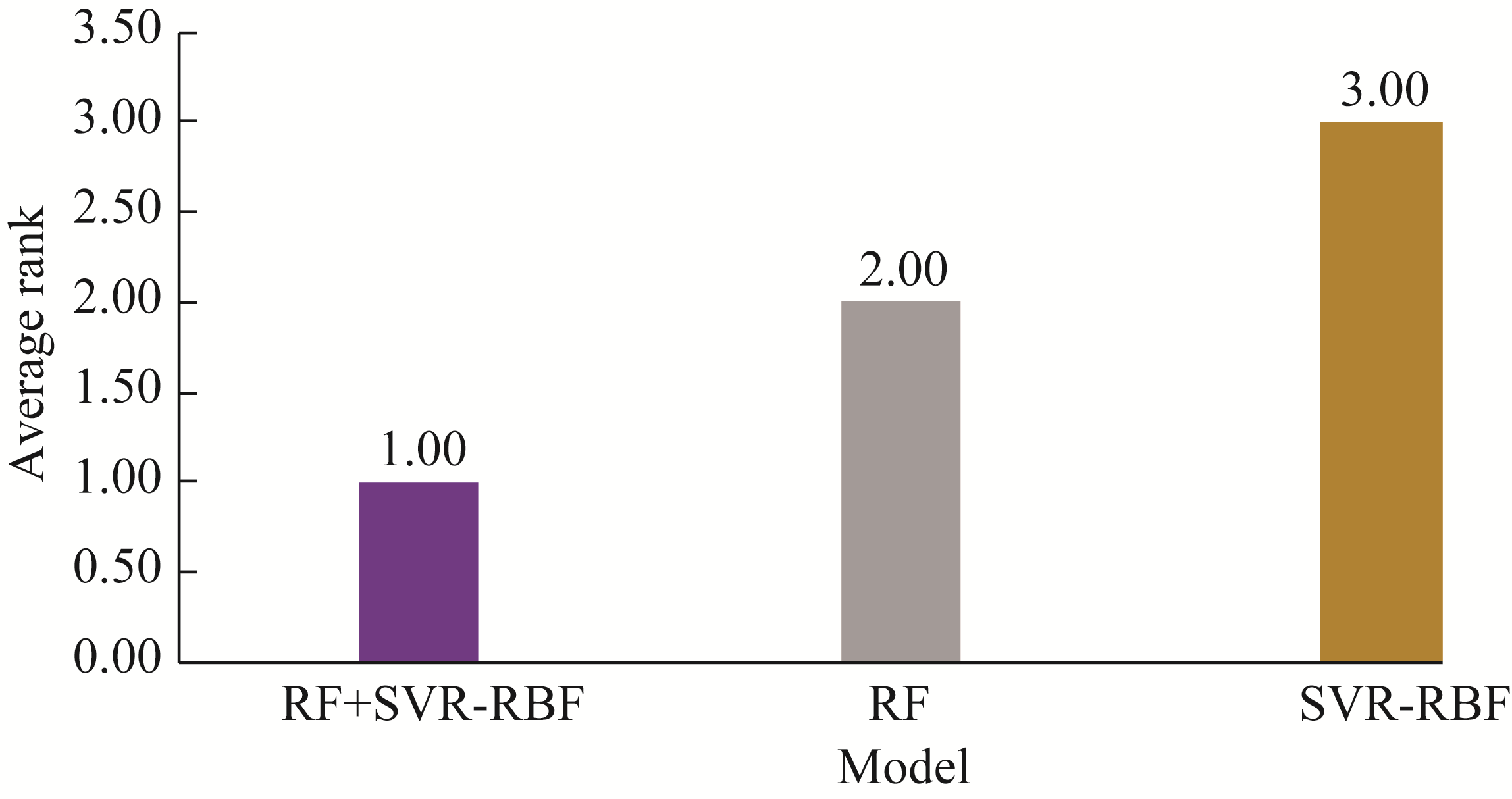
Table 4 Statistical comparison of model performance based on the Critical Difference (CD) test
Fig. 7Statistical comparison of model performance based on the Critical Difference (CD) test
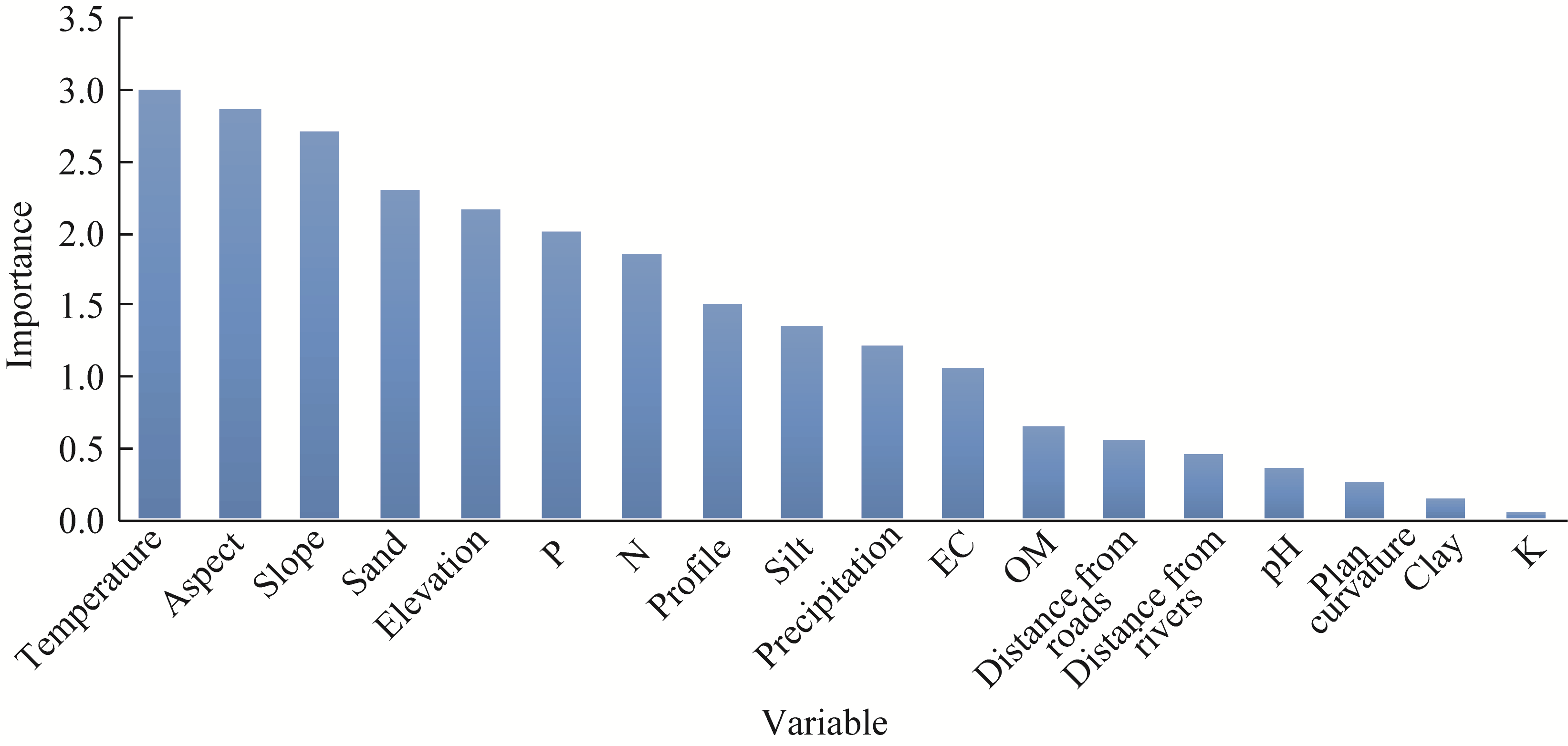
Fig. 8Importance of environmental variables based on generalized linear model (GLM)
[1]
Adams R P. 2017. Identification of Essential Oil Components by Gas Chromatography/Mass Spectrometry (4th ed.). Carol Stream: Allured Publishing.
[2]
Ahmed N, Atzberger C, Zewdie W. 2021. Species distribution modelling performance and its implication for Sentinel-2-based prediction of invasive Prosopis juliflora in lower Awash River basin, Ethiopia. Ecological Processes, 10(1): 8, doi: 10.1186/s13717-021-00285-6.
[3]
AlHamaydeh M, Al-Shamsi G, Aly N, et al. 2021. Seismic risk quantification and GIS-based seismic risk maps for Dubai-UAE_Dataset. Data in Brief, 39: 107566, doi: 10.1016/j.dib.2021.107566.
[4]
Amatulli G, Domisch S, Tuanmu M N, et al. 2018. A suite of global, cross-scale topographic variables for environmental and biodiversity modeling. Scientific Data, 5: 180040, doi: 10.1038/sdata.2018.40.
[5]
Azizi K, Soltani Z, Aliakbarpour M, et al. 2022. Bionomics of phlebotomine sand flies in different climates of leishmaniasis in Fars Province, southern Iran. Journal of Arthropod-Borne Diseases, 16(2): 148-161.
doi: 10.18502/jad.v16i2.11805
pmid: 37038508
[6]
Balkrishna A, Sharma N, Srivastava D, et al. 2024. Exploring the safety, efficacy, and bioactivity of herbal medicines: Bridging traditional wisdom and modern science in healthcare. Future Integrative Medicine, 3(1): 35-49.
doi: 10.14218/FIM.2023.00086
[7]
Benito P, Bellón J, Porcel R, et al. 2023. The biostimulant, potassium humate ameliorates abiotic stress in Arabidopsis thaliana by increasing starch availability. International Journal of Molecular Sciences, 24(15): 12140, doi: 10.3390/ijms241512140.
[8]
Boveiri Dehsheikh A, Mahmoodi Sourestani M, Enayatizamir N, et al. 2024. Oliveria decumbens, a long-neglected plant with promising phytochemical and biological properties. Chemistry & Biodiversity, 21: e202400810, doi: 10.1002/cbdv.202400810.
[9]
Capitani M, Ribolini A, Bini M. 2013. The slope aspect: A predisposing factor for landsliding? Comptes Rendus Geoscience, 345(11-12): 427-438.
doi: 10.1016/j.crte.2013.11.002
[10]
Catucci E, Scardi M. 2020. A machine learning approach to the assessment of the vulnerability of Posidonia oceanica meadows. Ecological Indicators, 108: 105744, doi: 10.1016/j.ecolind.2019.105744.
[11]
Chen X Y, Jiang Z H, Tai Q L, et al. 2022. Construction of a photosynthetic rate prediction model for greenhouse strawberries with distributed regulation of light environment. Mathematical Biosciences and Engineering, 19(12): 12774-12791.
doi: 10.3934/mbe.2022596
pmid: 36654021
[12]
Cheng J H, Sun J, Yao K S, et al. 2022. A variable selection method based on mutual information and variance inflation factor. Spectrochimica Acta Part A: Molecular and Biomolecular Spectroscopy, 268: 120652, doi: 10.1016/j.saa.2021.120652.
[13]
Chu H J, Chen Y C, Ali M Z, et al. 2019. Multi-parameter relief map from high-resolution DEMs: A case study of mudstone badland. International Journal of Environmental Research and Public Health, 16(7): 1109, doi: 10.3390/ijerph16071109.
[14]
Coley R Y, Liao Q Q, Simon N, et al. 2023. Empirical evaluation of internal validation methods for prediction in large-scale clinical data with rare-event outcomes: A case study in suicide risk prediction. BMC Medical Research Methodology, 23(1): 33, doi: 10.1186/s12874-023-01844-5.
[15]
Das S, Patel P P, Sengupta S. 2016. Evaluation of different digital elevation models for analyzing drainage morphometric parameters in a mountainous terrain: A case study of the Supin-Upper Tons Basin, Indian Himalayas. SpringerPlus, 5: 1544, doi: 10.1186/s40064-016-3207-0.
pmid: 27652117
[16]
Dastres E, Edalat M, Moayedi G, et al. 2022. An evaluation of alternative statistical models for predicting habitat suitability for weeds. Weed Research, 62(6): 404-421.
doi: 10.1111/wre.v62.6
[17]
Dastres E, Jahangiri E, Edalat M, et al. 2023. Habitat suitability modeling of Descurainia sophia medicinal plant using three bivariate models. Environmental Monitoring and Assessment, 195(3): 392, doi: 10.1007/s10661-023-10996-2.
[18]
Dastres E, Esmaeili H, Edalat M. 2025a. Species distribution modeling of Malva neglecta Wallr. weed using ten different machine learning algorithms: An approach to site-specific weed management (SSWM). European Journal of Agronomy, 167: 127579, doi: 10.1016/j.eja.2025.127579.
[19]
Dastres E, Esmaeili H, Sonboli A, et al. 2025b. Optimizing cultivation areas for Salvia leriifolia using advanced spatial prediction and hybrid machine learning algorithms for maximum bioactive compound yield. Smart Agricultural Technology, 12: 101482, doi: 10.1016/j.atech.2025.101482.
[20]
Dastres E, Rabiei-Dastjerdi H, Esmaeili H, et al. 2025c. Modeling habitat suitability for endangered herb (Salvia leriifolia Benth) using innovative hybrid machine learning algorithms. Environmental and Sustainability Indicators, 26: 100694, doi: 10.1016/j.indic.2025.100694.
[21]
Dastres E, Sarvestani G S, Edalat M, et al. 2025d. Habitat suitability modeling of dominant weed in rapeseed (Brassica napus) fields using machine learning techniques. Weed Science, 73: e35, doi: 10.1017/wsc.2025.5.
[22]
Dastres E, Sonboli A, Esmaeili H, et al. 2025e. Predicting nepetalactone accumulation in Nepeta persica using machine learning algorithms and geospatial analysis. Scientific Reports, 15: 31535, doi: 10.1038/s41598-025-17039-5.
[23]
de Santana F B, de Souza A M, Poppi R J. 2019. Green methodology for soil organic matter analysis using a national near infrared spectral library in tandem with learning machine. Science of The Total Environment, 658: 895-900.
doi: 10.1016/j.scitotenv.2018.12.263
[24]
Deák B, Botta-Dukát Z, Rádai Z, et al. 2024. Meso-scale environmental heterogeneity drives plant trait distributions in fragmented dry grasslands. Science of The Total Environment, 947: 174355, doi: 10.1016/j.scitotenv.2024.174355.
[25]
Elshaboury N, Elmousalami H. 2025. Wind speed and power forecasting using Bayesian optimized machine learning models in Gabal Al-Zayt, Egypt. Scientific Reports, 15(1): 28500, doi: 10.1038/s41598-025-13140-x.
[26]
Esmaeili H, Karami A, Maggi F. 2018. Essential oil composition, total phenolic and flavonoids contents, and antioxidant activity of Oliveria decumbens Vent. (Apiaceae) at different phenological stages. Journal of Cleaner Production, 198: 91-95.
doi: 10.1016/j.jclepro.2018.07.029
[27]
Forti M, Lavie Y, Ben-Dov Y, et al. 2006. Long-term plant survival and development under dryland conditions in an experimental site in the semi-arid Negev of Israel. Journal of Arid Environments, 65(1): 1-28.
doi: 10.1016/j.jaridenv.2005.11.011
[28]
Hassanpouraghdam M B, Ghorbani H, Esmaeilpour M, et al. 2022. Diversity and distribution patterns of endemic medicinal and aromatic plants of Iran: Implications for conservation and habitat management. International Journal of Environmental Research and Public Health, 19(3): 1552, doi: 10.3390/ijerph19031552.
[29]
He B H, Ma S G, Zhang X Y, et al. 2023. Rank-based greedy model averaging for high-dimensional survival data. Journal of the American Statistical Association, 118(544): 2658-2670.
doi: 10.1080/01621459.2022.2070070
pmid: 39552724
[30]
Hesami M, Jones A M P. 2020. Application of artificial intelligence models and optimization algorithms in plant cell and tissue culture. Applied Microbiology and Biotechnology, 104(23): 9449-9485.
doi: 10.1007/s00253-020-10888-2
[31]
Hill R D, de Castro J, Mira M M, et al. 2023. Over-expression of the barley Phytoglobin 1 (HvPgb1) evokes leaf-specific transcriptional responses during root waterlogging. Journal of Plant Physiology, 283: 153944, doi: 10.1016/j.jplph.2023.153944.
[32]
Ibrahimi H, Mohammadi H, Ghaderi E, et al. 2024. A new Drusinae (Trichoptera: Limnephilidae) species from the Zagros Mountains in the Kurdistan Province, Iran. Zootaxa, 5406(3): 451-460.
doi: 10.11646/zootaxa.5406.3.4
pmid: 38480140
[33]
Ji J C, Wei X X, Guan H, et al. 2025. Evaluation of the impact of ecological factors on the habitat suitability and bioactive components accumulation of the medicinal holoparasitic plant Cynomorium songaricum using machine learning models. Frontiers in Plant Science, 16: 1586682, doi: 10.3389/fpls.2025.1586682.
[34]
Karami A, Khoshbakht T, Esmaeili H, et al. 2020. Essential oil chemical variability in Oliveria decumbens (Apiaceae) from different regions of Iran and its relationship with environmental factors. Plants, 9(5): 680, doi: 10.3390/plants9050680.
[35]
Karim M R, Ahmed S, Reza M N, et al. 2024. Geometric feature characterization of apple trees from 3D LiDAR point cloud data. Journal of Imaging, 11(1): 5, doi: 10.3390/jimaging11010005.
[36]
Keshtegar B, Yaseen Z M. 2022. Reinforcing bar development length modeling using integrative support vector regression model with response surface method: New approach. ISA Transactions, 128: 423-434.
doi: 10.1016/j.isatra.2021.10.010
[37]
Khan M O, Klamerus-Iwan A, Kupka D, et al. 2023. Short-term impact of different doses of spent coffee grounds, salt, and sand on soil chemical and hydrological properties in an urban soil. Environmental Science and Pollution Research, 30(36): 86218-86231.
doi: 10.1007/s11356-023-28386-z
[38]
Li Z Y, Zheng L, ZHENG Z Z, et al. 2025. A new method for turbidity removal and decolorization in the determination of available phosphorus using sodium bicarbonate leaching. Rock and Mineral Analysis, 44(6): 1192-1202. (in Chinese)
[39]
Li Y K. 2018. Determining topographic shielding from digital elevation models for cosmogenic nuclide analysis: A GIS model for discrete sample sites. Journal of Mountain Science, 15(5): 939-947.
doi: 10.1007/s11629-018-4895-4
[40]
Liu F G, Chen Z R, Xu J, et al. 2024. Interpretable machine learning-based influence factor identification for 3D printing process-structure linkages. Polymers, 16(18): 2680, doi: 10.3390/polym16182680.
[41]
Majeed M. 2017. Evidence-based medicinal plant products for the health care of world population. Annals of Phytomedicine, 6(1): 1-4.
[42]
Måren I E, Karki S, Prajapati C, et al. 2015. Facing north or south: Does slope aspect impact forest stand characteristics and soil properties in a semiarid trans-Himalayan valley? Journal of Arid Environments, 121: 112-123.
doi: 10.1016/j.jaridenv.2015.06.004
[43]
McCoy D, Hubbard A, Van der Laan M. 2023. CVtreeMLE: Efficient estimation of mixed exposures using data adaptive decision trees and cross-validated targeted maximum likelihood estimation in R. Journal of Open Source Software, 8(82): 4181, doi: 10.21105/joss.04181.
[44]
Moreno-Jiménez E, Plaza C, Saiz H, et al. 2019. Aridity and reduced soil micronutrient availability in global drylands. Nature Sustainability, 2(5): 371-377.
doi: 10.1038/s41893-019-0262-x
pmid: 31111102
[45]
Mousavi S S, Karami A, Haghighi T M, et al. 2023. Phytochemistry of Oliveria decumbens Vent. (Apiaceae) and its therapeutic potential: A systematic review. Fitoterapia, 170: 105647, doi: 10.1016/j.fitote.2023.105647.
[46]
Mu K L, Ran F, Feng Y Q, et al. 2025. Integrated evaluation of habitat suitability and spatial prediction of medicinal quality for Bletilla striata using species distribution models and machine learning approaches. Industrial Crops and Products, 236: 121937, doi: 10.1016/j.indcrop.2025.121937.
[47]
Mwendwa S. 2022. Revisiting soil texture analysis: Practices towards a more accurate Bouyoucos method. Heliyon, 8(5): e09395, doi: 10.1016/j.heliyon.2022.e09395.
[48]
Najar B, Pistelli L, Fratini F. 2022. Exploitation of marginal hilly land in Tuscany through the cultivation of Lavandula angustifolia Mill.: Characterization of its essential oil and antibacterial activity. Molecules, 27(10): 3216, doi: 10.3390/molecules27103216.
[49]
Park S H, Jang J Y, Lim H, et al. 2025. Ecological dynamics of volatile organic compound-mediated interactions in Aristolochia contorta with parasitoids and herbivores. Ecology and Evolution, 15(1): e71175, doi: 10.1002/ece2.71175.
[50]
Pintar A L, Levine Z H, Yoon H W, et al. 2023. Linearity characterization and uncertainty quantification of spectroradiometers via maximum likelihood and the non-parametric bootstrap. Metrologia, 60(1): 015002, doi: 10.1088/1681-7575/acb5f8.
[51]
Rather T A, Kumar S, Khan J A. 2020. Multi-scale habitat modelling and predicting change in the distribution of tiger and leopard using random forest algorithm. Scientific Reports, 10(1): 11473, doi: 10.1038/s41598-020-68167-z.
pmid: 32651414
[52]
Regasa A, Haile W, Abera G. 2024. Assessment of soil acidity and fertility status under different land uses types in Sayo District of Western Ethiopia. Russian Agricultural Sciences, 50(2): 172-184.
doi: 10.3103/S1068367424700137
[53]
Rout S, Kumar R V, Sachan K. 2023. Flora diversity and conservation status of medicinal plants: Insights from a semi-arid to sub-humid subtropical region. Plant Science Archives, 8(4): 23-25.
doi: 10.51470/PSA
[54]
Saha A K, Agrawal S. 2020. Mapping and assessment of flood risk in Prayagraj district, India: A GIS and remote sensing study. Nanotechnology for Environmental Engineering, 5(1): 11, doi: 10.1007/s41204-020-00073-1.
[55]
Selassie Y G, Molla E, Muhabie D, et al. 2020. Response of crops to fertilizer application in volcanic soils. Heliyon, 6(12): e05629, doi: 10.1016/j.heliyon.2020.e05629.
[56]
Shahjaman M, Rahman M R, Islam T, et al. 2021. rMisbeta: A robust missing value imputation approach in transcriptomics and metabolomics data. Computers in Biology and Medicine, 138: 104911, doi: 10.1016/j.compbiomed.2021.104911.
[57]
Singh D K, Singh A, Gacem A, et al. 2023. Multiple site dissimilarities of herbaceous species due to coal fly ash dumping based soil heavy metal toxication. Toxics, 11(2): 90, doi: 10.3390/toxics11020090.
[58]
Singhal R, Izquierdo P, Ranaweera T, et al. 2025. Using supervised machine-learning approaches to understand abiotic stress tolerance and design resilient crops. Philosophical Transactions of the Royal Society B: Biological Sciences, 380(1927): 20240252, doi: 10.1098/rstb.2024.0252.
[59]
Spake R, Jackson E E, Bullock J M, et al. 2025. Precision ecology for targeted conservation action. Nature Ecology & Evolution, 9(7): 1102-1111.
[60]
Srivastava A K. 2018. Significance of medicinal plants in human life. In: Tewari A, Tiwari S. Synthesis of Medicinal Agents from Plants. Amsterdam: Elsevier, 1-24.
[61]
Sun Y M, Fernie A R. 2024. Plant secondary metabolism in a fluctuating world: Climate change perspectives. Trends in Plant Science, 29(5): 560-571.
doi: 10.1016/j.tplants.2023.11.008
[62]
Tang J Q, Wu H Y, Li Y Q, et al. 2025. The response microbial of the cucumber rhizosphere network keystone taxa of the cucumber rhizosphere to continuous fertilization. Microorganisms, 13(2): 451, doi: 10.3390/microorganisms13020451.
[63]
Toderean L, Daian M, Cioara T, et al. 2025. Heuristic based federated learning with adaptive hyperparameter tuning for households energy prediction. Scientific Reports, 15(1): 12564, doi: 10.1038/s41598-025-96443-3.
[64]
Troise A D, De Pascale S, Piluzza G, et al. 2025. Metabolite variations in Sulla shoots induced by drought stress. Journal of the Science of Food and Agriculture, 105(2): 1069-1079.
doi: 10.1002/jsfa.v105.2
[65]
Vilela A E, González-Paleo L, Ravetta D A. 2011. Secondary metabolites of woody plants from arid lands: Mechanisms involved, functions and uses. Ecología Austral, 21(3): 317-327.
[66]
Walton J C, Martinez-Gonzalez F, Worthington R. 2005. Desert vegetation and timing of solar radiation. Journal of Arid Environments, 60(4): 697-707.
doi: 10.1016/j.jaridenv.2004.07.016
[67]
Wan Y L, Yang Z X, Sun K L, et al. 2024. Micrometer groove array structures inspired by desert grasses on curved substrates for enhanced surface condensation efficiency. Langmuir, 40(38): 20035-20044.
doi: 10.1021/acs.langmuir.4c02272
[68]
Wang J F, Cai Q L. 2024. Nitrogen migration and transformation characteristics of the soil in Karst areas under the combined application of oxalic acid and urea inhibitors. Frontiers in Plant Science, 15: 1386912, doi: 10.3389/fpls.2024.1386912.
[69]
Wang J J, Zhou Q, Shang J L, et al. 2021. UAV- and machine learning-based retrieval of wheat SPAD values at the overwintering stage for variety screening. Remote Sensing, 13(24): 5166, doi: 10.3390/rs13245166.
[70]
Wang Y J, Jin C L, Ma L, et al. 2024. A robust TabNet-based multi-classification algorithm for infrared spectral data of Chinese herbal medicine with high-dimensional small samples. Journal of Pharmaceutical and Biomedical Analysis, 242: 116031, doi: 10.1016/j.jpba.2024.116031.
[71]
Wang Y, Dong J C, Zhou Y C, et al. 2025. Addressing the data scarcity problem in ecotoxicology via small data machine learning methods. Environmental Science & Technology, 59(12): 5867-5871.
doi: 10.1021/acs.est.5c00510
[72]
Warton D I, Hui F K. 2011. The arcsine is asinine: The analysis of proportions in ecology. Ecology, 92(1): 3-10.
pmid: 21560670
[73]
Wen D N, Yang L, Ni K, et al. 2024. Topography-driven differences in soil N transformation constrain N availability in Karst ecosystems. Science of The Total Environment, 908: 168363, doi: 10.1016/j.scitotenv.2023.168363.
[74]
Willi Y, Van Buskirk J. 2022. A review on trade-offs at the warm and cold ends of geographical distributions. Philosophical Transactions of the Royal Society B: Biological Sciences, 377(1848): 20210022, doi: 10.1098/rstb.2021.0022.
[75]
Xie Q W, Xue F C, Chen J F. 2024. Ensemble learning prediction model for rapeseed flowering periods incorporating virtual sample generation. Transactions of the Chinese Society of Agricultural Engineering, 40(19): 159-167.
[76]
Yan N, Liu Y H, Zhang H B, et al. 2017. Solanesol biosynthesis in plants. Molecules, 22(4): 510, doi: 10.3390/molecules22040510.
[77]
Yoon T, Kang D. 2023. Multi-modal stacking ensemble for the diagnosis of cardiovascular diseases. Journal of Personalized Medicine, 13(2): 373, doi: 10.3390/jpm13020373.
[78]
Zhong H Y, Brandeau M L, Yazdi G E, et al. 2022. Metamodeling for policy simulations with multivariate outcomes. Medical Decision Making, 42(7): 872-884.
doi: 10.1177/0272989X221105079