| Research article |
|


|
|
|
| Analysis of bank slope stability considering vegetation hydro-mechanical reinforcement |
TIAN Nianfeng1,2, ZHANG Lingkai1,2,*( ), SUN Jin1,2 ), SUN Jin1,2 |
1 College of Hydraulic and Civil Engineering, Xinjiang Agricultural University, Urumqi 830052, China
2 Xinjiang Key Laboratory of Water Conservancy Engineering Safety and Water Disaster Prevention and Control, Urumqi 830052, China |
|
|
|
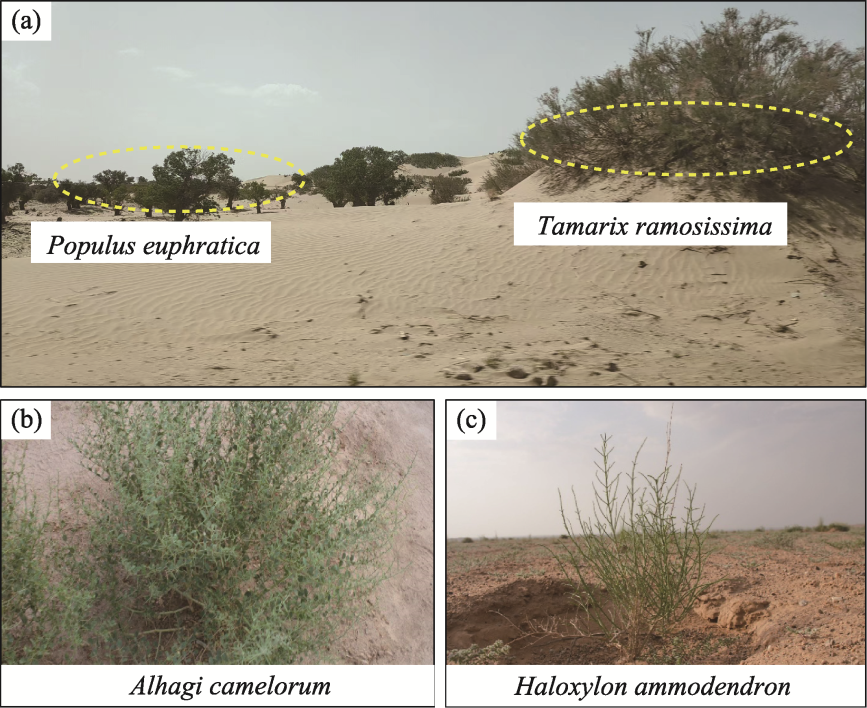
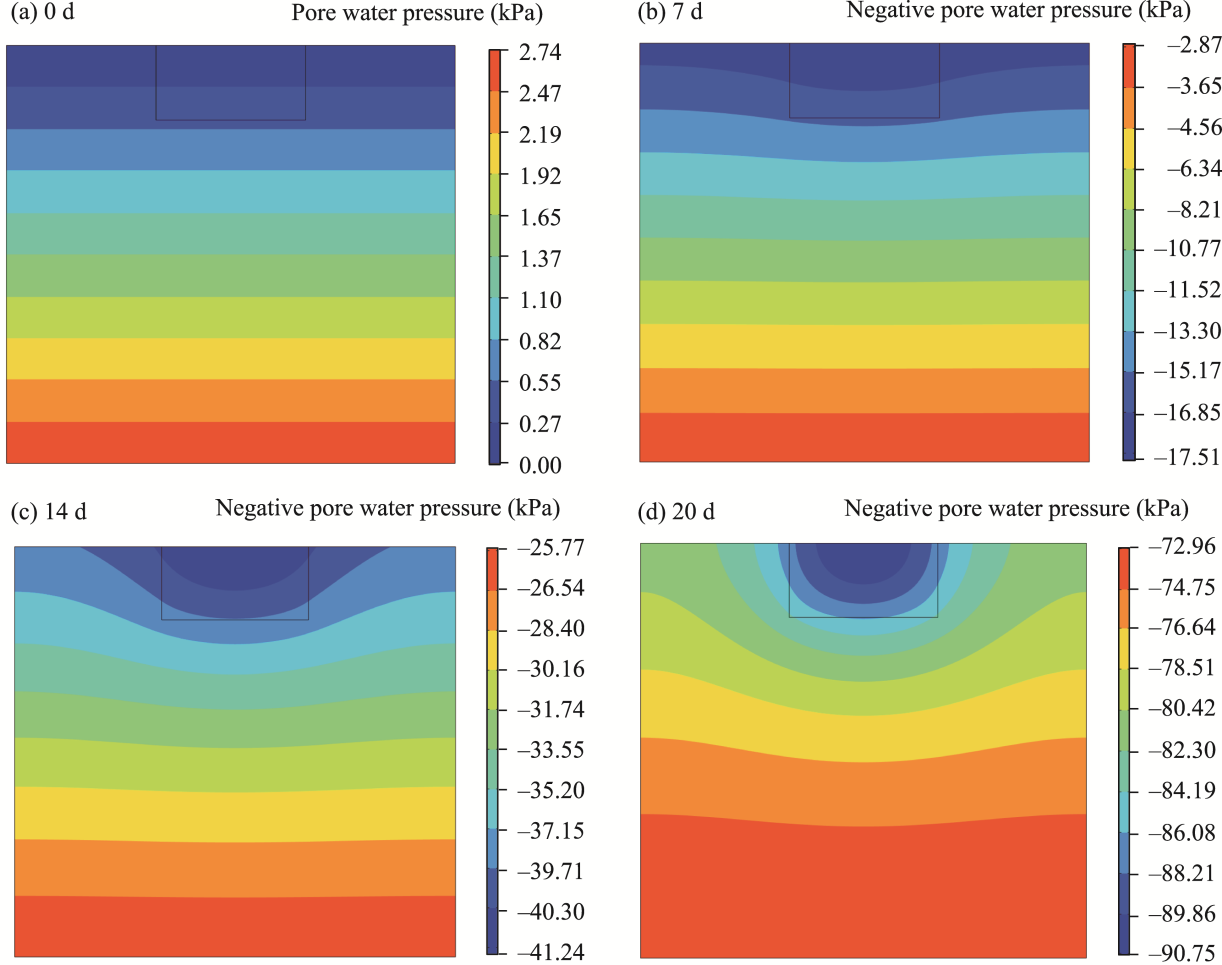
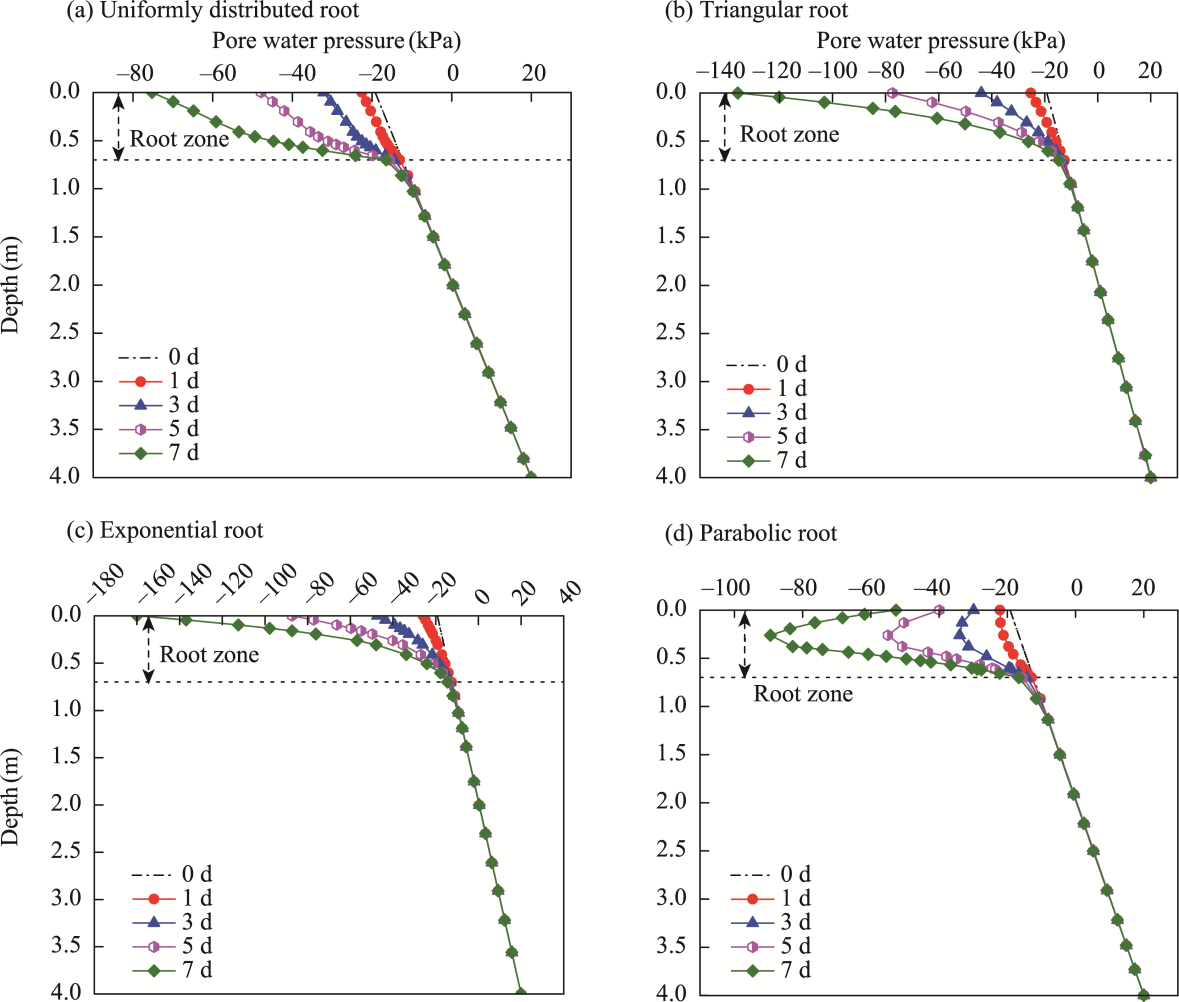
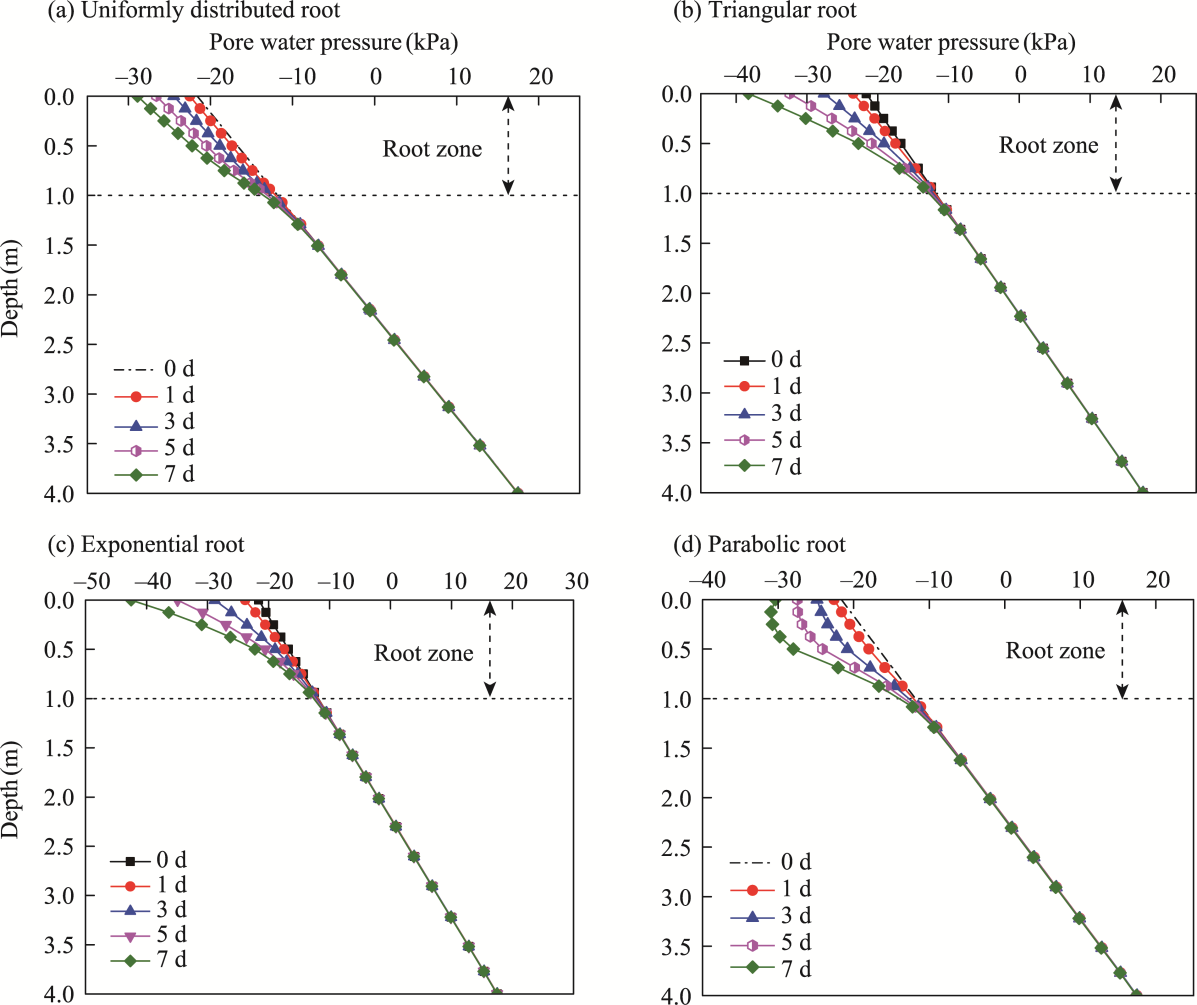
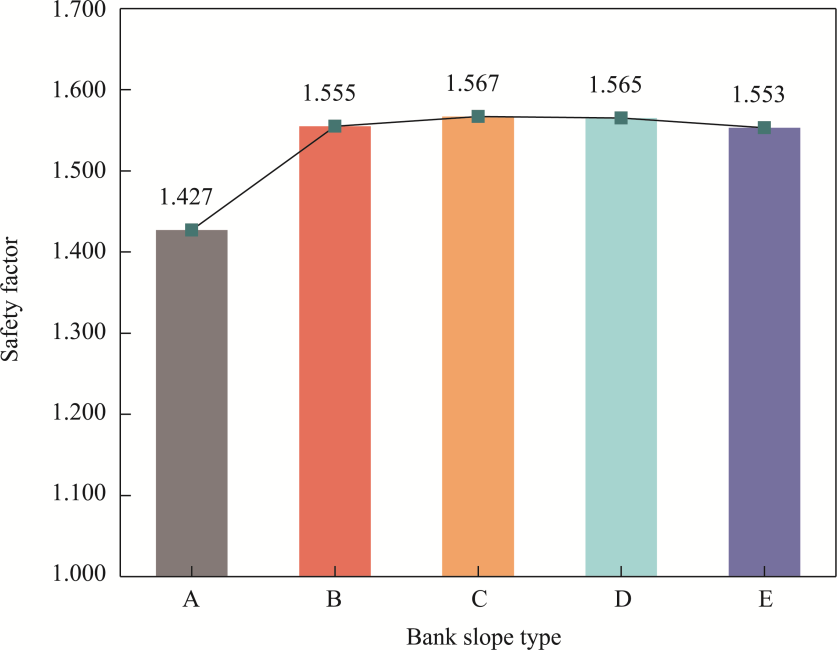
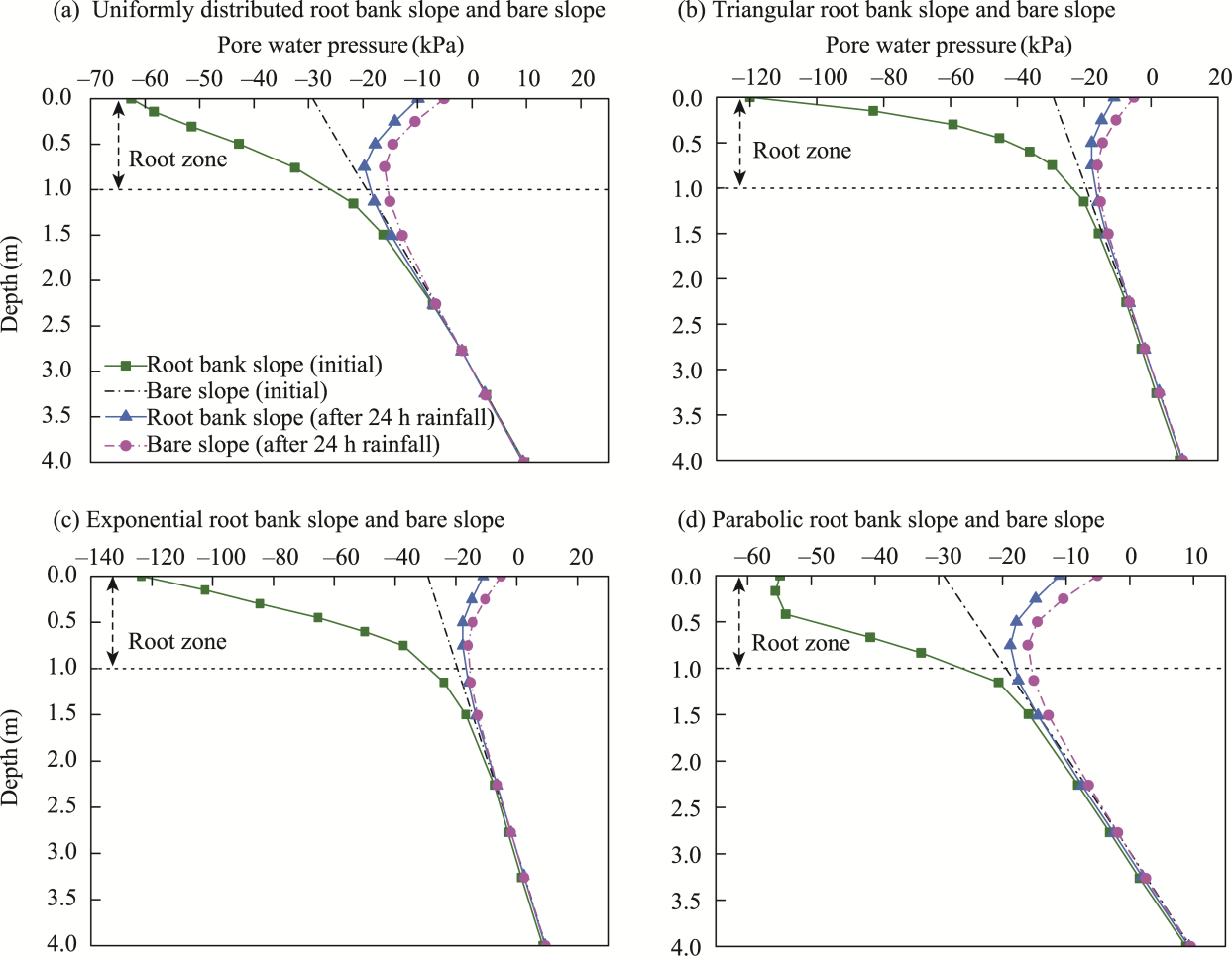
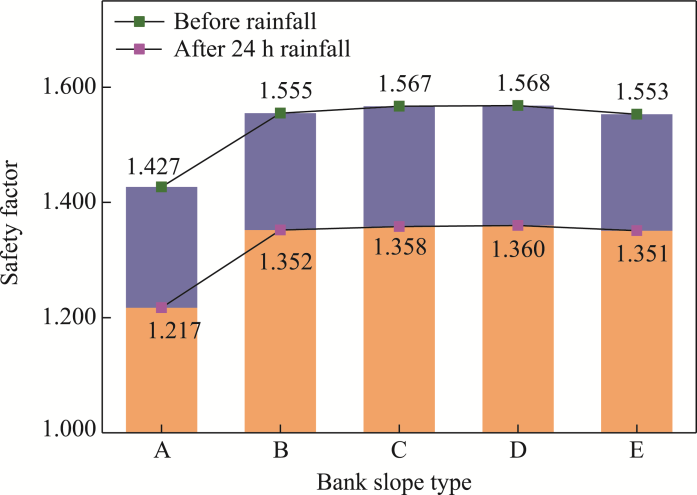
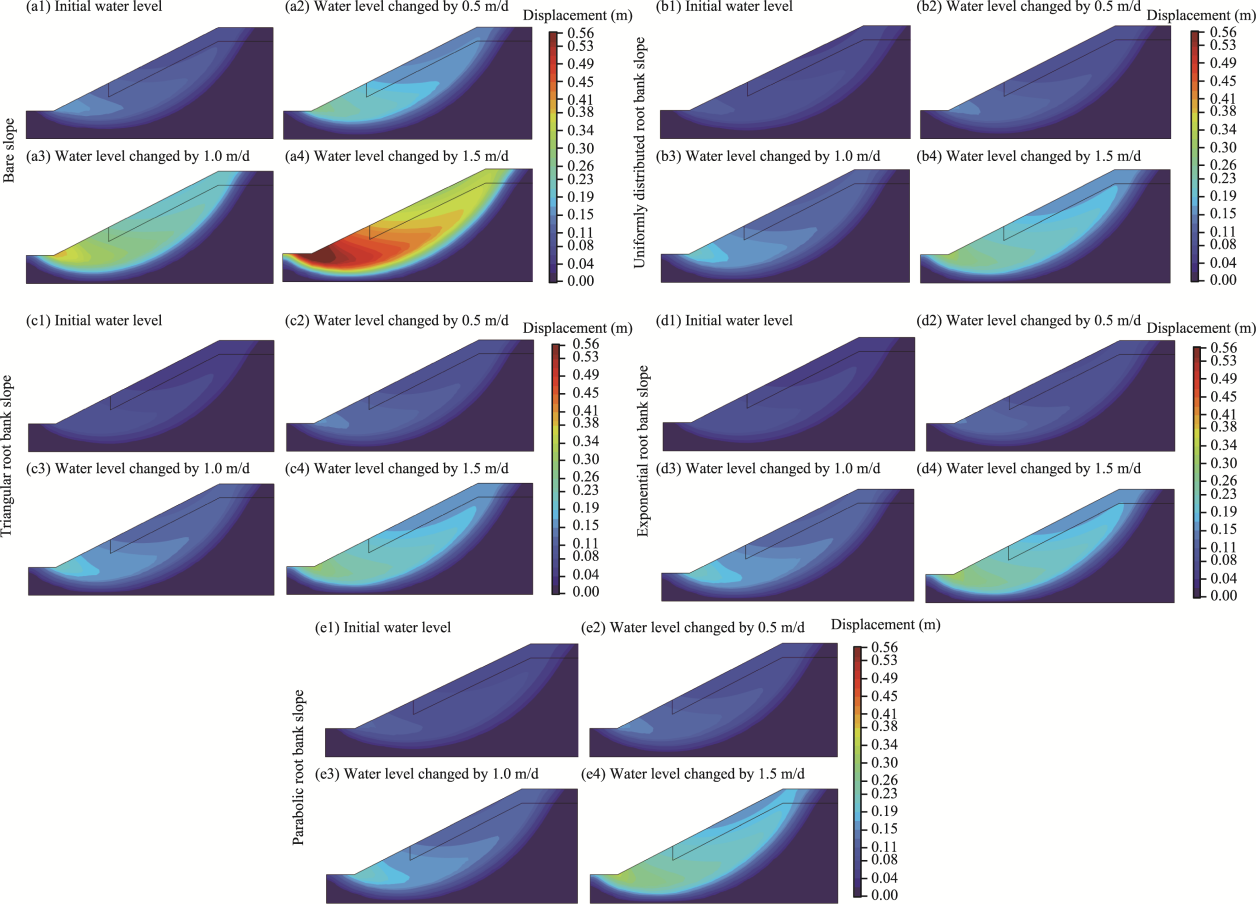
Abstract The banks in the middle and lower reaches of the Tarim River in China are weak in erosion resistance and prone to collapse. Vegetation, as a natural reinforcement material, can effectively improve slope stability and curb soil erosion. In March and July 2023, a field survey was conducted on the types and distribution characteristics of vegetation along both banks of a certain section in the lower reaches of the Tarim River. Taking COMSOL Multiphysics as the finite element numerical simulation platform, we investigated the variation law of bank slope stability in the middle and lower reaches of the Tarim River under different root morphologies, considering changes in transpiration time, rainfall, and water level under the action of hydro-mechanical reinforcement. The findings showed that vegetation transpiration has a significant effect on soil pore water pressure. Given the same transpiration rate, shorter root systems produced greater pore water pressure. For equal root lengths, the pore water pressures generated by roots in exponential and triangular morphologies were significantly greater than those generated by roots in uniformly distributed and parabolic morphologies. The water absorption capacity of the root system increased with transpiration rate. After 7 d of transpiration, the maximum safety factor of the bank slope reinforced by exponential roots was 1.568, which was a 9.88% improvement over that of the bare slope. After 24 h of rainfall, the effect of vegetation transpiration on soil pore water pressure weakened rapidly; the pore water pressure of the surface soil generated by transpiration from vegetation with different root morphologies was concentrated near -10.00 kPa. After rainfall, the displacement of the exponential root reinforced slope was minimized to 0.137 m. The effect of transpiration-induced changes in substrate suction on slope stability was negligible during the rainfall period. Compared with that of the bare slope, the displacements of bank slopes reinforced by root systems significantly increased. The maximum displacement occurred when the water level changed by 1.5 m/d; the displacement of the bare slope was 0.554 m, whereas the displacements of bank slopes reinforced by roots in different morphologies were 0.260-0.273 m. The impact of vegetation transpiration on the safety factor of riverbanks under sudden water level drops was relatively minor, but it can enhance the stability of riverbanks to a certain extent. Among these, riverbanks reinforced by roots in triangular and exponential morphologies exhibited superior stability compared with those reinforced by uniformly distributed or parabolic root systems. The findings offer a theoretical basis and practical guidance for designing vegetation slope protection in the middle and lower reaches of the Tarim River.
|
|
Received: 17 May 2025
Published: 28 February 2026
|
|
Corresponding Authors:
*ZHANG Lingkai (E-mail: xjauzhanglk@163.com)
|
|
|
| [1] |
Aravena J E, Berli M, Ghezzehei T A, et al. 2011. Effects of root-induced compaction on rhizosphere hydraulic properties—X-ray microtomography imaging and numerical simulations. Environmental Science & Technology, 45(2): 425-431.
doi: 10.1021/es102566j
|
|
|
| [2] |
Arnone E, Caracciolo D, Noto L V, et al. 2016. Modeling the hydrological and mechanical effect of roots on shallow landslides. Water Resources Research, 52(11): 8590-8612.
doi: 10.1002/wrcr.v52.11
|
|
|
| [3] |
Barciela-Rial M, Saaltink R M, van Kessel T, et al. 2023. A new setup to study the influence of plant growth on the consolidation of dredged cohesive sediment. Frontiers in Earth Science, 11: 952845, doi: 10.3389/feart.2023.952845.
|
|
|
| [4] |
Bischetti G B, Chiaradia E A, Epis T, et al. 2009. Root cohesion of forest species in the Italian Alps. Plant and Soil, 324: 71-89.
doi: 10.1007/s11104-009-9941-0
|
|
|
| [5] |
Boldrin D, Leung A K, Bengough A G. 2017. Correlating hydrologic reinforcement of vegetated soil with plant traits during establishment of woody perennials. Plant and Soil, 416: 437-451.
doi: 10.1007/s11104-017-3211-3
|
|
|
| [6] |
Bordoni M, Meisina C, Vercesi A, et al. 2016. Quantifying the contribution of grapevine roots to soil mechanical reinforcement in an area susceptible to shallow landslides. Soil and Tillage Research, 163: 195-206.
doi: 10.1016/j.still.2016.06.004
|
|
|
| [7] |
Bracmort K S, Arabi M, Frankenberger J R, et al. 2006. Modeling long-term water quality impact of structural BMPs. Transactions of the ASABE, 49(2): 367-374.
doi: 10.13031/2013.20411
|
|
|
| [8] |
Cao X Q, Yang P L, Engel B A, et al. 2018. The effects of rainfall and irrigation on cherry root water uptake under drip irrigation. Agricultural Water Management, 197: 9-18.
doi: 10.1016/j.agwat.2017.10.021
|
|
|
| [9] |
Chen R, Huang J W, Chen Z K, et al. 2019. Effect of root density of wheat and okra on hydraulic properties of an unsaturated compacted loam. European Journal of Soil Science, 70(3): 493-506.
doi: 10.1111/ejss.12766
|
|
|
| [10] |
Coppin N J, Richards I G. 1990. Use of Vegetation in Civil Engineering. London: Butterworths, 23-36.
|
|
|
| [11] |
De Baets S, Poesen J, Reubens B, et al. 2008. Root tensile strength and root distribution of typical Mediterranean plant species and their contribution to soil shear strength. Plant and Soil, 305: 207-226.
doi: 10.1007/s11104-008-9553-0
|
|
|
| [12] |
Dupuy L, Fourcaud T, Stokes A. 2005. A numerical investigation into the influence of soil type and root architecture on tree anchorage. Plant and Soil, 278: 119-134.
doi: 10.1007/s11104-005-7577-2
|
|
|
| [13] |
Eab K H, Likitlersuang S, Takahashi A. 2015. Laboratory and modelling investigation of root-reinforced system for slope stabilisation. Soils and Foundations, 55(5): 1270-1281.
doi: 10.1016/j.sandf.2015.09.025
|
|
|
| [14] |
Ekanayake J C, Phillips C J. 1999. A method for stability analysis of vegetated hillslopes: an energy approach. Canadian Geotechnical Journal, 36(6): 1172-1184.
doi: 10.1139/t99-060
|
|
|
| [15] |
Feddes R A, Bresler E, Neuman S P. 1974. Field test of a modified numerical model for water uptake by root systems. Water Resources Research, 10(6): 1199-1206.
doi: 10.1029/WR010i006p01199
|
|
|
| [16] |
Forster M, Ugarte C, Lamandé M, et al. 2022. Root traits of crop species contributing to soil shear strength. Geoderma, 409: 115642, doi: 10.1016/j.geoderma.2021.115642.
|
|
|
| [17] |
Gadi V K, Hussain R, Bordoloi S, et al. 2019. Relating stomatal conductance and surface area with evapotranspiration induced suction in a heterogeneous grass cover. Journal of Hydrology, 568: 867-876.
doi: 10.1016/j.jhydrol.2018.11.048
|
|
|
| [18] |
Huat B B, Ali F H, Low T H. 2006. Water infiltration characteristics of unsaturated soil slope and its effect on suction and stability. Geotechnical & Geological Engineering, 24: 1293-1306.
|
|
|
| [19] |
Indraratna B, Fatahi B, Khabbaz H. 2006. Numerical analysis of matric suction effects of tree roots. Geotechnical Engineering, 159(GE2): 77-90.
|
|
|
| [20] |
Jotisankasa A, Sirirattanachat T. 2017. Effects of grass roots on soil-water retention curve and permeability function. Canadian Geotechnical Journal, 54(11): 1612-1622.
doi: 10.1139/cgj-2016-0281
|
|
|
| [21] |
Kokutse N K, Temgoua A G T, Kavazović Z. 2016. Slope stability and vegetation: Conceptual and numerical investigation of mechanical effects. Ecological Engineering, 86: 146-153.
doi: 10.1016/j.ecoleng.2015.11.005
|
|
|
| [22] |
Leung A K, Garg A, Ng C W W. 2015a. Effects of plant roots on soil-water retention and induced suction in vegetated soil. Engineering Geology, 193: 183-197.
doi: 10.1016/j.enggeo.2015.04.017
|
|
|
| [23] |
Leung A K, Garg A, Coo J L, et al. 2015b. Effects of the roots of Cynodon dactylon and Schefflera heptaphylla on water infiltration rate and soil hydraulic conductivity. Hydrological Processes, 29(15): 3342-3354.
doi: 10.1002/hyp.v29.15
|
|
|
| [24] |
Leung A K, Kamchoom V, Ng C W W. 2017. Influences of root-induced soil suction and root geometry on slope stability: a centrifuge study. Canadian Geotechnical Journal, 54(3): 291-303.
doi: 10.1139/cgj-2015-0263
|
|
|
| [25] |
Liu H X, Mao Z, Wang Y, et al. 2021. Slow recovery from soil disturbance increases susceptibility of high elevation forests to landslides. Forest Ecology and Management, 485: 118891, doi: 10.1016/j.foreco.2020.118891.
|
|
|
| [26] |
Liu Q, Su L J, Xia Z Y, et al. 2019. Effects of soil properties and illumination intensities on matric suction of vegetated soil. Sustainability, 11(22): 6475, doi: 10.3390/su11226475.
|
|
|
| [27] |
Liu R, Zhou C, Chen Y, et al. 2024. Numerical simulation of seepage and stability in root-soil composite slopes. Hydro-Science and Engineering, 4: 47-59. (in Chinese)
|
|
|
| [28] |
Mickovski S B, Hallett P D, Bransby M F, et al. 2009. Mechanical reinforcement of soil by willow roots: impacts of root properties and root failure mechanism. Soil Science Society of America Journal, 73(4): 1276-1285.
doi: 10.2136/sssaj2008.0172
|
|
|
| [29] |
Murgia I, Giadrossich F, Mao Z, et al. 2022. Modeling shallow landslides and root reinforcement: A review. Ecological Engineering, 181: 106671, doi: 10.1016/j.ecoleng.2022.106671.
|
|
|
| [30] |
Ng C W W, Leung A K. 2012. Measurements of drying and wetting permeability functions using a new stress-controllable soil column. Journal of Geotechnical and Geoenvironmental Engineering, 138(1): 58-68.
doi: 10.1061/(ASCE)GT.1943-5606.0000560
|
|
|
| [31] |
Ng C W W, Woon K X, Leung A K, et al. 2013. Experimental investigation of induced suction distribution in a grass-covered soil. Ecological Engineering, 52: 219-223.
doi: 10.1016/j.ecoleng.2012.11.013
|
|
|
| [32] |
Ng C W W, Leung A K, Woon K X. 2014. Effects of soil density on grass-induced suction distributions in compacted soil subjected to rainfall. Canadian Geotechnical Journal, 51(3): 311-321.
doi: 10.1139/cgj-2013-0221
|
|
|
| [33] |
Ng C W W, Liu H W, Feng S. 2015. Analytical solutions for calculating pore-water pressure in an infinite unsaturated slope with different root architectures. Canadian Geotechnical Journal, 52(12): 1981-1992.
doi: 10.1139/cgj-2015-0001
|
|
|
| [34] |
Ni J J, Leung A K, Ng C W W, et al. 2018. Modelling hydro-mechanical reinforcements of plants to slope stability. Computers and Geotechnics, 95: 99-109.
doi: 10.1016/j.compgeo.2017.09.001
|
|
|
| [35] |
Nyambayo V P, Potts D M. 2010. Numerical simulation of evapotranspiration using a root water uptake model. Computers and Geotechnics, 37(1-2): 175-186.
doi: 10.1016/j.compgeo.2009.08.008
|
|
|
| [36] |
Patil U D, Shelton III A J, Aquino E. 2021. Bioengineering solution to prevent rainfall-induced slope failures in tropical soil. Land, 10(3): 299, doi: 10.3390/land10030299.
|
|
|
| [37] |
Peddinti S R, Kambhammettu B V N P, Lad R S, et al. 2020. A macroscopic soil-water transport model to simulate root water uptake in the presence of water and disease stress. Journal of Hydrology, 587: 124940, doi: 10.1016/j.jhydrol.2020.124940.
|
|
|
| [38] |
Pollen N, Simon A. 2005. Estimating the mechanical effects of riparian vegetation on stream bank stability using a fiber bundle model. Water Resources Research, 41(7): W07025, doi: 10.1029/2004WR003801.
|
|
|
| [39] |
Pollen-Bankhead N, Simon A. 2010. Hydrologic and hydraulic effects of riparian root networks on streambank stability: Is mechanical root-reinforcement the whole story? Geomorphology, 116(3-4): 353-362.
doi: 10.1016/j.geomorph.2009.11.013
|
|
|
| [40] |
Qiu J Q, Yu M H, Li Q. 2024. Analysis of the influence of vegetation on the riverbank stability in the Lower Jingjiang Reach under water level change. Journal of Hydraulic Engineering, 55(1): 60-70. (in Chinese)
|
|
|
| [41] |
Romero E, Gens A, Lloret A. 1999. Water permeability, water retention and microstructure of unsaturated compacted Boom clay. Engineering Geology, 54(1-2): 117-127.
doi: 10.1016/S0013-7952(99)00067-8
|
|
|
| [42] |
Scholl P, Leitner D, Kammerer G, et al. 2014. Root induced changes of effective 1D hydraulic properties in a soil column. Plant and Soil, 381: 193-213.
pmid: 25834290
|
|
|
| [43] |
Schwarz M, Preti F, Giadrossich F, et al. 2010. Quantifying the role of vegetation in slope stability: A case study in Tuscany (Italy). Ecological Engineering, 36(3): 285-291.
doi: 10.1016/j.ecoleng.2009.06.014
|
|
|
| [44] |
Shen Y F, Li Q, Pei X J, et al. 2023. Ecological restoration of engineering slopes in China—A review. Sustainability, 15(6): 5354, doi: 10.3390/su15065354.
|
|
|
| [45] |
Simon A, Curini A, Darby S E. 2000. Bank and near-bank processes in an incised channel. Geomorphology, 35(3-4): 193-217.
doi: 10.1016/S0169-555X(00)00036-2
|
|
|
| [46] |
Stokes A, Douglas G B, Fourcaud T, et al. 2014. Ecological mitigation of hillslope instability: ten key issues facing researchers and practitioners. Plant and Soil, 377: 1-23.
doi: 10.1007/s11104-014-2044-6
|
|
|
| [47] |
Sun C, Tang C S, Cheng Q, et al. 2022. Stability of soil slope under soil-atmosphere interaction. Earth Science, 47(10): 3701-3722. (in Chinese)
|
|
|
| [48] |
Sun J, Zhang L K. 2024. Influence of different plant roots on shear strength of bank slope soil. Water Resources and Power, 42(2): 192-196. (in Chinese)
|
|
|
| [49] |
Wiel M J V D, Darby S E. 2007. A new model to analyse the impact of woody riparian vegetation on the geotechnical stability of riverbanks. Earth Surface Processes and Landforms, 32(14): 2185-2198.
doi: 10.1002/esp.v32:14
|
|
|
| [50] |
Wu T H, McKinnell III W P, Swanston D N. 1979. Strength of tree roots and landslides on Prince of Wales Island, Alaska. Canadian Geotechnical Journal, 16(1): 19-33.
doi: 10.1139/t79-003
|
|
|
| [51] |
Yu G A, Li Z W, Huang H Q, et al. 2017. Human impacts on fluvial processes in a very arid environment: case of Tarim River in China. Advances in Water Science, 28(2): 183-192. (in Chinese)
|
|
|
| [52] |
Zaini M S I, Ishak M F, Zolkepli M F. 2020. Monitoring soil slope of tropical residual soil by using tree water uptake method. IOP Conference Series: Materials Science and Engineering, 736: 072018, doi: 10.1088/1757-899X/736/7/072018.
|
|
|
| [53] |
Zhang X L, Fu Y M, Pei Q H, et al. 2024a. Study on the root characteristics and effects on soil reinforcement of slope-protection vegetation in the Chinese Loess Plateau. Forests, 15(3): 464, doi: 10.3390/f15030464.
|
|
|
| [54] |
Zhang Y, Liu W, He S M. 2024b. Effect of vegetation growth on morphological traits of vegetation and biomechanical features of roots. Plant and Soil, 494(1): 395-411.
doi: 10.1007/s11104-023-06285-z
|
|
|
| [55] |
Zhang Y Y, Chen X, Gao M, et al. 2021. Simulation of transpiration for typical xeromorphic plants in inland arid region of northwestern China. Acta Ecologica Sinica, 41(19): 7751-7762. (in Chinese)
|
|
|
| [56] |
Zhang Z, Zhang W, Zhai Z J, et al. 2007. Evaluation of various turbulence models in predicting airflow and turbulence in enclosed environments by CFD: Part 2—Comparison with experimental data from literature. HVAC&R Research, 13(6): 871-886.
|
|
|
| [57] |
Zhu H, Zhang L M, Garg A. 2018. Investigating plant transpiration-induced soil suction affected by root morphology and root depth. Computers and Geotechnics, 103: 26-31.
doi: 10.1016/j.compgeo.2018.06.019
|
|
|
| [58] |
Zhu H, Zhang L M. 2019. Root-soil-water hydrological interaction and its impact on slope stability. Georisk: Assessment and Management of Risk for Engineered Systems and Geohazards, 13(4): 349-359.
doi: 10.1080/17499518.2019.1616098
|
|
|
| [59] |
Zong Q L, Feng B, Cai H B, et al. 2018. Mechanism of riverbank protection by desert river vegetation roots in Tarim River Basin. Chinese Journal of Rock Mechanics and Engineering, 37(5): 1290-1300. (in Chinese)
|
|
|
|
Viewed |
|
|
|
Full text
|
|
|
|
|
Abstract
|
|
|
|
|
Cited |
|
|
|
|
| |
Shared |
|
|
|
|
| |
Discussed |
|
|
|
|