| Research article |
|


|
|
|
| Ecophysiological responses of Stipa tenacissima L. under grassland degradation in a Mediterranean arid bioclimate |
Khouloud KRICHEN*( ), Mohamed CHAIEB ), Mohamed CHAIEB |
| Laboratory of Biodiversity and Ecosystems in Arid Environments (LEBIOMAT), Faculty of Sciences, University of Sfax, Sfax 3000, Tunisia |
|
|
|
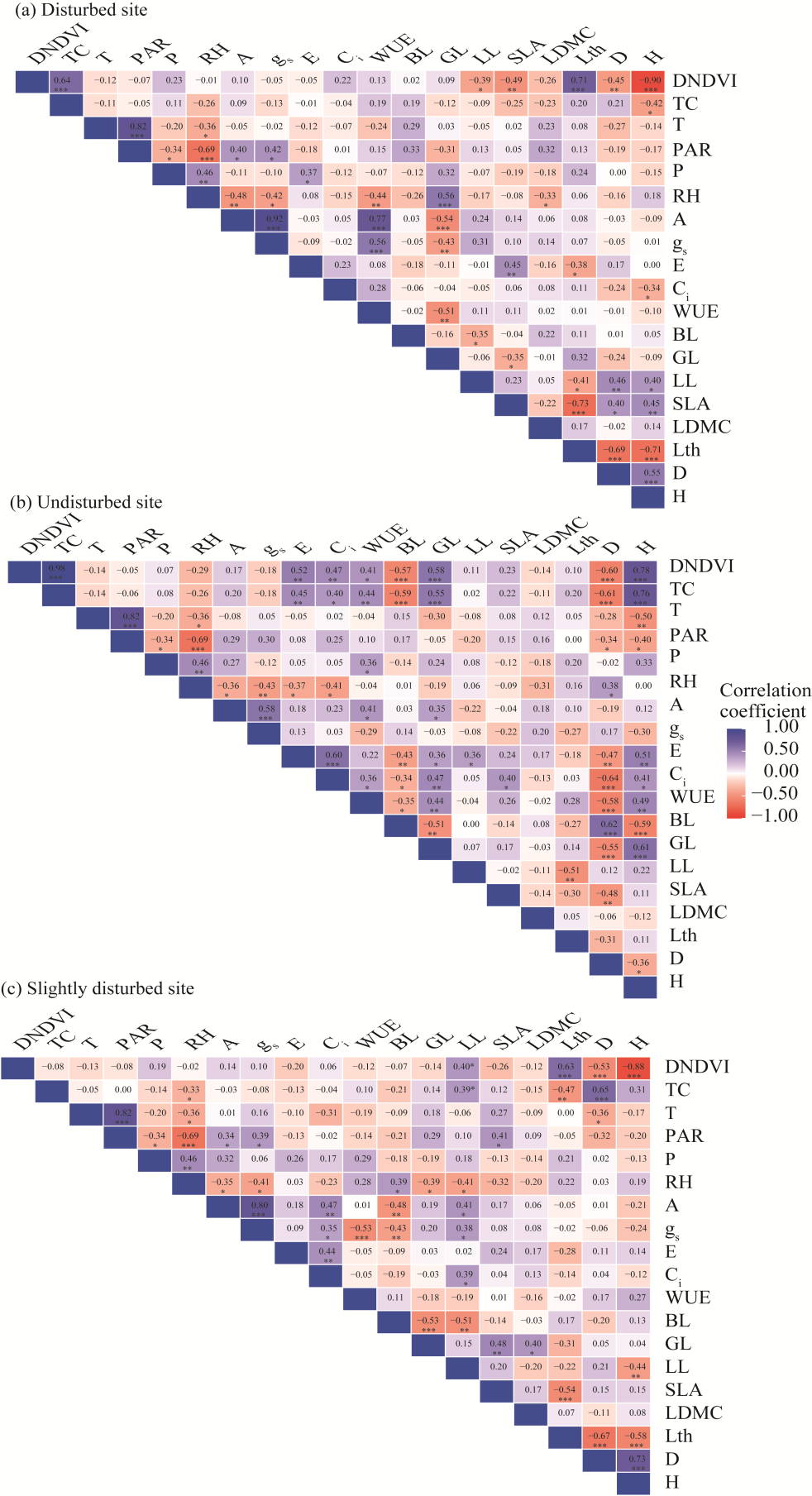
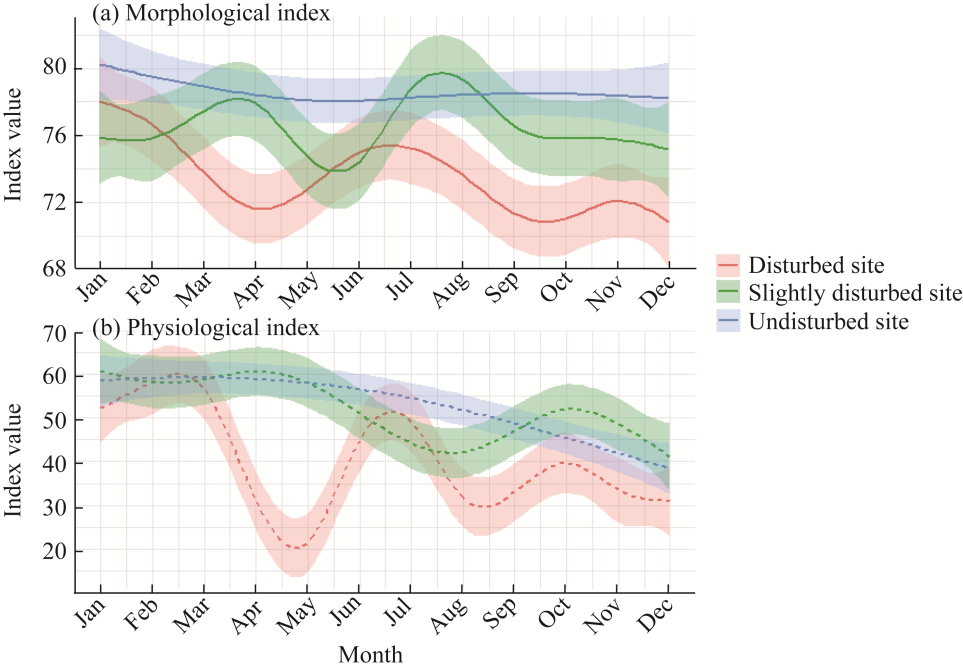
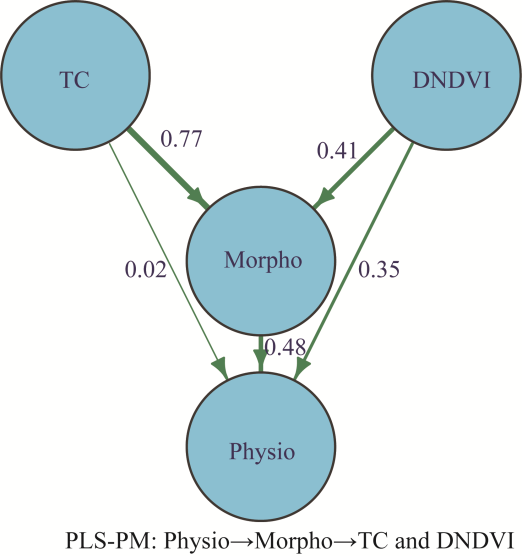
Abstract Under arid and semi-arid bioclimates, steppes are increasingly threatened by anthropogenic disturbance and climatic variability, which strongly affects ecosystem functioning and subsequently leads to desertification. We investigated the morphological and physiological responses of Stipa tenacissima L. across three disturbance levels (undisturbed, slightly disturbed, and highly disturbed) in three Tunisian steppe areas (Kasserine, Sidi Bouzid, and Sfax). Morphological and physiological traits were monitored over one year, together with microclimatic variables. Result showed that disturbance was a strong driver of plant functional dynamics, with significant effects on all traits and strong interactions with site and season. Disturbance reduced photosynthetic activity and water use efficiency, particularly in Sfax, where plants adopted conservative strategies (i.e., higher leaf dry matter content and reduced leaf area). In contrast, undisturbed populations maintained a stronger coordination between physiological and morphological traits. Seasonal analyses revealed that disturbance amplified physiological stress with limited recovery. Heatmap analyses further showed that disturbance weakened trait coordination and reshaped trade-offs between acquisitive and conservative traits. Partial least squares-path modeling showed that morphology strongly drove physiological performance (path coefficient=0.48). Disturbance (path coefficient=0.41) and tussock cover (path coefficient=0.47) influenced morphology both directly and indirectly through their effects on physiology. In conclusion, S. tenacissima adjusts physiological and morphological traits under disturbance, favoring stress tolerance, while undisturbed sites maintain high physiological efficiency and coordinated trait integration, reflecting a trade-off between survival and performance while overriding local site differences. Disturbance strongly restructures trait networks, drives site-specific adjustments, and modulates the seasonal balance between morphological stability and physiological flexibility.
|
|
Received: 09 September 2025
Published: 30 April 2026
|
|
Corresponding Authors:
*Khouloud KRICHEN (E-mail: kh.krichen@gmail.com)
|
|
|
| [1] |
Adler P B, Salguero-Gómez R, Compagnoni A, et al. 2014. Functional traits explain variation in plant life-history strategies. Proceedings of the National Academy of Sciences, 111: 740-745.
|
|
|
| [2] |
Afuye G A, Kalumba A M, Orimoloye I R. 2021. Characterisation of vegetation response to climate change: A review. Sustainability, 13(13): 7265, doi: 10.3390/su13137265.
|
|
|
| [3] |
Balaguer L, Pugnaire F I, Martínez-Ferri E, et al. 2002. Ecophysiological significance of chlorophyll loss and reduced photochemical efficiency under extreme aridity in Stipa tenacissima L. Plant and Soil, 240: 343-352.
doi: 10.1023/A:1015745118689
|
|
|
| [4] |
Chen X X, Wang Y D, Chen Y S, et al. 2023. NDVI-based assessment of land degradation trends in Balochistan, Pakistan, and analysis of the drivers. Remote Sensing, 15(9): 2388, doi: 10.3390/rs15092388.
|
|
|
| [5] |
Chieppa J, Power S A, Nielsen U N, et al. 2022. Plant functional traits affect competitive vigor of pasture grasses during drought and following recovery. Ecosphere, 13(7): e4156, doi: 10.1002/ecs2.4156.
|
|
|
| [6] |
Cortina J, Maestre F T, Ramírez D. 2009. Innovations in semiarid land restoration:The case of Stipa tenacissima L. steppes. In: Bautista S, Aronson J, Vallejo R. Land Restoration to Combat Desertification:Innovative Approaches, Quality Control and Project Evaluation. Valencia: Fundación Ceam.
|
|
|
| [7] |
Cortina J, Martín N, Maestre F T, et al. 2010. Disturbance of the biological soil crusts and performance of Stipa tenacissima in a semi-arid Mediterranean steppe. Plant and Soil, 334: 311-322.
doi: 10.1007/s11104-010-0384-4
|
|
|
| [8] |
Derbel S, Chaieb M. 2007. Germination behaviour and seedling establishment of two desert shrubs, Calligonum polygonoides (Polygonaceae) and Spartidium saharae (Fabaceae), under experimental conditions. Acta Botanica Gallica, 154(4): 533-544.
doi: 10.1080/12538078.2007.10516079
|
|
|
| [9] |
Díaz S, Hodgson J G, Thompson K, et al. 2004. The plant traits that drive ecosystems: Evidence from three continents. Journal of Vegetation Science, 15(3): 295-304.
doi: 10.1111/jvs.2004.15.issue-3
|
|
|
| [10] |
Fajardo-Cantos G, Peña-Molina E, Díaz-Montero A, et al. 2023. Short-term Macrochloa tenacissima response under Pinus halepensis Mill forest after early prescribed burns in a semi-arid landscape. Science of The Total Environment, 902: 166268, doi: 10.1016/j.scitotenv.2023.166268.
|
|
|
| [11] |
Flexas J, Medrano H. 2002. Drought-inhibition of photosynthesis in C3 plants: Stomatal and non-stomatal limitations revisited. Annals of Botany, 89(2): 183-189.
doi: 10.1093/aob/mcf027
pmid: 12099349
|
|
|
| [12] |
Aronson J. 1995. Ecology of restoration: Definition of several basic concept. Natures Sciences Sociétés, 3: S29-S35. (in French)
doi: 10.1051/nss/199503s029
|
|
|
| [13] |
Funk J L, Larson J E, Ames G M, et al. 2017. Revisiting the Holy Grail: Using plant functional traits to understand ecological processes. Biological Reviews, 92(2): 1156-1173.
doi: 10.1111/brv.2017.92.issue-2
|
|
|
| [14] |
Ghiloufi W, Quero J L, García-Gómez M, et al. 2016. Potential impacts of aridity on structural and functional status of a southern Mediterranean Stipa tenacissima steppe. South African Journal of Botany, 103: 170-180.
doi: 10.1016/j.sajb.2015.09.004
|
|
|
| [15] |
Gorelick N, Hancher M, Dixon M, et al. 2017. Google Earth Engine: Planetary-scale geospatial analysis for everyone. Remote Sensing of Environment, 202: 18-27.
doi: 10.1016/j.rse.2017.06.031
|
|
|
| [16] |
Hamdani M, Krichen K, Chaieb M. 2019. Predicting leaf trait variability as a functional descriptor of the effect of climate change in three perennial grasses. Diversity, 11(12): 233, doi: 10.3390/d11120233.
|
|
|
| [17] |
Haq S M, Waheed M, Jameel M A, et al. 2025. Impacts of anthropogenic disturbance gradients on vegetation dynamics in the hyper-arid desert environment. Ecological Frontiers, 45(6): 1744-1754.
doi: 10.1016/j.ecofro.2025.07.004
|
|
|
| [18] |
Herben T, Klimešová J, Chytrý M. 2018. Effects of disturbance frequency and severity on plant traits: An assessment across a temperate flora. Functional Ecology, 32(3): 799-808.
doi: 10.1111/fec.2018.32.issue-3
|
|
|
| [19] |
Huanca-Nunez N, Chazdon R L, Russo S E. 2024. Trait-mediated variation in seedling performance in Costa Rican successional forests: Comparing above-ground, below-ground, and allocation-based traits. Plants, 13(17): 2378, doi: 10.3390/plants13172378.
|
|
|
| [20] |
Jeddi K, Chaieb M. 2010. Soil properties and plant community in different aged Pinus halepensis Mill. plantations in arid Mediterranean areas: The case of southern Tunisia. Land Degradation & Development, 21(1): 32-39.
doi: 10.1002/ldr.964
|
|
|
| [21] |
Kan A, Xiang Q, Li G Q, et al. 2025. Quantifying ecosystem disturbances in nature reserves using satellite observational data and revealing their constraints on carbon sequestration potential. Human and Ecological Risk Assessment, 31(5-6): 718-734.
doi: 10.1080/10807039.2025.2496479
|
|
|
| [22] |
Khan A, Karim M R, Arfin-Khan M A S, et al. 2025. How do leaf functional traits influence above-ground tree carbon in tropical hill forests of Bangladesh? Ecological Indicators, 171: 113131, doi: 10.1016/j.ecolind.2025.113131.
|
|
|
| [23] |
Krichen K, Vilagrosa A, Chaieb M. 2019. Divergence of functional traits at early stages of development in Stipa tenacissima populations distributed along an environmental gradient of the Mediterranean. Plant Ecology, 220: 995-1008.
doi: 10.1007/s11258-019-00969-2
|
|
|
| [24] |
Krichen K, Vilagrosa A, Chaieb M. 2022. Morphological and ecophysiological responsiveness of Stipa tenacissima L. populations along a Mediterranean climatic gradient. South African Journal of Botany, 151: 116-125.
doi: 10.1016/j.sajb.2022.09.042
|
|
|
| [25] |
Krichen K, Vilagrosa A, Ben Mariem H, et al. 2024a. Ecophysiological traits of seedlings from different accessions of Stipa tenacissima along a climatic gradient. Plant Biosystems, 158(3): 419-431.
doi: 10.1080/11263504.2024.2320130
|
|
|
| [26] |
Krichen K, Vilagrosa A, Chaieb M. 2024b. Effects of climate change on the Mediterranean Stipa tenacissima L. steppes through an ecophysiological perspective. In: Advances in Science, Technology and Innovation. Cham: Springer, 241-244.
|
|
|
| [27] |
Krichen K, Chaieb M. 2025. Seedling plasticity and phytomass allocation of Stipa tenacissima L. populations in arid region of Tunisia. Journal of Oasis Agriculture & Sustainable Development, 7(3): 9-11.
|
|
|
| [28] |
Krichen K, Zagoub K, Chaieb M. 2025. Ecophysiological responses of Oloptum miliaceum (L.) to water deficit stress in arid and semi-arid Mediterranean ecosystems. Russian Journal of Plant Physiology, 72(4): 128, doi: 10.1134/S1021443725602010.
|
|
|
| [29] |
Kumar R, Bhardwaj A K, Chandra K K. 2023. Levels of natural and anthropogenic disturbances and assessment of their impact on plant community functional diversity. Forestist, 73: 108-116.
doi: 10.5152/forestist.2022.22025
|
|
|
| [30] |
Lang M, Mahyou H, Tychon B. 2021. Estimation of rangeland production in the arid oriental region (Morocco) combining remote sensing vegetation and rainfall indices: Challenges and lessons learned. Remote Sensing, 13(11): 2093, doi: 10.3390/rs13112093.
|
|
|
| [31] |
Le Houérou H N. 1986. The desert and arid zones of Northern Africa. In: Evenart M, Goodall D W. Hot Deserts and Arid Shrublands. Amsterdam: Elsevier, 451.
|
|
|
| [32] |
Le Houérou H N. 2001. Biogeography of the arid steppe land north of the Sahara. Journal of Arid Environments, 48(2): 103-128.
doi: 10.1006/jare.2000.0679
|
|
|
| [33] |
Li W L, Liu C L, Wang W Y, et al. 2021. Effects of different grazing disturbances on the plant diversity and ecological functions of alpine grassland ecosystem on the Qinghai-Tibetan Plateau. Frontiers in Plant Science, 12: 765070, doi: 10.3389/fpls.2021.765070.
|
|
|
| [34] |
Maestre F T, Valladares F, Reynolds J F. 2005. Is the change of plant-plant interactions with abiotic stress predictable? A meta-analysis of field results in arid environments. Journal of Ecology, 93(4): 748-757.
doi: 10.1111/jec.2005.93.issue-4
|
|
|
| [35] |
Maestre F T, Quero J L, Gotelli N J, et al. 2012. Plant species richness and ecosystem multifunctionality in global drylands. Science, 335(6065): 214-218.
doi: 10.1126/science.1215442
pmid: 22246775
|
|
|
| [36] |
Marques E Q, Silvério D V, Galvão L S, et al. 2024. Assessing the effectiveness of vegetation indices in detecting forest disturbances in the southeast Amazon. Scientific Reports, 14: 27287, doi: 10.1038/s41598-024-77924-3.
|
|
|
| [37] |
Mehdadi Z, Benaouda Z, Latreche A, et al. 2008. Seasonal evolution of the leaf composition of Stipa tenacissima L. in mineral elements and parietal fibers. Acta Botanica Gallica, 155(3): 435-445. (in French)
doi: 10.1080/12538078.2008.10516123
|
|
|
| [38] |
Meneses-Tovar C L. 2012. NDVI as indicator of degradation. Unasylva, 62(238): 39-46.
|
|
|
| [39] |
Meng B P, Jin Z Y, Chen J, et al. 2025. Critical signals for grassland desertification prediction in the transition zone between desert and typical steppe in Inner Mongolia, China. Ecological Indicators, 170: 113065, doi: 10.1016/j.ecolind.2024.113065.
|
|
|
| [40] |
Moulay A, Benabdeli K. 2012. Evaluation of the effect of removing shrub stands on the regeneration of Stipa tenacissima steppe in the Western Algeria. Revue d'Écologie, 67: 283-294. (in French)
|
|
|
| [41] |
Msadek J, Tlili A, Moumni M, et al. 2021. Community diversity, functional traits and adaptation of Stipa tenacissima L. under different grazing regimes in a North African arid montane rangeland. African Journal of Range & Forage Science, 38: 122-129.
|
|
|
| [42] |
Noualhaguet M, Work T T, Nock C A, et al. 2024. Functional responses of understory plants to natural disturbance-based management in eastern and western Canada. Ecological Applications, 34(6): e3011, doi: 10.1002/eap.3011.
|
|
|
| [43] |
Ojija F. 2024. Perennial grasses: Natural allies for soil health and biodiversity, climate change mitigation, and invasive plant management. Grass Research, 4: e020, doi: 10.48130/grares-0024-0019.
|
|
|
| [44] |
Pérez-Harguindeguy N, Díaz S, Garnier E, et al. 2013. New handbook for standardised measurement of plant functional traits worldwide. Australian Journal of Botany, 61: 167-234.
doi: 10.1071/BT12225
|
|
|
| [45] |
Pettorelli N. 2013. The Normalized Difference Vegetation Index. New York: Oxford University Press, 56-69.
|
|
|
| [46] |
Poorter H, Niklas K J, Reich P B, et al. 2012. Biomass allocation to leaves, stems and roots: Meta-analyses of interspecific variation and environmental control. New Phytologist, 193(1): 30-50.
doi: 10.1111/j.1469-8137.2011.03952.x
pmid: 22085245
|
|
|
| [47] |
Pugnaire F I, Haase P. 1996. Comparative physiology and growth of two perennial tussock grass species in a semi-arid environment. Annals of Botany, 77(1): 81-86.
doi: 10.1006/anbo.1996.0010
|
|
|
| [48] |
Pugnaire F I, Haase P, Incoll L, et al. 1996. Response of the tussock grass Stipa tenacissima to watering in a semi-arid environment. Functional Ecology, 10(2): 265-274.
doi: 10.2307/2389852
|
|
|
| [49] |
Puigdefábregas J, Mendizabal T. 1998. Perspectives on desertification: western Mediterranean. Journal of Arid Environments, 39(2): 209-224.
doi: 10.1006/jare.1998.0401
|
|
|
| [50] |
Ramírez D A, Bellot J, Domingo F, et al. 2007. Can water responses in Stipa tenacissima L. during the summer season be promoted by non-rainfall water gains in soil? Plant and Soil, 291: 67-79.
doi: 10.1007/s11104-006-9175-3
|
|
|
| [51] |
Ramírez D A, Valladares F, Domingo F, et al. 2008a. Seasonal water-use efficiency and chlorophyll fluorescence response in alpha grass (Stipa tenacissima L.) is affected by tussock size. Photosynthetica, 46(2): 222-231.
doi: 10.1007/s11099-008-0036-6
|
|
|
| [52] |
Ramírez D A, Valladares F, Blasco A, et al. 2008b. Effects of tussock size and soil water content on whole plant gas exchange in Stipa tenacissima L.: Extrapolating from the leaf versus modelling crown architecture. Environmental and Experimental Botany, 62(3): 376-388.
doi: 10.1016/j.envexpbot.2007.10.012
|
|
|
| [53] |
Reich P B. 2014. The world-wide fast-slow plant economics spectrum: A traits manifesto. Journal of Ecology, 102(2): 275-301.
doi: 10.1111/jec.2014.102.issue-2
|
|
|
| [54] |
Rey A, Pegoraro E, Oyonarte C, et al. 2011. Impact of land degradation on soil respiration in a steppe (Stipa tenacissima L.) semi-arid ecosystem in the SE of Spain. Soil Biology and Biochemistry, 43(2): 393-403.
doi: 10.1016/j.soilbio.2010.11.007
|
|
|
| [55] |
Rouse J W, Haas R H, Schell J A, et al. 1974. Monitoring Vegetation Systems in the Great Plains with ERTS. Washington DC:3rd ERTS-1 Symposium, NASA, 309-317.
|
|
|
| [56] |
Slimani H, Aidoud A, Rozé F. 2010. 30 years of protection and monitoring of a steppic rangeland undergoing desertification. Journal of Arid Environments, 74(6): 685-691.
doi: 10.1016/j.jaridenv.2009.10.015
|
|
|
| [57] |
Sparks T, Menzel A. 2013. Plant phenology changes and climate change. In: Levin S A. Encyclopedia of Biodiversity. New York: Academic Press, 103-108.
|
|
|
| [58] |
Spicer M E, Royo A A, Wenzel J W, et al. 2023. Understory plant growth forms respond independently to combined natural and anthropogenic disturbances. Forest Ecology and Management, 543: 121077, doi: 10.1016/j.foreco.2023.121077.
|
|
|
| [59] |
von Caemmerer S, Farquhar G D. 1981. Some relationships between the biochemistry of photosynthesis and the gas exchange of leaves. Planta, 153: 376-387.
doi: 10.1007/BF00384257
pmid: 24276943
|
|
|
| [60] |
Yan P S, Lu X L, Liang G F, et al. 2024. Seasonal and habitat dependence of plant species, functional and phylogenetic diversity in agricultural landscapes. Ecological Indicators, 160: 111795, doi: 10.1016/j.ecolind.2024.111795.
|
|
|
| [61] |
Yan X R, Wei D D, Yang J Z, et al. 2025. Monitoring temperate typical steppe degradation in Inner Mongolia: Integrating ecosystem structure and function. Sustainability, 17(20): 9015, doi: 10.3390/su17209015.
|
|
|
| [62] |
Yavas I, Jamal M A, Din K U, et al. 2024. Drought-induced changes in leaf morphology and anatomy: Overview, implications and perspectives. Polish Journal of Environmental Studies, 33(2): 1517-1530.
|
|
|
| [63] |
Yengoh G T, Dent D, Olsson L, et al. 2015. Use of the Normalized Difference Vegetation Index (NDVI) to Assess Land Degradation at Multiple Scales:A Review of the Current Status, Future Trends,and Practical Considerations. Heidelberg: Springer, 17-25.
|
|
|
| [64] |
You C H, Wang Y B, Tan X R, et al. 2022. Seasonal and interannual variations of ecosystem photosynthetic characteristics in a semi-arid grassland of Northern China. Journal of Plant Ecology, 15(5): 961-976.
doi: 10.1093/jpe/rtac065
|
|
|
| [65] |
Zagoub K, Krichen K, Chaieb M, et al. 2022. Hydrothermal time analysis of Ceratonia siliqua L. germination requirements under different abiotic constraints. Plant Biosystems, 156(5): 1201-1212.
|
|
|
| [66] |
Zhang M Q, Sun J, Wang Y, et al. 2025. State-of-the-art and challenges in global grassland degradation studies. Geography and Sustainability, 6(2): 100229, doi: 10.1016/j.geosus.2024.08.008.
|
|
|
|
Viewed |
|
|
|
Full text
|
|
|
|
|
Abstract
|
|
|
|
|
Cited |
|
|
|
|
| |
Shared |
|
|
|
|
| |
Discussed |
|
|
|
|