| Research article |
|


|
|
|
| Changes and determinants of belowground bud banks of a rhizomatous clonal plant Sophora alopecuroides L. in the desert steppe, northern China |
ZHANG Dongmei1, LUO Weicheng1, KANG Jianjun1,*( ), REN Heng1, GAO Jinlong2 ), REN Heng1, GAO Jinlong2 |
1Linze Inland River Basin Research Station, Chinese Ecosystem Research Network, Key Laboratory of Ecological Safety and Sustainable Development in Arid Lands, Northwest Institute of Eco-Environment and Resources, Chinese Academy of Sciences, Lanzhou 730000, China
2College of Pastoral Agriculture Science and Technology, Lanzhou University, Lanzhou 730000, China |
|
|
|
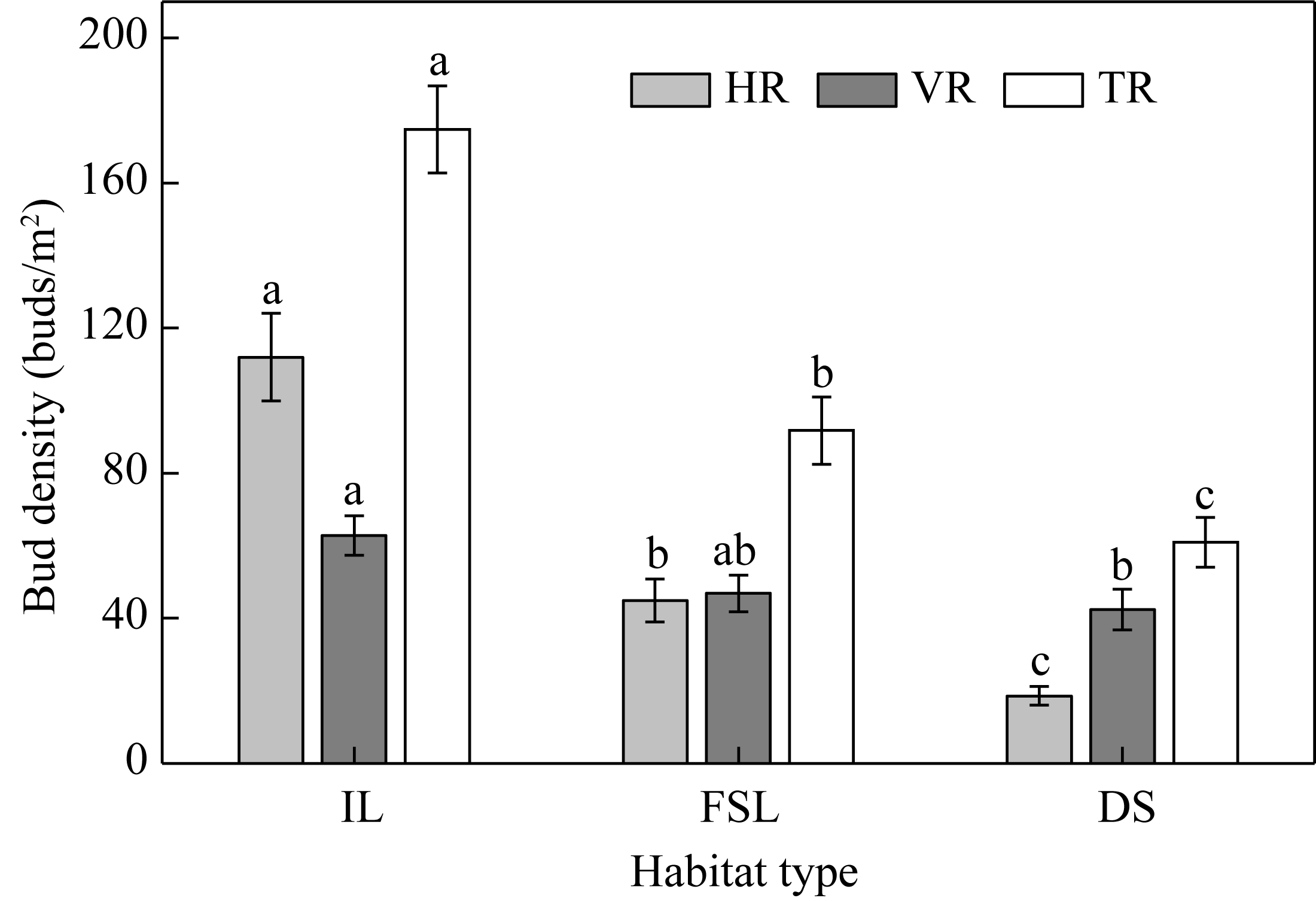
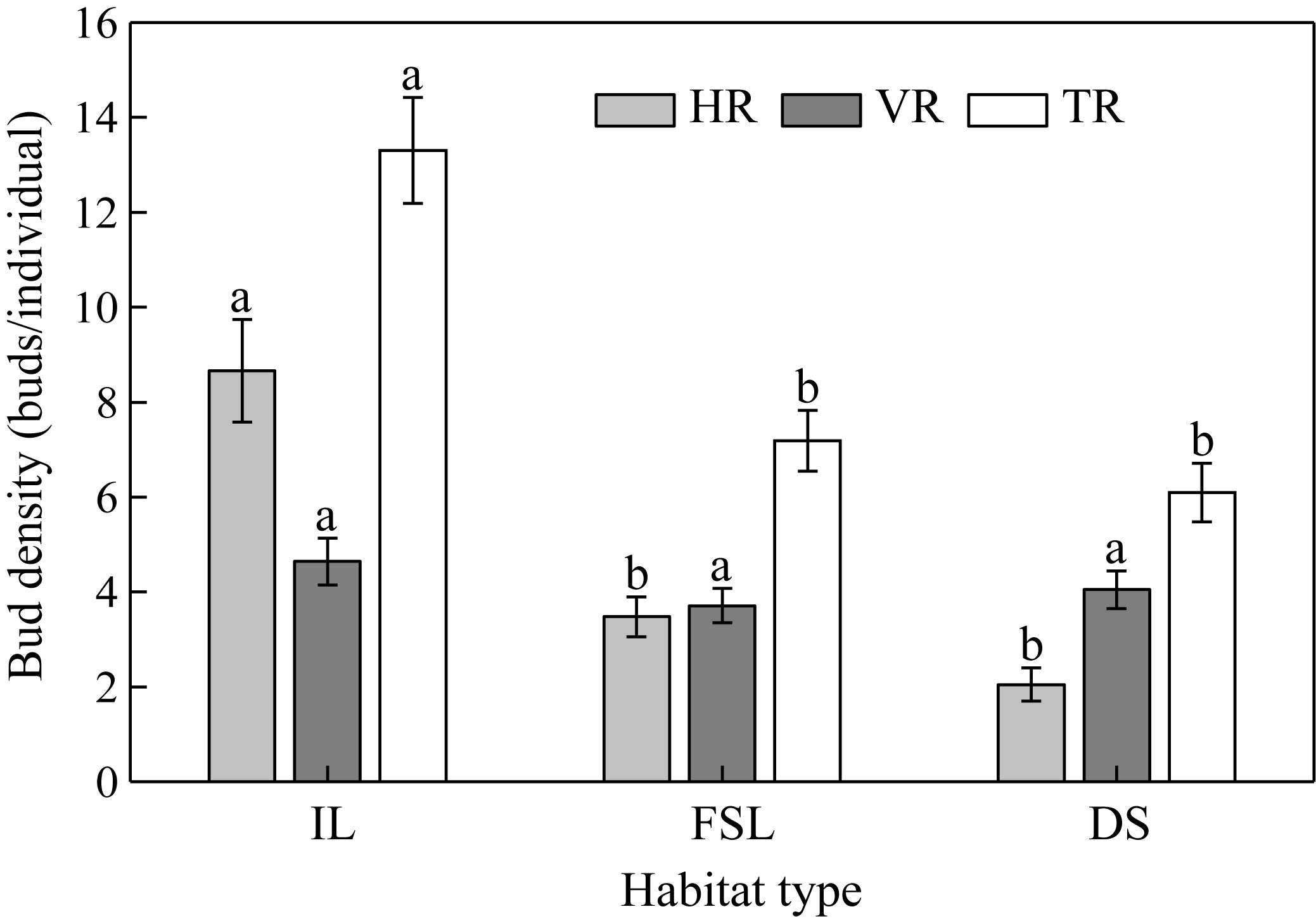
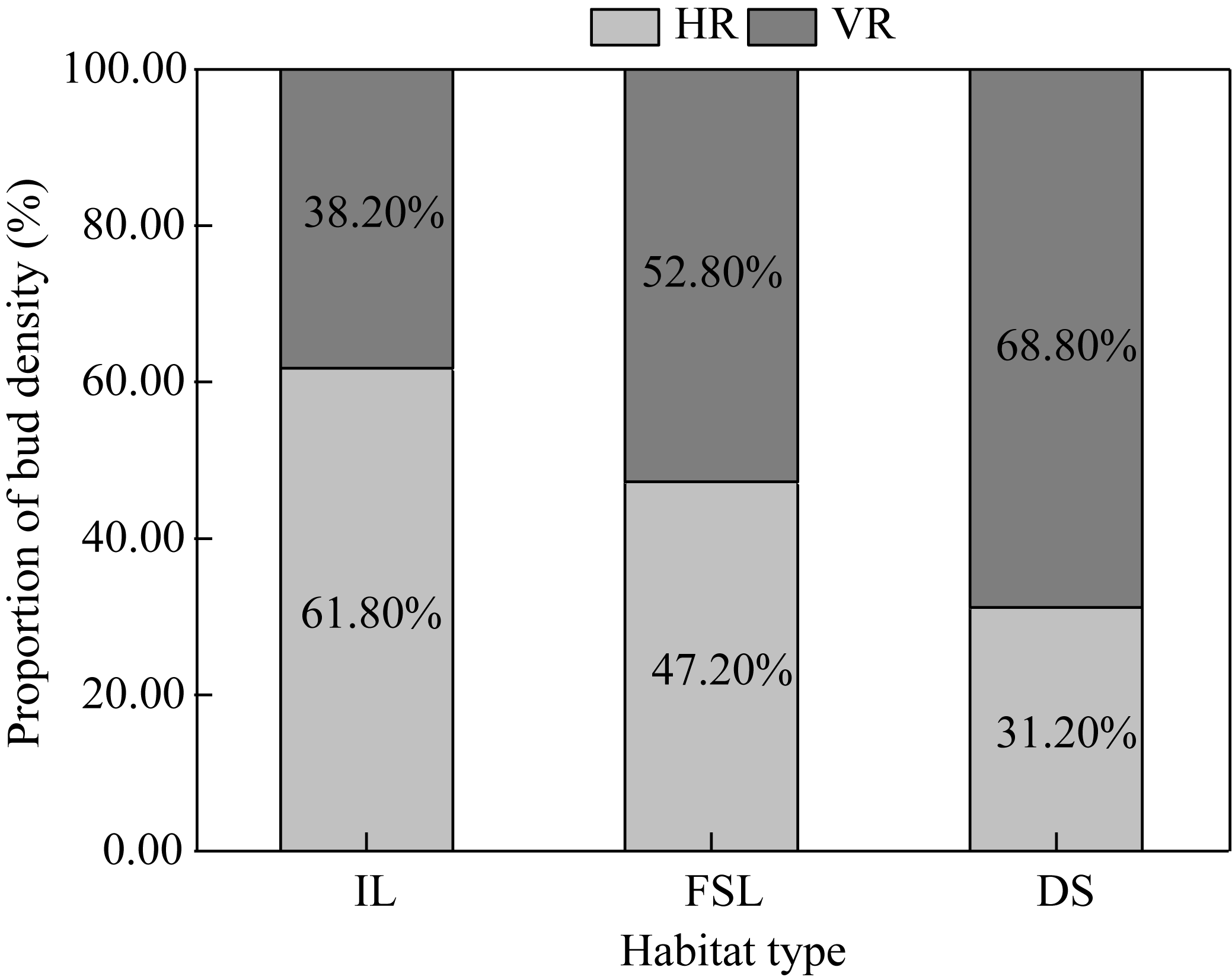
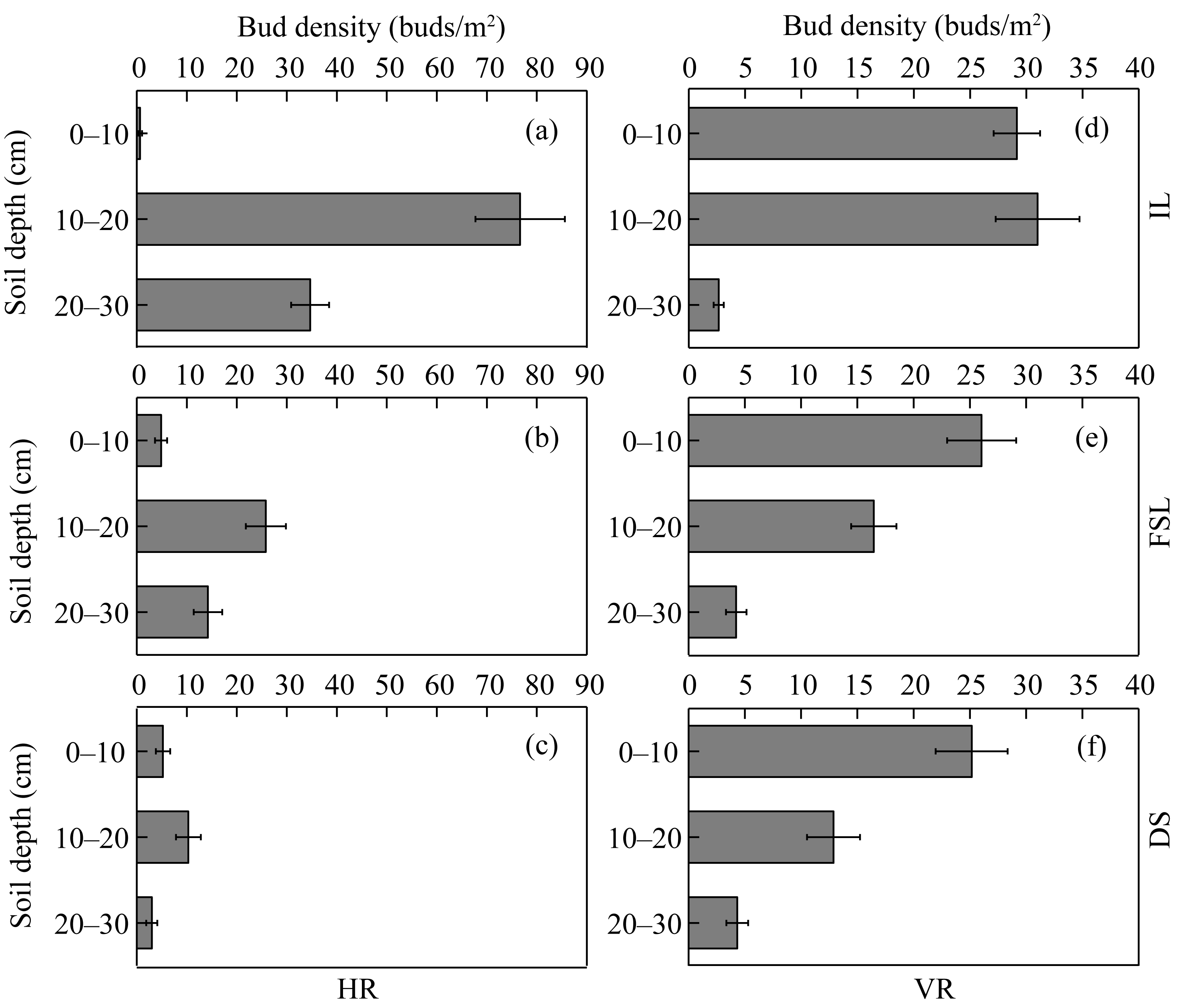
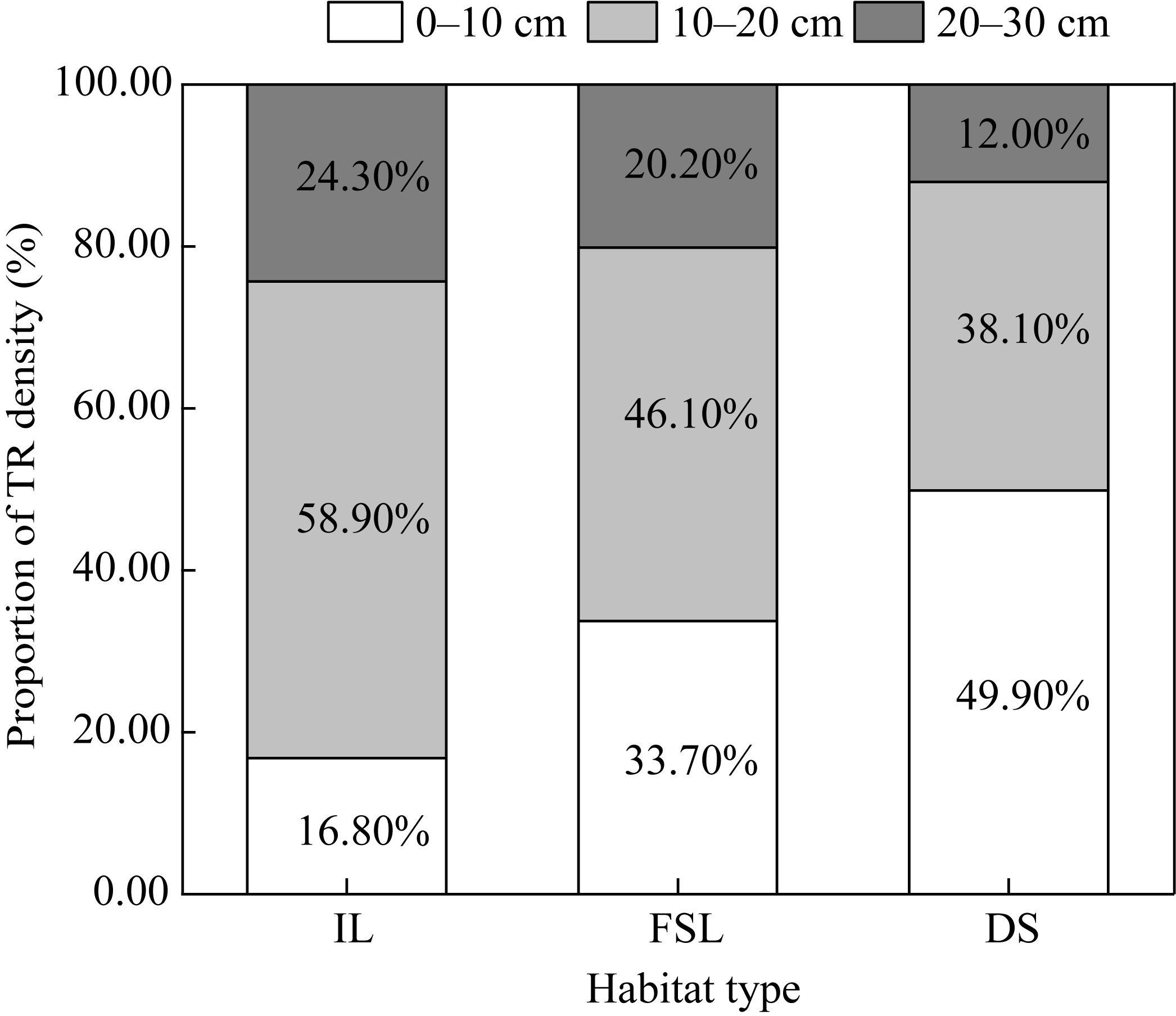
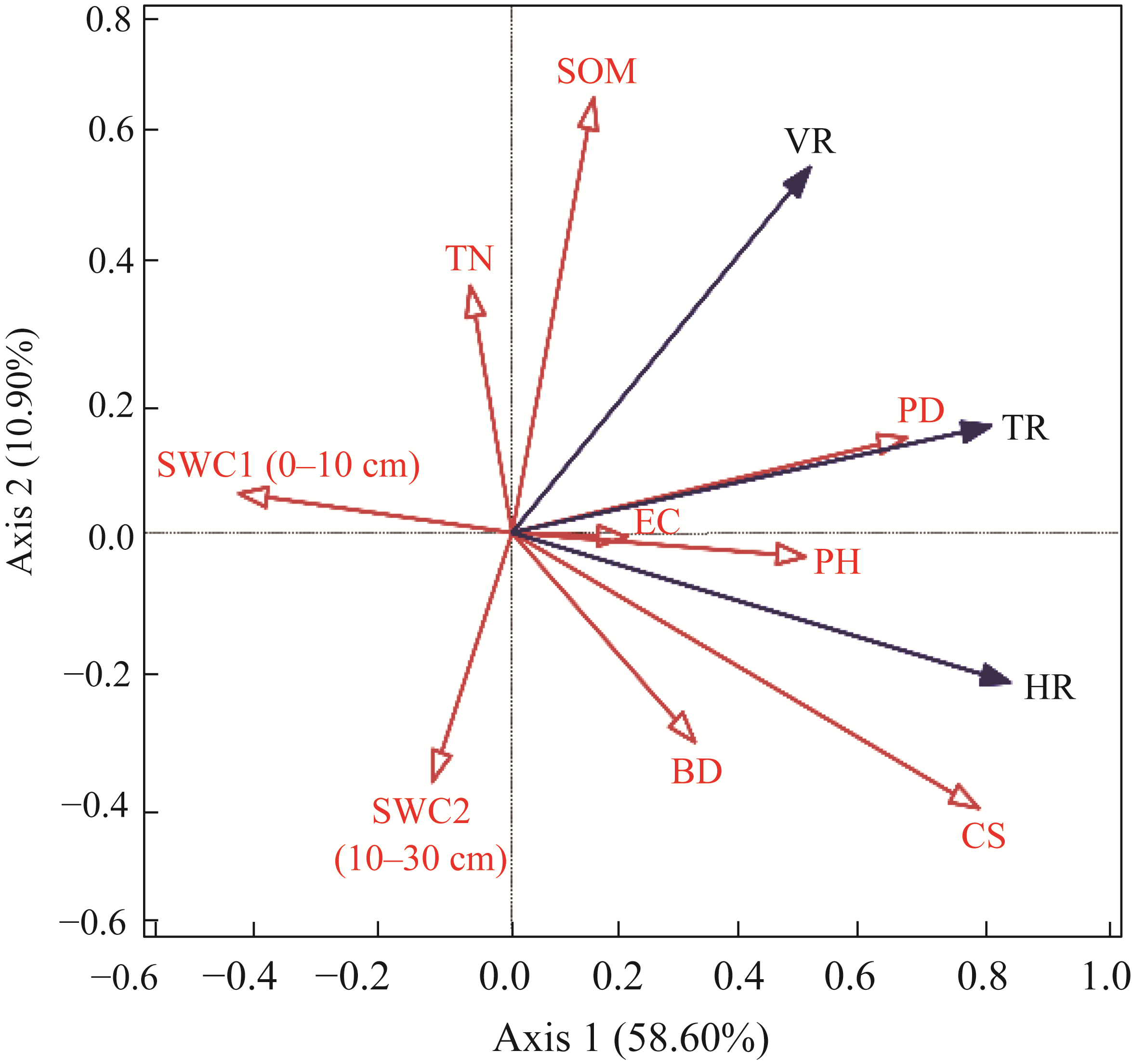
Abstract Belowground bud banks are essential for the regeneration of plant population in arid desert areas, and their response to environmental changes could reflect adaptive strategies of plants to desert habitats. However, the size and composition of belowground bud banks and their response to environmental factors in the desert steppe zone remain poorly understood, challenging desertification control efforts in arid desert areas. This study examined the density and vertical distribution of horizontal and vertical rhizome buds of a rhizomatous legume herb Sophora alopecuroides L., its population characteristics, and soil physical-chemical properties in three habitats (interdune lowland (IL), flat sandy land (FSL), and desert steppe (DS)) in a desert steppe zone, northern China. Our findings revealed that: (1) total and horizontal rhizome bud densities of S. alopecuroides differed significantly among the three habitats (P<0.05), with the largest total rhizome bud density (177 buds/m2) in IL and the smallest (63 buds/m2) in DS; (2) horizontal rhizome buds distributed in the deep soil layer were dominant in IL, while vertical rhizome buds in the top soil layer were predominant in DS; and (3) soil coarse sand, nutrient content, and population density were the primary factors affecting bud bank density of S. alopecuroides. Specifically, horizontal rhizome buds were dependent largely on soil coarse sand content, and vertical rhizome buds tended to be more related to soil organic matter content and population density. Our results indicated that horizontal rhizome buds were more important in IL with frequent aeolian disturbance, whereas vertical rhizome buds were more important in DS with abundant water and nutrient resources. The plastic responses and survival strategies of S. alopecuroides bud bank to different habitats provide valuable information for the effective implementation of desertification control measures and the management of desert steppe ecosystems.
|
|
Received: 01 May 2025
Published: 31 January 2026
|
|
Corresponding Authors:
*KANG Jianjun (E-mail: kangjj14@lzb.ac.cn)
|
|
|
| [1] |
Alamusa, Yang T T, Cao J, et al. 2017. Soil moisture influences vegetation distribution patterns in sand dunes of the Horqin Sandy Land, Northeast China. Ecological Engineering, 105: 95-101.
doi: 10.1016/j.ecoleng.2017.04.035
|
|
|
| [2] |
An H, Tang Z S, Keesstra S, et al. 2019. Impact of desertification on soil and plant nutrient stoichiometry in a desert grassland. Scientific Reports, 9(1): 9422, doi: 10.1038/s41598-019-45927-0.
|
|
|
| [3] |
Bakker C, Van Bodegom P M, Nelissen H J M, et al. 2006. Plant responses to rising water tables and nutrient management in calcareous dune slacks. Plant Ecology, 185: 19-28.
doi: 10.1007/s11258-005-9080-5
|
|
|
| [4] |
Bao S D. 2000. Soil and Agricultural Chemistry Analysis. Beijing: China Agriculture Press. (in Chinese)
|
|
|
| [5] |
Benson E J, Hartnett D C. 2006. The role of seed and vegetative reproduction in plant recruitment and demography in tallgrass prairie. Plant Ecology, 187: 163-178.
doi: 10.1007/s11258-005-0975-y
|
|
|
| [6] |
Buxbaum C A Z, Vanderbilt K. 2007. Soil heterogeneity and the distribution of desert and steppe plant species across a desert-grassland ecotone. Journal of Arid Environments, 69(4): 617-632.
doi: 10.1016/j.jaridenv.2006.11.017
|
|
|
| [7] |
Carter D L, VanderWeide B L, Blair J M. 2012. Drought‐mediated stem and below‐ground bud dynamics in restored grasslands. Applied Vegetation Science, 15(4): 470-478.
doi: 10.1111/avsc.2012.15.issue-4
|
|
|
| [8] |
Chen X S, Xie Y H, Deng Z M, et al. 2011. A change from phalanx to guerrilla growth form is an effective strategy to acclimate to sedimentation in a wetland sedge species Carex brevicuspis (Cyperaceae). Flora, 206(4): 347-350.
|
|
|
| [9] |
Clarke P J, Lawes M J, Midgley J J, et al. 2013. Resprouting as a key functional trait: how buds, protection and resources drive persistence after fire. New Phytologist, 197(1): 19-35.
doi: 10.1111/nph.12001
pmid: 23110592
|
|
|
| [10] |
Combroux I, Bornette G. 2004. Propagule banks and regenerative strategies of aquatic plants. Journal of Vegetation Science, 15(1): 13-20.
doi: 10.1111/jvs.2004.15.issue-1
|
|
|
| [11] |
Dalgleish H J, Kula A R, Hartnett D C, et al. 2008. Responses of two bunchgrasses to nitrogen addition in tallgrass prairie: the role of bud bank demography. American Journal of Botany, 95(6): 672-680.
doi: 10.3732/ajb.2007277
pmid: 21632392
|
|
|
| [12] |
Dalgleish H J, Hartnett D C. 2009. The effects of fire frequency and grazing on tallgrass prairie productivity and plant composition are mediated through bud bank demography. Plant Ecology, 201: 411-420.
doi: 10.1007/s11258-008-9562-3
|
|
|
| [13] |
Dong M, Alaten B. 1999. Clonal plasticity in response to rhizome severing and heterogeneous resource supply in the rhizomatous grass Psammochloa villosa in an Inner Mongolian dune, China. Plant Ecology, 141: 53-58.
doi: 10.1023/A:1009875000149
|
|
|
| [14] |
Dong Y W, Guo Z Y, Ma Q, et al. 2023. Soil moisture rather than soil nutrient regulates the belowground bud bank of rhizomatous species Psammochloa villosa in arid sand dunes. Phyton-International Journal of Experimental Botany, 92(5): 1301-1309.
|
|
|
| [15] |
Du L T, Zeng Y J, Ma L L, et al. 2021. Effects of anthropogenic revegetation on the water and carbon cycles of a desert steppe ecosystem. Agricultural and Forest Meteorology, 300: 108339, doi: 10.1016/j.agrformet.2021.108339.
|
|
|
| [16] |
Ferraro A, Silva G S, Martins A R, et al. 2022. Seasonality affects the below‐ground bud bank dynamics of the Cerrado. Journal of Vegetation Science, 33(6): e13165, doi: 10.1111/jvs.13165.
|
|
|
| [17] |
Hartnett D C, Setshogo M P, Dalgleish H J. 2006. Bud banks of perennial savanna grasses in Botswana. African Journal of Ecology, 44(2): 256-263.
doi: 10.1111/aje.2006.44.issue-2
|
|
|
| [18] |
He K Y, Zhou Q Q, He L, et al. 2025. Phenological stage and nitrogen input coordinately regulate bud bank dynamics and shoot allocation in an alpine clonal perennial grass. Plants, 14(14): 2164, doi: 10.3390/plants14142164.
|
|
|
| [19] |
Hu X W, Wu Y P, Wang Y R. 2009. Different requirements for physical dormancy release in two populations of Sophora alopecuroides relation to burial depth. Ecological Research, 24: 1051-1056.
doi: 10.1007/s11284-008-0580-3
|
|
|
| [20] |
Hutchings M J, Kroon H. 1994. Foraging in plants: The role of morphological plasticity in resource acquisition. Advances in Ecological Research, 25: 159-238.
|
|
|
| [21] |
Jansen A J M, Eysink F T W, Maas C. 2001. Hydrological processes in a Cirsio-Molinietum fen meadow: Implications for restoration. Ecological Engineering, 17(1): 3-20.
doi: 10.1016/S0925-8574(00)00129-4
|
|
|
| [22] |
Kleyer M, Bekker R M, Knevel I C, et al. 2008. The LEDA Traitbase: A database of life-history traits of the Northwest European flora. Journal of Ecology, 96(6):1266-1274.
doi: 10.1111/jec.2008.96.issue-6
|
|
|
| [23] |
Klimeš L, Klimešová J, Hendricks R, et al. 1997. Clonal plant architecture:A comparative analysis of form and function. In: DeKroon H, VanGroenendael J. The Ecology and Evolution of Clonal Plants. Leiden: Backhuys Publishers, 1-29.
|
|
|
| [24] |
Klimeš L, Klimešová J. 1999. Root sprouting in Rumex acetosella under different nutrient levels. Plant Ecology, 141: 33-39.
doi: 10.1023/A:1009877923773
|
|
|
| [25] |
Klimešová J, Klimeš L. 2007. Bud banks and their role in vegetative regeneration-A literature review and proposal for simple classification and assessment. Perspectives in Plant Ecology Evolution & Systematics, 8(3): 2115-2126.
|
|
|
| [26] |
Klimešová J, Martínková J, Ottaviani G. 2018. Belowground plant functional ecology: Towards an integrated perspective. Functional Ecology, 33(6): 995-1009.
|
|
|
| [27] |
Li R. 2007. Grassland vegetation dynamics in the farming-pastoral ecotones in the north of China:Taking Yanchi County in Ningxia as an example. PhD Dissertation. Beijing: Beijing Forestry University. (in Chinese)
|
|
|
| [28] |
Li W C, Huang A P, Zhou T C, et al. 2023. Patterns and drivers of the belowground bud bank in alpine grasslands on the Qinghai-Tibet Plateau. Frontiers in Plant Science, 13: 1095864, doi: 10.3389/fpls.2022.1095864.
|
|
|
| [29] |
Liu B, Liu Z M, Wang L X, et al. 2014. Responses of rhizomatous grass Phragmites communis to wind erosion: Effects on biomass allocation. Plant and Soil, 380: 389-398.
doi: 10.1007/s11104-014-2104-y
|
|
|
| [30] |
Liu F H, Liu J, Dong M. 2016. Ecological consequences of clonal integration in plants. Frontiers in Plant Science, 7: 770, doi: 10.3389/fpls.2016.00770.
pmid: 27446093
|
|
|
| [31] |
Liu Z M, Li X L, Yan Q L, et al. 2007. Species richness and vegetation pattern in interdune lowlands of an active dune field in Inner Mongolia, China. Biological Conservation, 140(1-2): 29-39.
doi: 10.1016/j.biocon.2007.07.030
|
|
|
| [32] |
Luo W C, Zhao W Z, Liu B. 2016. Growth stages affect species richness and vegetation patterns of nebkhas in the desert steppes of China. CATENA, 137: 126-133.
doi: 10.1016/j.catena.2015.09.011
|
|
|
| [33] |
Luo W C, Zhao W Z. 2019. Adventitious roots are key to the development of nebkhas in extremely arid regions. Plant and Soil, 442: 471-482.
doi: 10.1007/s11104-019-04209-4
|
|
|
| [34] |
Luo W T, Muraina T O, Griffin-Nolan R J. 2023. High below‐ground bud abundance increases ecosystem recovery from drought across arid and semiarid grasslands. Journal of Ecology, 111(9): 2038-2048.
doi: 10.1111/jec.v111.9
|
|
|
| [35] |
Ma Q, Qian J Q, Tian L, et al. 2019. Responses of belowground bud bank to disturbance and stress in the sand dune ecosystem. Ecological Indicators, 106: 105521, doi: 10.1016/j.ecolind.2019.105521.
|
|
|
| [36] |
Marbà N, Duarte C M. 1998. Rhizome elongation and seagrass clonal growth. Marine Ecology Progress Series, 174: 269-280.
doi: 10.3354/meps174269
|
|
|
| [37] |
Maun M A. 1998. Adaptations of plants to burial in coastal sand dunes. Canadian Journal of Botany, 76: 713-738.
doi: 10.1139/b98-058
|
|
|
| [38] |
Ott J P, Hartnett D C. 2012. Contrasting bud bank dynamics of two co-occurring grasses in tallgrass prairie: Implications for grassland dynamics. Plant Ecology, 213: 1437-1448.
doi: 10.1007/s11258-012-0102-9
|
|
|
| [39] |
Ott J P, Hartnett D C. 2015. Bud bank dynamics and clonal growth strategy in the rhizomatous grass, Pascopyrum smithii. Plant Ecology, 216: 395-405.
|
|
|
| [40] |
Passioura J B. 1988. Water transport in and to roots. Annual Review of Plant Physiology and Plant Molecular Biology, 39: 245-265.
doi: 10.1146/arplant.1988.39.issue-1
|
|
|
| [41] |
Qian J Q, Wang Z W, Klimešová J, et al. 2017. Differences in below-ground bud bank density and composition along a climatic gradient in the temperate steppe of northern China. Annals of Botany, 120(5): 755-764.
doi: 10.1093/aob/mcx072
pmid: 28633337
|
|
|
| [42] |
Qian J Q, Wang Z W, Klimešová J, et al. 2021. Belowground bud bank and its relationship with aboveground vegetation under watering and nitrogen addition in temperate semiarid steppe. Ecological Indicators, 125: 107520, doi: 10.1016/j.ecolind.2021.107520.
|
|
|
| [43] |
Qian J Q, Guo Z Y, Muraina T O, et al. 2022. Legacy effects of a multi-year extreme drought on belowground bud banks in rhizomatous vs bunchgrass-dominated grasslands. Oecologia, 198(3): 763-771.
doi: 10.1007/s00442-022-05133-8
pmid: 35230515
|
|
|
| [44] |
Rudgers J A, Chung Y A, Maurer G E, et al. 2018. Climate sensitivity functions and net primary production: A framework for incorporating climate mean and variability. Ecology, 99(3): 576-582.
doi: 10.1002/ecy.2136
pmid: 29315513
|
|
|
| [45] |
Rusch G M, Wilmann B, Klimešová J, et al. 2011. Do clonal and bud bank traits vary in correspondence with soil properties and resource acquisition strategies? Patterns in alpine communities in the Scandian Mountains. Folia Geobotanica, 46: 237-254.
doi: 10.1007/s12224-010-9072-7
|
|
|
| [46] |
Safriel U. 2009. Deserts and desertification: Challenges but also opportunities. Land Degradation & Development, 20(4): 353-366.
doi: 10.1002/ldr.v20:4
|
|
|
| [47] |
Schmid B, Harper J L. 1985. Clonal growth in grassland perennials: I. Density and pattern-dependent competition between plants with different growth forms. The Journal of Ecology, 73(3): 793-808.
doi: 10.2307/2260147
|
|
|
| [48] |
Shao W S, Li G Q. 2016. Plant community composition and characteristics of Sophora alopecuroides and Achnatherum splendens in Yanchi County of Ningxia. Guizhou Agricultural Sciences, 44(6): 159-163. (in Chinese)
|
|
|
| [49] |
Su Y Z, Zhao H L, Zhao W Z, et al. 2004. Fractal features of soil particle size distribution and the implication for indicating desertification. Geoderma, 122(1): 43-49.
doi: 10.1016/j.geoderma.2003.12.003
|
|
|
| [50] |
Sui Y, He W M, Pan X, et al. 2011. Partial mechanical stimulation facilitates the growth of the rhizomatous plant Leymus secalinus: Modulation by clonal integration. Annals of Botany, 107(4): 693-697.
doi: 10.1093/aob/mcr012
|
|
|
| [51] |
Te N W, Griffin‐Nolan R J, Slette I J, et al. 2025. Grassland bud and shoot demographic responses to single and recurrent droughts vary across an aridity gradient. Ecology, 106(2): e70002, doi: 10.1002/ecy.7000.
|
|
|
| [52] |
Tomlinson K W, O'Connor T G. 2004. Control of tiller recruitment in bunchgrasses: Uniting physiology and ecology. Functional Ecology, 18(4): 489-496.
doi: 10.1111/fec.2004.18.issue-4
|
|
|
| [53] |
van Kleunen M, Fischer M. 2001. Adaptive evolution of plastic foraging responses in a clonal plant. Ecology, 82(12): 3309-3319.
doi: 10.1890/0012-9658(2001)082[3309:AEOPFR]2.0.CO;2
|
|
|
| [54] |
Wang J F, Gao S, Lin J X, et al. 2010. Summer warming effects on biomass production and clonal growth of Leymus chinensis. Crop and Pasture Science, 61: 670-676.
doi: 10.1071/CP10012
|
|
|
| [55] |
Wang R Z, Deng X X, Gao Q X, et al. 2020. Sophora alopecuroides L.: An ethnopharmacological, phytochemical, and pharmacological review. Journal of Ethnopharmacology, 248: 112172, doi: 10.1016/j.jep.2019.112172.
|
|
|
| [56] |
Wang Z W, Xu A K, Zhu T C. 2008. Plasticity in bud demography of a rhizomatous clonal plant Leymus chinensis L. in response to soil water status. Journal of Plant Biology, 51: 102-107.
doi: 10.1007/BF03030718
|
|
|
| [57] |
Wu J, Wang Y C, Ma Q, et al. 2020. Roles of aboveground vegetation, soil properties, and disturbance in determining belowground bud bank in sand dune ecosystems. Environmental and Experimental Botany, 178: 104155, doi: 10.1016/j.envexpbot.2020.104155.
|
|
|
| [58] |
Wu J, Chen X, Xu L, et al. 2021a. The spatial pattern of the belowground bud bank and its responses to soil water status in the interdune lowlands of active sand dunes of Inner Mongolia, China. Restoration Ecology, 29(2): e13223, doi: 10.1111/rec.13223.
|
|
|
| [59] |
Wu J, Zhou Q L, Yu F H, et al. 2022. Changes and determinants of belowground bud banks along an interdune lowland sequence. Flora, 289: 152026, doi: 10.1016/j.flora.2022.152026.
|
|
|
| [60] |
Wu X, Zheng X J, Mu X H, et al. 2021b. Differences in allometric relationship of two dominant woody species among various terrains in a desert region of central Asia. Frontiers in Plant Science, 12: 754887, doi: 10.3389/fpls.2021.754887.
|
|
|
| [61] |
Xu D M, Wang K, Long S P. 2008. Vegetation characteristics and soil properties in the transitional zone in south fringe of Mu Us Sandy Land. Bulletin of Soil and Water Conservation, 28(5): 39-47. (in Chinese)
|
|
|
| [62] |
Yang H. 2005. The biological and ecological basis of population diffusion of Sophora alopecuroides. MSc Thesis. Urumqi: Xinjiang University. (in Chinese)
|
|
|
| [63] |
Yao Y F, Zhao Z N, Wei X R, et al. 2019. Effects of shrub species on soil nitrogen mineralization in the desert-loess transition zone. CATENA, 173: 330-338.
doi: 10.1016/j.catena.2018.10.016
|
|
|
| [64] |
Ye X H, Yu F H, Dong M. 2006. A trade-off between guerrilla and phalanx growth forms in Leymus secalinus under different nutrient supplies. Annals of Botany, 98(1): 187-191.
doi: 10.1093/aob/mcl086
|
|
|
| [65] |
Yu D F, Zheng X Y, Mu C S, et al. 2022. Irrigation and nitrogen application promote population density through altered bud bank size and components in Leymus chinensis. Agronomy, 12(6): 1436, doi: 10.3390/agronomy12061436.
|
|
|
| [66] |
Yu F H, Chen Y F, Dong M. 2002. Clonal integration enhances survival and performance of Potentilla anserina, suffering from partial sand burial on Ordos Plateau, China. Evolutionary Ecology, 15: 303-318.
doi: 10.1023/A:1016032831038
|
|
|
| [67] |
Yu F H, Dong M, Krüsi B. 2004. Clonal integration helps Psammochloa villosa survive sand burial in an inland dune. New Phytologist, 162(3): 697-704.
doi: 10.1111/nph.2004.162.issue-3
|
|
|
| [68] |
Yu F H, Wang N, He W M, et al. 2008. Adaptation of rhizome connections in drylands: Increasing tolerance of clones to wind erosion. Annals of Botany, 102(4): 571-577.
doi: 10.1093/aob/mcn119
|
|
|
| [69] |
Zhang D M, Zhao W Z, Luo W C. 2019. Effect of the population density on belowground bud bank of a rhizomatous clonal plant Leymus secalinus in Mu Us sandy land. Journal of Plant Research, 132(1): 69-80.
doi: 10.1007/s10265-018-01080-9
|
|
|
| [70] |
Zhang J T, Mu C S, Wang D L, et al. 2009. Shoot population recruitment from a bud bank over two seasons of undisturbed growth of Leymus chinensis. Botany, 87(12): 1242-1249.
doi: 10.1139/B09-080
|
|
|
| [71] |
Zhang Q Y, Zhang G R, Yin C A, et al. 2006. Protection and utilization of Sophora alopecuroides L. as medicinal plants resource. World Science and Technology-Modernization of Traditional Chinese Medicine, 8(1): 104-108. (in Chinese)
|
|
|
| [72] |
Zhao J D, Shi C Y, Wang D Y, et al. 2023. Sand burial, rather than salinity or drought, is the main stress that limits the germination ability of Sophora alopecuroides L. seed in the desert steppe of Yanchi, Ningxia, China. Plants, 12(15): 2766, doi: 10.3390/plants12152766.
|
|
|
| [73] |
Zuo S N, Liu L, Zhou C Y, et al. 2023. Effects of nitrogen limitation on Leymus chinensis clonal growth form and bud bank. Flora, 298: 152186, doi: 10.1016/j.flora.2022.152186.
|
|
|
|
Viewed |
|
|
|
Full text
|
|
|
|
|
Abstract
|
|
|
|
|
Cited |
|
|
|
|
| |
Shared |
|
|
|
|
| |
Discussed |
|
|
|
|