| Research article |
|


|
|
|
| Detecting nonlinear threshold effects in water-carbon trade-offs driven by farmland expansion: An Ordered Logit Model approach |
ZHAO Minmin, WANG Siyuan*( ) |
| Key Laboratory of Water Resources Investigation and Monitoring, Center for Hydrogeology and Environmental Geology Survey, China Geological Survey, Tianjin 300309, China |
|
|
|
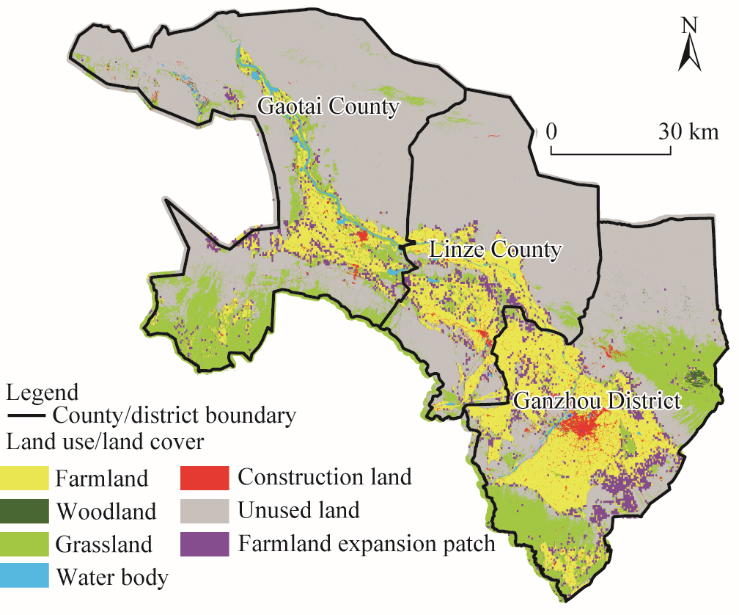
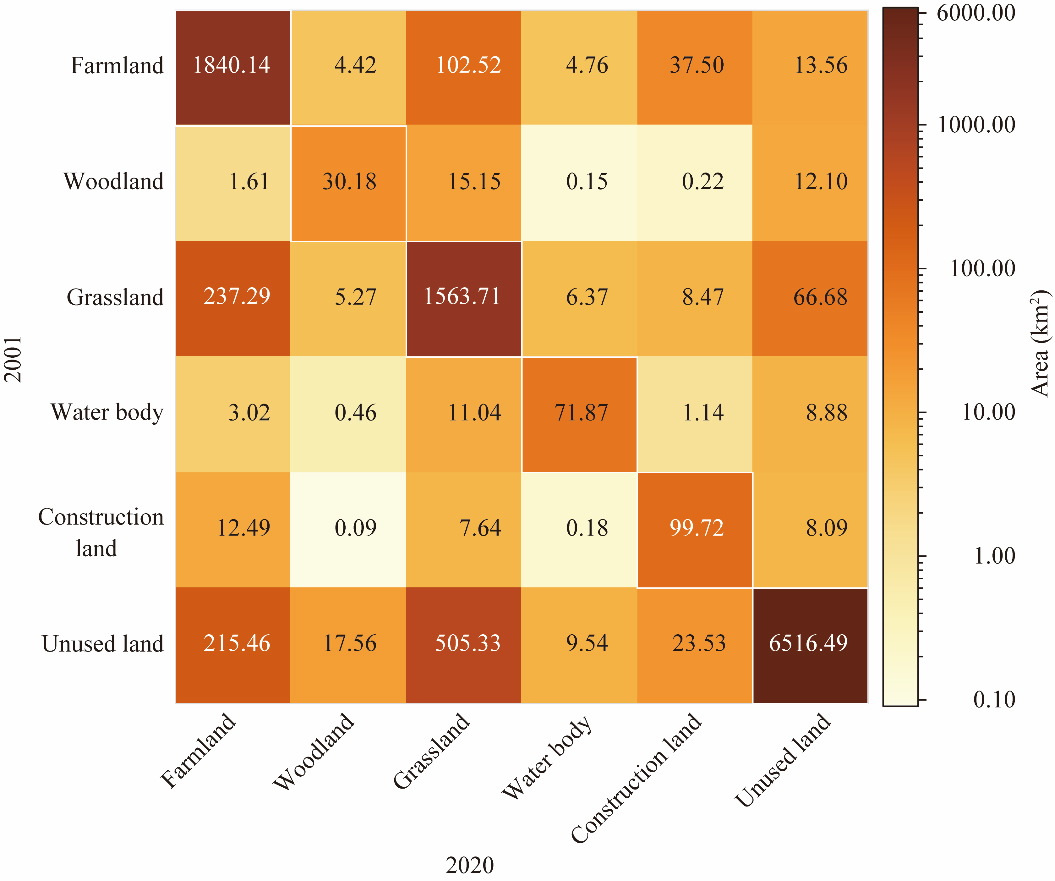
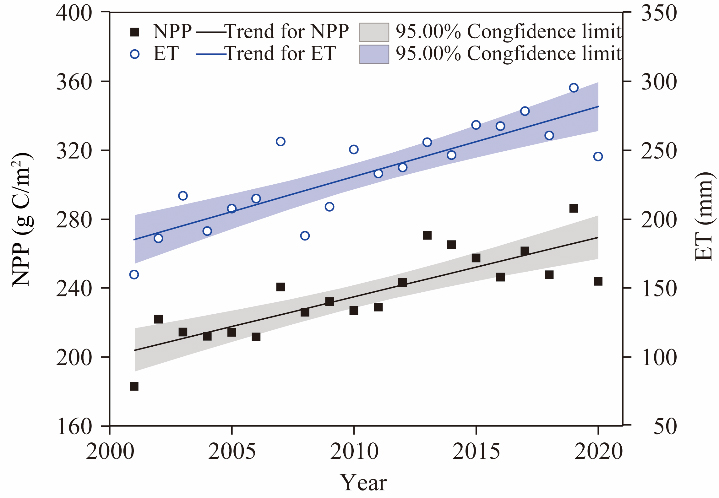
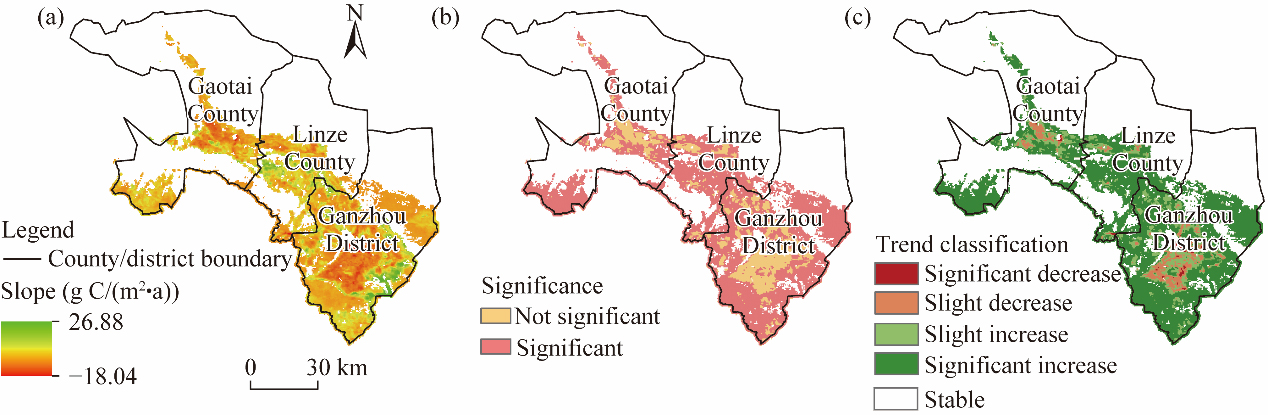
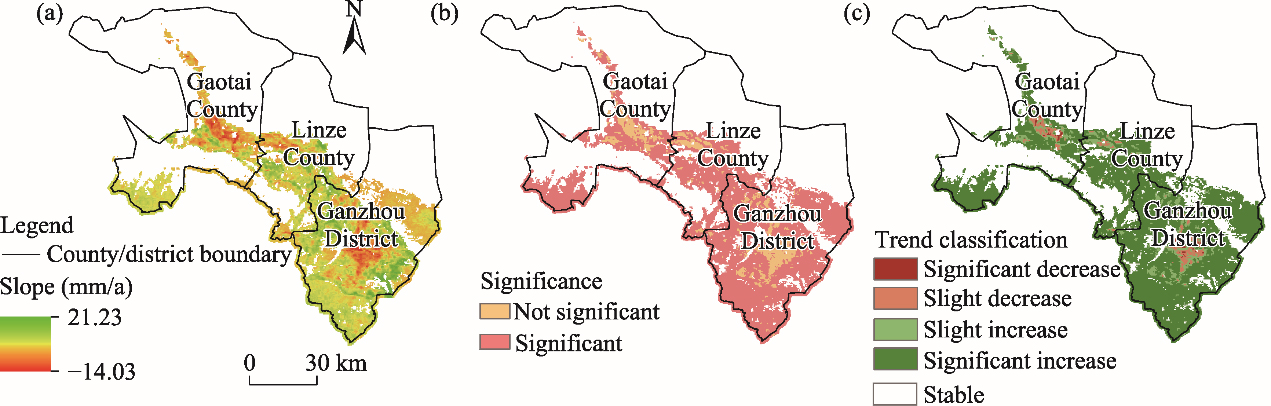
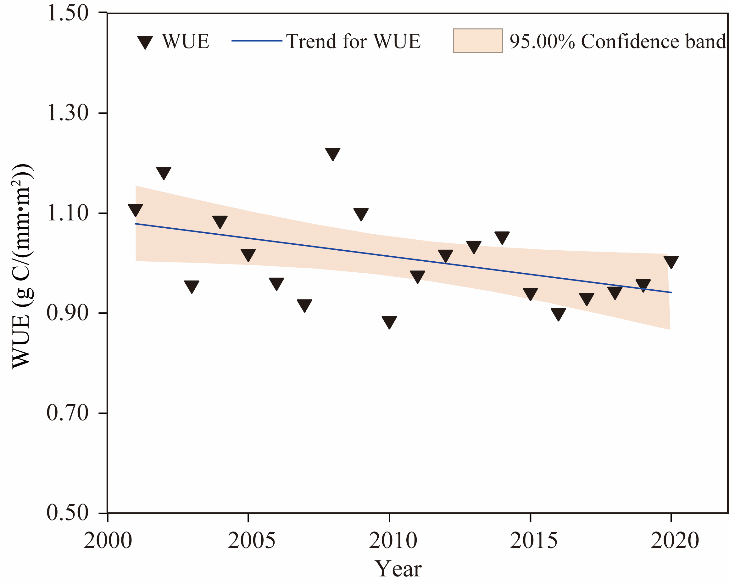
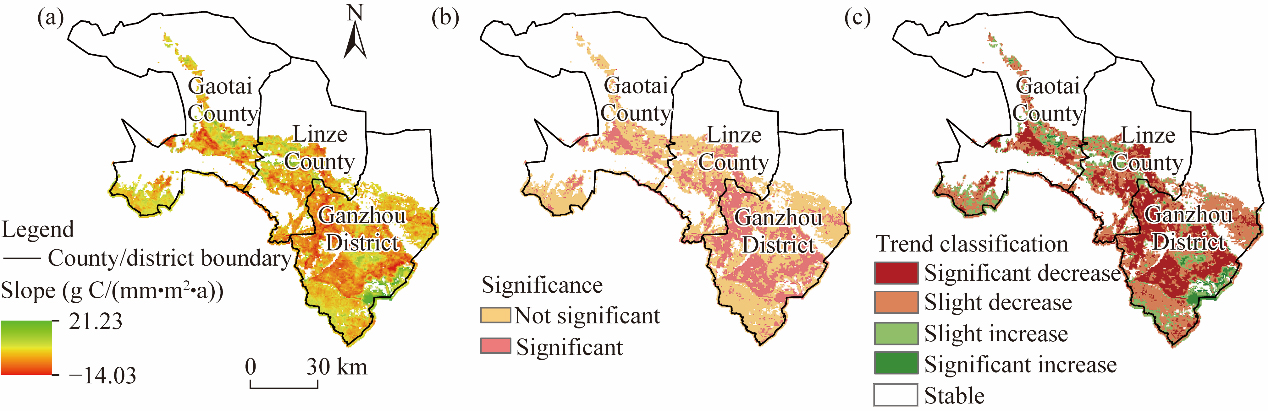
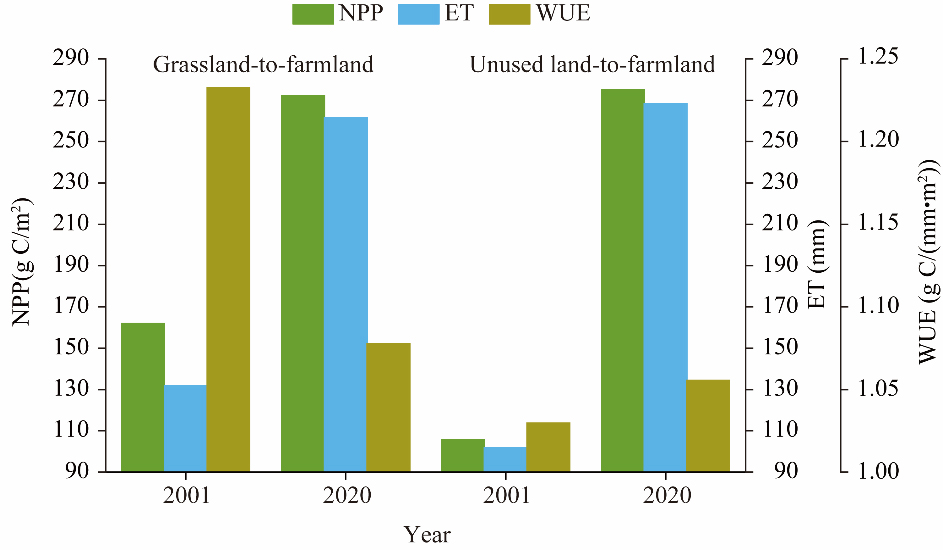
Abstract Meeting the escalating global food demand while maintaining sustainable ecosystem development poses a pressing global challenge. Since 1990, China's newly reclaimed farmland has been predominantly distributed in arid northwestern regions, where farmland expansion boosts food production but intensifies water consumption and threatens oasis ecological stability. However, conventional continuous models are incapable of identifying nonlinear threshold effects in water-carbon trade-offs, which are essential for targeted ecosystem management. To fill this research gap, this study developed a water-carbon trade-off degree (WCTD) indicator, discretized the WCTD indicator into ordered categorical variables, and adopted the Ordered Logit Model to quantify the impacts of farmland expansion on water-carbon trade-offs of the Heihe River Basin, China. Results showed that in the middle reaches of the Heihe River Basin, farmland expanded by 307.11 km2 from 2001 to 2020, mainly due to conversion from grassland and unused land. The regional annual mean net primary productivity (NPP) and evapotranspiration (ET) both showed significant increasing trends. However, the relatively faster growth rate of ET resulted in a pronounced decrease in water use efficiency (WUE), with a linear trend slope of -0.0072 g C/(mm•m2•a) (P<0.050). The Ordered Logit Model results suggested that increased well density and temperature were both significantly positively associated with the deterioration of the water-carbon trade-off, and that grassland-to-farmland conversion imposed a stronger negative impact than unused land-to-farmland conversion. This is mainly because unused land has extremely low baseline WUE, and its reclamation improves soil and hydrological conditions, thereby greatly enhancing WUE. In comparison, grassland reclamation disrupts ET balance; water consumption increases more rapidly than carbon sequestration, which restricts WUE improvement. This study provides a scientific reference for rational farmland planning in the Heihe River Basin and constructs a discretized modeling analytical framework that can be applied to other arid regions to explore the nonlinear interaction mechanisms of human-driven water-carbon coupled systems.
|
|
Received: 25 March 2026
Published: 30 November 2026
|
|
Corresponding Authors:
*WANG Siyuan (E-mail: wsylzu007@126.com)
|
| About author: Author contributions
Conceptualization: ZHAO Minmin, WANG Siyuan; Methodology: ZHAO Minmin, WANG Siyuan; Data curation: WANG Siyuan; Formal analysis: ZHAO Minmin, WANG Siyuan; Writing - original draft preparation: ZHAO Minmin; Writing - review and editing: ZHAO Minmin, WANG Siyuan; Funding acquisition: ZHAO Minmin; Supervision: WANG Siyuan. All authors approved the manuscript.
|
|
|
| [1] |
Ai Z P, Wang Q X, Yang Y H, et al. 2020. Variation of gross primary production, evapotranspiration and water use efficiency for global croplands. Agricultural and Forest Meteorology, 287: 107935, doi: 10.1016/j.agrformet.2020.107935.
|
|
|
| [2] |
Chang X L, Tian Z Z, Chen Y P, et al. 2025. Human activities dominantly driven the greening of China during 2001 to 2020. Remote Sensing, 17(14): 2446, doi: 10.3390/rs17142446.
|
|
|
| [3] |
Chen X J, Peng F, Xue X, et al. 2022. Irrigation quotas for high water use efficiency and economic water productivity of typical crops in Shiyang River Basin. Chinese Journal of Applied and Environmental Biology, 28(6): 1460-1468. (in Chinese)
|
|
|
| [4] |
Cox D R. 1958. The regression analysis of binary sequences. Journal of the Royal Statistical Society Series B: Statistical Methodology, 20(2): 215-232.
|
|
|
| [5] |
DeLucia E H, Chen S L, Guan K Y, et al. 2019. Are we approaching a water ceiling to maize yields in the United States? Ecosphere, 10(6): e02773, doi: 10.1002/ecs2.2773.
|
|
|
| [6] |
Dong X B, Dong G, Chen J Y, et al. 2024. Reclamation alters evapotranspiration and its biophysical controls in a meadow grassland on the Mongolian Plateau. Journal of Environmental Management, 370: 122528, doi: 10.1016/j.jenvman.2024.122528.
|
|
|
| [7] |
Feng Q, Yang L S, Deo R C, et al. 2019. Domino effect of climate change over two millennia in ancient China's Hexi Corridor. Nature Sustainability, 2: 957-961.
|
|
|
| [8] |
Feng Y, Cheng J H, Deng Y. 2024. Study on agricultural water resource utilization efficiency under the constraint of carbon emission and water pollution. Environmental Research, 253: 119142, doi: 10.1016/j.envres.2024.119142.
|
|
|
| [9] |
Forzieri G, Miralles D G, Ciais P, et al. 2020. Increased control of vegetation on global terrestrial energy fluxes. Nature Climate Change, 10: 356-362.
|
|
|
| [10] |
Fu Y M, Jian S Q, Yu X. 2024. Water use efficiency in China is impacted by climate change and land use and land cover. Environmental Science and Pollution Research, 31: 42840-42856.
|
|
|
| [11] |
Gang C, Wang Z, Zhou W, et al. 2016. Assessing the spatiotemporal dynamic of global grassland water use efficiency in response to climate change from 2000 to 2013. Journal of Agronomy and Crop Science, 202: 343-354.
|
|
|
| [12] |
Gentine P, Green J K, Guérin M, et al. 2019. Coupling between the terrestrial carbon and water cycles-a review. Environmental Research Letters, 14: 083003, doi: 10.1088/1748-9326/ab22d6.
|
|
|
| [13] |
Gong J, Liu D Q, Zhang J X, et al. 2019. Tradeoffs/synergies of multiple ecosystem services based on land use simulation in a mountain-basin area, western China. Ecological Indicators, 99: 283-293.
|
|
|
| [14] |
Griebel A, Bennett L T, Metzen D, et al. 2020. Trading water for carbon: maintaining photosynthesis at the cost of increased water loss during high temperatures in a temperate forest. Journal of Geophysical Research: Biogeosciences, 125(1): e2019JG005239, doi: 10.1029/2019JG005239.
|
|
|
| [15] |
Guo M, Li J, He H S, et al. 2018. Detecting global vegetation changes using Mann-Kendal (MK) trend test for 1982-2015 time period. Chinese Geographical Science, 28: 907-919.
|
|
|
| [16] |
Hu Y, Wei F L, Fu B J, et al. 2023. Ecosystems in China have become more sensitive to changes in water demand since 2001. Communications Earth & Environment, 4: 444, doi: 10.1038/s43247-023-01105-9.
|
|
|
| [17] |
Hu Y, Wei F L, Wang S, et al. 2024a. Critical thresholds for nonlinear responses of ecosystem water use efficiency to drought. Science of The Total Environment, 918: 170713, doi: 10.1016/j.scitotenv.2024.170713.
|
|
|
| [18] |
Hu Z Y, Dai Q H, Yan Y J, et al. 2024b. Dissecting the characteristics and driver factors on global water use efficiency using GLASS data sets. Earth's Future, 12(6): e2024EF004630, doi: 10.1029/2024EF004630.
|
|
|
| [19] |
Jia B H, Luo X, Wang L H, et al. 2022. Changes in water use efficiency caused by climate change, CO2 fertilization, and land use changes on the Tibetan Plateau. Advances in Atmospheric Sciences, 40: 144-154.
|
|
|
| [20] |
Kim D, Baik J J, Umair M, et al. 2021. Water use efficiency in terrestrial ecosystem over East Asia: Effects of climate regimes and land cover types. Science of The Total Environment, 773: 145519, doi: 10.1016/j.scitotenv.2021.145519.
|
|
|
| [21] |
Kong R, Zhang Z X, Huang R C, et al. 2022. Projected global warming-induced terrestrial ecosystem carbon across China under SSP scenarios. Ecological Indicators, 139: 108963, doi: 10.1016/j.ecolind.2022.108963.
|
|
|
| [22] |
Lan X, Liu Z Y, Chen X H, et al. 2021. Trade-off between carbon sequestration and water loss for vegetation greening in China. Agriculture, Ecosystems & Environment, 319: 107522, doi: 10.1016/j.agee.2021.107522.
|
|
|
| [23] |
Leong Y Y, Yue J C. 2017. A modification to geographically weighted regression. International Journal of Health Geographics, 16: 11, doi: 10.1186/s12942-017-0085-9.
|
|
|
| [24] |
Li S, Zhang Z S, Wang T, et al. 2020. Oasis functional stability evaluation based on multiple indicators, Northwest China. Acta Geologica Sinica-English Edition, 94: 624-636.
|
|
|
| [25] |
Liu C, Liu B, Zhao W Z, et al. 2020. Temporal and spatial variability of water use efficiency of vegetation and its response to precipitation and temperature in Heihe River Basin. Acta Ecologica Sinica, 40(3): 888-899. (in Chinese)
|
|
|
| [26] |
Liu J M, Pei X T, Zhu W Y, et al. 2024. Water-related ecosystem services interactions and their natural-human activity drivers: Implications for ecological protection and restoration. Journal of Environmental Management, 352: 120101, doi: 10.1016/j.jenvman.2024.120101.
|
|
|
| [27] |
Liu J Y, Kuang W H, Zhang Z X, et al. 2014. Spatiotemporal characteristics, patterns and causes of land use changes in China since the late 1980s. Acta Geographica Sinica, 69(1): 3-14. (in Chinese)
|
|
|
| [28] |
Liu Q, Niu J, Wood J D, et al. 2022. Spatial optimization of cropping pattern in the upper-middle reaches of the Heihe River basin, Northwest China. Agricultural Water Management, 264: 107479, doi: 10.1016/j.agwat.2022.107479.
|
|
|
| [29] |
Liu Z J, Liu Y S, Wang J Y. 2021. A global analysis of agricultural productivity and water resource consumption changes over cropland expansion regions. Agriculture, Ecosystems & Environment, 321: 107630, doi: 10.1016/j.agee.2021.107630.
|
|
|
| [30] |
Meng J J, Cheng H R, Li F, et al. 2022. Spatial-temporal trade-offs of land multi-functionality and function zoning at finer township scale in the middle reaches of the Heihe River. Land Use Policy, 115: 106019, doi: 10.1016/j.landusepol.2022.106019.
|
|
|
| [31] |
Niu Z E, He H L, Zhao Y, et al. 2024. Decadal variations in the driving factors of increasing water-use efficiency in China's terrestrial ecosystems from 2000 to 2022. Ecological Informatics, 84: 102895, doi: 10.1016/j.ecoinf.2024.102895.
|
|
|
| [32] |
Peng H H, Xia H N, Shi Q, et al. 2023. Monitoring of wetland cover changes in protected areas to trade-offs between ecological conservation and food security: A case study from the Dongting Lake, China. Ecological Informatics, 78: 102338, doi: 10.1016/j.ecoinf.2023.102338.
|
|
|
| [33] |
Phuksuksakul N, Yasmin S, Haque M M. 2023. A random parameters copula-based binary logit-generalized ordered logit model with parameterized dependency: Application to active traveler injury severity analysis. Analytic Methods in Accident Research, 38: 100266, doi: 10.1016/j.amar.2023.100266.
|
|
|
| [34] |
Sen P K. 1968. Estimates of the regression coefficient based on Kendall's tau. Journal of the American Statistical Association, 63(324): 1379-1389.
|
|
|
| [35] |
Sun Y, Piao S L, Huang M T, et al. 2016. Global patterns and climate drivers of water-use efficiency in terrestrial ecosystems deduced from satellite-based datasets and carbon cycle models. Global Ecology and Biogeography, 25: 311-323.
|
|
|
| [36] |
Tang K X, He L, Guo J B, et al. 2024. The contributions of climate and human activities to water use efficiency in China's drylands. Forests, 15: 528, doi: 10.3390/f15030528.
|
|
|
| [37] |
Wang G J, Peng W F, Zhang L D, et al. 2023. Quantifying the impacts of natural and human factors on changes in NPP using an optimal parameters-based geographical detector. Ecological Indicators, 155: 111018, doi: 10.1016/j.ecolind.2023.111018.
|
|
|
| [38] |
Wang H B, Li X, Xiao J F, et al. 2021a. Evapotranspiration components and water use efficiency from desert to alpine ecosystems in drylands. Agricultural and Forest Meteorology, 298-299: 108283, doi: 10.1016/j.agrformet.2020.108283.
|
|
|
| [39] |
Wang Z, Wang W K, Zhang Z Y, et al. 2021b. Assessment of the effect of water-table depth on riparian vegetation along the middle and lower reaches of the Manasi River, Northwest China. Hydrogeology Journal, 29: 579-589.
|
|
|
| [40] |
Xiong L, Wang J J, Ding J L, et al. 2024. Response of carbon and water use efficiency to climate change and human activities in Central Asia. Land, 13(12): 2072, doi: 10.3390/land13122072.
|
|
|
| [41] |
Yang L S, Feng Q, Lu T X, et al. 2023. The response of agroecosystem water use efficiency to cropland change in Northwest China's Hexi Corridor. Agricultural Water Management, 276: 108062, doi: 10.1016/j.agwat.2022.108062.
|
|
|
| [42] |
Yi J, Zhao Y, Shao M A, et al. 2015. Hydrological processes and eco-hydrological effects of farmland-forest-desert transition zone in the middle reaches of Heihe River Basin, Gansu, China. Journal of Hydrology, 529, Part 3: 1690-1700.
|
|
|
| [43] |
Yu G R, Chen Z, Wang Y P. 2024. Carbon, water and energy fluxes of terrestrial ecosystems in China. Agricultural and Forest Meteorology, 346: 109890, doi: 10.1016/j.agrformet.2024.109890.
|
|
|
| [44] |
Yue S, Wang C Y. 2004. The Mann-Kendall test modified by effective sample size to detect trend in serially correlated hydrological series. Water Resources Management, 18: 201-218.
|
|
|
| [45] |
Zhang W Q, Bai Y L, Liu L, et al. 2025. Changes in vegetation phenology and water use efficiency driven by warming and wetting in Northwest China. Hydrological Processes, 39: e70110, doi: 10.1002/hyp.70110.
|
|
|
| [46] |
Zhao W Z, Yang R, Liu B, et al. 2016. Oasification of northwestern China: a review. Journal of Desert Research, 36(1): 1-5. (in Chinese)
|
|
|
| [47] |
Zhou S, Yu B F, Zhang Y, et al. 2018. Water use efficiency and evapotranspiration partitioning for three typical ecosystems in the Heihe River Basin, northwestern China. Agricultural and Forest Meteorology, 253-254: 261-273.
|
|
|
|
Viewed |
|
|
|
Full text
|
|
|
|
|
Abstract
|
|
|
|
|
Cited |
|
|
|
|
| |
Shared |
|
|
|
|
| |
Discussed |
|
|
|
|