| Research article |
|


|
|
|
| Spatiotemporal patterns of meteorological-soil moisture drought propagation on the Qinghai-Xizang Plateau, China |
WANG Zegen1,*( ), CHEN Mi1,2, LIU Yaxin1, RAN Yaowen1, YONG Zhiwei1,3, HUANG Yaoxuan1, WANG Yingyang1, ZHAO Junxin4 ), CHEN Mi1,2, LIU Yaxin1, RAN Yaowen1, YONG Zhiwei1,3, HUANG Yaoxuan1, WANG Yingyang1, ZHAO Junxin4 |
1 School of Geoscience and Technology, Southwest Petroleum University, Chengdu 610500, China
2 Technology Innovation Center for Remote Sensing Monitoring of Natural Resources in Southwest China Mountains, Ministry of Natural Resources, Chengdu 610100, China
3 School of Resources and Environment, Chengdu University of Information Technology, Chengdu 610225, China
4 School of Civil Engineering and Geomatics, Southwest Petroleum University, Chengdu 610500, China |
|
|
|
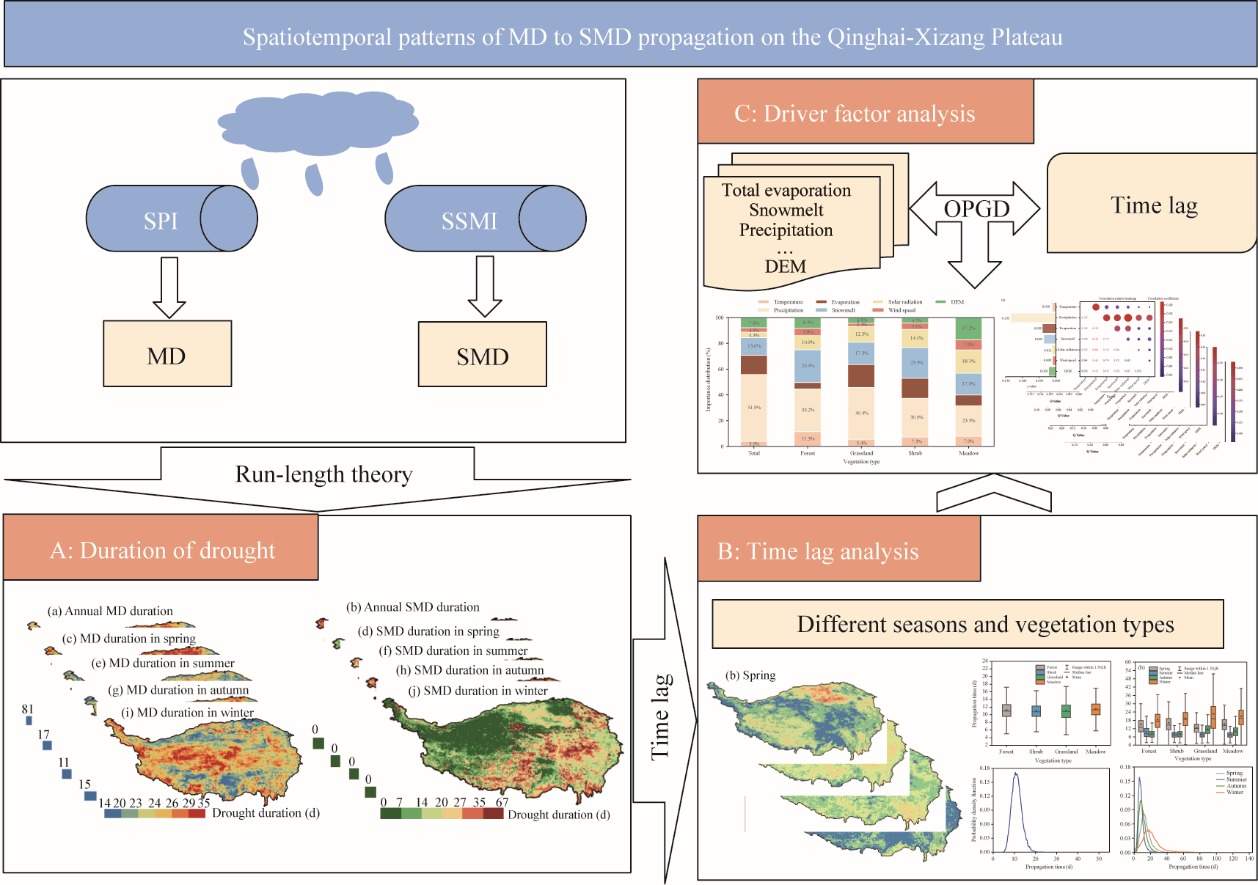
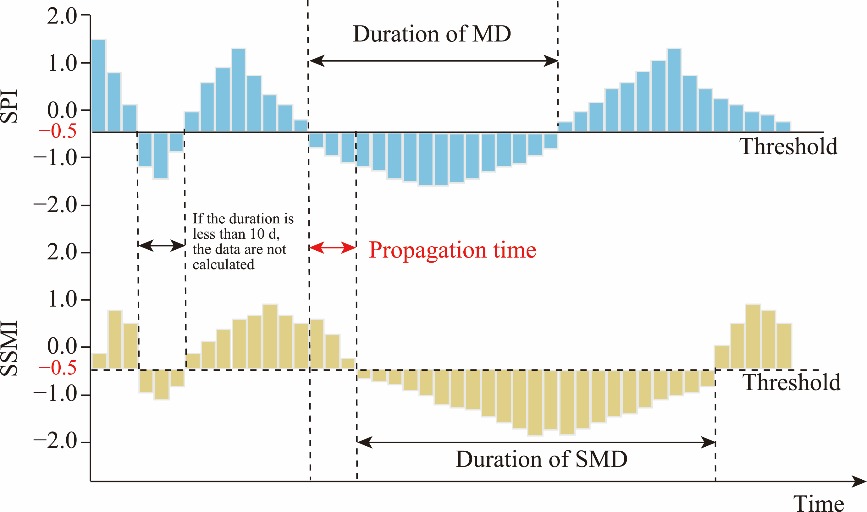
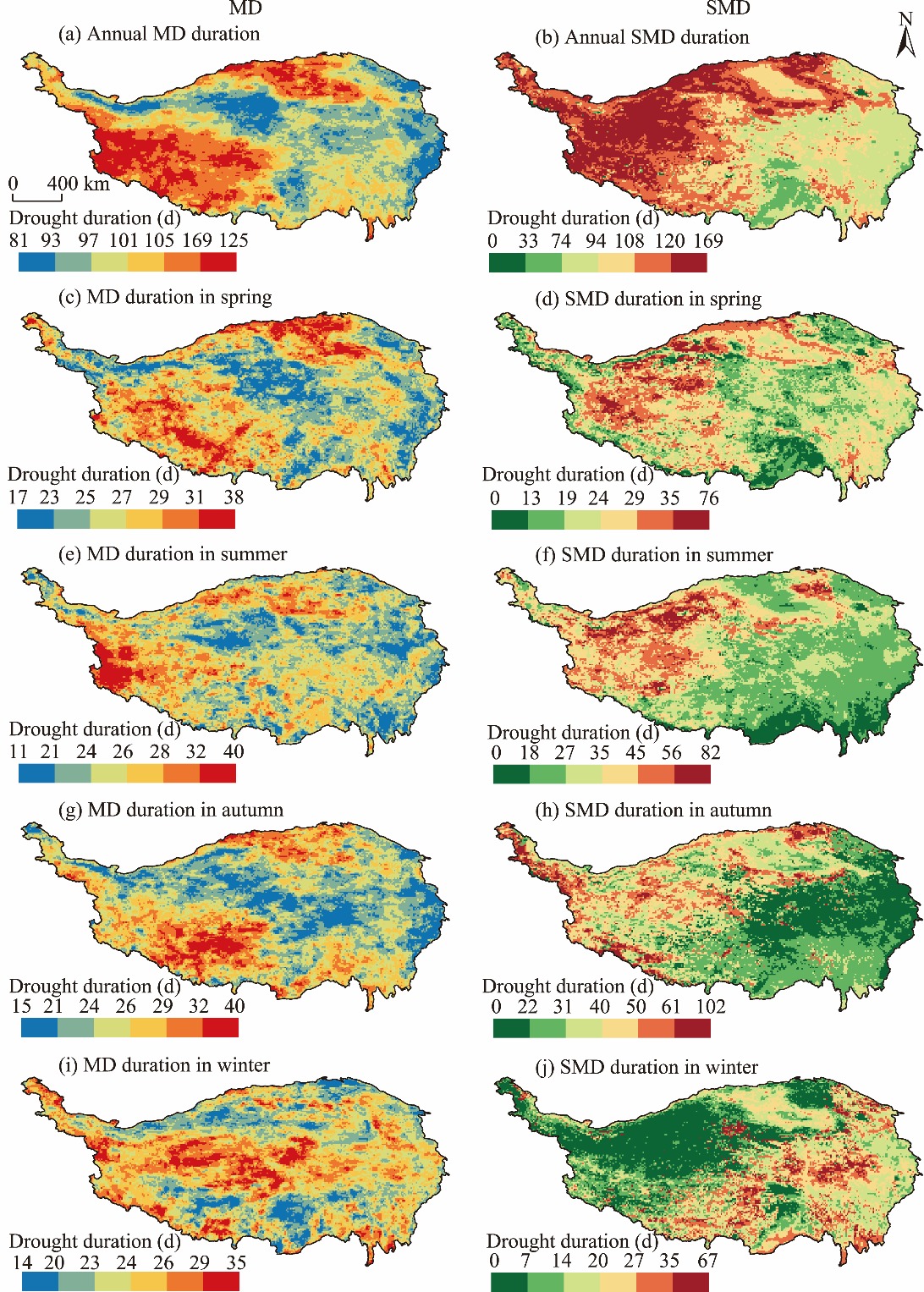
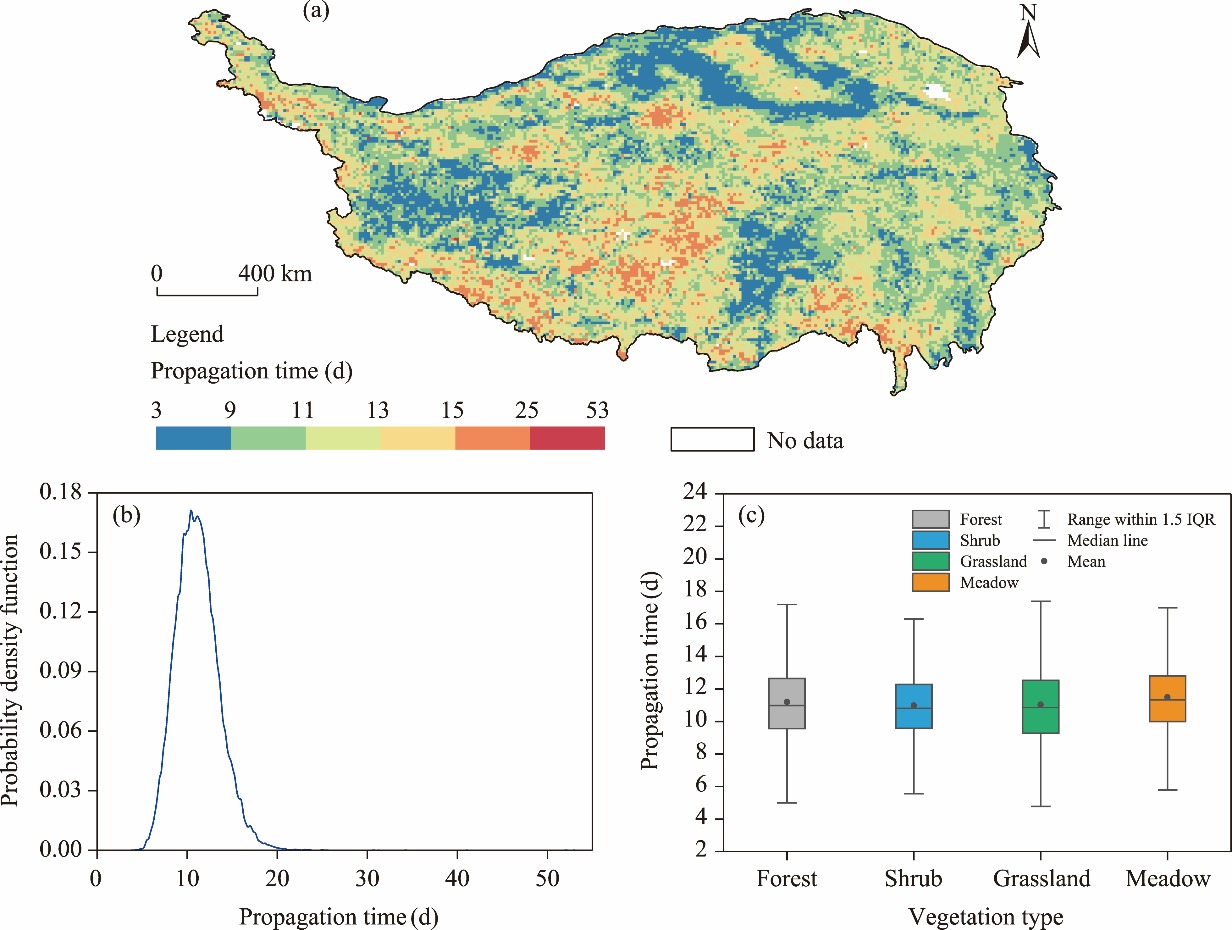
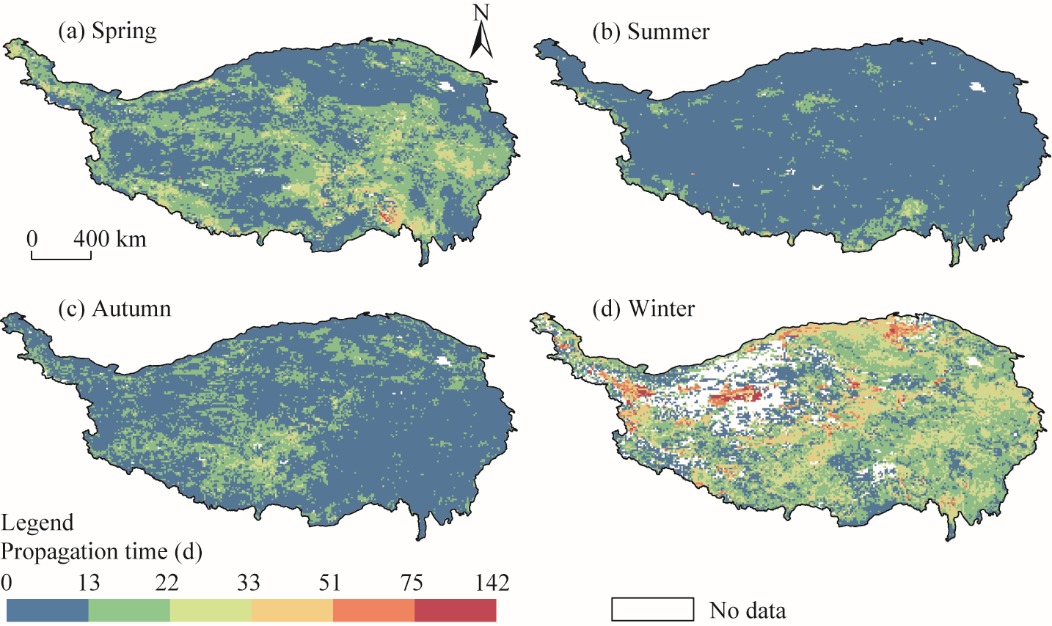
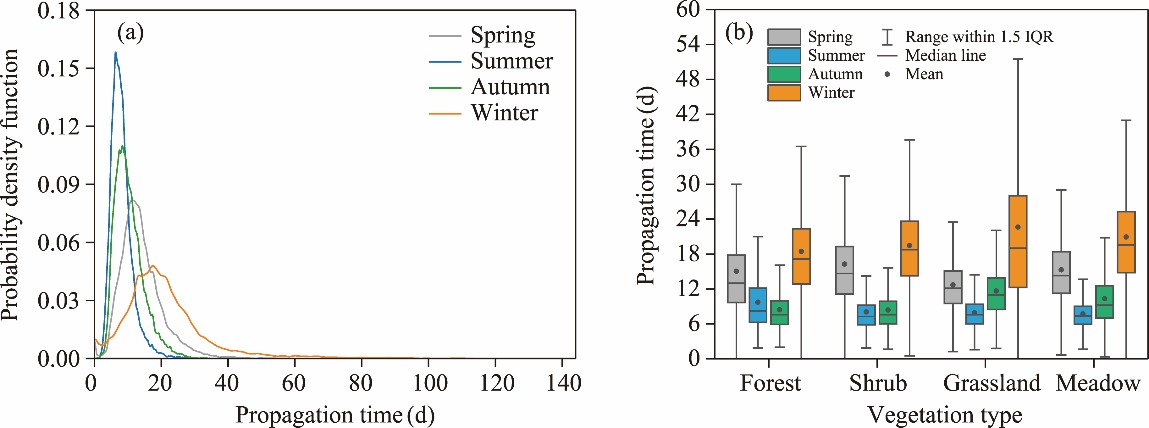
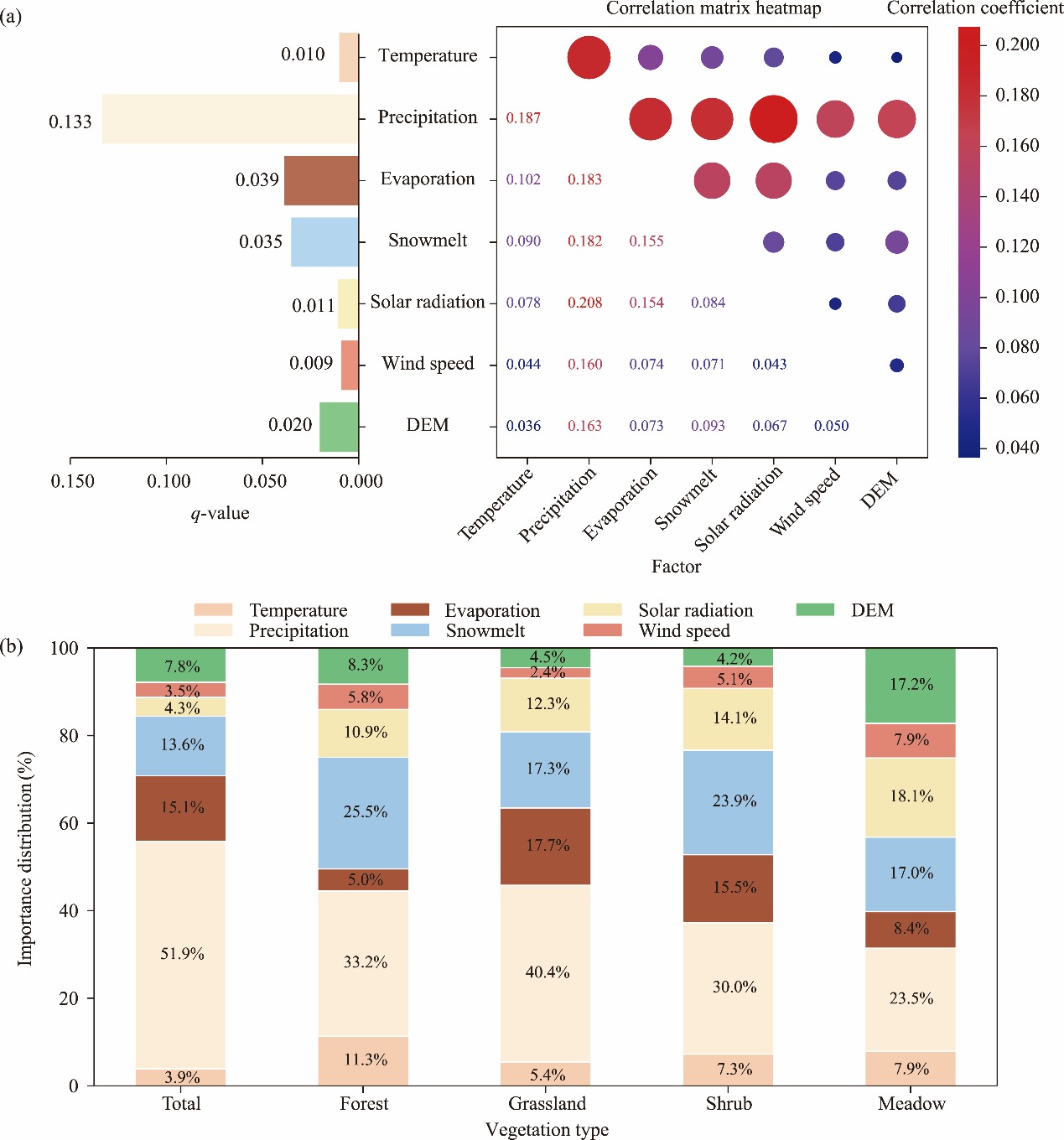
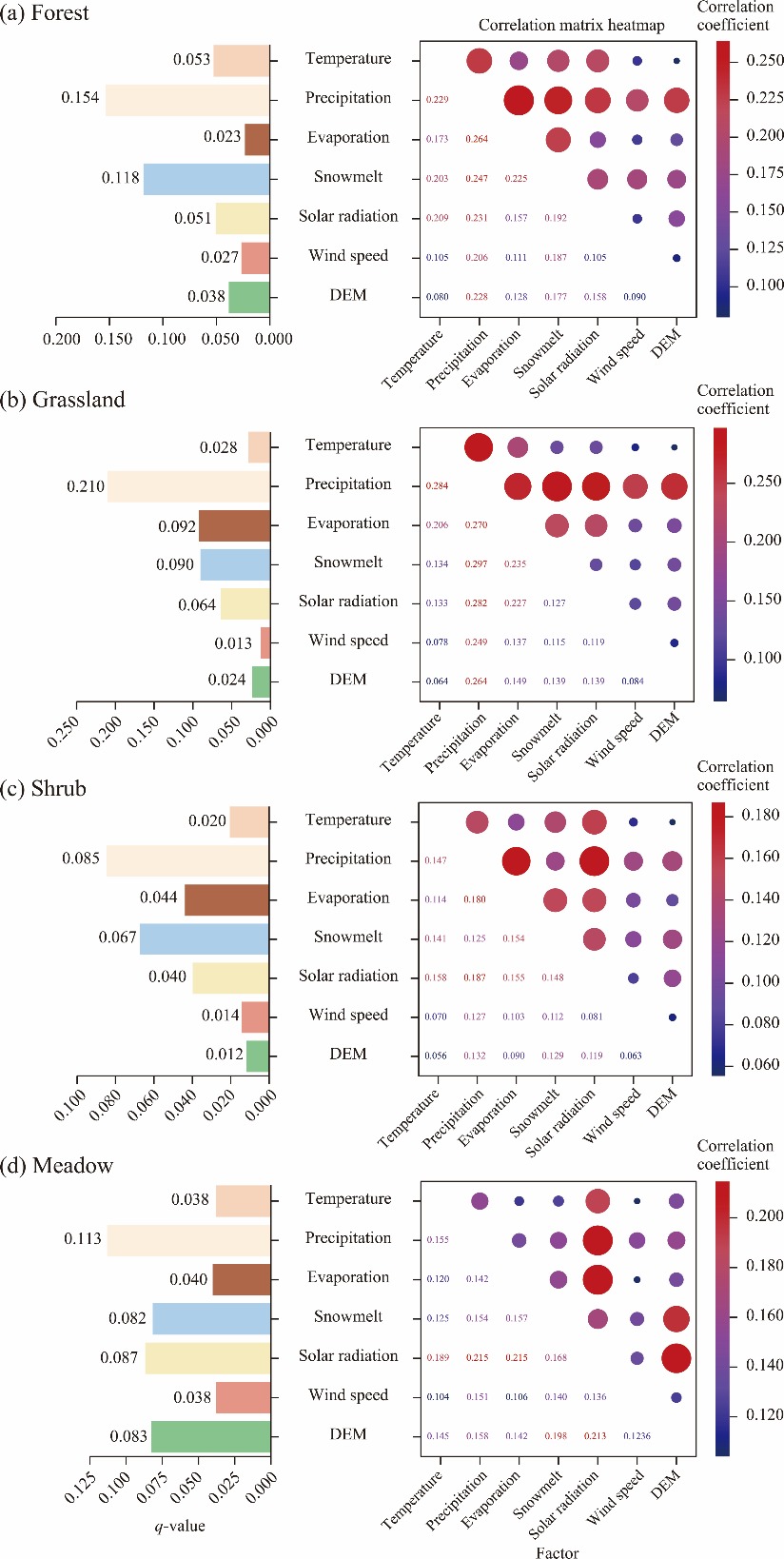
Abstract Drought is among the most destructive and recurrent natural disasters worldwide. In recent decades, the frequency of drought events has increased, exerting significant impacts on socioeconomic development. The propagation of meteorological drought (MD) to soil moisture drought (SMD) is a common natural process; however, its dynamics across different seasons and vegetation types on the Qinghai-Xizang Plateau, as well as the underlying meteorological driving mechanisms, remain insufficiently understood. This study utilized precipitation and soil moisture data from the European Centre for Medium-Range Weather Forecasts (ECMWF) Reanalysis v5 (ERA5)-Land reanalysis dataset for the period 1982-2022. The standardized precipitation index (SPI) and standardized soil moisture index (SSMI) were employed to characterize MD and SMD, respectively. By integrating run theory with an optimal parameter geographical detector (OPGD) model, this study systematically analyzed the average duration and propagation time of MD and SMD across the Qinghai-Xizang Plateau, and quantitatively evaluated the explanatory power of various meteorological and topographical factors influencing drought propagation. The results indicated that the mean duration of SMD across the Qinghai-Xizang Plateau from 1982 to 2022 was generally longer than that of MD. Significant seasonal differences in propagation time were observed, with the average propagation time ranked as winter (21 d)>spring (14 d)>autumn (10 d)>summer (8 d). Spatial variability of propagation time was more pronounced in spring and winter than in summer and autumn. Furthermore, the analysis of driving mechanisms revealed that drought propagation from MD to SMD on the Qinghai-Xizang Plateau was primarily influenced by precipitation (relative contribution proportion of 51.9%), followed by evaporation (15.1%) and snowmelt (13.6%), with the strongest interaction effects associated with precipitation. Although the dominant factors across different vegetation types were generally consistent with those for the entire plateau, solar radiation also showed a relatively high contribution (average 13.9%) across vegetation types. In summary, this study provides a scientific basis for improving drought early warning systems and optimizing water resource management strategies.
|
|
Received: 31 October 2025
Published: 31 May 2026
|
|
Corresponding Authors:
*WANG Zegen (E-mail: zegen01@126.com)
|
| About author: Author contributions
Conceptualization: WANG Zegen, CHEN Mi, HUANG Yaoxuan; Methodology: WANG Zegen, CHEN Mi, LIU Yaxin, RAN Yaowen, YONG Zhiwei, HUANG Yaoxuan; Supervision: WANG Zegen; Writing - original draft: CHEN Mi; Writing - review & editing: WANG Zegen, RAN Yaowen, YONG Zhiwei, WANG Yingyang; Research: CHEN Mi; Data management: LIU Yaxin; Software: ZHAO Junxin. All authors approved the manuscript.
|
| Cite this article:
WANG Zegen, CHEN Mi, LIU Yaxin, RAN Yaowen, YONG Zhiwei, HUANG Yaoxuan, WANG Yingyang, ZHAO Junxin. Spatiotemporal patterns of meteorological-soil moisture drought propagation on the Qinghai-Xizang Plateau, China. Journal of Arid Land, 2026, 18(5): 774-792.
URL:
http://jal.xjegi.com/10.1016/j.jaridl.2026.05.003 OR http://jal.xjegi.com/Y2026/V18/I5/774
|
|
|
| [1] |
Ahmadi B, Moradkhani H. 2019. Revisiting hydrological drought propagation and recovery considering water quantity and quality. Hydrological Processes, 33(10): 1492-1505.
doi: 10.1002/hyp.v33.10
|
|
|
| [2] |
Apurv T, Sivapalan M, Cai X M. 2017. Understanding the role of climate characteristics in drought propagation. Water Resources Research, 53(11): 9304-9329.
doi: 10.1002/wrcr.v53.11
|
|
|
| [3] |
Bai M, Li Z L, Huo P Y, et al. 2023. Propagation characteristics from meteorological drought to agricultural drought over the Heihe River Basin, Northwest China. Journal of Arid Land, 15(5): 523-544.
doi: 10.1007/s40333-023-0059-7
|
|
|
| [4] |
Corner S P. 2022. The sixth major IPCC assessment report and its implications: 15 September 2021. Weather, 77(2): 70-71.
doi: 10.1002/wea.v77.2
|
|
|
| [5] |
Cui A H, Li J F, Zhou Q M, et al. 2024. Propagation dynamics from meteorological drought to GRACE-based hydrological drought and its influencing factors. Remote Sensing, 16(6): 976, doi: 10.3390/rs16060976.
|
|
|
| [6] |
Cui P, Su F H, Zou Q, et al. 2015. Risk assessment and disaster reduction strategies for mountainous and meteorological hazards in Tibetan Plateau. Chinese Science Bulletin, 60(32): 3067-3077. (in Chinese)
|
|
|
| [7] |
Dai M, Huang S Z, Huang Q, et al. 2020. Assessing agricultural drought risk and its dynamic evolution characteristics. Agricultural Water Management, 231: 106003, doi: 10.1016/j.agwat.2020.106003.
|
|
|
| [8] |
Deng Y, Wang X H, Wang K, et al. 2021. Responses of vegetation greenness and carbon cycle to extreme droughts in China. Agricultural and Forest Meteorology, 298: 108307, doi: 10.1016/j.agrformet.2020.108307.
|
|
|
| [9] |
Ding Y B, Gong X L, Xing Z X, et al. 2021. Attribution of meteorological, hydrological and agricultural drought propagation in different climatic regions of China. Agricultural Water Management, 255: 106996, doi: 10.1016/j.agwat.2021.106996.
|
|
|
| [10] |
Dong Q, Chen X H, Chen J, et al. 2020. Mapping winter wheat in North China using Sentinel 2A/B data: A method based on phenology-time weighted dynamic time warping. Remote Sensing, 12(8): 1274, doi: 10.3390/rs12081274.
|
|
|
| [11] |
Dong X F, Lai X, Wang Y S, et al. 2022. Applicability evaluation of multiple sets of soil moisture data on the Tibetan Plateau. Frontiers in Earth Science, 10: 872413, doi: 10.3389/feart.2022.872413.
|
|
|
| [12] |
Du C, Chen J S, Nie T Z, et al. 2022. Spatial-temporal changes in meteorological and agricultural droughts in Northeast China: change patterns, response relationships and causes. Natural Hazards, 110(1): 155-173.
doi: 10.1007/s11069-021-04940-1
|
|
|
| [13] |
Feng W, Lu H W, Yao T C, et al. 2020. Drought characteristics and its elevation dependence in the Qinghai-Tibet Plateau during the last half-century. Scientific Reports, 10(1): 14323, doi: 10.1038/s41598-020-71295-1.
|
|
|
| [14] |
Geng G P, Zhang B, Gu Q, et al. 2024. Drought propagation characteristics across China: Time, probability, and threshold. Journal of Hydrology, 631: 130805, doi: 10.1016/j.jhydrol.2024.130805.
|
|
|
| [15] |
Geyaert A I, Veldkamp T I E, Ward P J. 2018. The effect of climate type on timescales of drought propagation in an ensemble of global hydrological models. Hydrology and Earth System Sciences, 22(9): 4649-4665.
doi: 10.5194/hess-22-4649-2018
|
|
|
| [16] |
Gong H D, Cheng Q P, Jin H Y, et al. 2023. Effects of temporal, spatial, and elevational variation in bioclimatic indices on the NDVI of different vegetation types in Southwest China. Ecological Indicators, 154: 110499, doi: 10.1016/j.ecolind.2023.110499.
|
|
|
| [17] |
Grillakis M G. 2019. Increase in severe and extreme soil moisture droughts for Europe under climate change. Science of The Total Environment, 660: 1245-1255.
doi: 10.1016/j.scitotenv.2019.01.001
|
|
|
| [18] |
Han Z M, Huang S Z, Huang Q, et al. 2019. Propagation dynamics from meteorological to groundwater drought and their possible influence factors. Journal of Hydrology, 578: 124102, doi: 10.1016/j.jhydrol.2019.124102.
|
|
|
| [19] |
Huang J P, Yu H P, Guan X D, et al. 2016. Accelerated dryland expansion under climate change. Nature Climate Change, 6(2): 166-171.
doi: 10.1038/NCLIMATE2837
|
|
|
| [20] |
Kaufman D S, Broadman E. 2023. Revisiting the Holocene global temperature conundrum. Nature, 614(7948): 425-435.
doi: 10.1038/s41586-022-05536-w
|
|
|
| [21] |
Li C, Zhang X, Yin G D, et al. 2022a. Evaluation of drought propagation characteristics and influencing factors in an arid region of Northeast Asia (ARNA). Remote Sensing, 14(14): 3307, doi: 10.3390/rs14143307.
|
|
|
| [22] |
Li N, Zhou C Y, Zhao P. 2022b. The validation of soil moisture from various sources and its influence factors in the Tibetan Plateau. Remote Sensing, 14(16): 4109, doi: 10.3390/rs14164109.
|
|
|
| [23] |
Li Q Q, Ye A Z, Zhang Y H, et al. 2022c. The peer-to-peer type propagation from meteorological drought to soil moisture drought occurs in areas with strong land-atmosphere interaction. Water Resources Research, 58(9): e2022WR032846, doi: 10.1029/2022WR032846.
|
|
|
| [24] |
Li Y F, Huang S Z, Wang H, et al. 2023. Warming and greening exacerbate the propagation risk from meteorological to soil moisture drought. Journal of Hydrology, 622: 129716, doi: 10.1016/j.jhydrol.2023.129716.
|
|
|
| [25] |
Lin C, He Y L, Wang Z Y. 2023a. Sensitivity of vegetation productivity to extreme droughts across the Yunnan Plateau, China. Atmosphere, 14(6): 1026, doi: 10.3390/atmos14061026.
|
|
|
| [26] |
Lin H, Yu Z B, Chen X G, et al. 2023b. Spatial-temporal dynamics of meteorological and soil moisture drought on the Tibetan Plateau: trend, response, and propagation process. Journal of Hydrology, 626: 130211, doi: 10.1016/j.jhydrol.2023.130211.
|
|
|
| [27] |
Liu Q, Liang L Q, Mcvicar T R, et al. 2024. Globally assessing how evapotranspiration feedbacks govern the impacts of multi-year droughts. Journal of Hydrology, 641: 131852, doi: 10.1016/j.jhydrol.2024.131852.
|
|
|
| [28] |
Liu Y W, Fan X W, Wang W, et al. 2025. Soil moisture drought and diverse impacts on vegetation across the Tibetan Plateau in recent three decades. Science of The Total Environment, 963: 178367, doi: 10.1016/j.scitotenv.2025.178367.
|
|
|
| [29] |
Liu Z F, Yao Z J, Wang R, et al. 2020. Estimation of the Qinghai-Tibetan Plateau runoff and its contribution to large Asian rivers. Science of The Total Environment, 749: 141570, doi: 10.1016/j.scitotenv.2020.141570.
|
|
|
| [30] |
Lu H L, Qiu J, Hu B X, et al. 2024. Potential impact of precipitation temporal structure on meteorological drought and vegetation condition: A case study on Qinghai-Tibet Plateau. Journal of Hydrology: Regional Studies, 56: 102048, doi: 10.1016/j.ejrh.2024.102048.
|
|
|
| [31] |
McKee T B, Doesken N J, Kleist J R. 1993. The relationship of drought frequency and duration to time scales. In:Proceedings of the 8th Conference on Applied Climatology. American Meteorological Society. Anaheim, USA, 179-183.
|
|
|
| [32] |
Mei L, Aru H, Tong S Q, et al. 2025. Study on the propagation processes and driving mechanisms of meteorological, hydrological, and agricultural droughts on the Mongolian Plateau. Journal of Hydrology, 660: 133511, doi: 10.1016/j.jhydrol.2025.133511.
|
|
|
| [33] |
Mishra A K, Singh V P. 2010. A review of drought concepts. Journal of Hydrology, 391(1-2): 204-216.
|
|
|
| [34] |
Mondal S K, Huang J L, Wang Y J, et al. 2021. Doubling of the population exposed to drought over South Asia: CMIP6 multi-model-based analysis. Science of The Total Environment, 771: 145186, doi: 10.1016/j.scitotenv.2021.145186.
|
|
|
| [35] |
Muñoz-sabater J, Dutra E, Agustí-Panareda A, et al. 2021. ERA5-Land: a state-of-the-art global reanalysis dataset for land applications. Earth System Science Data, 13(9): 4349-4383.
doi: 10.5194/essd-13-4349-2021
|
|
|
| [36] |
Ndehedehe C E, Agutu N O, Ferreira V G, et al. 2020. Evolutionary drought patterns over the Sahel and their teleconnections with low frequency climate oscillations. Atmospheric Research, 233: 104700, doi: 10.1016/j.atmosres.2019.104700.
|
|
|
| [37] |
Peña-Guerrero M D, Nauditt A, Muñoz-robles C, et al. 2020. Drought impacts on water quality and potential implications for agricultural production in the Maipo River Basin, Central Chile. Hydrological Sciences Journal, 65(6): 1005-1021.
doi: 10.1080/02626667.2020.1711911
|
|
|
| [38] |
Peters-Lidard C D, Mocko D M, Su L, et al. 2021. Advances in land surface models and indicators for drought monitoring and prediction. Bulletin of the American Meteorological Society, 102(5): E1099-E1122.
|
|
|
| [39] |
Peterson T J, Saft M, Peel M C, et al. 2021. Watersheds may not recover from drought. Science, 372(6543): 745-749.
doi: 10.1126/science.abd5085
pmid: 33986181
|
|
|
| [40] |
Potop V, BoroneanŢ C, Možný M, et al. 2014. Observed spatiotemporal characteristics of drought on various time scales over the Czech Republic. Theoretical and Applied Climatology, 115(3): 563-581.
doi: 10.1007/s00704-013-0908-y
|
|
|
| [41] |
Qian Y Q, He F P, Wang W. 2016. Seasonality, rather than nutrient addition or vegetation types, influenced short-term temperature sensitivity of soil organic carbon decomposition. PLoS ONE, 11(4): e0153415, doi: 10.1371/journal.pone.0153415.
|
|
|
| [42] |
Rehana S, Monish N T. 2021. Impact of potential and actual evapotranspiration on drought phenomena over water and energy-limited regions. Theoretical and Applied Climatology, 144(1): 215-238.
doi: 10.1007/s00704-021-03521-3
|
|
|
| [43] |
Schubert S D, Stewart R E, Wang H L, et al. 2016. Global meteorological drought: A synthesis of current understanding with a focus on SST drivers of precipitation deficits. Journal of Climate, 29(11): 3989-4019.
doi: 10.1175/JCLI-D-15-0452.1
|
|
|
| [44] |
Shao H, Zhang Y D, Yu Z, et al. 2022. The resilience of vegetation to the 2009/2010 extreme drought in Southwest China. Forests, 13(6): 851, doi: 10.3390/f13060851.
|
|
|
| [45] |
Shi H Y, Chen J, Wang K Y, et al. 2018. A new method and a new index for identifying socioeconomic drought events under climate change: A case study of the East River Basin in China. Science of The Total Environment, 616-617: 363-375.
doi: 10.1016/j.scitotenv.2017.10.321
|
|
|
| [46] |
Shi H Y, Zhou Z Q, Liu L, et al. 2022. A global perspective on propagation from meteorological drought to hydrological drought during 1902-2014. Atmospheric Research, 280: 106441, doi: 10.1016/j.atmosres.2022.106441.
|
|
|
| [47] |
Song Y Z, Wang J F, Ge Y, et al. 2020. An optimal parameters-based geographical detector model enhances geographic characteristics of explanatory variables for spatial heterogeneity analysis: cases with different types of spatial data. GIScience & Remote Sensing, 57(5): 593-610.
|
|
|
| [48] |
Spinoni J, Vogt J V, Naumann G, et al. 2018. Will drought events become more frequent and severe in Europe? International Journal of Climatology, 38(4): 1718-1736.
doi: 10.1002/joc.2018.38.issue-4
|
|
|
| [49] |
Sturchio N C, Du X, Purtschert R, et al. 2004. One million year old groundwater in the Sahara revealed by krypton-81 and chlorine-36. Geophysical Research Letters, 31(5): L05503, doi: 10.1029/2003GL019234.
|
|
|
| [50] |
Sun P, Liu R L, Yao R, et al. 2023. Responses of agricultural drought to meteorological drought under different climatic zones and vegetation types. Journal of Hydrology, 619: 129305, doi: 10.1016/j.jhydrol.2023.129305.
|
|
|
| [51] |
Sun P, Liu R L, Yao R, et al. 2025. Propagation threshold from meteorological to agricultural drought and its potential influence factors. Journal of Hydrology, 655: 132920, doi: 10.1016/j.jhydrol.2025.132920.
|
|
|
| [52] |
Sun Y X, Liu S L, Liu Y X, et al. 2021. Effects of the interaction among climate, terrain and human activities on biodiversity on the Qinghai-Tibet Plateau. Science of The Total Environment, 794: 148497, doi: 10.1016/j.scitotenv.2021.148497.
|
|
|
| [53] |
Tian F, Yang J H, Liu L Z, et al. 2022. Progress of research on the conception, characteristic, and influencing factors of drought propagation from the perspective of geographic sciences. Progress in Geography, 41(1): 173-184. (in Chinese)
doi: 10.18306/dlkxjz.2022.01.015
|
|
|
| [54] |
Vicente-Serrano S M, Peña-Gallardo M, Hannaford J, et al. 2019. Climate, irrigation, and land cover change explain streamflow trends in countries bordering the Northeast Atlantic. Geophysical Research Letters, 46(19): 10821-10833.
doi: 10.1029/2019GL084084
|
|
|
| [55] |
Wang H, Zhao H, Wang F Q, et al. 2024. Study on the multi-type drought propagation process and driving factors on the Tibetan Plateau. Journal of Hydrology, 645: 132162, doi: 10.1016/j.jhydrol.2024.132162.
|
|
|
| [56] |
Wang H M, Zan B L, Wei J F, et al. 2022a. Spatiotemporal characteristics of soil moisture and land-atmosphere coupling over the Tibetan Plateau derived from three gridded datasets. Remote Sensing, 14(22): 5819, doi: 10.3390/rs14225819.
|
|
|
| [57] |
Wang J, Xu C. 2017. Geodetector: Principle and prospective. Acta Geographica Sinica, 72(1): 116-134. (in Chinese)
doi: 10.11821/dlxb201701010
|
|
|
| [58] |
Wang L, Wei W, Wang L X, et al. 2025a. Trigger thresholds and propagation mechanism of meteorological drought to agricultural drought in an inland river basin. Agricultural Water Management, 311: 109378, doi: 10.1016/j.agwat.2025.109378.
|
|
|
| [59] |
Wang S Q, Huang S Z, Wang C, et al. 2025b. Global anthropogenic effects on meteorological—hydrological—soil moisture drought propagation: Historical analysis and future projection. Journal of Hydrology, 653: 132755, doi: 10.1016/j.jhydrol.2025.132755.
|
|
|
| [60] |
Wang X D, Zhang B, Ma B, et al. 2022b. Spatial and temporal evolution of drought in Northeast China in recent 58 years based on daily SPEI. Plateau Meteorology, 41(3): 721-732. (in Chinese)
|
|
|
| [61] |
Wu C G, Xu Y, Jin J L, et al. 2024. Meteorological to agricultural drought propagation time analysis and driving factors recognition considering time-variant characteristics. Water Resources Management, 38(3): 991-1010.
doi: 10.1007/s11269-023-03705-8
|
|
|
| [62] |
Wu D, Hu Z Y. 2024. Characterization of drought propagation over the Tibetan Plateau. Journal of Hydrology-Regional Studies, 56: 102035, doi: 10.1016/j.ejrh.2024.102035.
|
|
|
| [63] |
Wu X C, Liu H Y, Li X Y, et al. 2018. Differentiating drought legacy effects on vegetation growth over the temperate Northern Hemisphere. Global Change Biology, 24(1): 504-516.
doi: 10.1111/gcb.13920
pmid: 28973825
|
|
|
| [64] |
Xu Z G, Wu Z Y, Shao Q X, et al. 2023. From meteorological to agricultural drought: Propagation time and probabilistic linkages. Journal of Hydrology-Regional Studies, 46: 101329, doi: 10.1016/j.ejrh.2023.101329.
|
|
|
| [65] |
Yang F, Duan X W, Guo Q K, et al. 2022a. The spatiotemporal variations and propagation of droughts in Plateau Mountains of China. Science of The Total Environment, 805: 150257, doi: 10.1016/j.scitotenv.2021.150257.
|
|
|
| [66] |
Yang P, Zhai X Y, Huang H Q, et al. 2023. Association and driving factors of meteorological drought and agricultural drought in Ningxia, Northwest China. Atmospheric Research, 289: 106753, doi: 10.1016/j.atmosres.2023.106753.
|
|
|
| [67] |
Yang W J, Li J Z, Feng P. 2022b. Evaluation of agricultural drought in Luanhe River Basin based on the standardized soil moisture index. Chinese Journal of Applied Ecology, 33(3): 801-807. (in Chinese)
|
|
|
| [68] |
Zhang R R, Wu X P, Zhou X Z, et al. 2022a. Investigating the effect of improved drought events extraction method on spatiotemporal characteristics of drought. Theoretical and Applied Climatology, 147(1): 395-408.
doi: 10.1007/s00704-021-03838-z
|
|
|
| [69] |
Zhang X, Hao Z C, Singh V P, et al. 2022b. Drought propagation under global warming: Characteristics, approaches, processes, and controlling factors. Science of The Total Environment, 838: 156021, doi: 10.1016/j.scitotenv.2022.156021.
|
|
|
| [70] |
Zhao A Z, Zhang A B, Cao S, et al. 2018. Responses of vegetation productivity to multi-scale drought in Loess Plateau, China. CATENA, 163: 165-171.
doi: 10.1016/j.catena.2017.12.016
|
|
|
| [71] |
Zhou G S, Ren H R, Zhang L, et al. 2025. Annual vegetation maps in the Qinghai-Tibet Plateau (QTP) from 2000 to 2022 based on MODIS series satellite imagery. Earth System Science Data, 17(2): 773-797.
doi: 10.5194/essd-17-773-2025
|
|
|
| [72] |
Zhou H K, Wu J J, Li X H, et al. 2019a. Suitability of assimilated data-based standardized soil moisture index for agricultural drought monitoring. Acta Ecologica Sinica, 39(6): 2191-2202. (in Chinese)
|
|
|
| [73] |
Zhou S, Williams A P, Berg A M, et al. 2019b. Land-atmosphere feedbacks exacerbate concurrent soil drought and atmospheric aridity. Proceedings of the National Academy of Sciences of the United States of America, 116(38): 18848-18853.
|
|
|
| [74] |
Zhou Z Q, Wang P, Li L Q, et al. 2024. Recent development on drought propagation: A comprehensive review. Journal of Hydrology, 645: 132196, doi: 10.1016/j.jhydrol.2024.132196.
|
|
|
| [75] |
Zhu Y, Liu Y, Wang W, et al. 2021. A global perspective on the probability of propagation of drought: From meteorological to soil moisture. Journal of Hydrology, 603: 126907, doi: 10.1016/j.jhydrol.2021.126907.
|
|
|
|
Viewed |
|
|
|
Full text
|
|
|
|
|
Abstract
|
|
|
|
|
Cited |
|
|
|
|
| |
Shared |
|
|
|
|
| |
Discussed |
|
|
|
|