Effects of soil salinity on nitrogen fate and use efficiency in a maize (Zea mays L.) field under arid conditions
DU Linjuan1,2,3, GAO Tong1,2,3, CHEN Zhijun1,2,3, PAN Cunzhen1,2,3, HAN Jingwen1,2,3, TIAN Yu1,2,3, XIONG Yunwu1,2,3,*(), HUANG Guanhua1,2,3
1State Key Laboratory of Efficient Utilization of Agricultural Water Resources, China Agricultural University, Beijing 100083, China 2Chinese-Israeli International Center for Research and Training in Agriculture, China Agricultural University, Beijing 100083, China 3Engineering Research Center for Agricultural Water-Saving and Water Resources, Ministry of Education, China Agricultural University, Beijing 100083, China
Soil salinization is a critical factor influencing nitrogen dynamics and crop productivity in arid irrigated areas. In salt-affected areas, a significant mismatch exists between high nitrogen fertilizer input and low nitrogen use efficiency (NUE). This research quantitatively evaluates the influence of soil salinity on the fate and distribution pathways of nitrogen, as well as the total nitrogen balance and NUE in maize (Zea mays L.) fields. A two-year field experiment was conducted in the Hetao Irrigation District, located in the upper reaches of the Yellow River basin, China, to monitor nitrogen loss pathways (N2O emissions, NH3 volatilization, and nitrogen leaching) and crop physiological responses under three salinity gradients (non-saline, slightly saline, and moderately saline). The results demonstrated that salinity stress significantly intensified the loss of reactive nitrogen, increasing the cumulative N2O emissions by 55.61%-283.05% and NH3 volatilization by up to 80.61%. Notably, nitrate leaching increased by 97.44%-248.93% in slightly saline fields, posing a higher environmental risk than in moderately saline fields. The accelerated loss of reactive nitrogen, coupled with suppressed maize growth and grain yield, led to a substantial decline in the partial factor productivity of nitrogen fertilizer. Therefore, tailored water and fertilizer practices (e.g., precision irrigation, split fertilization or urease inhibitor application) are required in a salt-affected field to reduce reactive nitrogen losses and enhance NUE.
Received: 27 November 2025
Published: 30 June 2026
Formal analysis and writing - original draft preparation: DU Linjuan; Writing - review and editing: GAO Tong; Investigation: CHEN Zhijun; PAN Cunzhen; HAN Jingwen; TIAN Yu; Resources: HUANG Guanhua; Conceptualization and funding acquisition: XIONG Yunwu. All authors approved the manuscript.
DU Linjuan, GAO Tong, CHEN Zhijun, PAN Cunzhen, HAN Jingwen, TIAN Yu, XIONG Yunwu, HUANG Guanhua. Effects of soil salinity on nitrogen fate and use efficiency in a maize (Zea mays L.) field under arid conditions. Journal of Arid Land, 2026, 18(6): 1059-1075.
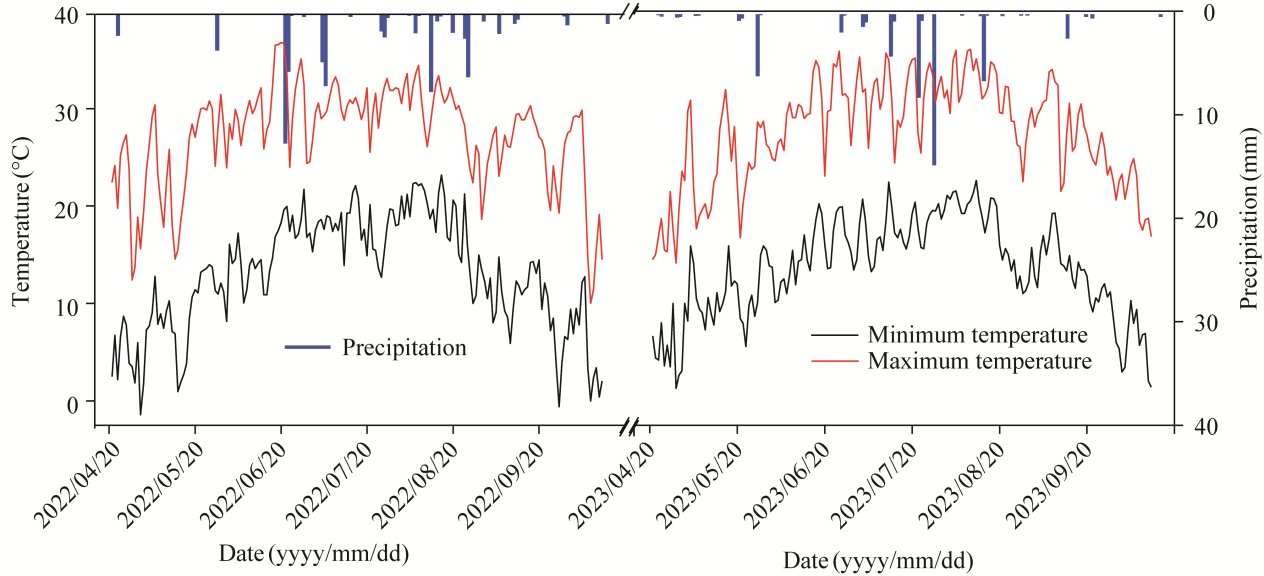
Fig. 1Meteorological data during the growing season of maize in 2022 and 2023
Soil depth (cm)
Sand (%)
Silt (%)
Clay (%)
Soil texture
Bulk density (g/cm3)
Organic matter (g/kg)
EC (μS/cm)
pH
NS
LS
MS
NS
LS
MS
0-20
50.83
41.32
7.85
Sandy loam
1.49
8.55
193.0
410.0
2351.0
8.76
9.38
8.84
20-40
46.32
50.35
3.33
1.53
8.80
220.0
545.0
922.0
9.01
9.52
9.20
Mean
48.58
45.84
5.59
1.51
8.68
206.5
477.5
1636.5
8.89
9.45
9.02
Table 1 Physical and chemical properties of different salinized soils
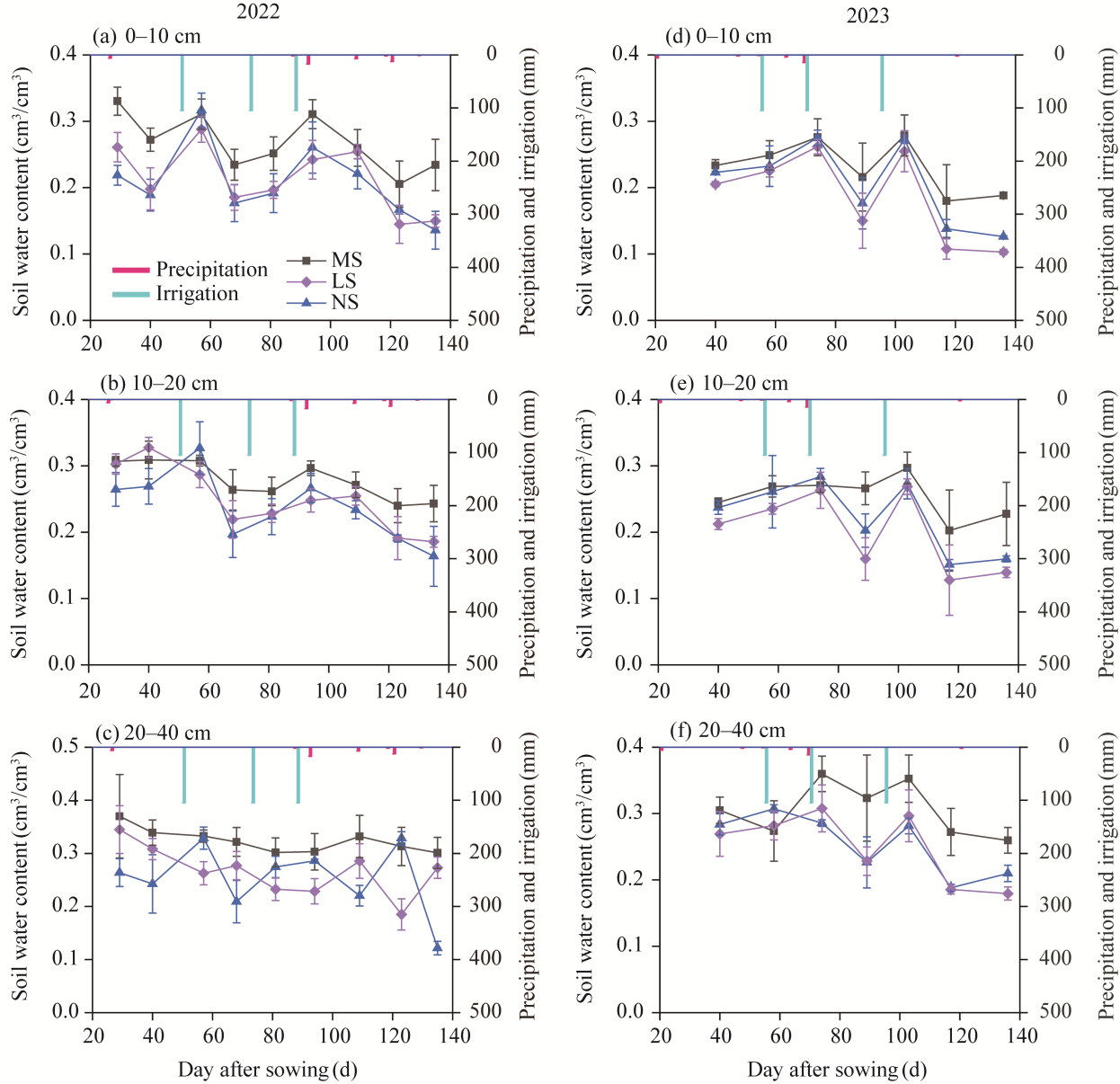
Fig. 2Soil water variation during the the growing seasons of maize in different salt-affected fields. (a-c), soil water contents at the 0-10, 10-20, and 20-40 cm layers in 2022, respectively; (d-f), soil water contents at the 0-10, 10-20, and 20-40 cm layers in 2023, respectively. NS, non-saline; LS, slightly saline; MS, moderately saline. Bars are standard errors.
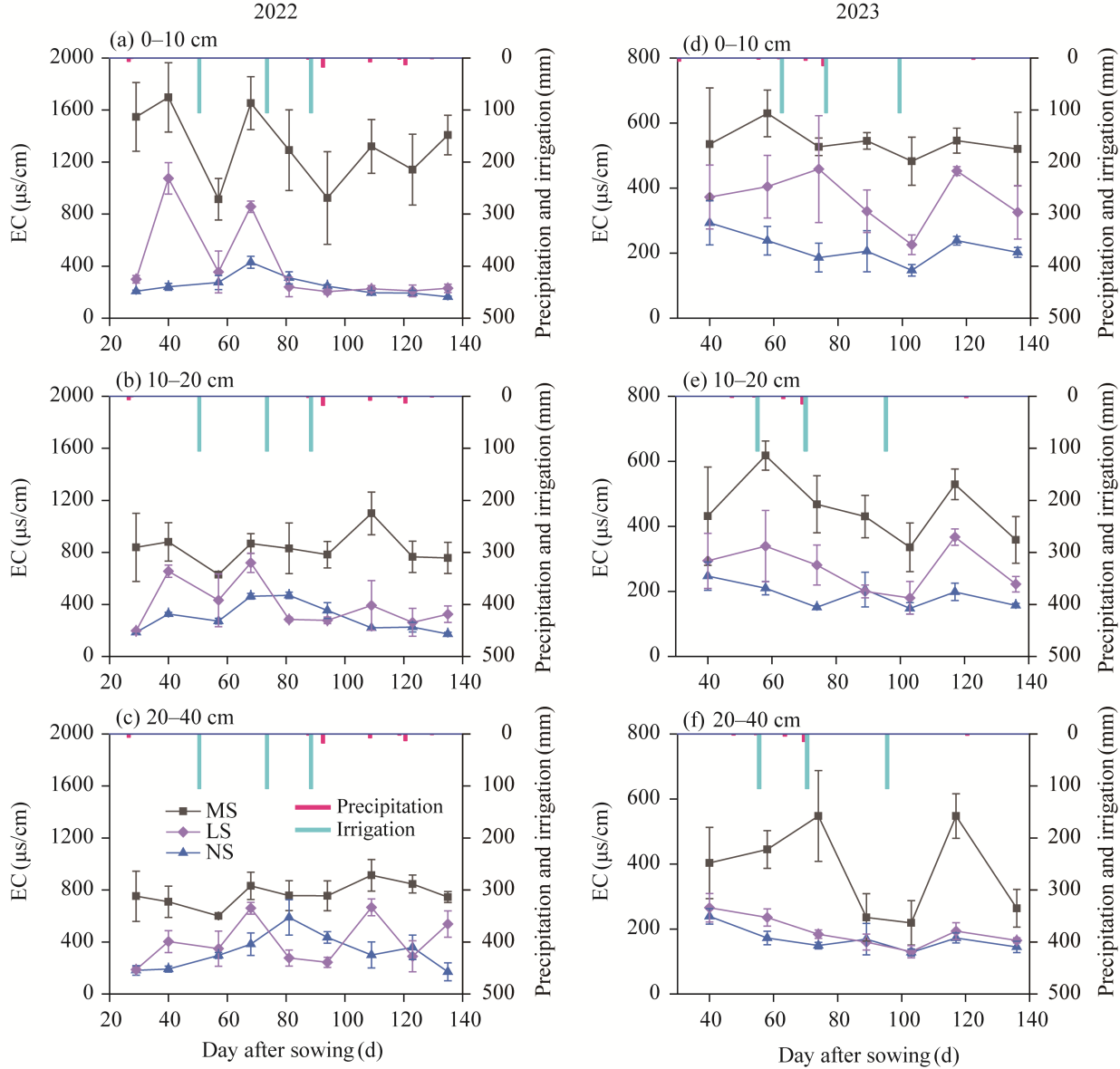
Fig. 3Soil electrical conductivity (EC) variations during the growing seasons of maize in different salt-affected fields. (a-c), EC values at the 0-10, 10-20, and 20-40 cm layers in 2022, respectively; (d-f), EC values at the 0-10, 10-20, and 20-40 cm layers in 2023, respectively. Bars are standard errors.
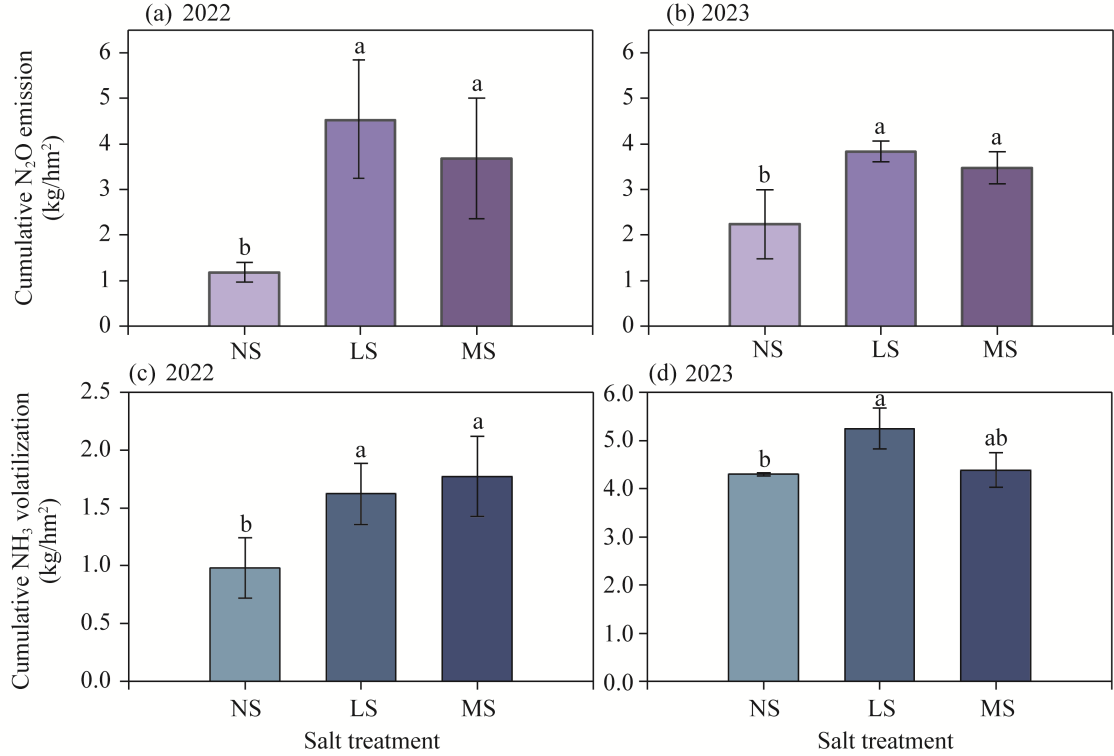
Fig. 4Cumulative N2O emission and NH3 volatilization in different salt-affected fields in 2022 (a and c) and 2023 (b and d). Different lowercase letter indicates significant difference among different salt treatments at P<0.05 level. Bars are standard errors.
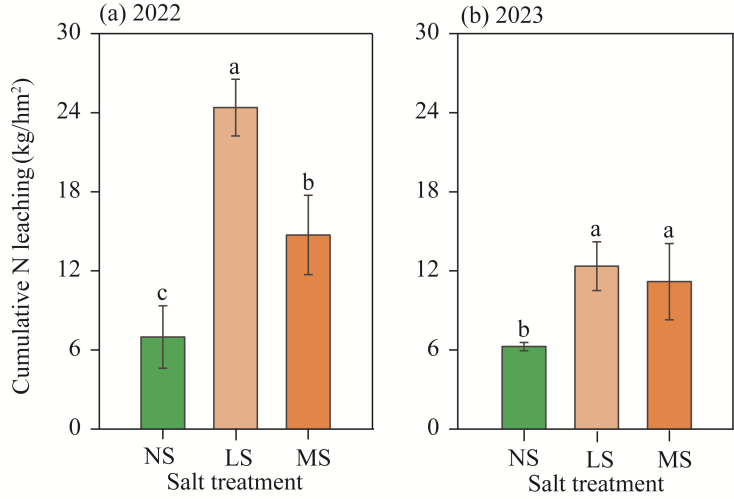
Fig. 5Cumulative nitrogen (N) leaching during the maize growing seasons in different salt-affected fields. Different lowercase letter within the same year indicates significant difference among different salt treatments at P<0.05 level. Bars are standard errors.
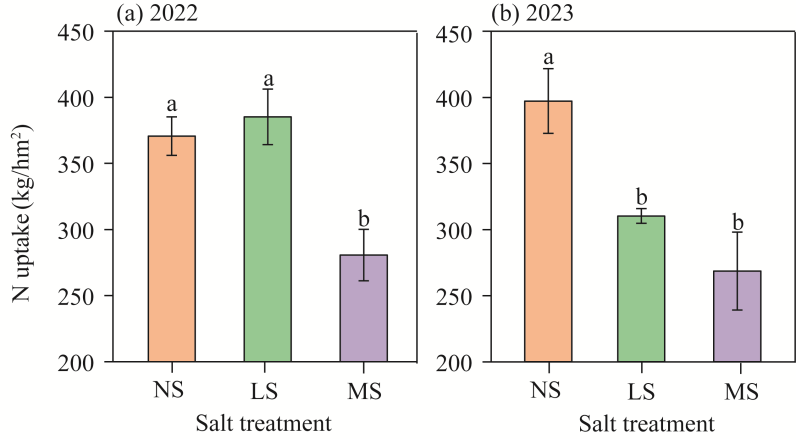
Fig. 6N uptake during the maize growing seasons in different salt-affected fields. Different lowercase letter within the same year indicates significant difference among different salt treatments at P<0.05 level. Bars are standard errors.
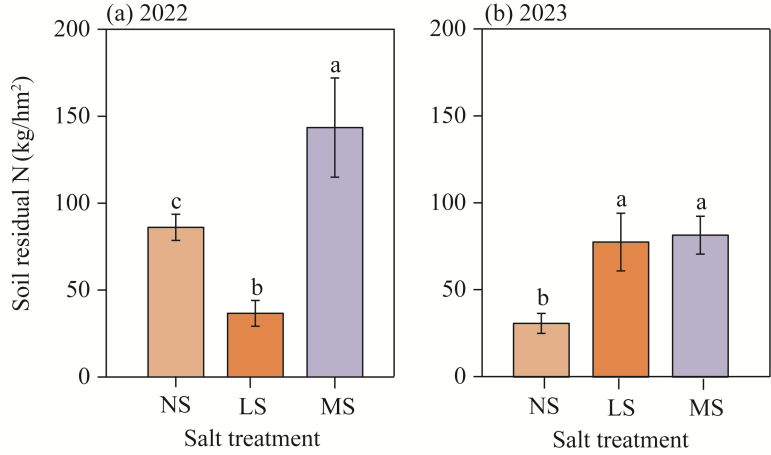
Fig. 7Soil residual N at the depth of 0-100 cm after havevst in different salt-affected fields. Different lowercase letter within the same year indicates significant difference among different salt treatments at P<0.05 level. Bars are standard errors.
Year
Treatment
N fate (%)
Maize N uptake
NH3 volatilization
N2O emission
N leaching
Soil residual N
2022
NS
87.74±0.99a
0.41±0.09a
0.27±0.05b
1.61±0.53c
9.96±0.79b
LS
88.98±0.66a
0.37±0.06a
1.02±0.32a
5.51±0.63a
4.13±0.54c
MS
75.46±4.03b
0.26±0.07a
0.99±0.34a
3.95±0.75b
19.34±4.20a
2023
NS
93.77±5.78a
1.04±0.01b
0.53±0.18b
1.48±0.08b
6.50±0.13c
LS
77.61±0.97b
1.31±0.11a
0.96±0.06a
3.09±0.48a
17.03±0.33b
MS
71.45±1.54b
1.15±0.09ab
0.94±0.18a
2.95±0.52a
23.52±1.83a
Table 2 Nitrogen (N) fate and distribution in the maize-soil system under different salt-affected fields in 2022 and 2023
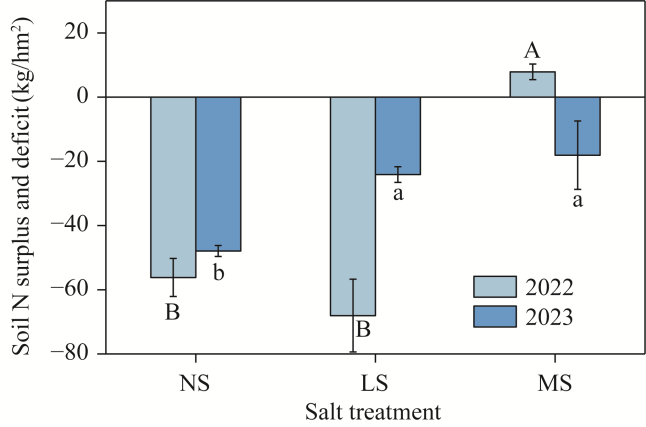
Fig. 8Soil N surplus and deficit in different salt-affected fields. Different lowercase letters indicate significant differences among different salt treatments in 2022 at P<0.05 level; and different uppercase letters indicate significant differences among different salt treatments in 2023 at P<0.05 level. Bars are standard errors.
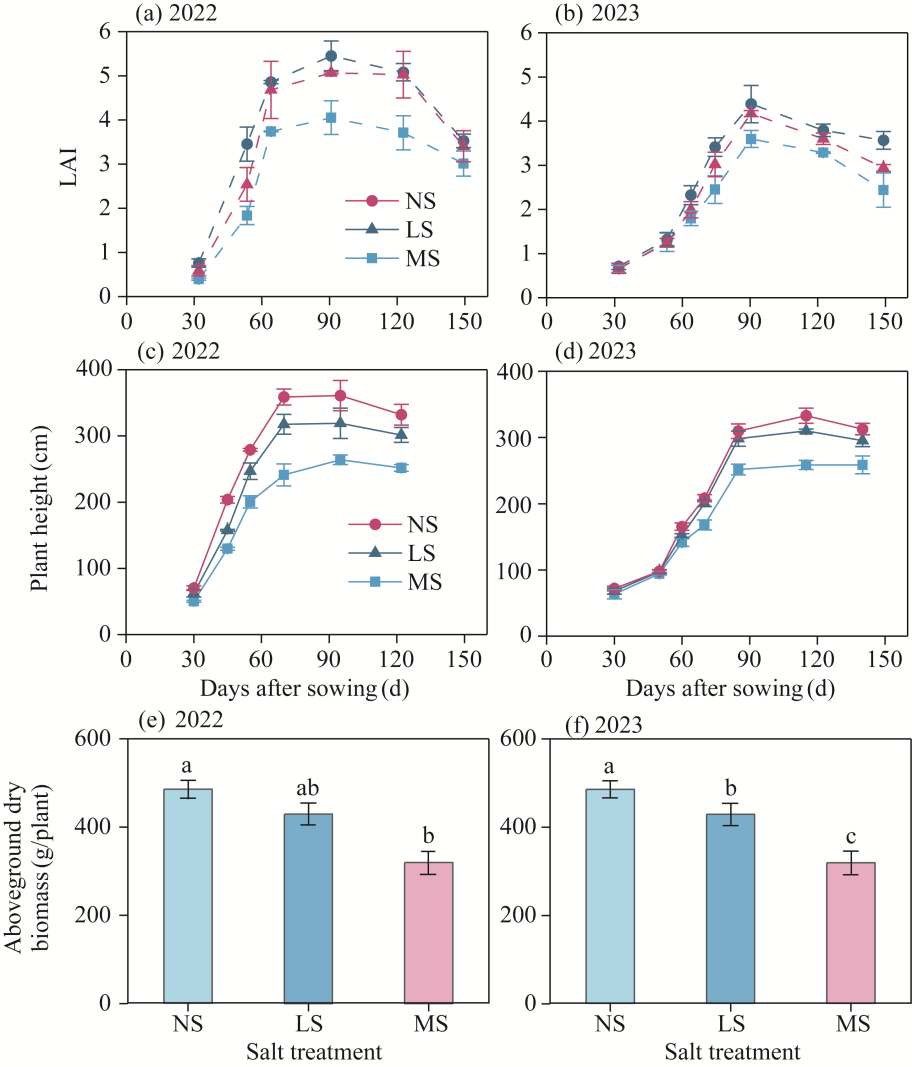
Fig. 9Maize grwoth properties in different salt-affected fields. (a and b), leaf area index (LAI) in 2022 and 2023, respectively; (c and d), plant height in 2022 and 2023, respectively; (e and f), aboveground dry biomass in 2022 and 2023, respectively. Different lowercase letters indicates significant differences among different salt treatments at P<0.05 level. Bars are standard errors.
Year
Treatment
Yield (t/hm2)
ETa (mm)
WUEET (kg/(hm2•mm))
WUEIrrig (kg/(hm2•mm))
PFPn (kg/kg)
2022
NS
16.6±0.4a
634.1±13.6a
2.62±0.1a
3.95±0.1a
66.4±1.8a
LS
14.1±0.2b
599.6±12.6b
2.35±0.1b
3.36±0.1b
56.4±0.7b
MS
11.6±1.0c
586.5±13.9b
1.98±0.1c
2.76±0.2c
46.4±4.2c
2023
NS
14.9±0.6a
592.7±12.3a
2.51±0.1a
3.54±0.2a
59.5±2.6a
LS
14.0±0.4ab
584.1±6.7a
2.40±0.1a
3.34±0.1ab
56.1±1.8a
MS
12.4±1.6b
545.5±1.1b
2.27±0.3b
2.95±0.4b
49.6±2.6b
Table 3 Grain yield, actual water evapotranspiration (ETa), water use efficiency (WUE), and nitrogen use efficiency of maize under different salt-affected fields
[1]
Akhtar M, Hussain F, Ashraf M Y, et al. 2012. Influence of salinity on nitrogen transformations in soil. Communications in Soil Science and Plant Analysis, 43(12): 1674-1683.
doi: 10.1080/00103624.2012.681738
[2]
Arif Y, Singh P, Siddiqui H, et al. 2020. Salinity induced physiological and biochemical changes in plants: An omic approach towards salt stress tolerance. Plant Physiology and Biochemistry, 156: 64-77.
doi: S0981-9428(20)30424-1
pmid: 32906023
[3]
Chen Z J, Li Y, Zhang X C, et al. 2022. Effects of lignite bioorganic product on sunflower growth, water and nitrogen productivity in saline-sodic farmlands at Northwest China. Agricultural Water Management, 271: 107806, doi:10.1016/j.agwat.2022.107806.
[4]
Chen Z J, Li Y, Hu M, et al. 2024. Soil aggregate stability helps construct a stable nitrogen fixation system in lignite-based amendment-driven saline-sodic soil remediation. Soil and Tillage Research, 240: 106090, doi: 10.1016/j.still.2024.106090.
[5]
Dias Freitas E, Lacerda C, Ferreira J F S, et al. 2017. Evidence of nitrogen and potassium losses in soil columns cultivated with maize under salt stress. Revista Brasileira de Engenharia Agrícola e Ambiental, 22(8): 553-557.
doi: 10.1590/1807-1929/agriambi.v22n8p553-557
[6]
Franklin R B, Morrissey E M, Morina J C. 2017. Changes in abundance and community structure of nitrate-reducing bacteria along a salinity gradient in tidal wetlands. Pedobiologia, 60: 21-26.
doi: 10.1016/j.pedobi.2016.12.002
[7]
Gavrichkova O, Brykova R, Brugnoli E, et al. 2020. Secondary soil salinization in urban lawns: Microbial functioning, vegetation state, and implications for carbon balance. Land Degradation & Development, 31(17): 2591-2604.
doi: 10.1002/ldr.v31.17
[8]
Ghosh P K, Bandyopadhyay A K K, Manna M C, et al. 2004. Comparative effectiveness of cattle manure, poultry manure, phosphocompost and fertilizer-NPK on three cropping systems in vertisols of semi-arid tropics. II. dry matter yield, nodulation, chlorophyll content and enzyme activity. Bioresource Technology, 95(1): 85-93.
doi: 10.1016/j.biortech.2004.02.012
pmid: 15207300
[9]
Guo X W, Du S Y, Guo H J, et al. 2023. Long-term saline water drip irrigation alters soil physicochemical properties, bacterial community structure, and nitrogen transformations in cotton. Applied Soil Ecology, 182: 104719, doi: 10.1016/j.apsoil.2022.104719.
[10]
Hassani A, Azapagic A, Shokri N. 2021. Global predictions of primary soil salinization under changing climate in the 21st century. Nature Communications, 12: 6663, doi: 10.1038/s41467-021-26907-3.
[11]
Hessini K, Issaoui K, Ferchichi S, et al. 2019. Interactive effects of salinity and nitrogen forms on plant growth, photosynthesis and osmotic adjustment in maize. Plant Physiology and Biochemistry, 139: 171-178.
doi: S0981-9428(19)30087-7
pmid: 30897508
[12]
Ivushkin K, Bartholomeus H, Bregt A K, et al. 2019. Global mapping of soil salinity change. Remote Sensing of Environment, 231: 111260, doi: 10.1016/j.rse.2019.111260.
[13]
Kumar V, Wagenet R J. 1985. Salt effects on urea hydrolysis and nitrification during leaching through laboratory soil columns. Plant and Soil, 85: 219-227.
doi: 10.1007/BF02139626
[14]
Li C J, Xiong Y W, Cui Z, et al. 2020a. Effect of irrigation and fertilization regimes on grain yield, water and nitrogen productivity of mulching cultivated maize (Zea mays L.) in the Hetao Irrigation District of China. Agricultural Water Management, 232: 106065, doi: 10.1016/j.agwat.2020.106065.
[15]
Li Y W, Xu J Z, Liu S M, et al. 2020b. Salinity-induced concomitant increases in soil ammonia volatilization and nitrous oxide emission. Geoderma, 361: 114053, doi: 10.1016/j.geoderma.2019.114053.
[16]
Liao Q, Gu S J, Kang S Z, et al. 2022. Mild water and salt stress improve water use efficiency by decreasing stomatal conductance via osmotic adjustment in field maize. Science of The Total Environment, 805: 150364, doi: 10.1016/j.scitotenv.2021.150364.
[17]
Mao R Z, Tian K X, Matsumoto S, et al. 1997. Salinity indicators of salt-affected soils and their relationship with chemical composition. Soils, 6(11): 326-330. (in Chinese)
[18]
Minhas P S, Ramos T B, Ben-Gal A, et al. 2020. Coping with salinity in irrigated agriculture: Crop evapotranspiration and water management issues. Agricultural Water Management, 227: 105832, doi: 10.1016/j.agwat.2019.105832.
Parihar P, Singh S, Singh R, et al. 2015. Effect of salinity stress on plants and its tolerance strategies: A review. Environmental Science and Pollution Research, 22: 4056-4075.
doi: 10.1007/s11356-014-3739-1
[21]
Raij-Hoffman I, Dahan O, Dahlke H E, et al. 2024. Assessing nitrate leaching during drought and extreme precipitation: Exploring deep vadose-zone monitoring, groundwater observations, and field mass balance. Water Resources Research, 60(11): e2024WR037973, doi: 10.1029/2024WR037973.
[22]
Reddy N, Crohn D M. 2014. Effects of soil salinity and carbon availability from organic amendments on nitrous oxide emissions. Geoderma, 235-236: 363-371.
doi: 10.1016/j.geoderma.2014.07.022
[23]
Rodriguez P, Torrecillas A, Morales M A, et al. 2005. Effects of NaCl salinity and water stress on growth and leaf water relations of Asteriscus maritimus plants. Environmental and Experimental Botany, 53(2): 113-123.
doi: 10.1016/j.envexpbot.2004.03.005
[24]
Sarrazin F J, Kumar R, Basu N B, et al. 2022. Characterizing catchment-scale nitrogen legacies and constraining their uncertainties. Water Resources Research, 58(4): e2021WR031587, doi: 10.1029/2021WR031587.
[25]
Shainberg I, Letey J. 1984. Response of soils to sodic and saline conditions. Hilgardia, 52(2): 1-57.
[26]
Shirazi M A, Boersma L. 1984. A unifying quantitative analysis of soil texture. Soil Science Society of America Journal, 48: 142-147.
doi: 10.2136/sssaj1984.03615995004800010026x
[27]
Singh A. 2022. Soil salinity: A global threat to sustainable development. Soil Use and Management, 38(1): 39-67.
doi: 10.1111/sum.v38.1
[28]
Singh B, Bajwa M S. 1986. Studies on urea hydrolysis in salt affected soils. Fertilizer Research, 8: 231-240.
doi: 10.1007/BF01048624
[29]
Tardieu F, Simonneau T, Muller B. 2018. The physiological basis of drought tolerance in crop plants: A scenario-dependent probabilistic approach. Annual Review of Plant Biology, 69: 433-459.
[30]
Wankhade S D, Cornejo M J, Mateu-Andrés I, et al. 2013. Morpho-physiological variations in response to NaCl stress during vegetative and reproductive development of rice. Acta Physiologiae Plantarum, 35: 323-333.
doi: 10.1007/s11738-012-1075-y
[31]
Weissman G, Bel G, Ben-Gal A, et al. 2020. Increased irrigation water salinity enhances nitrate transport to deep unsaturated soil. Vadose Zone Journal, 19(1): e20041, doi: 10.1002/vzj2.20041.
[32]
Yu Y X, Zhao C Y, Zheng N G, et al. 2019. Interactive effects of soil texture and salinity on nitrous oxide emissions following crop residue amendment. Geoderma, 337: 1146-1154.
doi: 10.1016/j.geoderma.2018.11.012
[33]
Yu Y X, Li X, Zhao C Y, et al. 2020. Soil salinity changes the temperature sensitivity of soil carbon dioxide and nitrous oxide emissions. CATENA, 195: 104912, doi: 10.1016/j.catena.2020.104912.
[34]
Zhang L H, Song L P, Wang B C, et al. 2018. Co-effects of salinity and moisture on CO2 and N2O emissions of laboratory- incubated salt affected soils from different vegetation types. Geoderma, 332: 109-120.
doi: 10.1016/j.geoderma.2018.06.025
[35]
Zhang X, Davidson E A, Mauzerall D L, et al. 2015. Managing nitrogen for sustainable development. Nature, 528: 51-59.
doi: 10.1038/nature15743
[36]
Zhu H, Yang J S, Yao R J, et al. 2020. Interactive effects of soil amendments (biochar and gypsum) and salinity on ammonia volatilization in coastal saline soil. CATENA, 190: 104527, doi: 10.1016/j.catena.2020.104527.
[37]
Zörb C, Geilfus C M, Dietz K J. 2019. Salinity and crop yield. Plant Biology, 1: 31-38.