Diversity, structure, and network relationships of microbial communities in different areas of the upper reaches of the Jinghe River, China
ZHUANG Chanyu1, LI Xueqin2, LIU Xigang2, PAN Yaqing2, Gyrat AZMAT1, YAN Xingfu1, KANG Peng1,*()
1School of Biological Science and Engineering, North Minzu University, Yinchuan 750021, China 2College of Geographic Science and Tourism, Xinjiang Normal University, Urumqi 830017, China
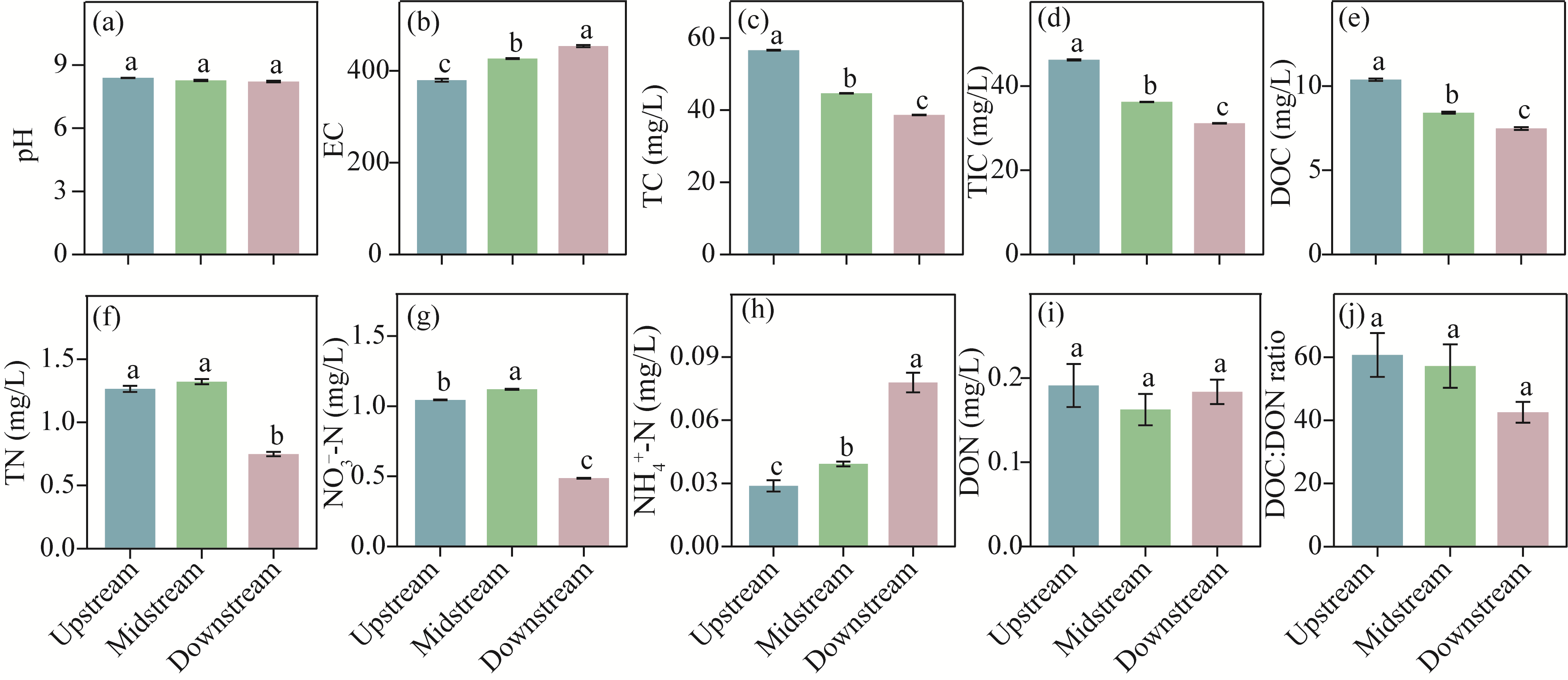
The Jinghe River, as one of the rivers flowing into the Yellow River, China, exhibits ecosystem vulnerability to agricultural activities and urbanization. However, the impact of agricultural activities and urbanization process on the physical-chemical properties and microbial community structure in its upper reaches has not been fully documented. This study selected three distinct sections along the upper Jinghe River: the Liupan Mountains Nature Reserve (upstream), agricultural area (midstream), and urbanized area (downstream). Through combined analysis of river physical-chemical parameters with high-throughput sequencing of bacterial and fungal communities, the results indicated significant increases in river water electrical conductivity (19.60%) and ammonium nitrogen content (170.74%) from the protected area to the urban section. Conversely, significant decreases were observed in total carbon (31.74%), total organic carbon (32.60%), dissolved organic carbon (27.91%), and nitrate nitrogen concentrations (53.44%). The abundance-based coverage estimation (ACE) index of bacteria was significantly higher in urban areas than in the protected area. The ACE index of fungi and the relative abundance of Proteomycota and Ascomycota were significantly higher in the protected area than in the urban area. Co-occurrence network analysis revealed higher complexity in the microbial network within the protected area and greater modularity in agricultural area, whereas the network structure in the urban area was simplified, indicating weakened network stability due to human disturbance. Furthermore, the abundance and distribution of Acidobacteriota were significantly and negatively correlated with river carbon components (P<0.01), highlighting its crucial potential role in carbon cycling. This research aims to elucidate changes in water physical-chemical characteristics, microbial community structure, diversity, and interaction networks under human influence, providing a scientific basis for water resource management and ecological conservation in arid areas.
Received: 08 November 2025
Published: 31 July 2026
Conceptualization: ZHUANG Chanyu, KANG Peng, PAN Yaqing; Methodology: ZHUANG Chanyu, KANG Peng; Investigation: ZHUANG Chanyu, KANG Peng, PAN Yaqing, LI Xueqin, Gyrat AZMAT; Formal analysis: LIU Xigang, LI Xueqin, Gyrat AZMAT; Writing - original draft preparation: ZHUANG Chanyu, KANG Peng; Writing - review and editing: ZHUANG Chanyu, PAN Yaqing; Funding acquisition: YAN Xingfu. All authors approved the manuscript.
ZHUANG Chanyu, LI Xueqin, LIU Xigang, PAN Yaqing, Gyrat AZMAT, YAN Xingfu, KANG Peng. Diversity, structure, and network relationships of microbial communities in different areas of the upper reaches of the Jinghe River, China. Journal of Arid Land, 2026, 18(7): 1213-1231.
Fig. 1Schematic diagram of the upper reaches of the Jinghe River (a) and pictures of sampling sections (b-d)
Fig. 2Differences in physical-chemical indicators of water bodies in different sections of the Jinghe River. (a), pH; (b), EC (electrical conductivity); (c), TC (total carbon); (d), TIC (total inorganic carbon); (e), DOC (dissolved organic carbon); (f), TN (total nitrogen); (g), NO3‒-N (nitrate nitrogen); (h), NH4+-N (ammonium nitrogen); (i), DON (dissolved organic nitrogen), (j), DOC:DON ratio. The abbreviations are the same in the following figures. Different lowercase letters indicate significant differences among different river sections at P<0.050 level. Bars are standard errors.
Fig. 3Shannon and abundance-based coverage estimation (ACE) indices of bacterial (a and b) and fungal (c and d) community diversity, as well as the correlation between microbial diversity and physical-chemical indicators (e) in different sections of the Jinghe River. In Figure 3a-d, different lowercase letters indicate significant differences among different river sections at P<0.050 level. Bars are standard errors. *, P<0.050 level; **, P<0.010 level; ***, P<0.001 level.
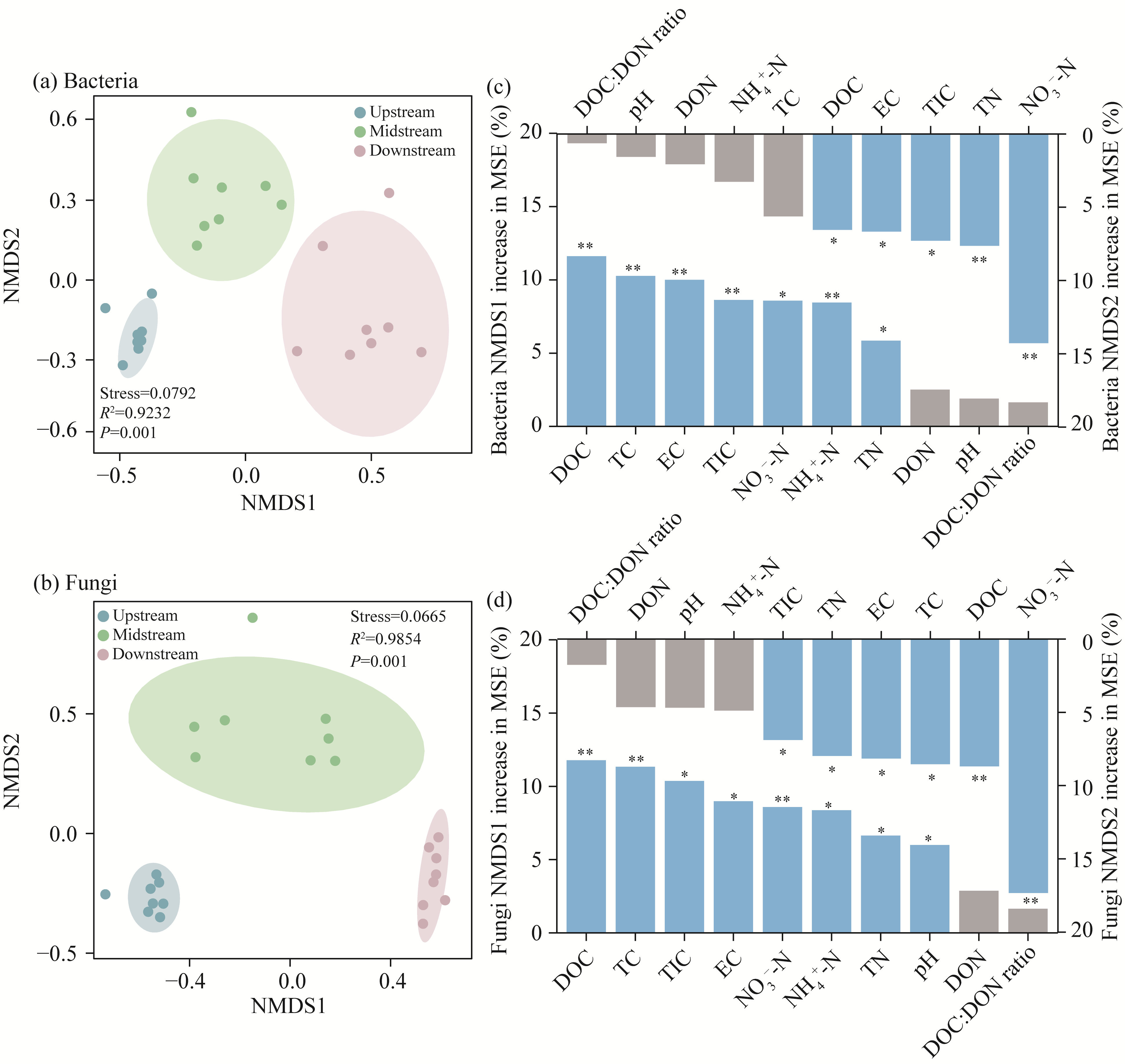
Fig. 4NMDS (non-metric multidimensional scaling) analysis of microbial community structure of bacteria (a) and fungi (b) in different sections of the Jinghe River, and the impact of environmental factors on NMDS of bacterial (c) and fungal (d) communities. MSE, mean squared error. *, P<0.050 level; **, P<0.010 level.
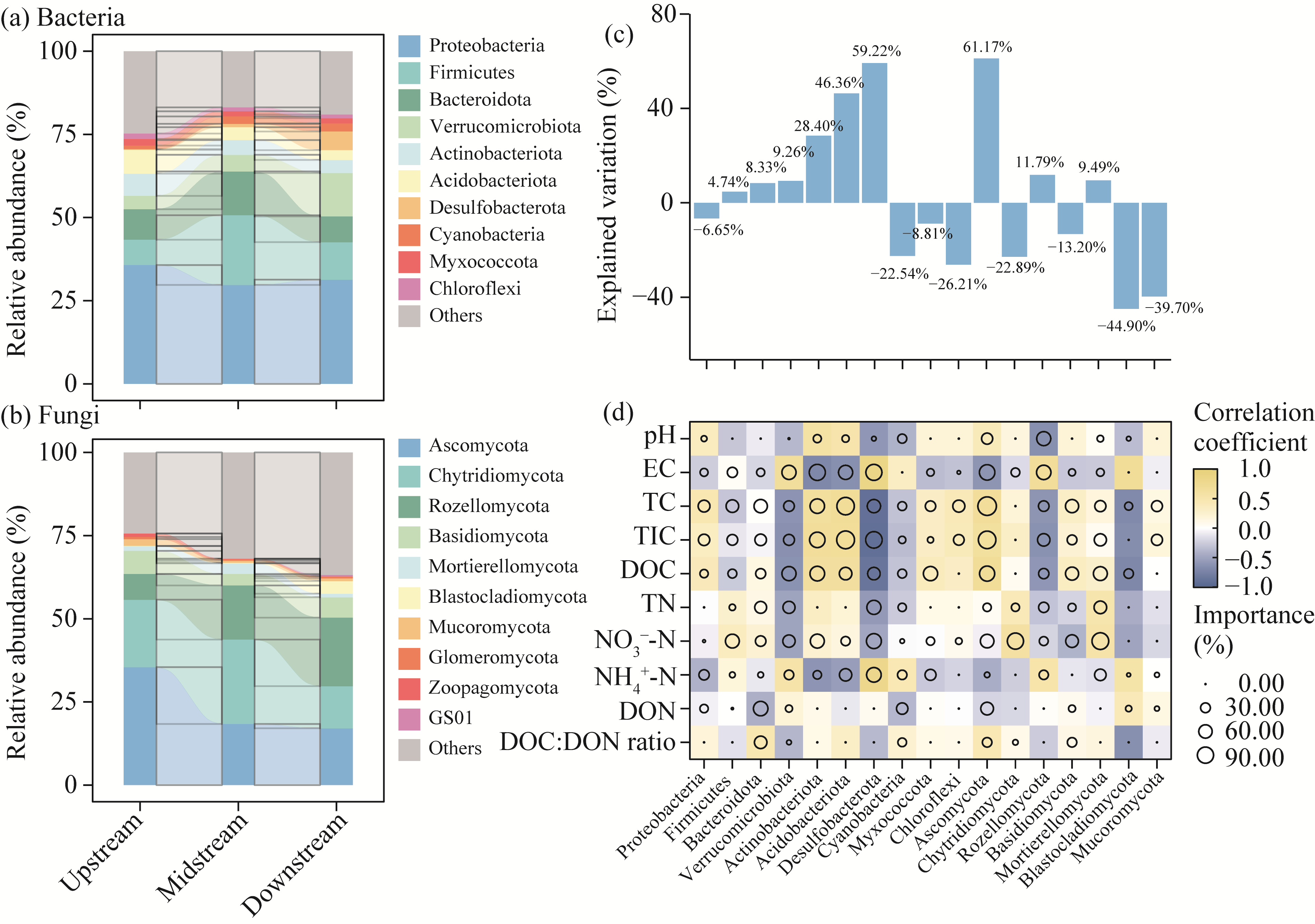
Fig. 5Relative abundance of the top 10 phyla of bacteria (a) and fungi (b) in different river sections. (c), explanatory variation of environmental factors for dominant microbial phyla; (d), correlation and importance of environmental factors associated with dominant microbial phyla. In Figure 5d, circle size represents the importance of each variable and background color indicates the strength and direction of the correlation.
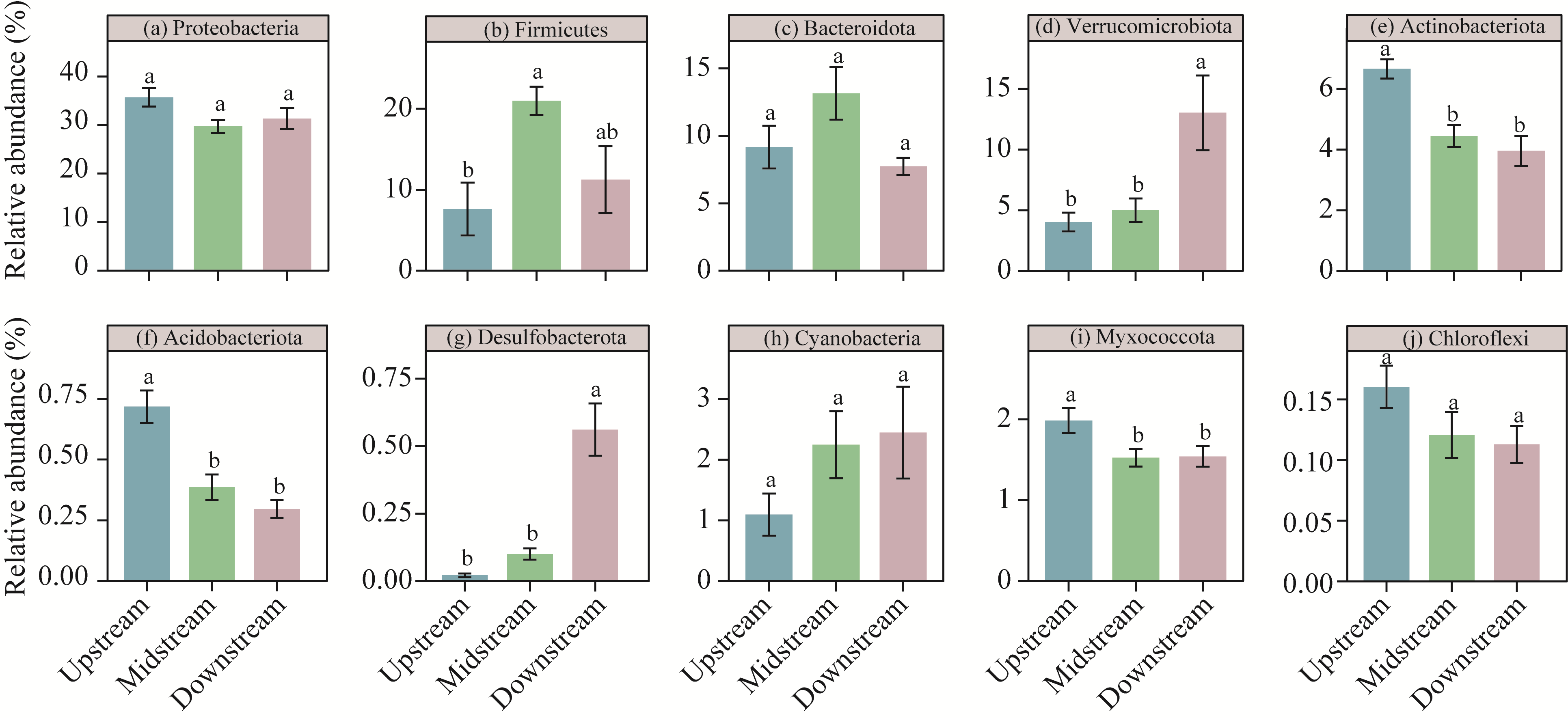
Fig. S1Comparison of relative abundance of the top 10 bacterial phyla in different sections of the Jinghe River. (a), Proteobacteria; (b), Firmicutes; (c), Bacteroidota; (d), Verrucomicrobiota; (e), Actinobacteriota; (f), Acidobateriota; (g), Desulfobacterota; (h), Cynobacterial; (i), Myxococcota; (j), Chloroflexi. Different lowercase letters indicate significant differences among different river sections at P<0.050 level. Bars are standard errors.
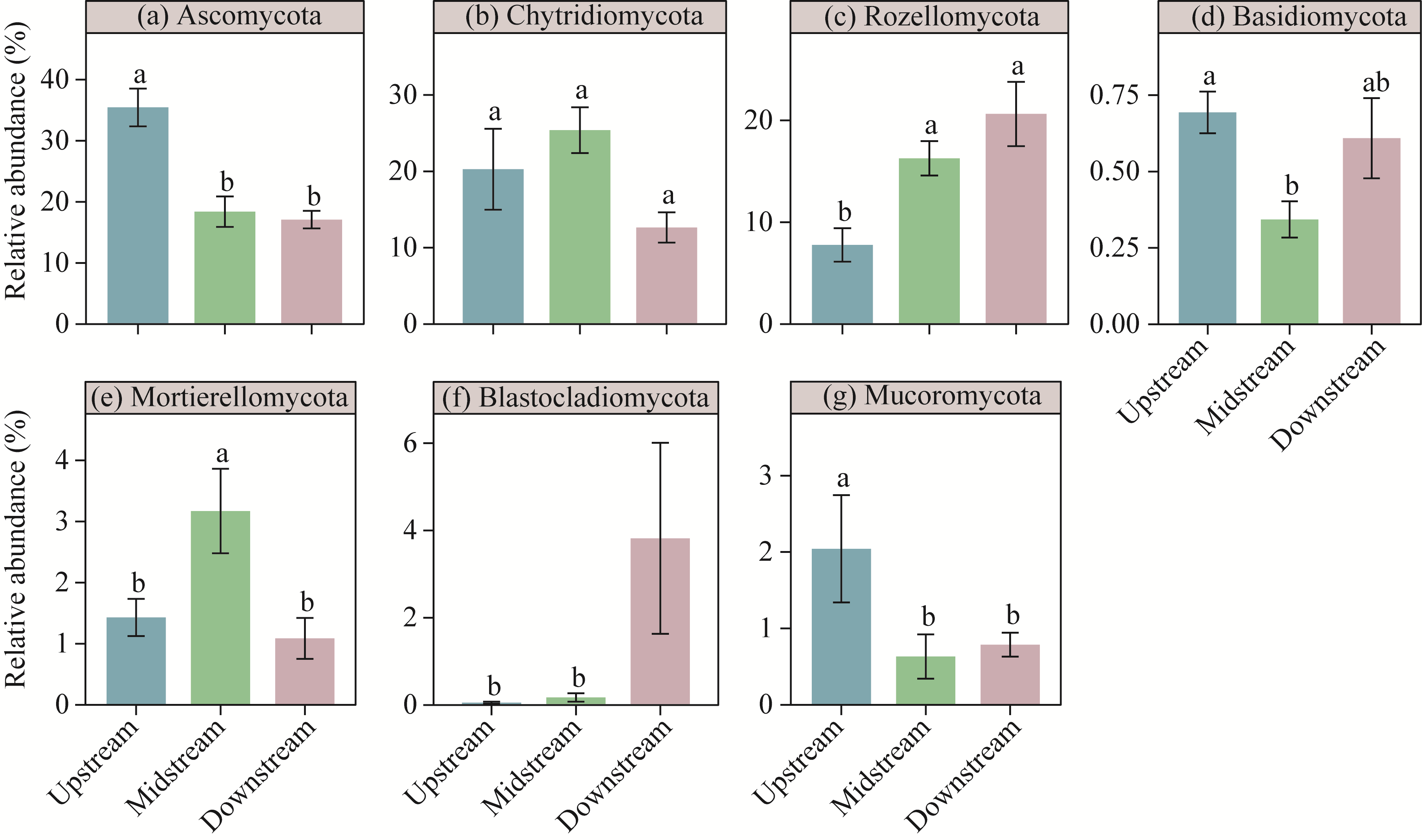
Fig. S2Comparison of relative abundance of the top 7 fungal phyla in different sections of the Jinghe River. (a), Ascomycota; (b), Chytridiomycota; (c), Rozellomycota; (d), Basidiomycota; (e), Mortierellymycota; (f), Blastocladiomycota; (g), Mucoromycota. Different lowercase letters indicate significant differences among different river sections at P<0.050 level. Bars are standard errors.
Topological feature
Upstream
Midstream
Downstream
Total nodes
1437
1014
919
Total edges
5823
2986
2583
Positive edges
4303
1782
1539
Negative edges
1520
1204
1044
Modularity
0.7212
0.7813
0.7184
Average path length
5.5749
6.0973
6.1227
Graph diameter
14.6461
13.8583
18.4355
Graph density
0.0056
0.0058
0.0061
Clustering coefficient
0.4012
0.4163
0.3790
Betweenness centralization
0.0136
0.0281
0.0368
Degree centralization
0.0180
0.0120
0.0255
Table 1 Network topology characteristics of water bodies in different river sections
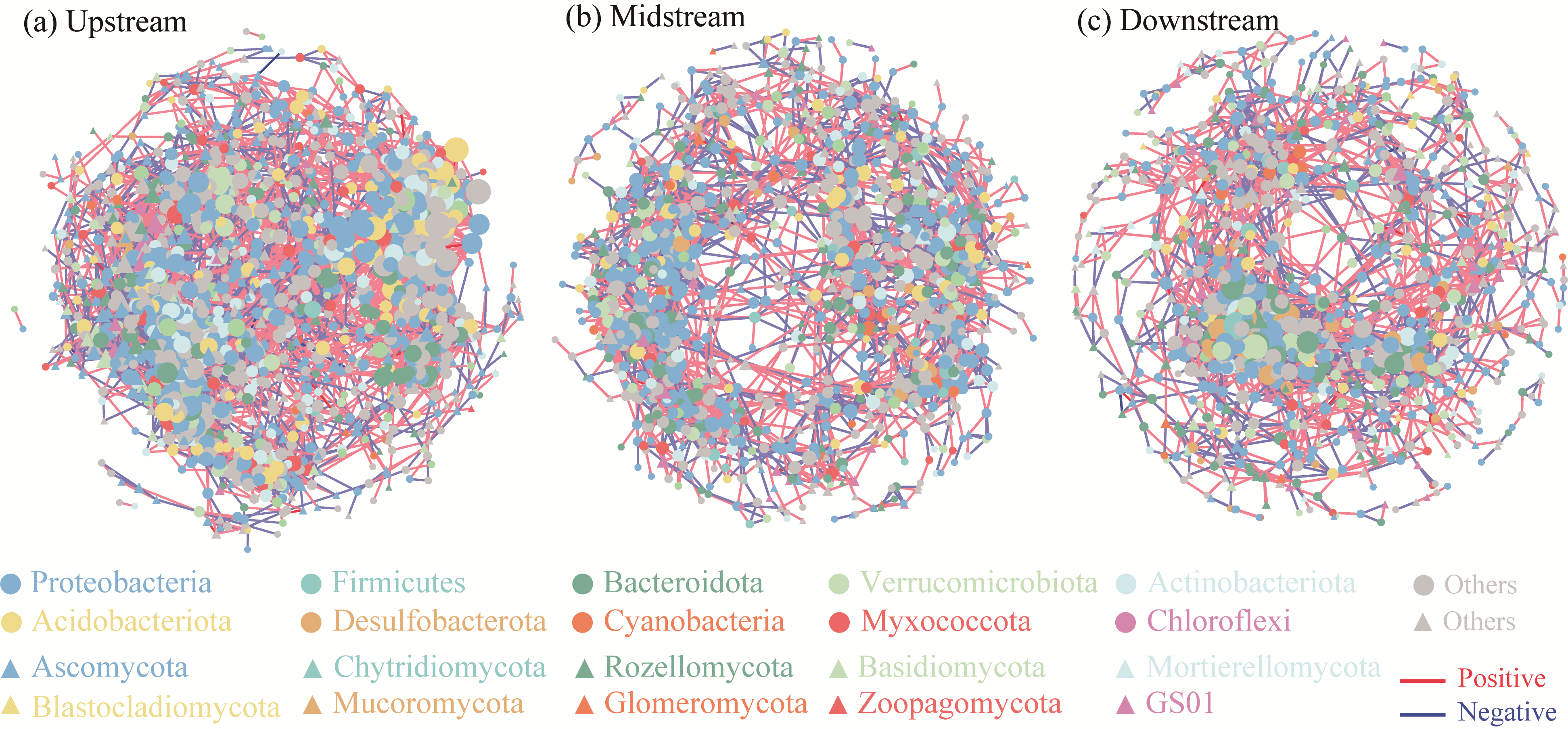
Fig. 6Co-occurrence networks of bacteria and fungi in the upstream (a), midstream (b), and downstream (c) of the Jinghe River. The circle represents the node of the bacteria, and the triangle represents the node of the fungi, and different colors represent different phyla.
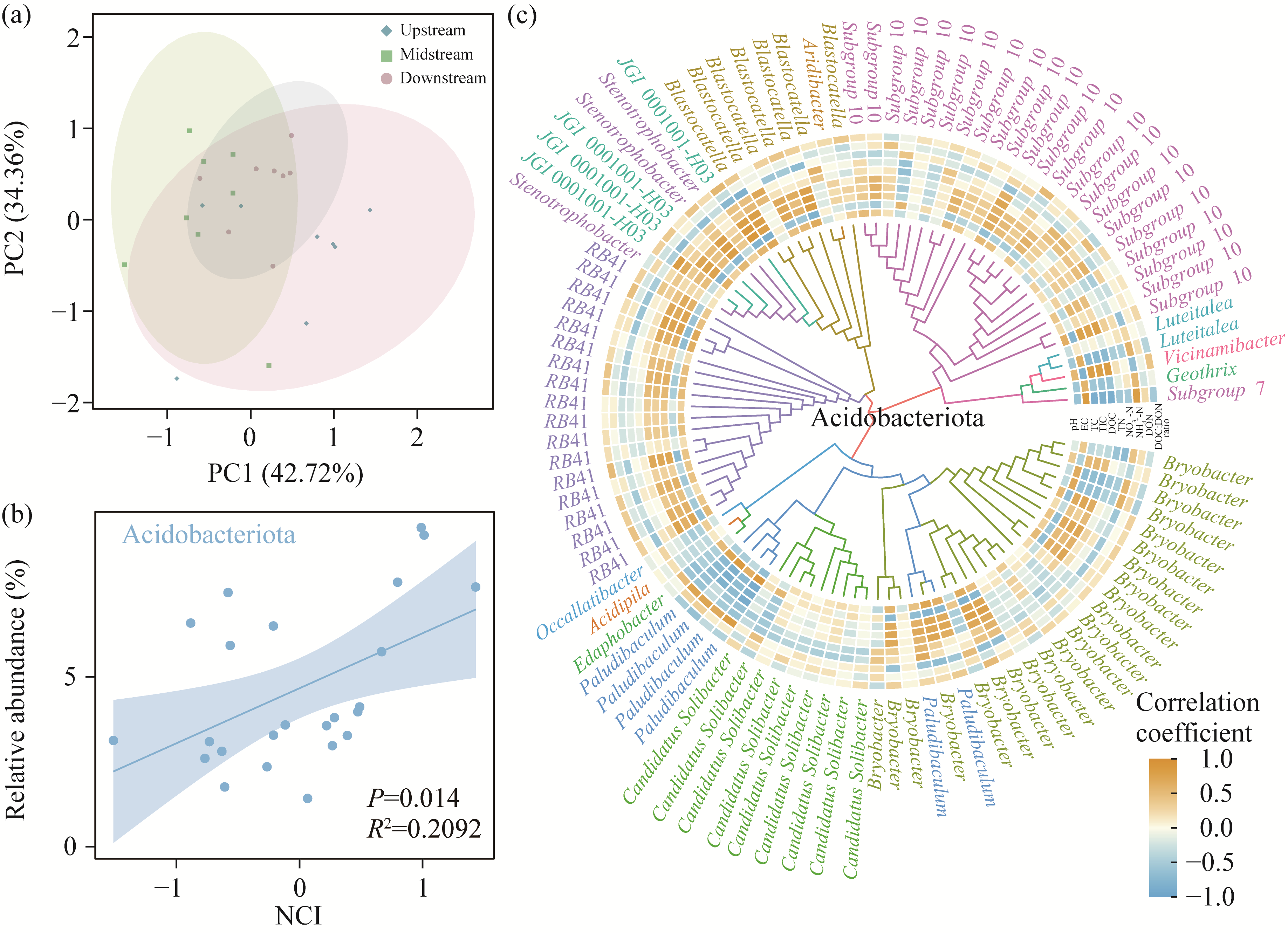
Fig. 7Analysis of Acidobacteriota community structure, significance, and taxonomic composition in different sections of the Jinghe River. (a), PCA (principal component analysis) result; (b), correlation analysis between relative abundance of Acidobacteriota and NCI (niche competition index); (c), phylogenetic tree of Acidobacteriota taxonomic units and correlations with environmental factors. PC, principal component.
[1]
Albert J S, Destouni G, Duke-Sylvester S M, et al. 2021. Scientists' warning to humanity on the freshwater biodiversity crisis. Ambio, 50(1): 85-94.
doi: 10.1007/s13280-020-01318-8
[2]
Anderson S R, Harvey E L. 2022. Estuarine microbial networks and relationships vary between environmentally distinct communities. PeerJ, 10(7): e14005, doi: 10.7717/peerj.14005.
[3]
Bagagnan S, Guérin-Rechdaoui S, Rocher V, et al. 2024. Spatial and temporal characteristics of microbial communities in the Seine River in the greater Paris area under anthropogenic perturbation. Heliyon, 10(9): e30614, doi: 10.1016/j.heliyon.2024.e30614.
[4]
Cesoniene L, Dapkiene M, Sileikiene D. 2019. The impact of livestock farming activity on the quality of surface water. Environmental Science and Pollution Research, 26(32): 32678-32686.
doi: 10.1007/s11356-018-3694-3
[5]
Chen C C, Xie G D, Lin Z. 2007. Characters of precipitation variation in Jinghe Watershed. Resources Science, 29(2): 172-177. (in Chinese)
[6]
Chen W L, Zhang X H, Wu N T, et al. 2024. Sources and transformations of riverine nitrogen across a coastal-plain river network of eastern China: New insights from multiple stable isotopes. Science of The Total Environment, 924(10): 171671, doi: 10.1016/j.scitotenv.2024.171671.
[7]
Chen H D, Zhang L L, Zheng Z S, et al. 2025. Hydrological connectivity shape the nitrogen pollution sources and microbial community structure in a river-lake connected system. Frontiers in Microbiology, 16: 1563578, doi: 10.3389/fmicb.2025.1563578.
[8]
Claesson M J, O'Sullivan O, Wang Q, et al. 2009. Comparative analysis of pyrosequencing and a phylogenetic microarray for exploring microbial community structures in the human distal intestine. PLoS ONE, 4(8): e6669, doi: 10.1371/journal.pone.0006669.
[9]
Dai Z M, Su W Q, Chen H H, et al. 2018. Long-term nitrogen fertilization decreases bacterial diversity and favors the growth of Actinobacteria and Proteobacteria in agro-ecosystems across the globe. Global Change Biology, 24(8): 3452-3461.
doi: 10.1111/gcb.14163
pmid: 29645398
[10]
Eichorst S A, Trojan D, Roux S, et al. 2018. Genomic insights into the Acidobacteria reveal strategies for their success in terrestrial environments. Environmental Microbiology, 20(3): 1041-1063.
doi: 10.1111/1462-2920.14043
pmid: 29327410
[11]
Elassassi Z, Ougrad I, Bedoui I, et al. 2022. Spatial and temporal variations of the water quality of the Tiflet River, province of Khemisset, Morocco. Water, 14(12): 1829, doi: 10.3390/w14121829.
[12]
Escalas A, Hale L, Voordeckers J W, et al. 2019. Microbial functional diversity: From concepts to applications. Ecology and Evolution, 9(20): 12000-12016.
doi: 10.1002/ece3.5670
[13]
Fan L M, Song C, Meng S L, et al. 2016. Spatial distribution of planktonic bacterial and archaeal communities in the upper section of the tidal reach in Yangtze River. Scientific Reports, 6: 39147, doi: 10.1038/srep39147.
pmid: 27966673
[14]
Fang W K, Fan T Y, Wang S, et al. 2023. Seasonal changes driving shifts in microbial community assembly and species coexistence in an urban river. Science of The Total Environment, 905: 167027, doi: 10.1016/j.scitotenv.2023.167027.
[15]
Findlay S. 2010. Stream microbial ecology. Journal of the North American Benthological Society, 29(1): 170-181.
doi: 10.1899/09-023.1
[16]
Gruppuso L, Receveur J P, Fenoglio S, et al. 2023. Hidden decomposers: The role of bacteria and fungi in recently intermittent alpine streams heterotrophic pathways. Microbial Ecology, 86: 1499-1512.
doi: 10.1007/s00248-023-02169-y
pmid: 36646914
[17]
Gutiérrez M H, Pantoja S, Tejos E, et al. 2011. The role of fungi in processing marine or-ganic matter in the upwelling ecosystem off Chile. Marine Biology, 158: 205-219.
doi: 10.1007/s00227-010-1552-z
[18]
Hao L X, Sun R H, Chen L D. 2014. Health assessment of river ecosystem in Haihe River Basin, China. Environmental Science, 35(10): 3692-3701. (in Chinese)
[19]
Hermans S M, Buckley H L, Case B S, et al. 2020. Using soil bacterial communities to predict physico-chemical variables and soil quality. Microbiome, 8: 79, doi: 10.1186/s40168-020-00858-1.
pmid: 32487269
[20]
Hernandez D J, David A S, Menges E S, et al. 2021. Environmental stress destabilizes microbial networks. The ISME Journal, 15(6): 1722-1734.
doi: 10.1038/s41396-020-00882-x
[21]
Hu A Y, Ju F, Hou L Y, et al. 2017. Strong impact of anthropogenic contamination on the co-occurrence patterns of a riverine microbial community. Environmental Microbiology, 19(12): 4993-5009.
doi: 10.1111/1462-2920.13942
pmid: 28967165
[22]
Hu J X, Chen Y, Yuan W H. 2023. Research on the variation of bacterial community structure and function in the estuarine surface sediment of Taihu Lake. Journal of Environmental Science, 43(10): 371-381. (in Chinese)
[23]
Huang Y, Wang P, Wu B B, et al. 2022. Community structure and interaction of bacterioplankton under pollution stress in Jinjiang River of Poyang Lake basin. Acta Microbiologica Sinica, 62(12): 4564-4576. (in Chinese)
[24]
Hui C Z, Li Y, Yuan S Y, et al. 2023. River connectivity determines microbial assembly processes and leads to alternative stable states in river networks. Science of The Total Environment, 904(15): 166797, doi: 10.1016/j.scitotenv.2023.166797.
[25]
Ji X H, Zheng S X, Lu Y H, et al. 2007. Study of dynamics of floodwater nitrogen and regulation of its runoff loss in paddy field-based two-cropping rice with urea and controlled release nitrogen fertilizer application. Agricultural Sciences in China, 6(2): 189-199.
doi: 10.1016/S1671-2927(07)60034-0
[26]
Jiang T T, Sun S N, Chen Y A, et al. 2021. Microbial diversity characteristics and the influence of environmental factors in a large drinking-water source. Science of The Total Environment, 769: 144698, doi: 10.1016/j.scitotenv.2020.144698.
[27]
Jin Z, Ji F Y, Xu X, et al. 2014. Microbial and metabolic characterization of a denitrifying phosphorus-uptake/side stream phosphorus removal system for treating domestic sewage. Biodegradation, 25(6): 777-786.
doi: 10.1007/s10532-014-9698-x
pmid: 25073616
[28]
Jones R T, Robeson M S, Lauber C L, et al. 2009. A comprehensive survey of soil Acidobacterial diversity using pyrosequencing and clone library analyses. The ISME Journal, 3(4): 442-453.
doi: 10.1038/ismej.2008.127
[29]
Kang P, Pan Y Q, Yang P, et al. 2022. A comparison of microbial composition under three tree ecosystems using the stochastic process and network complexity approaches. Frontiers in Microbiology, 13: 1018077, doi: 10.3389/fmicb.2022.1018077.
[30]
Karr J R, Chu E W.2000. Sustaining living rivers. Hydrobiologia, 422: 1-14.
[31]
Kielak A M, Barreto C C, Kowalchuk G A, et al. 2016. The ecology of Acidobacteria: Moving beyond genes and genomes. Frontiers in Microbiology, 7: 744, doi: 10.3389/fmicb.2016.00744.
pmid: 27303369
[32]
Li F L, Zhang Y, Altermatt F, et al. 2023. Destabilizing effects of environmental stressors on aquatic communities and interaction networks across a major river basin. Environmental Science and Technology, 57(20): 7828-7839.
doi: 10.1021/acs.est.3c00456
pmid: 37155929
[33]
Li M X, Peng C H, Wang M, et al. 2017. The carbon flux of global rivers: A re-evaluation of amount and spatial patterns. Ecological Indicators, 80: 40-51.
doi: 10.1016/j.ecolind.2017.04.049
[34]
Liao X, Wang H, Wu D, et al. 2025. Geographical and environmental factors differentially shape planktonic microbial community assembly and resistomes composition in urban rivers. Global Change Biology, 31(4): e70211, doi: 10.1111/gcb.70211.
[35]
Lin X B, Gao D Z, Lu K J, et al. 2019. Bacterial community shifts driven by nitrogen pollution in river sediments of a highly urbanized city. International Journal of Environmental Research and Public Health, 16(20): 3794, doi: 10.3390/ijerph16203794.
[36]
Liu B B, Mørkved P T, Frostegård Å, et al. 2010. Denitrification gene pools, transcription and kinetics of NO, N2O and N2 production as affected by soil pH. FEMS Microbiology Ecology, 72(3): 407-417.
doi: 10.1111/fem.2010.72.issue-3
[37]
Liu T, Zhang A N, Wang J W, et al. 2018. Integrated biogeography of planktonic and sedimentary bacterial communities in the Yangtze River. Microbiome, 6(1): 16, doi: 10.1186/s40168-017-0388-x.
pmid: 29351813
[38]
Liu X, Zhang L, Wang Y C, et al. 2024. Microbiome analysis in Asia's largest watershed reveals inconsistent biogeographic pattern and microbial assembly mechanisms in river and lake systems. iScience, 27(6): 110053, doi: 10.1016/j.isci.2024.110053.
[39]
Liu X Y, Hu S H, Sun R, et al. 2021. Dissolved oxygen disturbs nitrate transformation by modifying microbial community, co-occurrence networks, and functional genes during aerobic-anoxic transition. Science of The Total Environment, 790: 148245, doi: 10.1016/j.scitotenv.2021.148245.
[40]
Logue J B, Stedmon C A, Kellerman A M, et al. 2016. Experimental insights into the importance of aquatic bacterial community composition to the degradation of dissolved organic matter. The ISME Journal, 10(3): 533-545.
doi: 10.1038/ismej.2015.131
[41]
Ma B, Wang H Z, Dsouza M, et al. 2016. Geographic patterns of co-occurrence network topological features for soil microbiota at continental scale in eastern China. The ISME Journal, 10(8): 1891-1901.
doi: 10.1038/ismej.2015.261
[42]
Malik R N, Nadeem M. 2011. Spatial and temporal characterization of trace elements and nutrients in the Rawal Lake Reservoir, Pakistan using multivariate analysis techniques. Environmental Geochemistry and Health, 33(6): 525-541.
doi: 10.1007/s10653-010-9369-8
pmid: 21240624
[43]
Mayer P M, Reynolds S K, Canfield J T J.2007. Riparian buffer width, vegetative cover, and nitrogen removal effectiveness. United States Environmental Protection Agency. [2025-09-10]. https://www.epa.gov/sites/default/files/2019-02/documents/riparian-buffer-width-2005.pdf.
[44]
Mishra A, Alnahit A, Campbell B. 2021. Impact of land uses, drought, flood, wildfire, and cascading events on water quality and microbial communities: A review and analysis. Journal of Hydrology, 596: 125707, doi: 10.1016/j.jhydrol.2020.125707.
[45]
Naipal V, Ciais P, Wang Y L, et al. 2018. Global soil organic carbon removal by water erosion under climate change and land use change during AD 1850-2005. Biogeosciences, 15(14): 4459-4480.
doi: 10.5194/bg-15-4459-2018
[46]
Navarrete A A, Venturini A M, Meyer K M, et al. 2015. Differential response of Acidobacteria subgroups to forest-to-pasture conversion and their biogeographic patterns in the western Brazilian Amazon. Frontiers in Microbiology, 6: 1443, doi: 10.3389/fmicb.2015.01443.
pmid: 26733981
[47]
Nehme N, Haydar C, Koubaissy B, et al. 2014. Study of the correlation of the physicochemical characteristics of the Litani lower river basin. Physics Procedia, 55: 451-455.
doi: 10.1016/j.phpro.2014.07.065
[48]
Pan Y Q, Kang P, Hu J P, et al. 2021. Bacterial community demonstrates stronger network connectivity than fungal community in desert-grassland salt marsh. Science of The Total Environment, 798: 149118, doi: 10.1016/j.scitotenv.2021.149118.
[59]
Pan Y Q, Kang P, Zhang Y Q, et al. 2024. Kalidium cuspidatum colonization changes the structure and function of salt crust microbial communities. Environmental Science and Pollution Research, 31(13): 19764-19778.
doi: 10.1007/s11356-024-32364-4
[50]
Paula I A, Karhu J A. 2017. Natural vs. anthropogenic effects in the composition of dissolved inorganic carbon in a boreal river with a seasonal base flow component. Hydrology Research, 48(6): 1585-1593.
doi: 10.2166/nh.2017.216
[51]
Peng F, Guo Y Y, Isabwe A, et al. 2020. Urbanization drives riverine bacterial antibiotic resistome more than taxonomic community at watershed scale. Environment International, 137: 105524, doi: 10.1016/j.envint.2020.105524.
[52]
Preheim S P, Olesen S W, Spencer S J, et al. 2016. Surveys, simulation and single-cell assays relate function and phylogeny in a lake ecosystem. Nature Microbiology, 1(9): 16130, doi: 10.1038/nmicrobiol.2016.130.
pmid: 27562262
[53]
Prosser J I. 2012. Ecosystem processes and interactions in a morass of diversity. FEMS Microbiology Ecology, 81(3): 507-519.
doi: 10.1111/j.1574-6941.2012.01435.x
pmid: 22715974
[54]
Qin M, Jiang M, Tian W, et al. 2017. Effects of wetland vegetation on soil microbial composition: A case study in Tumen River Basin, Northeast China. Chinese Geographical Science, 27(2): 239-247.
doi: 10.1007/s11769-017-0853-2
[55]
Ran L S, Lu X X, Yang H, et al. 2015. CO2 outgassing from the Yellow River network and its implications for riverine carbon cycle. Journal of Geophysical Research-Biogeosciences, 120(7): 1334-1347.
doi: 10.1002/jgrg.v120.7
[56]
Read D S, Gweon H S, Bowes M J, et al. 2015. Catchment-scale biogeography of riverine bacterioplankton. The ISME Journal, 9(2): 516-526.
doi: 10.1038/ismej.2014.166
[57]
Savio D, Sinclair L, Ijaz U Z, et al. 2015. Bacterial diversity along a 2600 km river continuum. Environmental Microbiology, 17(12): 4994-5007.
doi: 10.1111/1462-2920.12886
pmid: 25922985
[58]
Shi K, Zhang J F, Zhao Y T, et al. 2025. Spatiotemporal distribution, assembly processes, and key drivers of bacterial communities in a multi-terrain river basin of northern China. Journal of Environmental Chemical Engineering, 13(3): 116756, doi: 10.1016/j.jece.2025.116756.
[59]
State Environmental Protection Administration. 2002. Monitoring and Analysis Methods for Water and Wastewater (4th ed.). Beijing: China Environmental Science Press. (in Chinese)
[60]
Sun G J, Zou Q, Wang B. 2026. The interplay of carbon and nitrogen cycling driven by watershed microorganisms. Frontiers in Microbiology, 16: 1696238, doi: 10.3389/fmicb.2025.1696238.
[61]
Sunagawa S, Coelho L P, Chaffron S, et al. 2015. Structure and function of the global ocean microbiome. Science, 348(6237): 1261359, doi: 10.1126/science.1261359.
[62]
Tang C Y, Li J, Zhou Z X, et al. 2019. How to optimize ecosystem services based on a bayesian model: A case study of Jinghe River basin. Sustainability, 11(15): 4149, doi: 10.3390/su11154149.
[63]
Tian X Z, Yan T, Jiang Y N, et al. 2025. Propagation characteristics of meteorological to hydrological drought in the Jinghe River Basin based on SWAT. Journal of Water Resources & Water Engineering, 36(5): 18-28. (in Chinese)
[64]
Vinagre P A, Pais-Costa A J, Gaspar R, et al. 2016. Response of macroalgae and macroinvertebrates to anthropogenic disturbance gradients in rocky shores. Ecological Indicators, 61: 850-864.
doi: 10.1016/j.ecolind.2015.10.038
Wang A N. 2022. The relationship between man and river from the perspective of ecological evolution in the Yellow River Basin. [2025-09-10]. https://www.tjrd.gov.cn/ztjz/system/2022/05/07/030024942.shtml. (in Chinese)
[67]
Wang S, Wang X Y, He B, et al. 2020. Relative influence of forest and cropland on fluvial transport of soil organic carbon and nitrogen in the Nen River basin, northeastern China. Journal of Hydrology, 582: 124526, doi: 10.1016/j.jhydrol.2019.124526.
[68]
Wei Z X, Lin S R. 1996. Analysis of hydrological characteristics in the Jinghe River basin. Hydrology, 2(2): 52-59. (in Chinese)
[69]
Wilson H F, Xenopoulos M A. 2009. Effects of agricultural land use on the composition of fluvial dissolved organic matter. Nature Geoscience, 2(1): 37-41.
doi: 10.1038/ngeo391
[70]
Worden A Z, Follows M J, Giovannoni S J, et al. 2015. Rethinking the marine carbon cycle: Factoring in the multifarious lifestyles of microbes. Science, 347(6223): 1257594, doi: 10.1126/science.1257594.
[71]
Wu B B, Wang P, Devlin A T, et al. 2021. Spatial and temporal distribution of bacterioplankton molecular ecological networks in the Yuan River under different human activity intensity. Microorganisms, 9(7): 1532, doi: 10.3390/microorganisms9071532.
[72]
Wujisiguleng, Kang P, Hu J P, et al. 2022. Difference in endophyte community structure between young and mature branches of Artemisia ordosica. Microbiological Bulletin, 49(2): 569-582. (in Chinese)
[73]
Xie M L, Ren M L, Yang C, et al. 2016. Metagenomic analysis reveals symbiotic relationship among bacteria in microcystis-dominated community. Frontiers in Microbiology, 7: 56, doi: 10.3389/fmicb.2016.00056.
[74]
Xu N H, Hu H, Wang Y, et al. 2023. Geographic patterns of microbial traits of river basins in China. Science of The Total Environment, 871(1): 162070, doi: 10.1016/j.scitotenv.2023.162070.
[75]
Yan P Z, Li M C, Wei G S, et al. 2015. Molecular fingerprint and dominant environmental factors of nitrite-dependent anaerobic methane-oxidizing bacteria in sediments from the Yellow River estuary, China. PLoS ONE, 10(9): e0137996, doi: 10.1371/journal.pone.0137996.
[76]
Yao S X, Meng J Q, Lu S F, et al. 2022. Characteristics of bacterial community structure in the nearshore sediments of Longjiang River and the environmental impact factors. Microbiological Bulletin, 49(7): 2470-2485. (in Chinese)
[77]
Yin Y R, Wu H, Jiang Z H, et al. 2022. Degradation of triclosan in the water environment by microorganisms: A review. Microorganisms, 10(9): 1713, doi: 10.3390/microorganisms10091713.
[78]
Zhang K, He D, Cui X Q, et al. 2019a. Impact of anthropogenic organic matter on the distribution patterns of sediment microbial community from the Yangtze River, China. Geomicrobiology Journal, 36(10): 881-893.
doi: 10.1080/01490451.2019.1641772
[79]
Zhang L, Li X C, Fang W K, et al. 2021a. Impact of different types of anthropogenic pollution on bacterial community and metabolic genes in urban river sediments. Science of The Total Environment, 793: 148475, doi: 10.1016/j.scitotenv.2021.148475.
[80]
Zhang M Z, Wu Z J, Sun Q Y, et al. 2019b. The spatial and seasonal variations of bacterial community structure and influencing factors in river sediments. Journal of Environmental Management, 248: 109293, doi: 10.1016/j.jenvman.2019.109293.
[81]
Zhang Q M, Huang J C, Zhang J, et al. 2024a. Characterizing nitrogen dynamics and their response to sediment dredging in a lowland rural river. Journal of Hydrology, 628: 130479, doi: 10.1016/j.jhydrol.2023.130479.
[82]
Zhang S H, Hou X N, Wu C S, et al. 2020. Impacts of climate and planting structure changes on watershed runoff and nitrogen and phosphorus loss. Science of The Total Environment, 706: 134489, doi: 10.1016/j.scitotenv.2019.134489.
[83]
Zhang W L, Li Y, Wang C, et al. 2016. Modeling the biodegradation of bacterial community assembly linked antibiotics in river sediment using a deterministic-stochastic combined model. Environmental Science and Technology, 50(16): 8788-8798.
doi: 10.1021/acs.est.6b01573
pmid: 27428250
[84]
Zhang W H, Ma Y, Zhao J Y, et al. 2024b. Analysis of surface water development and utilization in the Jinghe River basin of Ningxia. Ningxia Agriculture and Forestry Technology, 65(12): 54-56. (in Chinese)
[85]
Zhang Y L, Lin L, Wang F F, et al. 2021b. Nitrogen removal and N2O emission characteristics in Jiulong River estuary continuum. Journal of Xiamen University, 60(2): 382-389. (in Chinese)
[86]
Zhao J, Peng W, Ding M J, et al. 2021. Effect of water chemistry, land use patterns, and geographic distances on the spatial distribution of bacterioplankton communities in an anthropogenically disturbed riverine ecosystem. Frontiers in Microbiology, 12: 633993, doi: 10.3389/fmicb.2021.633993.
[87]
Zheng Z H, Cai Y F, Zhang Y, et al. 2021. The effects of C/N (10-25) on the relationship of substrates, metabolites, and microorganisms in ''inhibited steady-state'' of anaerobic digestion. Water Research, 188(1): 116466, doi: 10.1016/j.watres.2020.116466.
[88]
Zhou L, Wu Y H, Zhou Y Q, et al. 2024. Terrestrial dissolved organic matter inputs drive the temporal dynamics of riverine bacterial ecological networks and assembly processes. Water Research, 249(1): 120955, doi: 10.1016/j.watres.2023.120955.
[89]
Zhu G F, Wan Q Z, Yong L L, et al. 2020. Dissolved organic carbon transport in the Qilian mountainous areas of China. Hydrological Processes, 34(25): 4985-4995.
doi: 10.1002/hyp.v34.25
[90]
Zhu Z Q, Li X, Bu Q R, et al. 2023. Land-water transport and sources of nitrogen pollution affecting the structure and function of riverine microbial communities. Environmental Science and Technology, 57(7): 2726-2738.
doi: 10.1021/acs.est.2c04705
pmid: 36746765