Spatiotemporal variation of vegetation cover dynamics and driving factors in the vulnerable sandy lands, China
XU Xiaona1, ZHANG Huayong1,2,*(), WANG Zhongyu1
1Research Center for Engineering Ecology and Nonlinear Science, North China Electric Power University, Beijing 102206, China 2Theoretical Ecology and Engineering Ecology Research Group, School of Life Sciences, Shandong University, Qingdao 266237, China
Sandy vegetation plays a critical role in maintaining ecological balance and combating desertification in arid regions. Accurately elucidating the vegetation dynamics and analyzing how it responds to the impacts of natural and human activity hold vital scientific significance for promoting the sustainable preservation and development of sandy lands. This research focuses on four major sandy lands (Hulun Buir, Mu Us, Horqin, and Otindag) in the typical fragile ecological zones of China, aiming to analyze the vegetation change and identify the contribution of driving factors to vegetation dynamics. Using normalized difference vegetation index (NDVI) data from the Google Earth Engine, we analyzed the spatiotemporal patterns of fractional vegetation cover (FVC) during the period 2000-2020. Furthermore, by integrating the optimal parameter-based geographical detector (OPGD) and structural equation modeling (SEM), we systematically assessed the relationships of natural factors and human activities with FVC changes. Compared with the period 2000-2010, FVC degradation in the Horqin and Mu Us sandy lands decreased by 5.74% and 3.49%, respectively, while FVC improvement increased by 6.12% and 1.24% during the period 2011-2020. Meanwhile, the Hulun Buir Sandy Land showed reductions in both degradation (14.92%) and improvement (0.08%), whereas the Otindag Sandy Land exhibited increased degradation (1.43%) and reduced improvement (0.41%). Climate was the dominant driver of FVC changes in the Hulun Buir and Otindag sandy lands, whereas human activity played a key role in the Horqin and Mu Us sandy lands. Specifically, temperature and precipitation were the key drivers in the Hulunbuir and Otindag sandy lands, while FVC dynamics in the Horqin and Mu Us sandy lands were mainly driven by land use intensity. These findings provide insights into vegetation dynamics and driving mechanisms in sandy land ecosystems, and offer practical implications for ecological management in vulnerable regions.
Received: 31 December 2025
Published: 31 October 2026
XU Xiaona, ZHANG Huayong, WANG Zhongyu. Spatiotemporal variation of vegetation cover dynamics and driving factors in the vulnerable sandy lands, China. Journal of Arid Land, 2026, 18(10): 1796-1812.
Table 1 Geographical characteristics of the four sandy lands
Fig. 1Spatial distribution of land use types in the four sandy lands. (a), Hulun Buir Sandy Land; (b), Horqin Sandy Land; (c), Otindag Sandy Land; (d) Mu Us Sandy Land.
Data type
Data source
Derived variable
Unit
Resolution
Website
Climate
National Tibetan Plateau Data Centre
Temperature (TEM)
°C
1000 m
https://www.tpdc.ac.cn/
Precipitation (PRE)
mm
1000 m
Potential evapotranspiration (PET)
mm
1000 m
Digital elevation model (DEM)
Resources and Environment Science and Data Center
Slope (SLP)
°
90 m
http://www.resdc.cn/
Aspect (ASP)
°
90 m
Land use
China Land Cover Datasets (CLCD)
Land use intensity (LUI)
-
30 m
https://zenodo.org/records/8176941
Soil
National Tibetan Plateau/Third Pole Environment Data Center
Table 3 Classification of fractional vegetation coverage (FVC) in this study
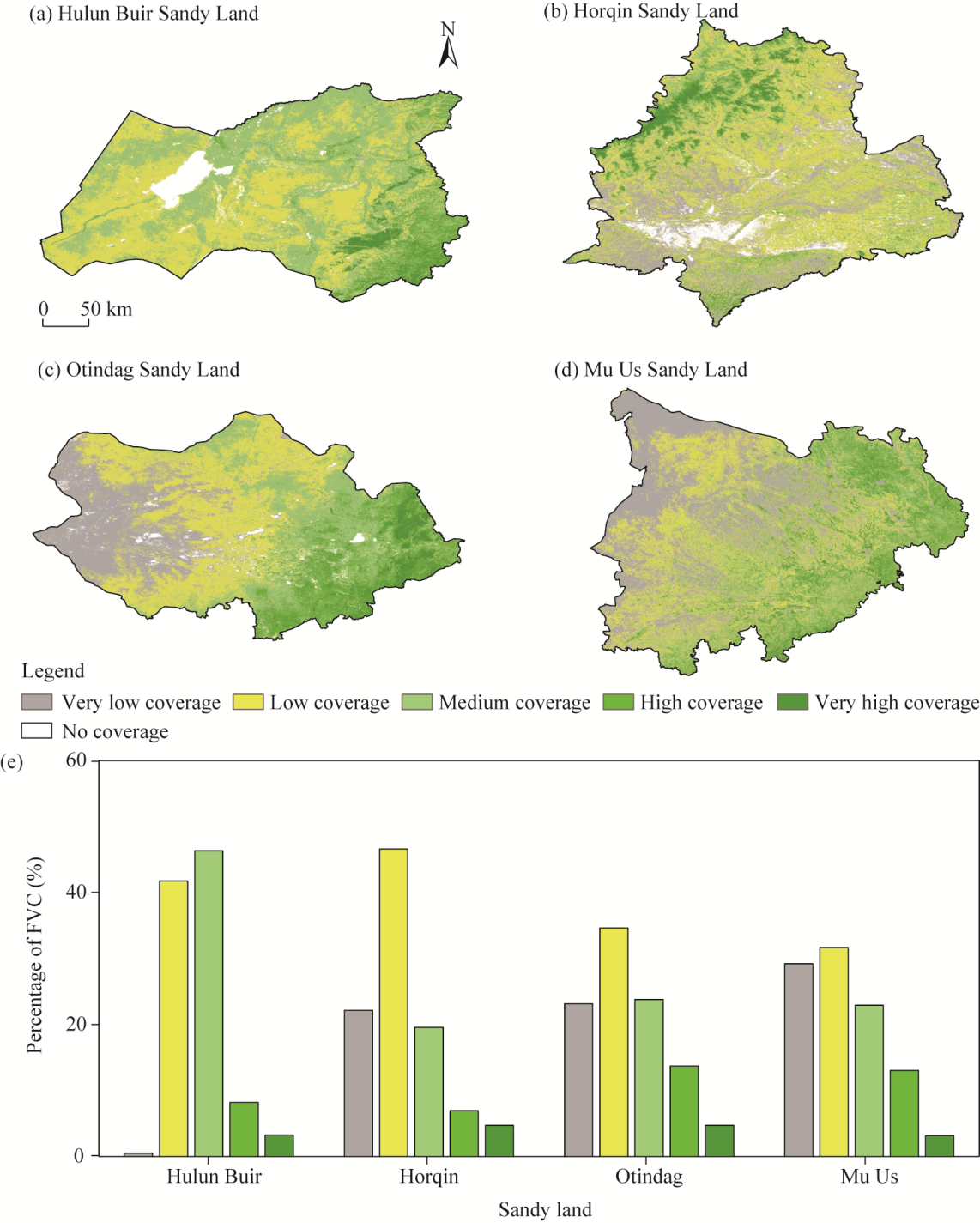
Fig. 2Spatial distribution of fractional vegetation coverage (FVC) in the Hulun Buir (a), Horqin (b), Otindag (c), and Mu Us (d) sandy lands, and the percentage of FVC (e)
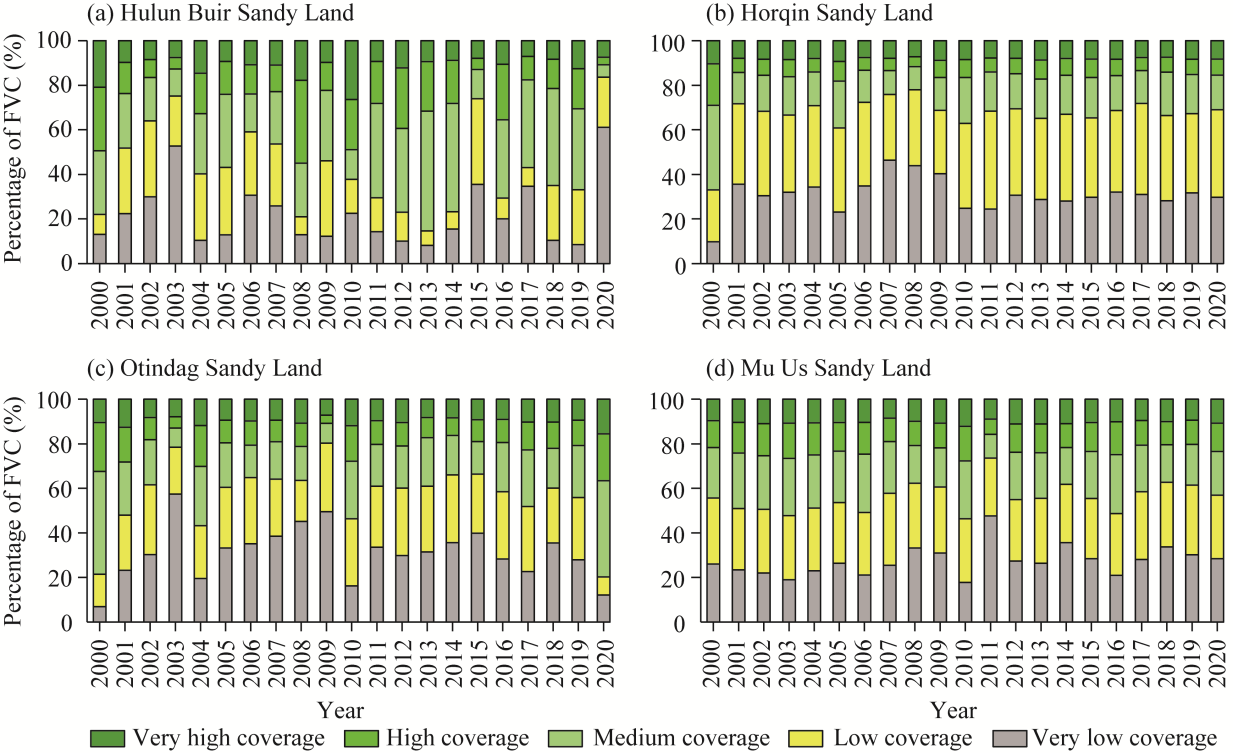
Fig. 3Inter-annual variations in the percentage of FVC in the Hulun Buir (a), Horqin (b), Otindag (c), and Mu Us (d) sandy lands
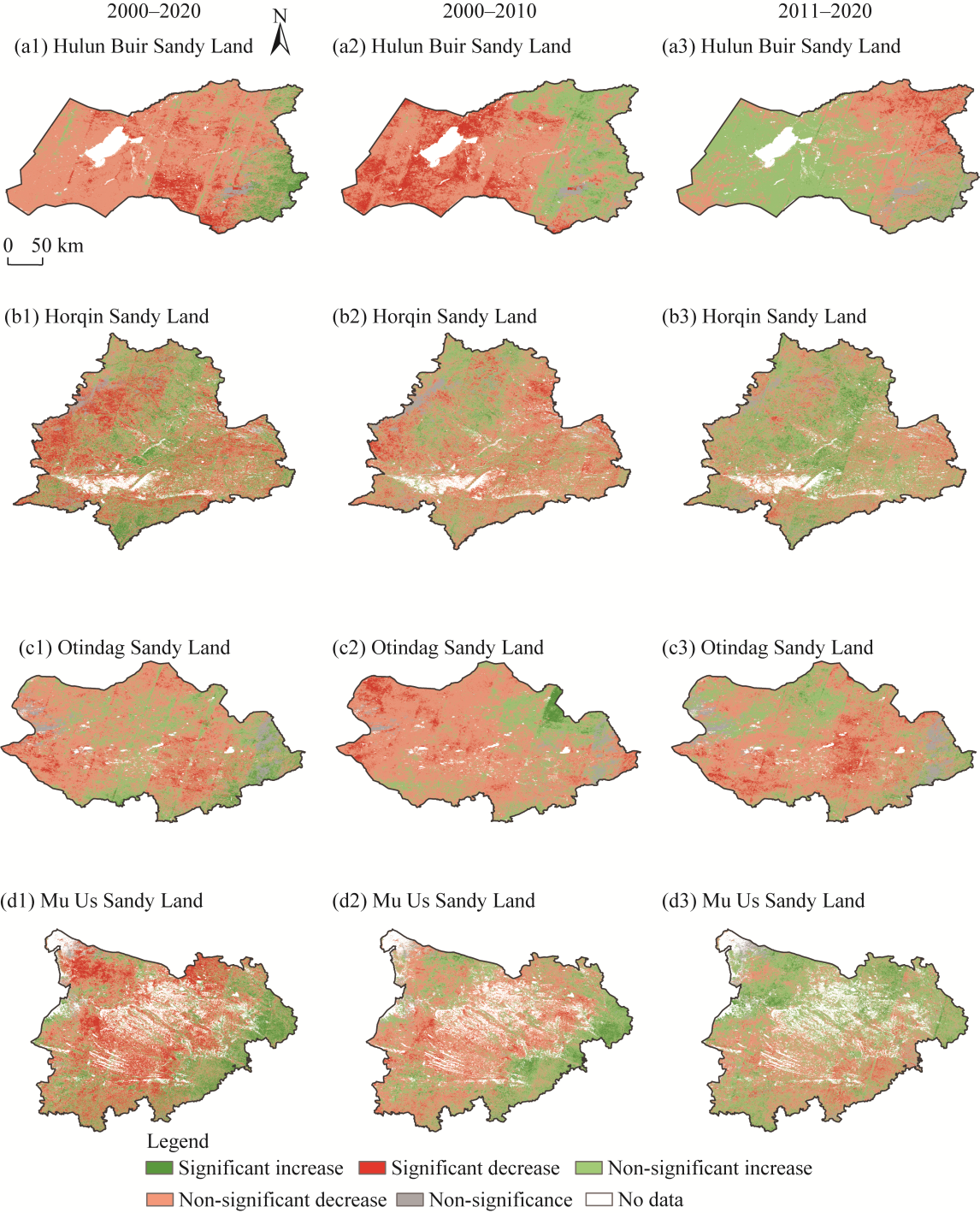
Fig. 4Spatial change trends of FVC in the Hulun Buir (a1-a3), Horqin (b1-b3), Otindag (c1-c3), and Mu Us (d1-d3) sandy lands during the periods 2000-2020, 2000-2010, and 2011-2020
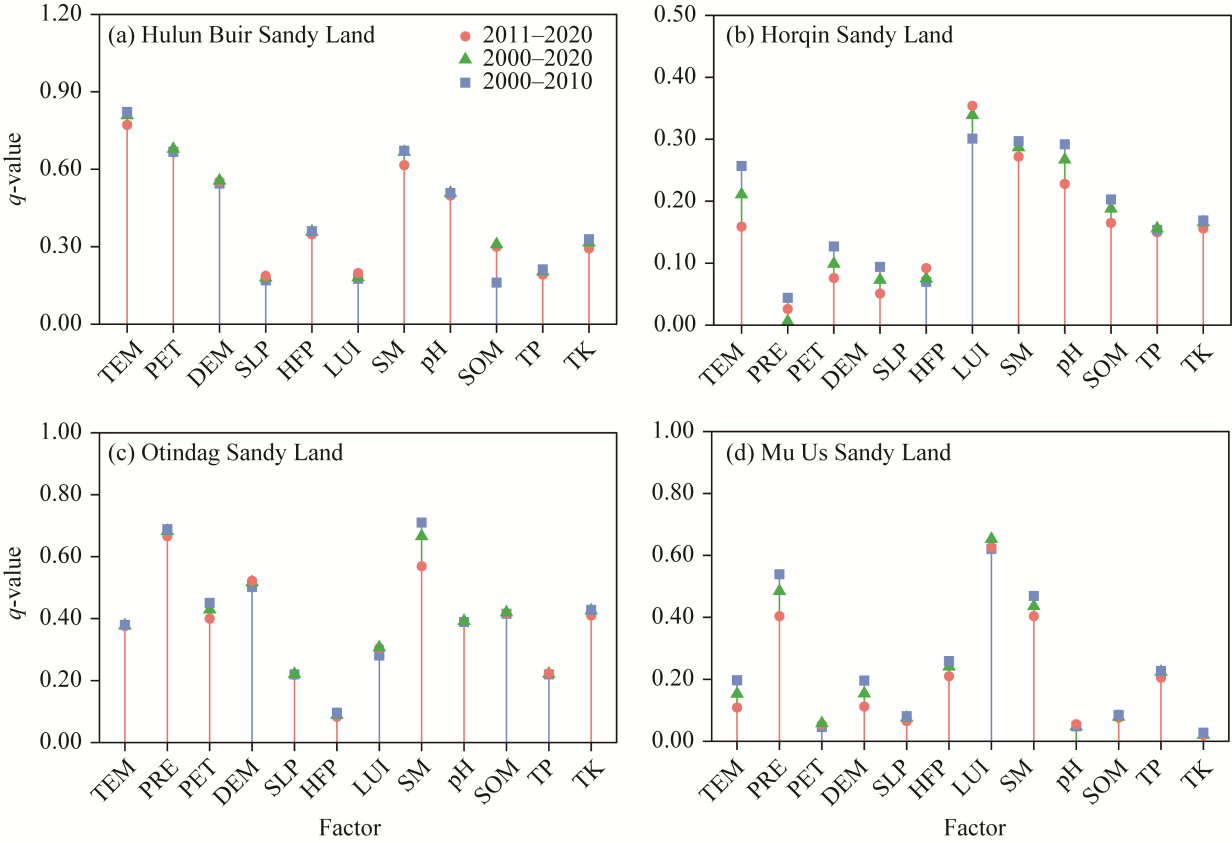
Fig. 5Factor detector in the Hulun Buir (a), Horqin (b), Otindag (c), and Mu Us (d) sandy lands. TEM, temperature; PRE, precipitation; PET, potential evapotranspiration; DEM, digital elevation model; SLP, slope; HFP, human footprint; LUI, land use intensity; SM, soil moisture; SOM, soil organic matter; TP, total phosphorus; TK, total potassium.
Fig. 6Interaction detection of driving factors on FVC in the Hulun Buir (a1-a3), Horqin (b1-b3), Otindag (c1-c3), and Mu Us (d1-d3) sandy lands during the periods 2000-2020, 2000-2010, and 2011-2020
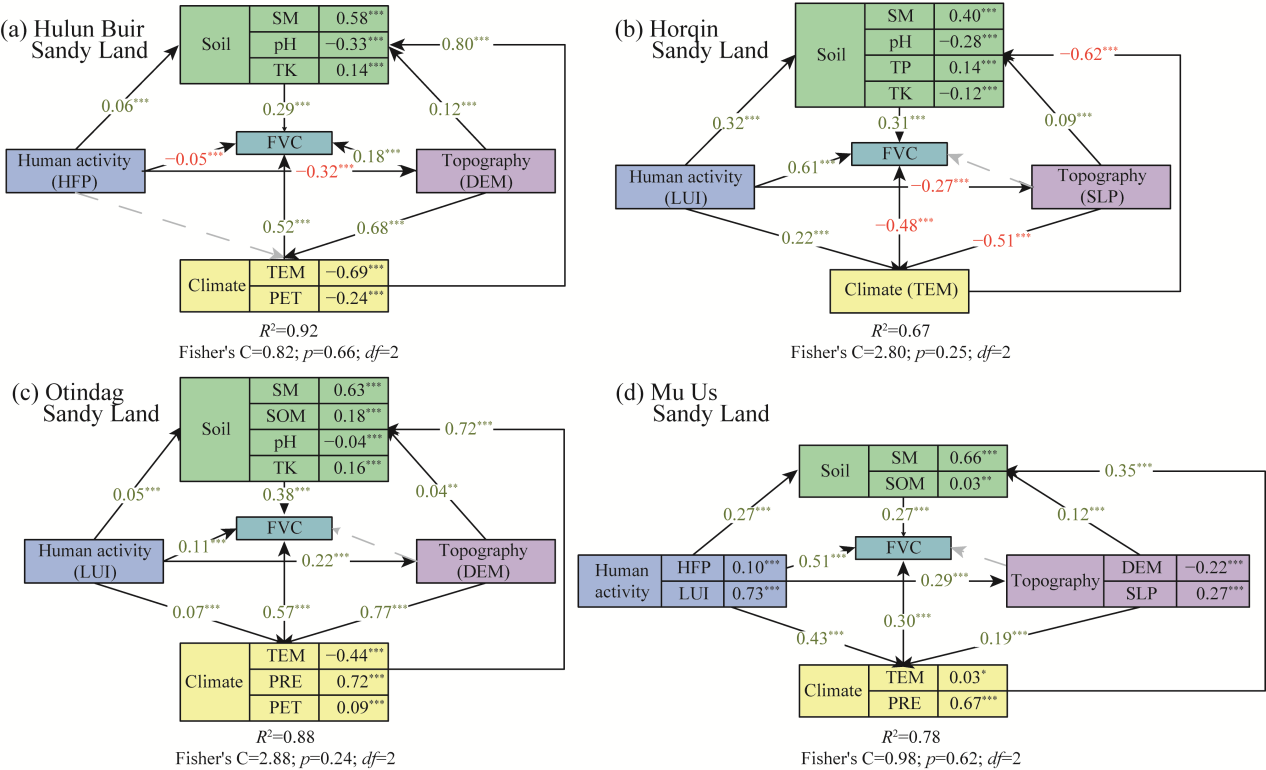
Fig. 7Structural equation model (SEM) for FVC in the Hulun Buir (a), Horqin (b), Otindag (c), and Mu Us (d) sandy lands during the period 2000-2020. p, probability; df, degree of freedom; *, P<0.050 level; **, P<0.010 level; ***, P<0.001 level.
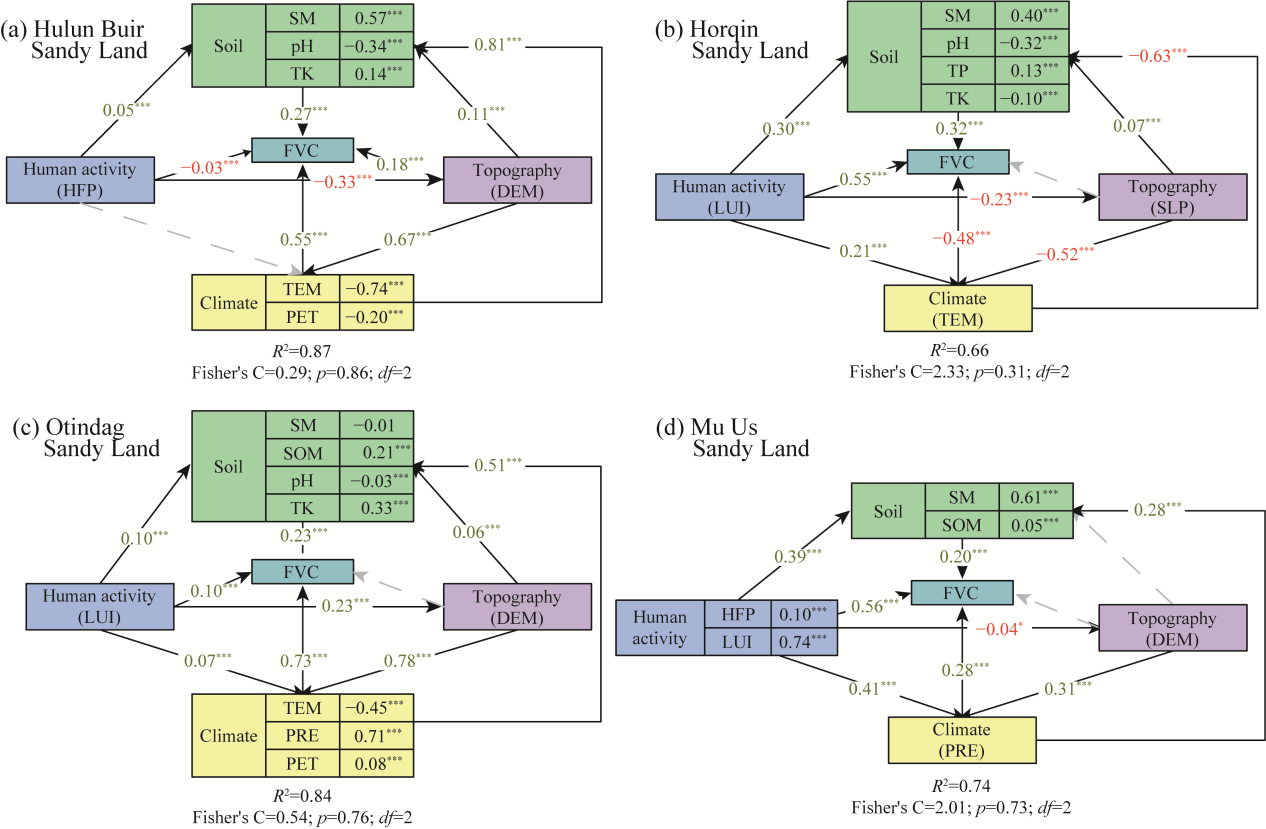
Fig. 8SEM for FVC in the Hulun Buir(a), Horqin (b), Otindag (c), and Mu Us (d) sandy lands during the period 2000-2010. p, probability; df, degree of freedom; *, P<0.050 level; ***, P<0.001 level.
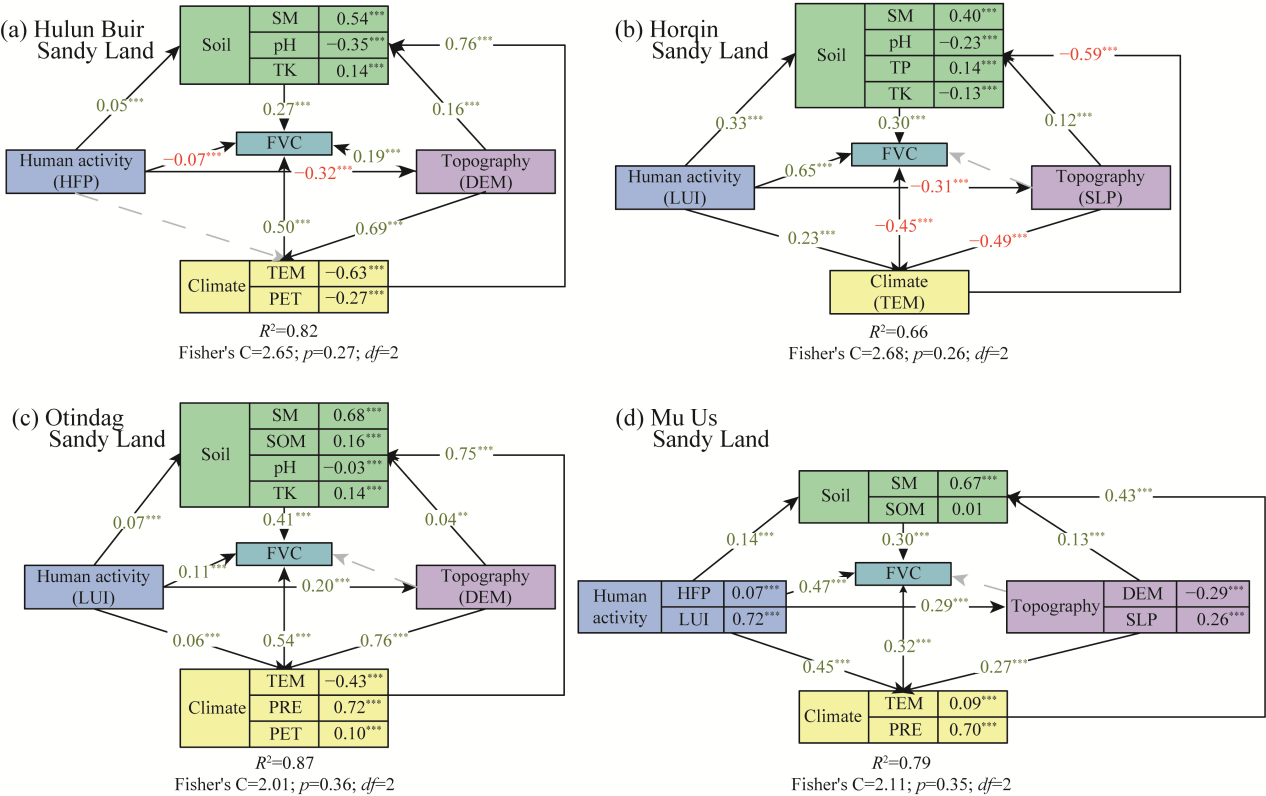
Fig. 9SEM for FVC in the Hulun Buir (a), Horqin (b), Otindag (c), and Mu Us (d) sandy lands during the period 2011-2020. p, probability; df, degree of freedom; **, P<0.010 level; ***, P<0.001 level.
[1]
Airiken M, Li S C, Abulaiti A, et al. 2023. Prediction of extreme climate on the Tibetan Plateau based on NEX-GDDP-CMIP6. Human and Ecological Risk Assessment, 29(9-10): 1261-1275.)
doi: 10.1080/10807039.2023.2260493
[2]
An M Y, Wei C C, Han Y G, et al. 2024. Soil erosion and nutrient loss due to changes in rainfall intensity under different wind directions. Earth Surface Processes and Landforms, 49(1): 291-303.
doi: 10.1002/esp.v49.1
[3]
Andrianasolo F N, Casadebaig P, Langlade N, et al. 2016. Effects of plant growth stage and leaf aging on the response of transpiration and photosynthesis to water deficit in sunflower. Functional Plant Biology, 43(8): 797-805.
doi: 10.1071/FP15235
pmid: 32480504
[4]
Bagley J E, Davis S C, Georgescu M, et al. 2014. The biophysical link between climate, water, and vegetation in bioenergy agro-ecosystems. Biomass and Bioenergy, 71: 187-201.
doi: 10.1016/j.biombioe.2014.10.007
[5]
Chen M Z, Xue Y Y, Xue Y B, et al. 2024. Assessing the effects of climate and human activity on vegetation change in northern China. Environmental Research, 247: 118233, doi: 10.1016/j.envres.2024.118233.
[6]
Ding X H, Wang Y F, Wang H, et al. 2025. Adaptive and differentiated land governance for sustainability: the spatiotemporal dynamics and explainable machine learning analysis of land use intensity in the Guanzhong Plain urban agglomeration. Land, 14(9): 1883, doi: 10.3390/land14091883.
[7]
Dou P P, Wang J, Miao Z Z, et al. 2023. Sustainable restoration in sandy lands is challenged by the divergent responses of grassland functional types to disturbance. Ecological Informatics, 77: 102260, doi: 10.1016/j.ecoinf.2023.102260.
[8]
Duan Q W, Tan M H. 2020. Using a geographical detector to identify the key factors that influence urban forest spatial differences within China. Urban Forestry & Urban Greening, 49: 126623, doi: 10.1016/j.ufug.2020.126623.
[9]
Gan H H, Yang H X, Chu J M, et al. 2026. Stoichiometry and drivers of soil C, N, P and K in the Otindag Sandy Land, northern China. Plant and Soil, 519(1): 985-999.
doi: 10.1007/s11104-025-08174-z
[10]
Gao H D, Li Z B, Jia L L, et al. 2016. Capacity of soil loss control in the Loess Plateau based on soil erosion control degree. Journal of Geographical Sciences, 26(4): 457-472.
doi: 10.1007/s11442-016-1279-y
[11]
Guo S S, Wu C Y, Wang Y H, et al. 2022. Threshold effect of ecosystem services in response to climate change, human activity and landscape pattern in the upper and middle Yellow River of China. Ecological Indicators, 136: 108603, doi: 10.1016/j.ecolind.2022.108603.
[12]
Guo Y F, Wu Z F, Zheng Z H, et al. 2024. An optimal multivariate-stratification geographical detector model for revealing the impact of multi-factor combinations on the dependent variable. GIScience & Remote Sensing, 61(1): 2422941, doi: 10.1080/15481603.2024.2422941.
[13]
Hamad K O, Surucu A. 2024. Land degradation sensitivity and desertification risk in Harrir Region, northern Iraq. Heliyon, 10(5): e27123, doi: 10.1016/j.heliyon.2024.e27123.
[14]
Hebbar K B, Apshara E, Chandran K P, et al. 2020. Effect of elevated CO2, high temperature, and water deficit on growth, photosynthesis, and whole plant water use efficiency of cocoa (Theobroma cacao L.). International Journal of Biometeorology, 64(1): 47-57.
doi: 10.1007/s00484-019-01792-0
pmid: 31468175
[15]
Hu J J, Zhou Q P, Cao Q H, et al. 2022. Effects of ecological restoration measures on vegetation and soil properties in semi-humid sandy land on the southeast Qinghai-Tibetan Plateau, China. Global Ecology and Conservation, 33: e02000, doi: 10.1016/j.gecco.2022.e02000.
[16]
Jiang Y T, Hu Y C, Gao M W, et al. 2026. The paradox of green fragmentation: fractional vegetation cover and landscape pattern coupling in the agro-pastoral ecotone of Inner Mongolia. Journal of Environmental Management, 401: 128844, doi: 10.1016/j.jenvman.2026.128844.
[17]
Jin K, Wu Y D, Wang F, et al. 2025. Assessment of climatic and anthropogenic influences on vegetation dynamics in China: a consideration of climate time-lag and cumulative effects. International Journal of Biometeorology, 69(1): 77-91.
doi: 10.1007/s00484-024-02794-3
[18]
Lai C G, Sun H W, Wu X S, et al. 2024. Water availability may not constrain vegetation growth in Northern Hemisphere. Agricultural Water Management, 291: 108649, doi: 10.1016/j.agwat.2023.108649.
[19]
Li H Y, Liu X H, Zhang W B, et al. 2024. Elevational patterns of forest evapotranspiration and its sensitivity to climatic variation in dryland mountains. Water, 16(9): 1252, doi: 10.3390/w16091252.
[20]
Li L, Zhang Y J, Novak A, et al. 2021. Role of biochar in improving sandy soil water retention and resilience to drought. Water, 13(4): 407, doi: 10.3390/w13040407.
[21]
Lian T H, Li Y N, Wang X, et al. 2024. Effect of grazing exclusion on plant communities varies over time in a Tibetan alpine meadow. Ecological Engineering, 209: 107420, doi: 10.1016/j.ecoleng.2024.107420.
[22]
Lin J, Bo W H, Dong X P, et al. 2025. Evolution of vegetation cover and impacts of climate change and human activities in arid regions of Northwest China: a Mu Us Sandy Land case. Environment Development and Sustainability, 27(8): 18977-18996.
doi: 10.1007/s10668-024-04704-4
[23]
Liu X M, Zhao W W, Gao B B, et al. 2025. Threshold effects of vegetation increase on ecosystem services based on the constraint line method in the Loess Plateau gully zone. Ecological Indicators, 174: 113470, doi: 10.1016/j.ecolind.2025.113470.
[24]
Liu X Y, Lai Q, Yin S, et al. 2022. Exploring sandy vegetation sensitivities to water storage in China's arid and semi-arid regions. Ecological Indicators, 136: 108711, doi: 10.1016/j.ecolind.2022.108711.
[25]
Ma B X, Jing J L, Liu B, et al. 2023. Assessing the contribution of human activities and climate change to the dynamics of NPP in ecologically fragile regions. Global Ecology and Conservation, 42: e02393, doi: 10.1016/j.gecco.2023.e02393.
[26]
Ma H W, Wang Y F, Guo E L, et al. 2025. Unstable changes in ecological quality of the four major sandy lands in northern China based on Google Earth Engine. Ecological Indicators, 171: 113195, doi: 10.1016/j.ecolind.2025.113195.
[27]
Magalhaes T M, Maciel E A, Buramuge V A. 2025. Monodominance in semi-arid woodlands results in neutral biodiversity- ecosystem functioning relationships. Forest Ecology and Management, 593: 122911, doi: 10.1016/j.foreco.2025.122911.
[28]
Maurya A K, Bhargava N, Singh D. 2022. Efficient selection of SAR features using ML based algorithms for accurate FVC estimation. Advances in Space Research, 70(7): 1795-1809.
doi: 10.1016/j.asr.2022.06.039
[29]
Mekonnen Z A, Riley W J, Shirley I A, et al. 2025. Changes in high-latitude surface energy balance driven by snowpack and vegetation dynamics under warmer climate. Environmental Research Letters, 20(1): 014031, doi: 10.1088/1748-9326/ad98aa.
[30]
Miao R H, Miao Y, Liu Y L, et al. 2022. Late-season drought exerts more negative effects on plant diversity and cover than early-season drought through changing soil moisture in a semi-arid grassland. Journal of Vegetation Science, 33(5): e13151, doi: 10.1111/jvs.13151.
[31]
Miao Z G, Chen J, Wang C L, et al. 2025. Global dynamics of grassland FVC and LST and spatial distribution of their correlation (2001-2022). Plants-Basel, 14(3): 439, doi: 10.3390/plants14030439.
[32]
Qi K, Zhu J J, Zheng X, et al. 2023. Impacts of the world's largest afforestation program (Three-North Afforestation Program) on desertification control in sandy land of China. GIScience & Remote Sensing, 60(1): 2167574, doi: 10.1080/15481603.2023.2167574.
[33]
Qiu J Q, Huang T, Yu D Y. 2022. Evaluation and optimization of ecosystem services under different land use scenarios in a semiarid landscape mosaic. Ecological Indicators, 135: 108516, doi: 10.1016/j.ecolind.2021.108516.
[34]
Schuster A C, Burghardt M, Alfarhan A, et al. 2016. Effectiveness of cuticular transpiration barriers in a desert plant at controlling water loss at high temperatures. AoB Plants, 8: plw027, doi: 10.1093/aobpla/plw027.
[35]
Shen F X, Yang L, Zhang L, et al. 2023. Quantifying the direct effects of long-term dynamic land use intensity on vegetation change and its interacted effects with economic development and climate change in Jiangsu, China. Journal of Environmental Management, 325: 116562, doi: 10.1016/j.jenvman.2022.116562.
[36]
Sun Y F, Guan Q Y, Du Q Q, et al. 2025. Elevation dependence of vegetation growth stages and carbon sequestration dynamics in high mountain ecosystems. Environmental Research, 273: 121200, doi: 10.1016/j.envres.2025.121200.
[37]
van Vugt L, Gobet E, Morales-Molino C, et al. 2025. Changes in climate drove vegetation and land use dynamics at the onset of farming in Europe. Quaternary Research, 124: 76-93.
doi: 10.1017/qua.2024.40
[38]
Wang H, Yao F, Zhu H S, et al. 2020. Spatiotemporal variation of vegetation coverage and its response to climate factors and human activities in arid and semi-arid areas: case study of the Otindag Sandy Land in China. Sustainability, 12(12): 5214, doi: 10.3390/su12125214.
[39]
Wang N, Cong A Q, Chen X P, et al. 2025. The characteristics of farmland area changes and dust source control in the Horqin Sandy Land. Journal of Desert Research, 45(4): 253-261. (in Chinese)
doi: 10.7522/j.issn.1000-694X.2025.00115
[40]
Wen X Y, Liu T T, Wang Z J. 2023. Assessment of ecological security risk in rocky desertification area based on land-use change model. Ecological Indicators, 156: 111000, doi: 10.1016/j.ecolind.2023.111000.
[41]
Wu P, Peng J, Xie Y Y, et al. 2025a. Forcing mechanisms of paleosol development at the edge of East Asian Summer Monsoon area over the past 20 kyrs: a large-scale analysis of lacustrine and dune field sedimentary archives in Central China. Palaeogeography, Palaeoclimatology, Palaeoecology, 676: 113137, doi: 10.1016/j.palaeo.2025.113137.
[42]
Wu Q, Cao Y, Su D, et al. 2025b. A multi-scale framework for understanding spatial scale effects on ecosystem service heterogeneity, interactions, drivers and their socio-ecological impact pathways for adaptive management. Journal of Cleaner Production, 516: 145757, doi: 10.1016/j.jclepro.2025.145757.
[43]
Wu Y S, Li X R, Hasi E, et al. 2020. Surface roughness response of biocrust-covered soil to mimicked sheep trampling in the Mu Us Sandy Land, northern China. Geoderma, 363: 114146, doi: 10.1016/j.geoderma.2019.114146.
[44]
Xie C H, Wu S X, Zhuang Q W, et al. 2022. Where anthropogenic activity occurs, anthropogenic activity dominates vegetation net primary productivity change. Remote Sensing, 14(5): 1092, doi: 10.3390/rs14051092.
[45]
Xu F, Chi G Q. 2019. Spatiotemporal variations of land use intensity and its driving forces in China, 2000-2010. Regional Environmental Change, 19(8): 2583-2596.
doi: 10.1007/s10113-019-01574-9
[46]
Yum S G, Song M S, Adhikari M D. 2023. Assessing typhoon Soulik-induced morphodynamics over the Mokpo coastal region in South Korea based on a geospatial approach. Natural Hazards and Earth System Sciences, 23(7): 2449-2474.
[47]
Zhao W, Yu X B, Xu C D, et al. 2022. Dynamic traceability effects of soil moisture on the precipitation-vegetation association in drylands. Journal of Hydrology, 615: 128645, doi: 10.1016/j.jhydrol.2022.128645.
[48]
Zhao Y H, Yang S Y, Liu L, et al. 2023. Variations and driving mechanisms of desertification in the southeast section of the China-Mongolia-Russia economic zone. Science of The Total Environment, 887: 164004, doi: 10.1016/j.scitotenv.2023.164004.
[49]
Zhuang D F, Liu J Y. 1997. Modeling of regional differentiation of land-use degree in China. Chinese Geographical Science, 7: 302-309.
doi: 10.1007/s11769-997-0002-4