| Research article |
|

|
|
|
| Phosphate-solubilizing fungi: Isolation, characterization, and impact on soil as potential biofertilizers |
Rim WERHENI AMMERI1,2,*( ), Yasmine OCHI1, Maroua OUESLETI1, Hassen ABDENNACEUR2, Najla SADFI ZOUAOUI1 ), Yasmine OCHI1, Maroua OUESLETI1, Hassen ABDENNACEUR2, Najla SADFI ZOUAOUI1 |
1 Laboratory of Mycology, Pathologies and Biomarkers (LR16ES05), Faculty of Sciences of Tunis, University Tunis El Manar, Tunis 2092, Tunisia
2 Laboratory of Treatment and Valorization of Water Rejects, Water Researches and Technologies Center, Borj-Cedria Technopark, University of Carthage, Soliman 8020, Tunisia |
|
|
|
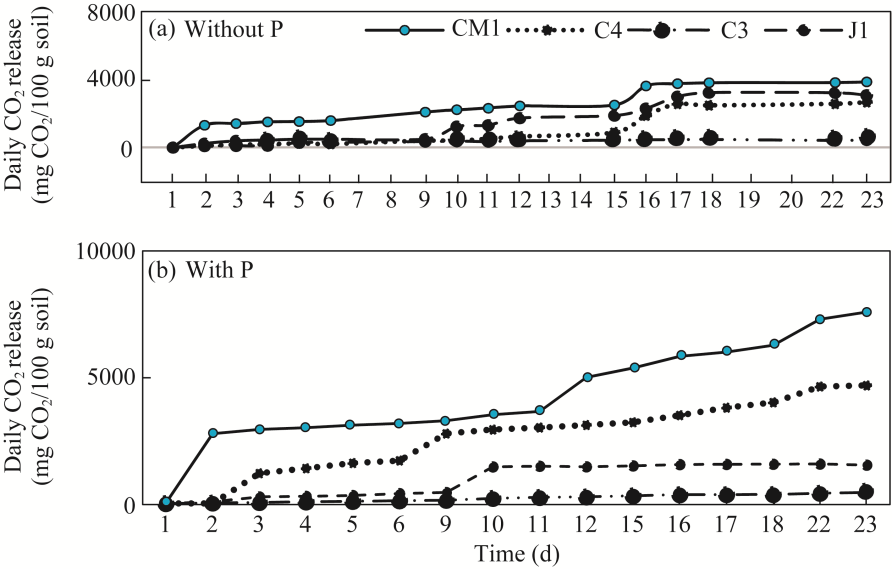
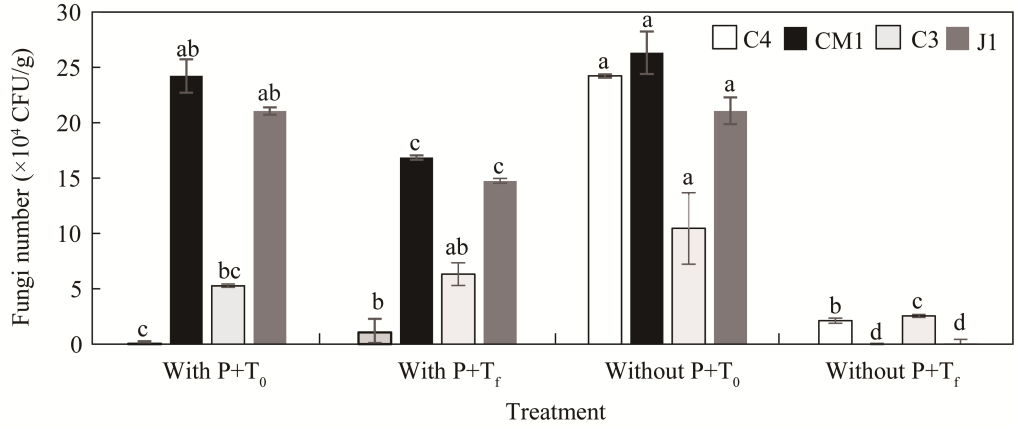
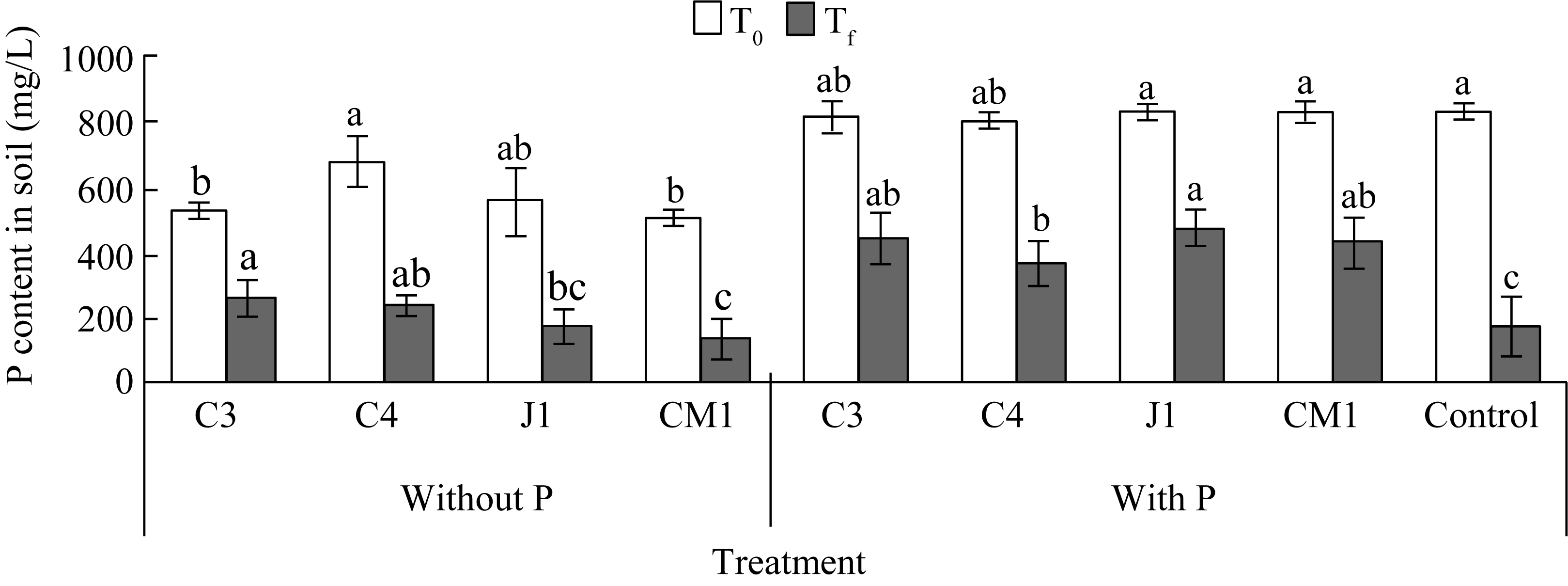
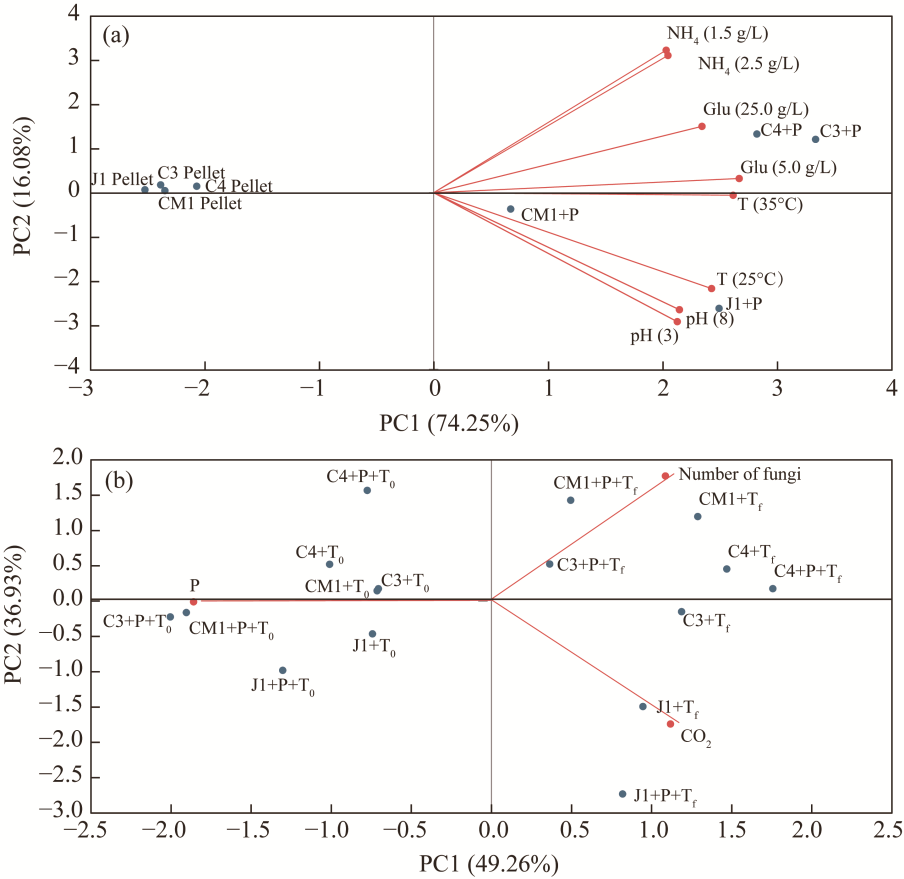
Abstract The escalating global demand for sustainable agriculture necessitates the development of effective biological alternatives to conventional chemical fertilizers, particularly those addressing phosphorus (P) use efficiency. This study focused on the isolation and detailed characterization of phosphate-solubilizing fungi from soil or compost to evaluate their impact and potential for use as biofertilizers. Fungal isolation was performed using serial dilution from various sources, followed by molecular and morphological characterization to identify promising strains. Four strains were ultimately selected and identified using morphological, biochemical, and molecular techniques: Aspergillus flavus (CM1), Penicillium crustosum (C3), Penicillium fellutanum (C4), and Metarhizium robertsii (J1). The most active strain was initially tested in liquid and solid media supplemented with synthetic P (Ca3(PO4)2) and was evaluated by measuring fungal biomass and P titration. This strain demonstrated good growth and activity, supporting an optimal temperature of 25°C, a pH of 3, an ammonium concentration of 1.5 g/L, and a glucose addition of 25.0 g/L. The biofertilization potential of the selected strains was then comprehensively evaluated through controlled experiments, including the optimization of growing conditions, quanti fication of soluble P under hermetic storage in soil, and measurement of soil fungal populations to assess their impact. P transformation experiments conducted in hermetic jars showed that CM1 had the highest CO2 release (approximately 7115.30 mg CO2/100 g soil) and the highest soluble P levels at the final sampling time (78.85 mg/L), thus outperforming the other strains. Furthermore, in soil hermetic jars, CM1 (reaching up to 26×104 CFU (colony forming units)/g soil) and C4 significantly enhanced soil microbial activity and P bioavailability. These results clearly highlight the potential of the selected fungal strains as biofertilizers to improve P availability and boost crop productivity in P-deficient soils.
|
|
Received: 07 August 2025
Published: 28 February 2026
|
|
Corresponding Authors:
*Rim WERHENI AMMERI (E-mail: rim.werheni@gmail.com)
|
|
|
| [1] |
Achal V, Savant V V, Reddy M S. 2007. Phosphate solubilization by a wild type strain and UV-induced mutants of Aspergillus tubingensis. Soil Biology and Biochemistry, 39(2): 695-699.
doi: 10.1016/j.soilbio.2006.09.003
|
|
|
| [2] |
APHA (American Public Health Association). 1998. Standard Methods for the Examination of Water and Wastewater (20th ed.). Washington D. C.: American Public Health Association.
|
|
|
| [3] |
Arias R, Abarca G, Del Carmen Perea Rojas Y, et al. 2023. Selection and characterization of phosphate-solubilizing fungi and their effects on coffee plantations. Plants, 12(19): 3395, doi: 10.3390/plants12193395.
|
|
|
| [4] |
Balkan B, Ertan F. 2007. Production of α-amylase from Penicillium chrysogenum under solid-state fermentation by using some agricultural by-products. Food Technology and Biotechnology, 45(4): 439-442.
|
|
|
| [5] |
Benaouida K. 2008. Study of alpha-amylase from yeasts isolated from an extreme ecosystem (soil surrounding thermal springs) and cultivated on a whey-based medium. MSc Thesis. Constantine: Mentouri University. (in French)
|
|
|
| [6] |
Berraquero F R, Baya A M, Cormenzana A R. 1976. Establishing indicators to study phosphate solubilization by soil bacteria. Ars Pharmceutica, 17(4): 399-406. (in Spanish)
|
|
|
| [7] |
Bogati K, Walczak M. 2022. The impact of drought stress on soil microbial community, enzyme activities and plants. Agronomy, 12(1): 189, doi: 10.3390/agronomy12010189.
|
|
|
| [8] |
Bononi L, Chiaramonte J, Pansa C, et al. 2020. Phosphorus-solubilizing Trichoderma spp. from Amazon soils improve soybean plant growth. Scientific Reports, 10: 2858, doi: 10.1038/s41598-020-59793-8.
pmid: 32071331
|
|
|
| [9] |
Chen J, Xu H, Seven J, et al. 2024. Microbial phosphorus recycling in soil by intra- and extra-cellular mechanisms. ISME Communications, 3: 135, doi: 10.1038/s43705-023-00340-7.
|
|
|
| [10] |
Cherif H, Marasco R, Rolli E, et al. 2015. Oasis desert farming selects environment-specific date palm root endophytic communities and cultivable bacteria that promote resistance to drought. Environmental Microbiology Reports, 7(4): 668-678.
doi: 10.1111/1758-2229.12304
pmid: 26033617
|
|
|
| [11] |
Dilly O. 2005. Microbial energetics in soils. In: BuscotF, VarmaA. Microorganisms in Soils:Roles in Genesis and Functions. Heidelberg: Springer, 123-138.
|
|
|
| [12] |
Dixon-Hardy J E, Karamushka V I, Gruzina T G, et al. 1998. Influence of the carbon, nitrogen and phosphorus source on the solubilization of insoluble metal compounds by Aspergillus niger. Mycological Research, 102(9): 1050-1054.
doi: 10.1017/S0953756297005583
|
|
|
| [13] |
Fan D W, Jing Y J, Zhu Y L, et al. 2020. Toluene induces hormetic response of soil alkaline phosphatase and the potential enzyme kinetic mechanism. Ecotoxicology and Environmental Safety, 206: 111123, doi: 10.1016/j.ecoenv.2020.111123.
|
|
|
| [14] |
Fliebach A, Oberholzer H R, Gunst L, et al. 2007. Soil organic matter and biological soil quality indicators after 21 years of organic and conventional farming. Agriculture, Ecosystems and Environment, 118(1-4): 273-284.
doi: 10.1016/j.agee.2006.05.022
|
|
|
| [15] |
Fossi B T, Tavea F, Ndjouenkeu R. 2005. Production and partial characterization of a thermostable alpha amylase from ascomycete yeast strain isolated from starchy soil. African Journal of Biotechnology, 4(1): 14-18.
|
|
|
| [16] |
Fu S F, Balasubramanian V, Chen C L, et al. 2024. The phosphate-solubilising fungi in sustainable agriculture: Unleashing the potential of fungal biofertilisers for plant growth. Folia Microbiologica, 69(4): 697-712.
doi: 10.1007/s12223-024-01181-0
|
|
|
| [17] |
Fujita M, Ike M, Kusunoki K, et al. 2002. Removal of color and estrogenic substances by fungal reactor equipped with ultrafiltration unit. Water Science and Technology: Water Supply, 2(5-6): 353-358.
doi: 10.2166/ws.2002.0190
|
|
|
| [18] |
Gaind S. 2016. Phosphate dissolving fungi: Mechanism and application in alleviation of salt stress in wheat. Microbiological Research, 193: 94-102.
doi: S0944-5013(16)30383-4
pmid: 27825490
|
|
|
| [19] |
Gokhale M, Holmes W, Kopser A, et al. 1991. Building and using a highly parallel programmable logic array. Computer, 24(1): 81-89.
|
|
|
| [20] |
Hidri Y, Hibar K, Bchir A, et al. 2021. Changes in the microbial properties of olive cultivated soils under short, medium and long-term irrigation with treated wastewater. Asian Soil Research Journal, 5(1): 1-20.
|
|
|
| [21] |
Islam M T, Hossain M M. 2012. Plant probiotics in phosphorus nutrition in crops, with special reference to rice. In: Maheshwari DK. Bacteria in Agrobiology, Plant Probiotics. Heidelberg: Springer, 325-363.
|
|
|
| [22] |
Jena A B, Goldman D, Weaver L, et al. 2014. Opioid prescribing by multiple providers in Medicare: Retrospective observational study of insurance claims. BMJ, 348: g1393, doi: 10.1136/bmj.g1393.
|
|
|
| [23] |
Jin Z X, Wang G W, George T, et al. 2024. Potential role of sugars in the hyphosphere of arbuscular mycorrhizal fungi to enhance organic phosphorus mobilization. Journal of Fungi, 10(3): 226, doi: 10.3390/jof10030226.
|
|
|
| [24] |
Jog R, Pandya M, Nareshkumar G, et al. 2014. Mechanism of phosphate solubilization and antifungal activity of Streptomyces spp. isolated from wheat roots and rhizosphere and their application in improving plant growth. Microbiology, 160(4): 778-788.
doi: 10.1099/mic.0.074146-0
|
|
|
| [25] |
Jukes T H, Cantor C R. 1969. Evolution of protein molecules. Mammalian Protein Metabolism, 3: 121-132.
|
|
|
| [26] |
Kafle A, Cope K R, Raths R, et al. 2019. Harnessing soil microbes to improve plant phosphate efficiency in cropping systems. Agronomy, 9(3): 127, doi: 10.3390/agronomy9030127.
|
|
|
| [27] |
Kathiresan K, Manivannan S. 2006. Amylase production by Penicillium fellutanum isolated from mangrove rhizosphere soil. African Journal of Biotechnology, 7(5): 1-4.
|
|
|
| [28] |
Khan M S, Zaidi A, Ahemad M, et al. 2010. Plant growth promotion by phosphate solubilizing fungi-current perspective. Archives of Agronomy and Soil Science, 56(1): 73-98.
doi: 10.1080/03650340902806469
|
|
|
| [29] |
Khurshid H, Li W F, Chandra S, et al. 2013. Mechanism and controlled growth of shape and size variant core/shell FeO/Fe3O4 nanoparticles. Nanoscale, 5(17): 7942-7952.
doi: 10.1039/c3nr02596a
pmid: 23857290
|
|
|
| [30] |
Kitamoto N, Go M, Shibayama T, et al. 1996. Molecular cloning, purification and characterization of two endo-1, 4-β-glucanases from Aspergillus oryzae KBN616. Applied Microbiology and Biotechnology, 46(5-6): 538-544.
pmid: 9008887
|
|
|
| [31] |
Leong S L L, Hocking A D, Pitt J I, et al. 2006. Australian research on ochratoxigenic fungi and ochratoxin A. International Journal of Food Microbiology, 111(Suppl. 1): 10-17.
|
|
|
| [32] |
Li Y, Jiang L M, Yuan H F, et al. 2024. The impact of artificial afforestation on the soil microbial community and function in desertified areas of NW China. Forests, 15(7): 1140, doi: 10.3390/f15071140.
|
|
|
| [33] |
Liu D, Coloe S, Baird R, et al. 2000. Rapid mini-preparation of fungal DNA for PCR. Journal of Clinical Microbiology, 38(1): 471-471.
doi: 10.1128/JCM.38.1.471-471.2000
pmid: 10681211
|
|
|
| [34] |
Lompo F, Segda Z, Gnankambary Z, et al. 2009. Effect of natural phosphate on the quality and biodegradation of corn straw compost. Tropicultura, 27(2): 105-109. (in French)
|
|
|
| [35] |
Lucchetta M. 2025. Crisis-proofing heterogeneous banks. Department of Economics. [2025-08-01]. https://www.unive.it/web/fileadmin/user_upload/dipartimenti/DEC/doc/Pubblicazioni_scientifiche/working_papers/2025/WP_DSE_lucchetta_08_25.pdf.
|
|
|
| [36] |
Luo D, Shi J, Li M, et al. 2024. Consortium of phosphorus-solubilizing bacteria promotes maize growth and changes the microbial community composition of rhizosphere soil. Agronomy, 14(7): 1535, doi: 10.3390/agronomy14071535.
|
|
|
| [37] |
Mącik M, Gryta A, Frąc M. 2020. Chapter two-Biofertilizers in agriculture:An overview on concepts, strategies and effects on soil microorganisms. In: Sparks DL. Advances in Agronomy. New York: Academic Press, 31-87.
|
|
|
| [38] |
Mehta R A, Stiénon M, Xu P. 2015. The Atiyah class of a dg-vector bundle. Comptes Rendus Mathematique, 353(4): 357-362.
|
|
|
| [39] |
Mulkerrins D, O'Connor E, Lawlee B, et al. 2004. Assessing the feasibility of achieving biological nutrient removal from wastewater at an Irish food processing factory. Bioresource Technology, 91(2): 207-214.
pmid: 14592752
|
|
|
| [40] |
Murphy J, Riley J P. 1962. A modified single solution method for the determination of phosphate in natural waters. Analytica Chimica Acta, 27: 31-36.
doi: 10.1016/S0003-2670(00)88444-5
|
|
|
| [41] |
Naorem A, Jayaraman S, Dang Y P, et al. 2023. Soil constraints in an arid environment-challenges, prospects, and implications. Agronomy, 13(1): 220, doi: 10.3390/agronomy13010220.
|
|
|
| [42] |
Nelofer R, Syed Q, Nadeem M, et al. 2016. Isolation of phosphorus-solubilizing fungus from soil to supplement biofertilizer. Arabian Journal for Science and Engineering, 41: 2131-2138.
doi: 10.1007/s13369-015-1916-2
|
|
|
| [43] |
Nogawa T, Kamano Y, Yamashita A, et al. 2001. Isolation and structure of five new cancer cell growth inhibitory bufadienolides from the Chinese traditional drug Ch'an Su. Journal of Natural Products, 64(9): 1148-1152.
pmid: 11575946
|
|
|
| [44] |
Olsen S R, Sommers L E. 1982. Phosphorus. In: Page AL. Methods of Soil Analysis:Part 2 Chemical and Microbiological Properties. Madison: American Society of Agronomy, 403-430.
|
|
|
| [45] |
Pane R D P, Farrasati R, Darlan N H, et al. 2022. Study of soil bacteria and fungi population in oil palm with big hole planting system. Berkala Penelitian Hayati, 27(2): 91-97.
doi: 10.23869/bphjbr
|
|
|
| [46] |
Pang F, Li Q, Solanki M K, et al. 2024. Soil phosphorus transformation and plant uptake driven by phosphate-solubilizing microorganisms. Frontiers in Microbiology, 15: 1383813, doi: 10.3389/fmicb.2024.1383813.
|
|
|
| [47] |
Pratibha G, Manjunath M, Raju B, et al. 2023. Soil bacterial community structure and functioning in a long-term conservation agriculture experiment under semi-arid rainfed production system. Frontiers in Microbiology, 14: 1102682, doi: 10.3389/fmicb.2023.1102682.
|
|
|
| [48] |
Reis B O, Prakki A, Stavroullakis A T, et al. 2021. Analysis of permeability and biological properties of dentin treated with experimental bioactive glasses. Journal of Dentistry, 111: 103719, doi: 10.1016/j.jdent.2021.103719.
|
|
|
| [49] |
Saadaoui I, Sedky R, Rasheed R, et al. 2019. Assessment of the algae-based biofertilizer influence on date palm (Phoenix dactylifera L.) cultivation. Journal of Applied Phycology, 31: 457-463.
doi: 10.1007/s10811-018-1539-6
|
|
|
| [50] |
Saidi Y, Finka A, Muriset M. 2009. The heat shock response in moss plants is regulated by specific calcium-permeable channels in the plasma membrane. The Plant Cell, 21(9): 2829-2843.
doi: 10.1105/tpc.108.065318
pmid: 19773386
|
|
|
| [51] |
Samson R A, Visagie C M, Houbraken J, et al. 2014. Phylogeny, identification and nomenclature of the genus Aspergillus. Studies in Mycology, 78(1): 141-173.
doi: 10.1016/j.simyco.2014.07.004
|
|
|
| [52] |
Sarr P S, Tibiri E B, Fukuda M, et al. 2020. Phosphate-solubilizing fungi and alkaline phosphatase trigger the P solubilization during the co-composting of sorghum straw residues with Burkina Faso phosphate rock. Frontiers in Environmental Science, 8: 559195, doi: 10.3389/fenvs.2020.559195.
|
|
|
| [53] |
Seshadri S, Ignacimuthu S, Lakshminarasimhan C. 2004. Effect of nitrogen and carbon sources on the inorganic phosphate solubilization by different Aspergillus niger strains. Chemical Engineering Communications, 191(8): 1043-1052.
doi: 10.1080/00986440490276308
|
|
|
| [54] |
Sheir-Neiss G, Montenecourt B S. 1984. Characterization of the secreted cellulases of Trichoderma reesei wild type and mutants during controlled fermentations. Applied Microbiology and Biotechnology, 20: 46-53.
|
|
|
| [55] |
Silva Filho G N, Vidor C. 2000. Phosphate solubilization by microorganisms in the presence of different carbon sources. Brazilian Journal of Soil Science, 24(2): 311-319.
|
|
|
| [56] |
Souchie E L, Barea Navarro J M, Saggin-Júnior O J, et al. 2007. Indolacetic acid production by P-solubilizing microorganisms and interaction with arbuscular mycorrhizal fungi. Acta Scientiarum Biological Sciences, 29(3): 315-320.
|
|
|
| [57] |
Sudiana I M, Mino T, Satoh H, et al. 1999. Metabolism of enhanced biological phosphorus removal and non-enhanced biological phosphorus removal sludge with acetate and glucose as carbon source. Water Science and Technology, 39(6): 29-35.
|
|
|
| [58] |
Timofeeva A M, Galyamova M R, Sedykh S E. 2022. Bacterial siderophores: Classification, biosynthesis, perspectives of use in agriculture. Plants, 11(22): 3065, doi: 10.3390/plants11223065.
|
|
|
| [59] |
Vassilev A, Hadid H B, Botton V, et al. 2007. Experimental and numerical studies on the topology of gas/liquid interfaces. In: CFM 2007-8th Conference French of Mechanics. Grenoble: Association of French Mechanics, 27-31. (in French)
|
|
|
| [60] |
Wang G W, Jin Z X, George T, et al. 2023. Arbuscular mycorrhizal fungi enhance plant phosphorus uptake through stimulating hyphosphere soil microbiome functional profiles for phosphorus turnover. New Phytologist, 238(6): 2578-2593.
doi: 10.1111/nph.v238.6
|
|
|
| [61] |
Wang X L, Chi Y K, Song S Z. 2024. Important soil microbiota's effects on plants and soils: A comprehensive 30-year systematic literature review. Frontiers in Microbiology, 15: 1347745, doi: 10.3389/fmicb.2024.1347745.
|
|
|
| [62] |
Werheni Ammeri R, Kraiem K, Riahi K, et al. 2021. Removal of pentachlorophenol from contaminated wastewater using phytoremediation and bioaugmentation processes. Water Science and Technology, 84(10-11): 3091-3103.
doi: 10.2166/wst.2021.328
pmid: 34850714
|
|
|
| [63] |
White R J, Ghez A M, Reid I N, et al. 1999. A test of pre-main-sequence evolutionary models across the stellar/substellar boundary based on spectra of the young quadruple GG Tauri. The Astrophysical Journal, 520(2): 811-821.
doi: 10.1086/apj.1999.520.issue-2
|
|
|
| [64] |
Xiao W, Chen X, Jing X, et al. 2018. A meta-analysis of soil extracellular enzyme activities in response to global change. Soil Biology and Biochemistry, 123: 21-32.
doi: 10.1016/j.soilbio.2018.05.001
|
|
|
| [65] |
Yadav G S, Babu S, Meena R S, et al. 2017. Effects of godawariphos gold and single super phosphate on groundnut (Arachis hypogaea) productivity, phosphorus uptake, phosphorus use efficiency and economics. The Indian Journal of Agricultural Sciences, 87(9): 1165-1169.
|
|
|
| [66] |
Yang B, Yang S, Wang X M, et al. 2025. Inhibition of RNase to attenuate fungal-manipulated rhizosphere microbiome and diseases. Advanced Science, 12(40), e03146, doi: 10.1002/advs.202503146.
|
|
|
| [67] |
Zhang C, Lei S L, Wu H Y, et al. 2024. Simplified microbial network reduced microbial structure stability and soil functionality in alpine grassland along a natural aridity gradient. Soil Biology and Biochemistry, 191: 109366, doi: 10.1016/j.soilbio.2024.109366.
|
|
|
| [68] |
Zhang X, Rajendran A, Grimm S, et al. 2023. Screening of calcium- and iron-targeted phosphorus solubilizing fungi for agriculture production. Rhizosphere, 26: 100689, doi: 10.1016/j.rhisph.2023.100689.
|
|
|
| [69] |
Zhang Y, Chen F S, Wu X Q, et al. 2018. Isolation and characterization of two phosphate-solubilizing fungi from rhizosphere soil of moso bamboo and their functional capacities when exposed to different phosphorus sources and pH environments. PLoS ONE, 13(7): e0199625, doi: 10.1371/journal.pone.0199625.
|
|
|
| [70] |
Zhu X K, Li C Y, Jiang Z Q, et al. 2012. Responses of phosphorus use efficiency, grain yield, and quality to phosphorus application amount of weak-gluten wheat. Journal of Integrative Agriculture, 11(7): 1103-1110.
doi: 10.1016/S2095-3119(12)60103-8
|
|
|
| [71] |
Zúñiga-Silgado D, Rivera-Leyva J C, Coleman J J, et al. 2020. Soil type affects organic acid production and phosphorus solubilization efficiency mediated by several native fungal strains from Mexico. Microorganisms, 8(9): 1337, doi: 10.3390/microorganisms8091337.
|
|
|
|
Viewed |
|
|
|
Full text
|
|
|
|
|
Abstract
|
|
|
|
|
Cited |
|
|
|
|
| |
Shared |
|
|
|
|
| |
Discussed |
|
|
|
|